
Have you ever wondered how your engine or home stays cool even when things heat up? The secret lies in water circulation and cooling.
Understanding this process can help you protect your valuable equipment and save money on repairs. You’ll discover how water moves to keep systems from overheating and why it’s crucial for your safety and comfort. Keep reading to unlock simple yet powerful insights that can make a big difference in how your machines perform.
Basics Of Water Circulation
Water circulation helps move water through pipes, tanks, and cooling systems. It keeps water flowing to control temperature and remove heat.
This process is important in many places, like homes, industries, and power plants. Understanding water circulation helps improve cooling and efficiency.
Key Components
Water circulation systems have parts that work together to move water. Each part plays a role in keeping the system running smoothly.
These components include pumps, pipes, valves, and heat exchangers. Pumps push water through the system. Pipes carry water to different areas.
- Pumps:Move water through the system.
- Pipes:Transport water to needed locations.
- Valves:Control water flow and direction.
- Heat Exchangers:Transfer heat from water to cool or warm it.
Flow Dynamics
Flow dynamics describe how water moves inside the system. Water can flow in different ways depending on pressure and pipe design.
Water flows from high pressure to low pressure areas. The speed and force of water affect how well it cools or heats.
- Water moves due to pressure differences.
- Faster flow means quicker heat transfer.
- Pipe size affects water speed.
- Obstacles can slow down water flow.
Common Circulation Patterns
Water circulation follows common patterns to keep systems working. These patterns help spread heat evenly and avoid hot spots.
Some systems use continuous loops, while others have one-way flow. The choice depends on the cooling needs and system design.
- Closed Loop:Water circulates in a sealed circuit.
- Open Loop:Water flows from a source and returns after use.
- One-Way Flow:Water moves in a single direction.
- Bidirectional Flow:Water can flow both ways based on demand.
Types Of Cooling Systems
Cooling systems help manage heat in buildings and machines. They use water or air to lower temperatures.
There are different types of cooling systems. Each one uses different ways to move heat away.
Passive Cooling Techniques
Passive cooling uses natural processes to reduce heat. It does not need extra energy or machines.
These techniques often use shade, ventilation, and materials that absorb less heat. Water can also help cool by evaporation.
- Natural ventilation to move air
- Shade from trees or structures
- Evaporative cooling using water
- Using materials that stay cool
Active Cooling Solutions
Active cooling uses machines to remove heat. It needs energy like electricity or fuel to run.
Water circulation is common in active cooling. Pumps move water to carry heat away from hot areas.
- Chillers that cool water before use
- Pumps that circulate water or coolant
- Cooling towers that release heat into air
- Air conditioning systems with water cooling
Hybrid Systems
Hybrid systems combine passive and active cooling. They use both natural and mechanical ways to cool.
These systems save energy by using passive methods first. Active cooling adds support when needed.
- Using natural ventilation with fans
- Evaporative cooling with backup chillers
- Smart controls to switch between modes
Designing Efficient Systems
Water circulation and cooling systems need careful design to work well. Good planning saves energy and improves system life.
Choosing the right parts and sizes helps keep systems running smoothly. This guide covers key design points.
Material Selection
Choosing strong and corrosion-resistant materials is important for long system life. Metals like stainless steel and copper are common.
Plastics like PVC suit low-pressure and low-temperature needs. Material affects cost and maintenance.
Pump And Pipe Sizing
Select pumps that meet flow and pressure needs without wasting energy. Pipes must be wide enough to reduce friction.
- Calculate required flow rate and pressure.
- Choose pump with matching capacity.
- Pick pipe diameter to keep flow smooth.
- Check pipe length and fittings for pressure drop.
- Consider future system expansion in sizing.
Energy Efficiency Tips
| Tip | Description |
| Use Variable Speed Pumps | Adjust pump speed to match demand and save energy. |
| Insulate Pipes | Reduce heat loss and lower cooling costs. |
| Regular Maintenance | Keep parts clean and working well to avoid extra energy use. |
| Optimize Flow Paths | Minimize bends and fittings to reduce friction. |

Credit: www.amazon.com
Maintenance Practices
Water circulation and cooling systems need regular care to work well. Proper maintenance helps avoid breakdowns and keeps the system efficient.
Following simple steps can extend the life of your system and save money on repairs.
Routine Inspection
Check your water circulation and cooling system often. Look for leaks, unusual noises, or loose parts. Early detection stops bigger problems.
Inspect pipes, pumps, and valves to ensure they work correctly. Also, watch the water level and pressure regularly.
- Look for cracks or leaks in pipes
- Listen for strange sounds from pumps
- Check valves for proper opening and closing
- Measure water pressure and temperature
- Ensure no blockages in flow paths
Cleaning Procedures
Clean your system to remove dirt and debris that reduce efficiency. Dirt can block pipes and damage parts over time.
Use brushes and water to clean pipes and filters. Clean cooling towers and heat exchangers to keep good water flow.
- Flush out pipes regularly to remove buildup
- Clean or replace filters as needed
- Remove algae and scale from cooling towers
- Use non-toxic cleaning agents safe for water systems
- Dry wet parts to prevent rust and mold
Troubleshooting Common Issues
If the system does not cool well or water flow drops, find the cause quickly. Troubleshoot to fix issues before they worsen.
Common problems include clogged pipes, pump failure, and leaks. Follow simple steps to identify and solve these problems.
- Check for blocked pipes or filters
- Test pump operation and replace if faulty
- Look for leaks around joints and valves
- Ensure sensors and controls work properly
- Monitor system pressure for irregularities
Innovations In Water Cooling
Water cooling is a key method to keep machines and buildings cool. It uses water to move heat away efficiently.
New ideas in water cooling help save energy and reduce waste. These innovations improve how cooling systems work.
Smart Control Technologies
Smart controls use sensors and computers to manage water cooling. They adjust cooling based on real-time needs.
This technology saves water and energy by avoiding overcooling. It also helps detect leaks and problems early.
- Sensors monitor temperature and flow
- Automated systems adjust cooling levels
- Remote control via apps or software
- Alerts for maintenance and faults
Eco-friendly Cooling Options
Eco-friendly cooling uses natural water sources and less harmful chemicals. It lowers environmental impact.
Techniques like rainwater harvesting and water recycling reduce water use. Plants and wetlands can also cool water naturally.
- Using rainwater instead of tap water
- Recycling water within cooling systems
- Natural filtration through plants
- Reducing harmful additives in water
Future Trends
Future water cooling will focus on better efficiency and smart integration. Systems will learn and adapt automatically.
New materials and designs may reduce water use. Combining cooling with renewable energy will cut costs and emissions.
- AI-powered cooling management
- Advanced materials that cool better
- Hybrid systems using solar or wind power
- Waterless or low-water cooling methods
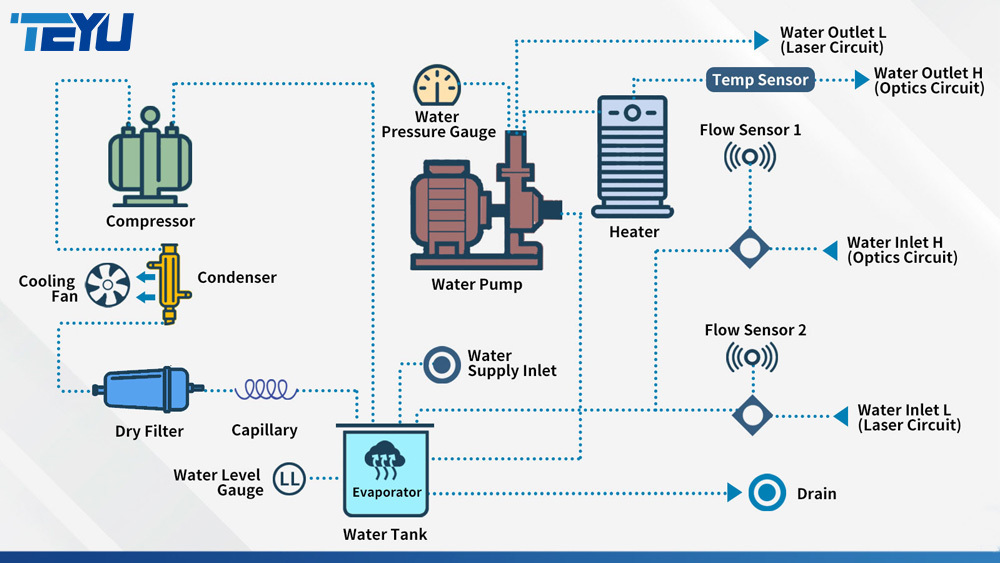
Credit: www.teyuchiller.com

Credit: enginesworld.com
Frequently Asked Questions
What Is The Purpose Of Water Circulation In Cooling Systems?
Water circulation moves heat away from equipment by transporting warm water to coolers. This maintains optimal operating temperatures and prevents overheating, ensuring system efficiency and longevity.
How Does Water Cooling Improve System Performance?
Water cooling efficiently removes heat from components, lowering temperatures faster than air cooling. This leads to better performance, reduced energy use, and increased hardware lifespan.
What Are Common Water Circulation Methods In Cooling?
Common methods include pump-driven closed loops and natural convection. Closed loops circulate water continuously, while convection relies on temperature differences to move water and dissipate heat.
Why Is Regular Maintenance Important For Water Cooling Systems?
Regular maintenance prevents blockages, leaks, and corrosion in pipes and pumps. This ensures consistent water flow and effective cooling, avoiding costly repairs and system downtime.
Conclusion
Water circulation and cooling keep machines and engines safe from heat. Good flow moves heat away fast. This stops damage and keeps things working well. Choosing the right system helps save energy and costs. Regular checks find problems early and fix them.
Clear water and clean parts improve the whole process. Understanding how water moves and cools helps you make smart choices. Stay aware, keep systems clean, and enjoy smooth operation every day. Simple steps lead to better cooling and longer machine life.