
Keeping saltwater fish healthy and happy starts with one crucial factor: the right tank conditions. If you want your underwater friends to thrive, you need to create an environment that matches their natural habitat as closely as possible.
But what exactly does that mean for you and your tank? How can you make sure your fish are swimming in the best water, with the perfect temperature, salinity, and cleanliness? This guide will walk you through everything you need to know to set up and maintain proper tank conditions.
By the end, you’ll feel confident in giving your saltwater fish the home they deserve—and watch them flourish like never before. Keep reading to unlock the secrets to a thriving saltwater aquarium!
Choosing The Right Tank
Setting up a saltwater fish tank starts with picking the right tank. The tank must fit your space and the needs of your fish.
Choosing the right tank helps keep fish healthy and happy. This guide covers tank size, shape, and materials.
Tank Size And Shape
Tank size affects water quality and fish health. Bigger tanks hold water more stable and reduce stress for fish.
- Choose a tank at least 20 gallons for beginners.
- Long tanks provide more surface area for oxygen exchange.
- Taller tanks may have less oxygen at the bottom.
- Consider the number and size of fish you want to keep.
- Make sure the tank fits well in your chosen space.
Material Considerations
| Material | Advantages | Disadvantages |
| Glass | Scratch-resistant, clear, easy to clean | Heavier, can break if dropped |
| Acrylic | Lighter, impact-resistant, better insulation | Scratches easily, needs special cleaner |
| Plastic | Cheap, lightweight | Less clear, can warp over time |
Pick a material that matches your budget and care routine. Glass suits most saltwater tanks, but acrylic works well for large tanks.
Water Quality Essentials
Keeping the right water quality is vital for saltwater fish health. This involves maintaining specific conditions in the tank to ensure fish thrive.
Learn how to manage salinity, pH, temperature, and toxic substances to create an ideal environment for your saltwater fish.
Salinity Levels
Salinity measures the salt concentration in water. Saltwater fish need the right salinity to survive. Typical salinity for a saltwater tank is between 1.020 and 1.025 specific gravity.
- Use a hydrometer or refractometer to measure salinity.
- Adjust salinity with marine salt mixes.
- Check salinity levels weekly.
Ph Balance
pH balance is crucial for fish health. The ideal pH for most saltwater fish ranges from 8.1 to 8.4. Maintaining this balance supports fish immune systems.
Temperature Control
Temperature directly affects fish metabolism and behavior. Most saltwater fish prefer temperatures between 75°F and 82°F. Use a reliable aquarium heater to maintain this range.
Ammonia, Nitrite, And Nitrate Levels
Ammonia, nitrite, and nitrate are toxic to fish. These compounds must be minimized for a healthy tank. Regular testing helps keep these levels low.
| Compound | Safe Level |
| Ammonia | 0 ppm |
| Nitrite | 0 ppm |
| Nitrate | <20 ppm |
Filtration And Circulation
Proper filtration and circulation keep saltwater fish healthy. Clean water removes waste and toxins. Good flow provides oxygen and helps fish swim.
Choosing the right filter and keeping water moving are key. Regular care keeps the tank safe and clear.
Types Of Filters
There are several filters to use in saltwater tanks. Each has a special job to clean the water.
- Mechanical filterscatch debris and particles.
- Chemical filtersremove chemicals and odors.
- Biological filtersuse beneficial bacteria to break down waste.
- Protein skimmersremove organic waste before it breaks down.
Maintaining Water Flow
Water circulation is vital for oxygen and health. Pumps and powerheads create steady flow in the tank.
| Tool | Purpose |
| Powerhead | Creates strong water currents |
| Wave maker | Simulates natural ocean waves |
| Return pump | Moves water from the filter back to the tank |
Cleaning And Maintenance
Regular cleaning keeps filters and pumps working well. It stops buildup that can harm fish.
- Rinse filter media with tank water, not tap water.
- Check pumps for blockages each week.
- Replace chemical filter cartridges as needed.
- Clean protein skimmer collection cups often.

Credit: reefcoaquariums.com
Lighting For Saltwater Tanks
Lighting plays a vital role in the health of saltwater fish and corals. Proper lighting mimics natural conditions and helps maintain a balanced environment.
Choosing the right light spectrum and timing supports the growth of plants and coral, and keeps fish active and healthy.
Light Spectrum And Intensity
Saltwater tanks need light that matches the natural ocean environment. Blue and white light are important for coral growth and fish well-being.
- Blue light helps simulate deep ocean conditions.
- White light supports natural colors of fish and corals.
- Strong light intensity encourages photosynthesis in corals.
- Too much light can cause algae growth and stress fish.
Photoperiod Timing
Keeping a regular light schedule is key for saltwater tank health. Fish and corals need periods of light and darkness like in nature.
| Time | Lighting | Purpose |
|---|---|---|
| 8:00 AM – 12:00 PM | Full Spectrum Light | Stimulates coral photosynthesis and fish activity |
| 12:00 PM – 4:00 PM | Blue Light | Mimics ocean depth and reduces stress |
| 4:00 PM – 8:00 PM | Dim Light | Prepares fish for night rest |
| 8:00 PM – 8:00 AM | Lights Off | Rest period for fish and corals |
Substrate And Decorations
Choosing the right substrate and decorations is key for a healthy saltwater fish tank. These elements affect water quality and fish behavior.
Proper substrate and decorations create a natural and safe environment for your fish to thrive.
Choosing Suitable Substrate
The substrate is the material that covers the bottom of the tank. It influences tank cleanliness and fish comfort. Common substrates include sand, crushed coral, and aragonite.
- Sand is gentle for bottom-dwelling fish and easy to clean.
- Crushed coral helps keep pH levels stable by buffering acidity.
- Aragonite is good for tanks with sensitive fish needing calcium.
- Avoid sharp or toxic materials that can harm fish or alter water chemistry.
Live Rock And Coral Placement
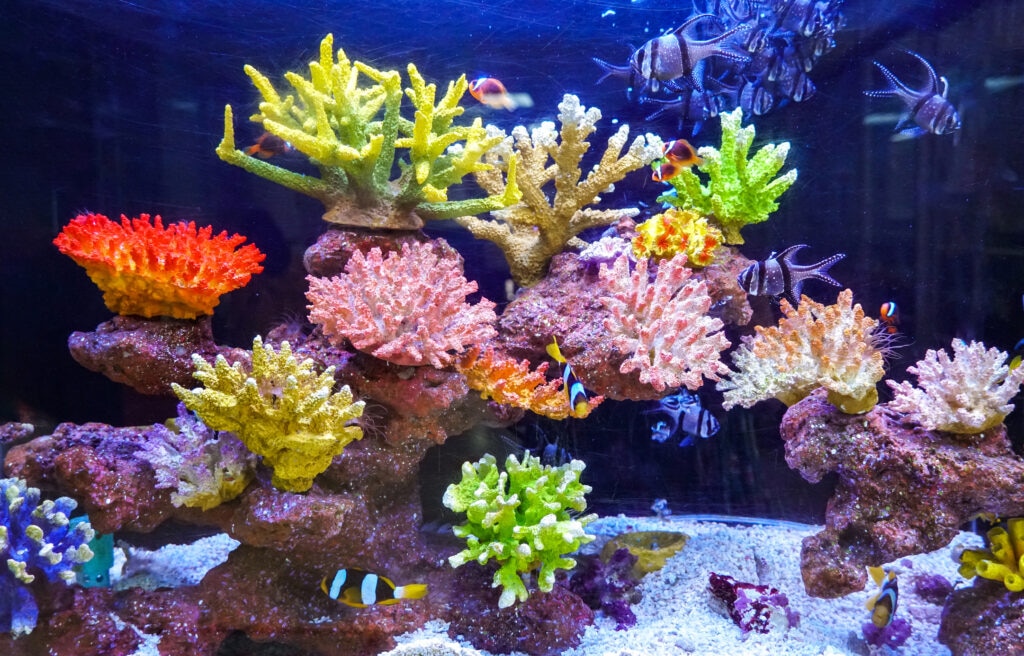
Live rock and coral are important decorations. They provide hiding spots and help maintain water quality by hosting beneficial bacteria.
| Placement Area | Purpose |
| Near tank bottom | Provides shelter and territory |
| Mid-level stacking | Creates swim-through spaces |
| Top areas | Supports coral growth and light access |
Credit: www.chewy.com
Feeding And Nutrition
Proper feeding and nutrition are vital for saltwater fish health. Good nutrition supports growth and bright colors.
Understanding diet types, feeding times, and supplements helps keep your fish strong and active.
Diet Types
Saltwater fish eat different diets based on their species. Some are carnivores, others herbivores, or omnivores.
Feed your fish a diet matching their natural food to keep them healthy and happy.
- Carnivores:Eat meat like shrimp, fish, and krill.
- Herbivores:Eat algae and plant matter.
- Omnivores:Eat both plants and small animals.
Feeding Frequency
Feed your saltwater fish small meals multiple times each day. Overfeeding can harm water quality.
Young fish need more frequent feeding than adults to support growth.
- Feed juvenile fish 2-3 times daily.
- Adult fish usually need feeding once or twice a day.
- Remove uneaten food to keep the tank clean.
Supplements And Vitamins
Supplements boost your fish’s immune system and improve their color. Vitamins help keep their bodies strong.
Use supplements designed for saltwater fish to avoid harming the tank environment.
- Vitamin C supports healing and growth.
- Omega-3 fatty acids improve skin and scales.
- Calcium helps build strong bones and shells.
Tank Monitoring Tools
Maintaining the right conditions in a saltwater fish tank is very important. Monitoring tools help keep water safe and healthy. These tools check water quality and tank environment.
Using the right tools lets you catch problems early. This keeps your fish safe and happy. Let’s look at two key tools for tank monitoring.
Water Testing Kits
Water testing kits measure important chemicals in the tank. They check levels of ammonia, nitrites, nitrates, and pH. These chemicals affect fish health.
- Test water weekly to track changes.
- Use color charts to read results clearly.
- Replace kits regularly to ensure accuracy.
- Follow instructions carefully for best results.
Temperature And Salinity Monitors
Temperature and salinity are vital for saltwater fish. Too hot or cold water stresses fish. Wrong salinity can harm their health. Monitors keep these factors steady.
| Monitor Type | What it Measures | Why it Matters |
| Thermometer | Water temperature | Prevents stress and illness |
| Salinity Meter | Salt concentration | Keeps fish comfortable |
| Digital Monitor | Temperature and salinity | Provides quick, clear readings |
Common Problems And Solutions
Keeping a saltwater fish tank healthy needs good care. Many problems can happen in these tanks.
Knowing common issues and how to fix them helps fish stay safe and happy.
Algae Growth Control
Algae can grow fast in saltwater tanks. Too much algae makes the tank look dirty.
Algae also use up oxygen and block light for fish and plants.
- Keep tank light on for 8 to 10 hours daily only
- Use algae-eating fish or snails to control growth
- Change water regularly to reduce nutrients algae need
- Clean tank walls and decorations often
Disease Prevention
Diseases can spread quickly in saltwater tanks. Sick fish may lose color or stop eating.
Keep fish healthy by testing water and watching for signs of illness.
- Quarantine new fish before adding to the tank
- Keep water clean with regular changes and good filtration
- Remove sick fish to prevent spreading diseases
- Feed balanced food to boost fish immune systems
Stress Reduction Techniques
Fish get stressed from loud noises, sudden changes, or poor water quality. Stress makes fish weak.
Reduce stress by creating a calm and stable environment for fish.
- Keep tank in a quiet place away from direct sunlight
- Maintain stable water temperature and conditions
- Provide hiding places with rocks or plants
- Avoid overcrowding the tank with too many fish
Routine Maintenance Tips
Keeping a saltwater fish tank healthy needs regular care. Routine maintenance helps keep fish safe and water clean.
Simple daily and weekly tasks can prevent problems and keep the tank stable for your fish.
Regular Water Changes
Changing water often removes waste and keeps salt levels balanced. This keeps fish healthy and water clear.
Replace 10 to 20 percent of tank water every one to two weeks. Use clean, salt-mixed water at the right temperature.
- Use a siphon to remove debris from the tank bottom
- Mix saltwater properly before adding it
- Match new water temperature to tank water
- Test water parameters after changes
Equipment Checks
Check all equipment often to make sure it works well. Filters, heaters, and lights keep the tank stable.
Look for clogs, leaks, or broken parts. Fix or replace broken items fast to avoid stress to fish.
- Clean or replace filter media regularly
- Check heater temperature and settings
- Inspect lights and timers for proper function
- Test air pumps and water flow
Record Keeping
Write down water tests, changes, and equipment checks. Records help track tank health over time.
Good notes make spotting problems easier. Keep dates and results clear for quick review.
- Record date and amount of water changed
- Note water test results like pH and salinity
- Log equipment maintenance and issues
- Track fish health and behavior changes

Credit: onthemediapk.medium.com
Frequently Asked Questions
What Are Ideal Water Parameters For Saltwater Fish Tanks?
Ideal water parameters include a temperature of 75-82°F, pH between 8. 1-8. 4, salinity at 1. 020-1. 025 specific gravity, and ammonia, nitrite at 0 ppm. Maintaining stable conditions ensures healthy saltwater fish and prevents stress or disease.
How Often Should Saltwater Tank Water Be Tested?
Test water weekly for pH, salinity, ammonia, nitrite, and nitrate levels. Regular testing helps detect imbalances early and keeps the tank environment safe for fish.
What Is The Best Filtration System For Saltwater Fish Tanks?
A combination of mechanical, biological, and chemical filtration works best. Protein skimmers and live rock enhance water quality by removing organic waste and promoting beneficial bacteria growth.
How Frequently Should Saltwater Fish Tanks Be Cleaned?
Perform partial water changes of 10-20% every 1-2 weeks. Clean algae from glass and remove debris to maintain water quality and a healthy habitat for fish.
Conclusion
Proper tank conditions keep saltwater fish healthy and happy. Clean water, stable temperature, and good filtration matter most. Regular checks help spot problems early. Balanced salt levels and proper lighting support fish well-being. Feeding fish the right food also plays a key role.
Small efforts daily make a big difference over time. Enjoy watching your vibrant saltwater fish thrive in a safe home. Care and attention bring a beautiful underwater world to life.