
Are you ready to transform your aquarium into a breathtaking underwater paradise? Natural aquascaping design ideas can help you create a vibrant, calming space that feels alive and refreshing.
Imagine your tank filled with lush plants, carefully placed stones, and flowing water that mimics nature itself. You’ll discover simple yet stunning ways to bring the beauty of the outdoors right into your home. Keep reading to unlock secrets that will make your aquascape not just a hobby, but a true masterpiece you’ll be proud to show off.
Choosing Plants For Natural Aquascapes
Plants are key to creating a natural aquascape. They add life and beauty to your underwater world.
Selecting the right plants helps keep your tank healthy and looks great over time.
Low-maintenance Options
Some plants need less care and grow well in many conditions. These are great for beginners or busy hobbyists.
Low-maintenance plants help keep your aquascape simple and beautiful without much effort.
- Anubias – grows slowly and tolerates low light
- Java Fern – easy to attach to rocks or wood
- Cryptocoryne – adapts to many water types
- Amazon Sword – large leaves and hardy growth
- Vallisneria – creates tall grass-like plants
Colorful Plant Varieties
Adding colorful plants makes your aquascape lively and eye-catching. Use different colors to add contrast.
Red and purple plants work well with green ones to create a natural look with variety.
- Rotala – bright red stems and leaves
- Ludwigia – orange to red shades
- Alternanthera – deep red and purple tones
- Cabomba – fine green leaves with a hint of red
- Hygrophila – green with purple edges
Creating Plant Layers
Layering plants by size and shape creates depth in your aquascape. Place tall plants in the back and short ones in front.
This technique helps mimic natural habitats and makes your tank look full and balanced.
- Tall plants like Vallisneria or Amazon Sword go in the back
- Medium plants such as Cryptocoryne fit in the middle
- Short plants like Java Moss or Anubias stay in front
- Use ground cover plants to fill empty spaces

Credit: buceplant.com
Selecting Substrate And Hardscape
Natural aquascaping uses plants, rocks, and wood to create a beautiful underwater scene. Choosing the right substrate and hardscape is key for a healthy and attractive tank.
The substrate supports plant roots and helps keep the tank clean. Hardscape items like rocks and driftwood add structure and interest to your design.
Types Of Substrates
Substrate comes in different types for different needs. Choose one that fits your plants and aquarium style.
Some substrates help plants grow better by providing nutrients. Others focus on looking natural or keeping water clear.
- Gravel: Small stones, good for most plants and fish
- Sand: Fine texture, looks natural but can compact easily
- Aquarium soil: Rich in nutrients, great for planted tanks
- Clay-based substrates: Help anchor plants and provide minerals
Using Rocks And Driftwood
Rocks and driftwood create the hardscape framework in your aquarium. They add shape and natural beauty to your layout.
Pick rocks and wood that are safe for your fish. Avoid items that change water chemistry or have sharp edges.
- Rocks: Use stones with interesting shapes and textures
- Driftwood: Adds a natural look and provides hiding spots
- Clean all hardscape items before adding them to the tank
- Arrange pieces to create depth and balance in your design
Arranging Natural Elements
Place substrate, rocks, and wood carefully to mimic nature. This helps plants grow well and fish feel safe.
Use layers of substrate to create height. Position rocks and driftwood to make focal points and open spaces.
- Start with a sloped substrate for depth
- Group rocks and wood in odd numbers for a natural look
- Leave open areas for fish to swim
- Balance hardscape with plants for a full, natural feel
Designing Layouts For Depth
Creating depth in aquascaping makes your tank look bigger and more natural. You can use different plants, rocks, and wood to build layers.
Arranging elements well helps guide the viewer’s eye inside the aquarium. This makes the scene feel alive and three-dimensional.
Foreground
The foreground is the front part of your aquascape. Use small plants and fine gravel here to keep it simple.
Low-growing plants help create a soft, green carpet. This draws attention and frames the rest of the layout.
- Use mosses and small grass-like plants
- Keep rocks and wood small or flat
- Keep open spaces for fish to swim
Midground
The midground is the middle area of the tank. Use medium-sized plants and decor to add interest and texture.
Plants that grow upright or bushy work well here. Place rocks or wood that lead the eye toward the background.
- Choose plants with medium height and leaf size
- Arrange rocks to create natural lines
- Keep the midground less crowded than foreground
Background
The background is the farthest part of the aquarium. Use tall plants or large rocks to create a sense of depth.
Dark colors and dense plants make the background look distant. Avoid clutter so the tank does not feel closed in.
- Select tall, bushy plants or branches
- Use darker colors to push back the view
- Keep some open space for light and contrast
Balancing Open Spaces
Open spaces let fish swim freely and make the tank look natural. Too many objects can make it feel crowded.
Balance filled areas with empty spots. This helps create flow and gives the eye places to rest.
- Leave clear areas in foreground and midground
- Avoid placing too many rocks or plants together
- Use open space to highlight key features
Focal Points In Aquascapes
A focal point is the main area that catches attention. It can be a special plant, rock, or wood piece.
Place the focal point off-center for a natural look. Use contrast in color, size, or shape to make it stand out.
- Choose a unique or colorful plant
- Use a large or interesting rock
- Position focal points using the rule of thirds

Credit: www.serpadesign.com
Lighting For Vibrant Growth
Lighting plays a key role in natural aquascaping. It helps plants grow healthy and colorful. Using the right light makes your aquarium look alive and bright.
Good lighting supports photosynthesis. It also improves the overall atmosphere for fish and plants. Choosing the right type of light is important for vibrant growth.
Choosing The Right Spectrum
Plants need specific light colors to grow well. Blue and red spectrums are the most important. Blue light helps leaves grow strong. Red light helps with flowering and color.
- Use full-spectrum LED lights for balanced growth.
- Include blue light for healthy leaf development.
- Use red light to enhance plant colors.
- Avoid lights with too much green as plants reflect this color.
Light Duration Tips
Too much light can harm plants and fish. Too little light slows growth. Keeping the right schedule is key for healthy aquascapes.
| Light Duration | Effect |
| 6 hours | May slow plant growth |
| 8 to 10 hours | Ideal for most plants |
| 12 hours | Risk of algae growth |
Avoiding Algae Growth
Algae grows when light and nutrients are too high. Controlling light helps keep algae low and plants healthy.
- Limit light to 8–10 hours daily.
- Use timers to keep light steady.
- Keep water clean and remove debris.
- Balance nutrients with plant needs.
Maintaining Water Quality
Keeping water clean is key for natural aquascaping. Clear water helps plants and fish stay healthy. Good water quality makes your aquascape look its best.
Use simple steps to maintain water quality. These include filtering water, changing water often, and checking water conditions regularly.
Filtration Techniques
Filters remove waste and dirt from the water. They keep the water clear and safe. There are many types of filters to choose from.
- Mechanical filters trap large particles
- Biological filters use good bacteria to break down waste
- Chemical filters remove toxins and odors
Regular Water Changes
Changing water regularly helps control nitrate and phosphate levels. It also removes pollutants that filters cannot catch. Use clean, conditioned water for changes.
- Change 10 to 20 percent of water weekly
- Use a siphon to clean the substrate during water change
- Match new water temperature with aquarium water
- Avoid using tap water without treatment
Monitoring Parameters
Check water parameters often. This helps catch problems early. Use test kits to measure important values.
| Parameter | Ideal Range |
| pH | 6.5 – 7.5 |
| Ammonia (NH3) | 0 ppm |
| Nitrite (NO2-) | 0 ppm |
| Nitrate (NO3-) | < 20 ppm |
| Temperature | 22 – 28 °C (72 – 82 °F) |
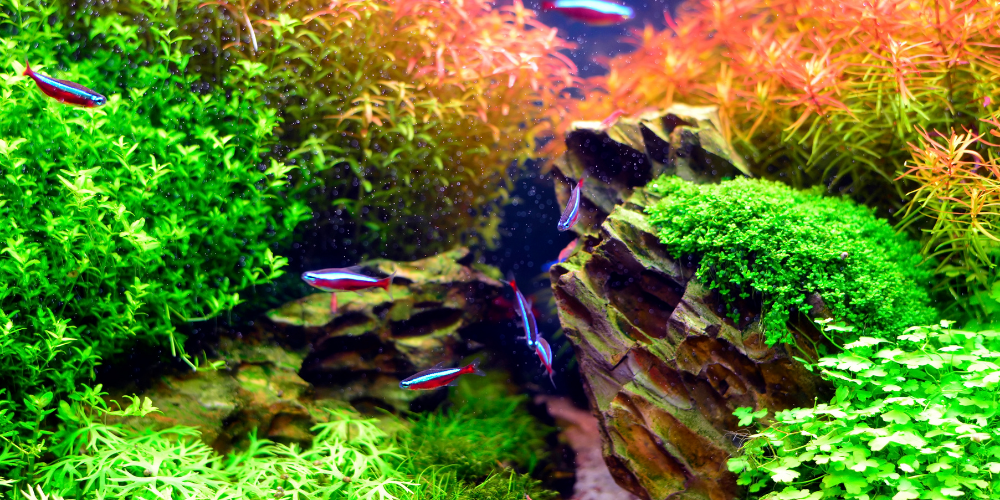
Credit: www.pond-planet.co.uk
Incorporating Aquatic Life
Natural aquascaping creates a beautiful underwater world. It combines plants and aquatic life to form a balanced ecosystem. Adding fish, shrimp, and snails enhances both beauty and function.
Choosing the right aquatic life is essential. It helps maintain harmony and supports plant growth. This guide will help you select compatible species for your aquascape.
Compatible Fish Species
Fish add movement and color to your aquascape. Choose species that do not disturb plants. Peaceful fish are best for planted aquariums.
- Tetras: Small and colorful, they swim in groups.
- Guppies: Easy to care for and lively.
- Rasboras: Peaceful and good for beginners.
Shrimp And Snails
Shrimp and snails help keep your tank clean. They eat algae and leftover food. These creatures are small but very useful.
- Cherry Shrimp: Bright red and easy to breed.
- Amano Shrimp: Excellent algae eaters.
- Nerite Snails: Do not reproduce in freshwater.
Balancing Ecosystem
A balanced ecosystem is vital for a thriving aquascape. Each creature has a role in this balance. Fish, shrimp, and snails contribute to a healthy environment.
Ensure the tank has enough plants and space. This prevents overcrowding and stress. Regular maintenance keeps the ecosystem stable.
| Task | Frequency |
| Check water parameters | Weekly |
| Clean tank and change water | Bi-weekly |
Creative Layout Inspirations
Designing a natural aquascape brings peace and beauty to any space. Discover these creative layout inspirations for your aquascaping projects.
Explore themes that mimic nature’s landscapes, from majestic mountains to serene rivers.
Mountain And Valley Themes
Mountain and valley themes create dramatic elevations and textures. Use rocks and plants to mimic towering peaks and lush valleys.
Riverbed And Forest Styles
Riverbed and forest styles capture the essence of flowing water and dense vegetation. Arrange stones and driftwood to form natural river paths.
- Use smooth pebbles for a realistic riverbed
- Select tall plants to mimic forest canopies
- Incorporate moss for a touch of greenery
Zen And Minimalist Designs
Zen and minimalist designs focus on simplicity and balance. These layouts use fewer elements to create a calm, open space.
| Element | Purpose |
| White Sand | Symbolizes purity |
| Bamboo | Represents strength |
| Rocks | Signifies stability |
Frequently Asked Questions
What Are Natural Aquascaping Design Ideas?
Natural aquascaping mimics real aquatic environments using plants, rocks, and wood. It creates a balanced, organic look. Popular styles include Iwagumi, Jungle, and Dutch aquascapes. Using native plants and natural materials enhances realism and fish comfort. This approach promotes a healthy, sustainable aquarium ecosystem.
How Do I Choose Plants For Natural Aquascaping?
Select plants that thrive in your aquarium’s lighting and water conditions. Use a variety of heights and textures for depth. Fast-growing plants help control algae. Popular choices include Java fern, Anubias, and Cryptocoryne. Always research plant compatibility with your fish species for best results.
What Materials Are Best For Natural Aquascaping?
Use natural rocks, driftwood, and substrate like sand or gravel. Avoid sharp or chemically treated materials. Driftwood adds texture and tannins, enhancing water quality. Rocks create structure and focal points. Choose materials that blend well and support plant rooting for a stable layout.
How Can I Maintain A Natural Aquascape?
Regular water changes and trimming keep plants healthy and prevent algae. Monitor water parameters like pH and hardness. Use CO2 injection if needed for plant growth. Clean substrate gently to avoid disturbing roots. Patience and consistency are key to a thriving natural aquascape.
Conclusion
Natural aquascaping brings calm and beauty to any space. Simple plants and stones create a peaceful underwater world. Small details make your design unique and alive. Try different layouts to find what fits your style. Keep it balanced and natural for the best look.
Enjoy the process and watch your aquarium grow. Natural aquascaping is a relaxing hobby anyone can try. Let nature guide your creativity and have fun.