
If you want your marine tank to thrive, live copepods might be the secret ingredient you’re missing. These tiny creatures play a huge role in keeping your tank healthy and balanced.
Whether you’re a beginner or an experienced aquarist, understanding how live copepods work can transform your tank’s ecosystem. Keep reading to discover why live copepods are essential for your marine setup and how they can make a real difference in the life of your aquatic friends.

Credit: www.amazon.com
Benefits Of Live Copepods
Live copepods are tiny crustaceans that thrive in marine tanks. They serve many important roles in aquarium care.
These small creatures help maintain a healthy and balanced environment for marine life.
Natural Food Source
Live copepods are a natural food for many marine animals. Fish, corals, and shrimp eat them for nutrition.
They provide essential proteins and fats that help aquatic creatures grow strong and stay healthy.
- Rich in nutrients
- Easy to digest
- Supports natural feeding habits
Enhancing Biodiversity
Copepods increase the variety of life in a marine tank. They add to the small animal population.
This diversity helps create a balanced ecosystem where many species can live and thrive.
- Boosts ecosystem balance
- Supports different species
- Encourages natural behaviors
Improving Water Quality
Copepods feed on waste, leftover food, and tiny particles. This helps keep the water clean.
Cleaner water lowers harmful substances, making the tank safer for all marine life.
- Removes detritus and debris
- Reduces harmful bacteria
- Maintains clearer water

Credit: www.amazon.com
Choosing The Right Copepods
Live copepods are tiny crustaceans that help keep marine tanks healthy. They serve as natural food for many fish and invertebrates. Picking the right copepods improves your tank’s balance and vitality.
It is important to know which species fit your tank size and the creatures you keep. Also, finding a reliable source will ensure you get healthy copepods that survive well.
Species Suitable For Marine Tanks
Many copepod species thrive in marine tanks. Some species help clean the water by eating detritus. Others serve as food for fish and corals. Choose species that match your tank’s conditions.
- Tisbe spp.– Small, fast breeders good for nano tanks.
- Amphiascus spp.– Hardy species that tolerate various conditions.
- Oithona spp.– Excellent for feeding filter feeders.
- Paracalanus spp.– Commonly used as live food in marine systems.
Size And Compatibility
Copepod size affects which tank inhabitants can eat them. Small copepods suit tiny fish and corals. Larger species feed bigger predators. Ensure copepods and tank animals do not compete for food.
| Copepod Species | Average Size | Compatible Tank Inhabitants |
|---|---|---|
| Tisbe spp. | 0.5 – 1 mm | Small fish, corals, shrimps |
| Amphiascus spp. | 0.6 – 1.2 mm | Medium fish, filter feeders |
| Oithona spp. | 0.4 – 0.7 mm | Corals, small fish larvae |
| Paracalanus spp. | 0.7 – 1.5 mm | Fish fry, larger corals |
Where To Source Copepods
Buying copepods from trusted suppliers gives you healthy cultures. You can also start your own culture at home. Proper care and feeding help maintain a steady population for your tank.
- Reputable aquarium stores with live cultures
- Online vendors specializing in live marine food
- DIY cultures using seawater and algae
- Local hobbyist groups sharing cultures
Setting Up A Copepod Culture
Copepods are tiny crustaceans that live in marine tanks. They help keep tanks clean by eating waste and serve as food for fish. Setting up a copepod culture is simple and rewarding.
This guide covers the tank needs, water settings, and feeding tips for healthy copepods.
Tank Requirements
Choose a small tank or container to start your copepod culture. It should have a lid to prevent evaporation and contamination. A size of 5 to 10 gallons works well.
- Use a tank made of glass or clear plastic
- Provide gentle water movement with an air stone or small pump
- Keep the tank away from direct sunlight
- Use a fine mesh to prevent other creatures from entering
Water Parameters
Maintain stable water conditions to support copepod growth. They thrive in saltwater that mimics ocean conditions.
| Parameter | Ideal Range |
| Temperature | 22°C to 26°C (72°F to 79°F) |
| Salinity (Specific Gravity) | 1.020 to 1.025 |
| pH | 8.0 to 8.4 |
| Ammonia | 0 ppm |
| Nitrite | 0 ppm |
| Nitrate | Below 10 ppm |
Feeding Your Copepods
Copepods need food to reproduce and grow. Feed them small amounts regularly to keep the culture healthy.
Best food options include:
- Phytoplankton (live or powdered)
- Algae wafers, crushed into small pieces
- Yeast mixed with water
- Commercial copepod food pellets
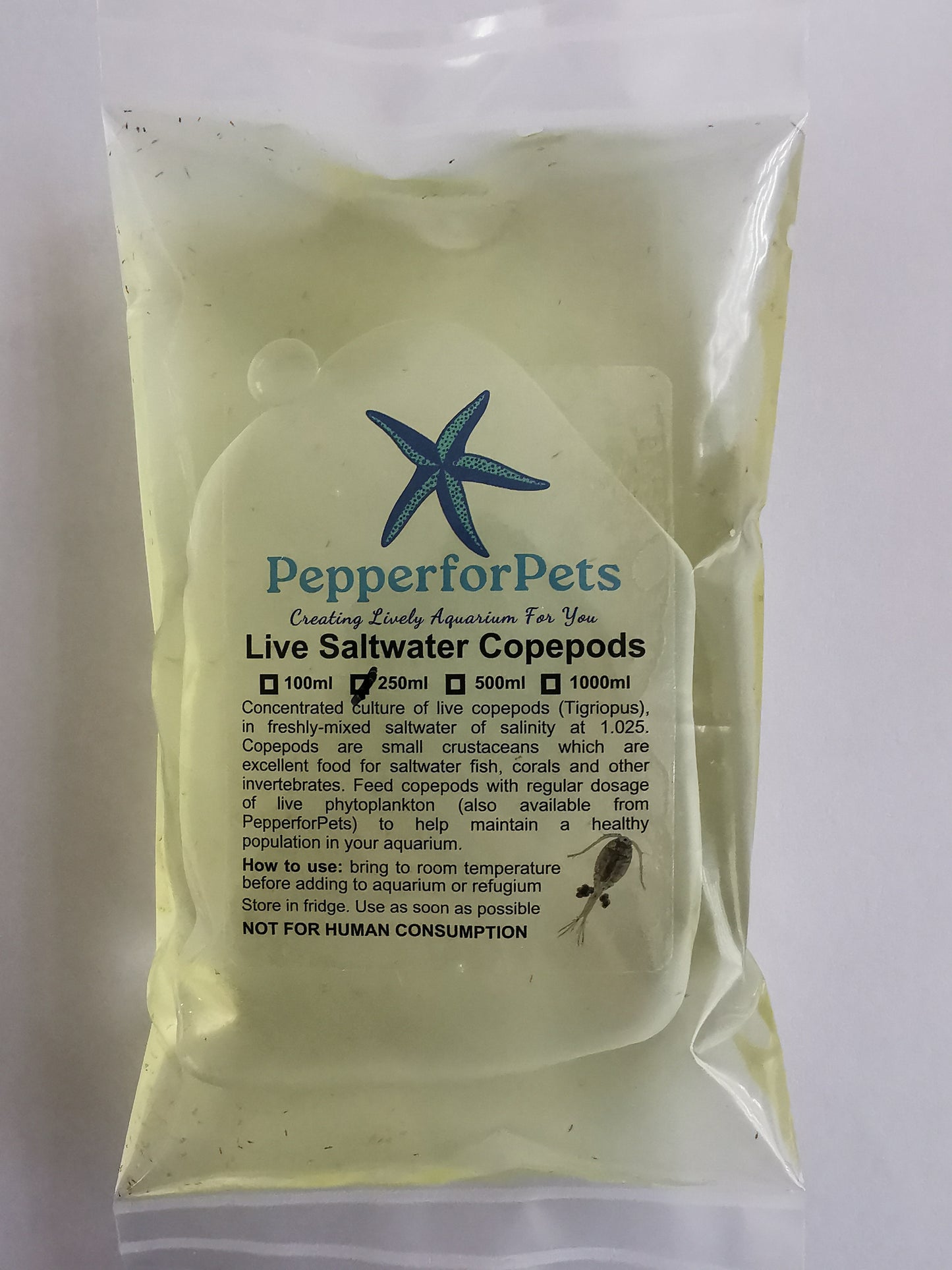
Credit: www.pepperforpets.co.uk
Maintaining A Healthy Population
Live copepods are vital for marine tanks. They serve as natural food and help keep the tank balanced. Maintaining their population ensures your tank stays healthy and thriving.
Proper care and attention support steady growth. Watching their numbers and environment helps prevent issues early. This guide covers key ways to keep copepods healthy.
Monitoring Growth
Check your copepod population regularly. Count them in different tank areas to track changes. Look for steady growth or signs of decline. Use a magnifying glass for better views.
- Sample water from various tank spots.
- Place samples on a clear dish for counting.
- Record the number of copepods seen.
- Compare counts over days or weeks.
- Adjust tank conditions if numbers drop.
Preventing Contamination
Keep the tank water clean to avoid harmful bacteria or algae. Use filtered water and clean feeding tools. Quarantine new plants or animals before adding them to the tank.
| Contamination Source | Prevention Method |
|---|---|
| Dirty Water | Use filtered or RO water only |
| Unclean Tools | Sanitize before use |
| New Tank Additions | Quarantine for 2 weeks |
| Excess Feed | Feed small amounts, remove leftovers |
Balancing Predators And Prey
Copepods must have enough food and safe space. Predators in the tank can reduce their numbers quickly. Watch predator types and keep the balance fair.
- Feed copepods with phytoplankton or algae.
- Limit predators like small fish or shrimp.
- Add hiding spots using plants or rocks.
- Remove aggressive predators if needed.
Integrating Copepods Into Your Marine Tank
Copepods are tiny crustaceans that help keep marine tanks healthy. They serve as a natural food source and improve water quality. Adding copepods can support fish and invertebrates in your tank.
Introducing copepods correctly is important to avoid stress on your marine life. Follow simple steps to make sure they settle well and benefit your tank ecosystem.
Introducing Copepods Safely
Before adding copepods, check your water parameters. Stable temperature and salinity help them survive. Avoid chemicals that can harm them.
- Quarantine new copepods to prevent pests
- Acclimate slowly to tank water
- Introduce at night to reduce stress
- Keep tank stable during introduction
Feeding Fish And Invertebrates
Copepods serve as live food for many marine animals. They provide essential nutrients that support growth and health.
| Marine Animal | Feeding Behavior | Benefits of Copepods |
| Clownfish | Hunts small live prey | Improves coloration and energy |
| Mandarinfish | Feeds on tiny crustaceans | Supports natural diet and digestion |
| Corals | Filter feeds particles | Enhances growth and polyp extension |
Encouraging Natural Behavior
Copepods help fish and invertebrates act naturally. They encourage hunting and foraging, which reduces stress and boredom.
Tips to encourage natural behavior:
- Keep low light levels during feeding
- Provide hiding places for prey and predators
- Feed small amounts often to mimic nature
- Observe animal interaction with copepods
Common Challenges And Solutions
Keeping live copepods in marine tanks can be tricky. These tiny creatures are vital for maintaining a balanced tank ecosystem.
Understanding common challenges can help you keep them healthy. Let’s explore some common issues and their solutions.
Dealing With Die-offs
Die-offs can occur if copepods do not get enough food or if conditions are not stable. They need a consistent supply of nutrients to thrive.
- Ensure a steady supply of phytoplankton.
- Keep the water temperature stable.
- Avoid sudden changes in water salinity.
Algae Overgrowth
Too much algae can be a problem. It can use up nutrients needed by copepods and cause oxygen levels to drop.
| Action | Benefit |
| Reduce light exposure | Limits algae growth |
| Add algae-eating species | Controls algae naturally |
| Regular tank cleaning | Prevents algae buildup |
Water Quality Fluctuations
Water quality changes can stress copepods. Monitoring and maintaining stable conditions is key.
Use a reliable water testing kit to check:
- pH levels
- Salinity
- Ammonia and nitrate levels
Adjust with care to keep copepods healthy.
Advanced Tips For Thriving Ecosystems
Live copepods are small crustaceans that enhance marine tank ecosystems. They provide essential nutrition for fish and corals.
These creatures help maintain water quality and balance. Learn advanced tips to make them thrive in your marine tank.
Supplementing Nutrition
Copepods need a balanced diet to flourish. Supplement their nutrition with phytoplankton and microalgae.
Ensure a continuous food source by cultivating these organisms at home. This keeps your copepods healthy and active.
- Use liquid phytoplankton for easy feeding
- Rotate different algae types for variety
- Monitor food levels regularly
Optimizing Lighting
Proper lighting is essential for copepod survival. They thrive under specific light conditions.
Adjust your tank lights to mimic natural sunlight. This encourages copepod reproduction and growth.
- Use full-spectrum LED lights
- Set a consistent light schedule
- Ensure dark periods for rest
Using Live Rock And Substrate
Live rock and substrate create natural habitats. They provide surfaces for copepods to hide and breed.
Choose porous rocks and fine substrate to maximize surface area. This helps maintain a healthy copepod population.
- Arrange rocks to form caves
- Mix different substrate textures
- Regularly check for cleanliness
Frequently Asked Questions
What Are Live Copepods For Marine Tanks?
Live copepods are tiny crustaceans used as natural food in marine aquariums. They improve tank health and provide nutrition for fish and corals.
How Do Live Copepods Benefit Marine Tank Ecosystems?
Copepods enhance water quality by consuming detritus and algae. They serve as a vital food source, promoting a balanced and thriving marine environment.
Can Live Copepods Reproduce In Home Aquariums?
Yes, live copepods can reproduce in well-maintained tanks. A stable environment with proper flow and food supports their continuous population growth.
How To Introduce Live Copepods Into A Marine Tank?
Add copepods gently to avoid stress. Release them near live rock or coral areas to encourage natural distribution and feeding behavior.
Conclusion
Live copepods bring many benefits to marine tanks. They help keep water clean and provide food for fish. Copepods support a healthy tank environment naturally. Adding live copepods can improve fish health and growth. They are easy to care for and breed in tanks.
Small but powerful helpers for any marine aquarium. Consider live copepods for a balanced and thriving tank.