
Are you setting up your first planted aquarium and wondering how to choose the right lighting? You might think any light will do, but the truth is, lighting can make or break the health of your plants.
The right light helps your plants grow strong, stay green, and create a beautiful underwater world. You’ll discover simple tips to pick the perfect lighting for your aquarium. By the end, you’ll feel confident to give your plants the light they need to thrive.
Keep reading to turn your aquarium into a vibrant, living masterpiece!
Choosing The Right Light
Lighting is key for a healthy planted aquarium. It helps plants grow and look bright. Picking the right light can seem hard for beginners.
This guide explains types of lights, light intensity and spectrum, and energy use. These points help you choose the best light for your tank.
Types Of Aquarium Lights
There are several common lights for planted tanks. Each has different benefits and costs. Knowing these helps you pick one that fits your needs.
- Fluorescent Lights: Good for low to medium light plants. They are affordable and easy to find.
- LED Lights: Popular choice. They use less energy and last longer. Many have adjustable colors.
- Metal Halide Lights: Very bright and good for deep tanks. They use more power and create more heat.
- CFL Lights: Compact fluorescent lights are small and bright. They work well for small tanks.
Light Intensity And Spectrum
Plants need the right light strength and color to grow well. Intensity means how bright the light is. Spectrum means the colors of light it gives.
| Light Feature | Details |
| Intensity | Measured in lumens or PAR. Higher for dense or tall plants. |
| Spectrum | Full spectrum or 6500K is best for photosynthesis. |
| Duration | 8 to 10 hours daily is ideal for most plants. |
Energy Efficiency Considerations
Energy use affects your electric bill and how long the light lasts. Efficient lights save money and reduce heat in the tank.
- LED lights use the least power and last many years.
- Fluorescent lights are less efficient but cheaper upfront.
- Metal halide lights consume a lot of energy and may need extra cooling.
- Choose a timer to control light hours and save energy.
Duration And Timing
Lighting is key for planted aquariums to grow healthy plants. The right duration and timing help plants get enough light.
Too much or too little light can harm your aquarium ecosystem. Let’s look at how to set the best light schedule.
Optimal Lighting Hours
Most planted aquariums need 8 to 10 hours of light daily. This range supports photosynthesis without causing algae growth.
- Start with 8 hours if new to planted tanks
- Increase to 10 hours for faster plant growth
- Reduce lighting if algae starts to appear
- Adjust based on plant species and tank conditions
Using Timers For Consistency
Timers keep your aquarium lighting consistent every day. Plants benefit from a stable light cycle like they do in nature.
Set your timer to turn lights on and off at the same time. This avoids stress for plants and fish.
| Time | Action |
|---|---|
| 7:00 AM | Lights ON |
| 5:00 PM | Lights OFF |
Balancing Light And Dark Periods
Plants need darkness to rest and perform night-time processes. Balance light and dark to keep plants healthy.
- Provide 8–10 hours of light daily
- Allow 14–16 hours of darkness
- Keep the dark period free from any light leaks
- Use blackout covers if room light affects your tank
Impact On Plant Growth
Lighting plays a key role in planted aquariums. It helps plants grow strong and healthy. Without enough light, plants may not survive.
Choosing the right light affects how well plants can perform photosynthesis. It also influences the overall look of your aquarium.
Photosynthesis Basics
Plants use light to make food through photosynthesis. They take in carbon dioxide and water and create oxygen and energy.
Light provides the energy plants need to grow leaves, stems, and roots. Without light, plants cannot make food and will weaken.
Light Requirements For Common Plants
Different plants need different amounts of light. Some plants do well with low light. Others need bright light to thrive.
- Anubias: low to medium light
- Java Fern: low to medium light
- Amazon Sword: medium to high light
- Rotala: high light
Choose plants that match your aquarium’s light level. This helps plants grow without extra effort.
Preventing Algae Overgrowth
Too much light can cause algae to grow fast. Algae can cover plants and block light, hurting plant growth.
Control light duration and intensity to keep algae in check. Use a timer to give plants a steady light cycle.
- Limit lighting to 8-10 hours a day
- Use moderate light intensity for your plants
- Remove algae manually if it appears
- Keep water clean with regular changes

Credit: www.amazon.ca
Setting Up Your Aquarium Lighting
Lighting is very important for planted aquariums. It helps plants grow and stay healthy.
Choosing the right light and setting it up well will make your plants thrive in your aquarium.
Positioning Lights Effectively
Place your lights above the aquarium to cover all plants evenly. Avoid dark spots where plants get little light.
Use adjustable light fixtures to change the height or angle. This helps give light to all parts of the tank.
- Keep lights 6 to 12 inches above the water surface
- Use reflectors to focus light downward
- Check for shadows and move lights if needed
Combining Lighting With Co2 And Fertilizers
Plants need more than light to grow well. Carbon dioxide (CO2) and fertilizers help plants use light better.
When you add CO2 and fertilizers, you can increase light levels safely. This leads to faster, healthier plant growth.
- Use CO2 injection to boost plant photosynthesis
- Add liquid or root fertilizers regularly
- Balance light, CO2, and nutrients to avoid algae
Adjusting Light Based On Plant Needs
Different plants need different amounts of light. Adjust your lighting time and intensity to fit each plant type.
Low-light plants need less light, while high-light plants need stronger and longer light periods.
- Start with 6 to 8 hours of light daily
- Increase light for plants that grow fast or need more light
- Watch plant color and growth to adjust light settings
Troubleshooting Lighting Issues
Lighting is very important for a planted aquarium. It helps plants grow and stay healthy. Sometimes lighting problems can hurt your plants.
Fixing lighting issues early keeps your aquarium looking good. This guide helps beginners spot and fix common lighting problems.
Identifying Light Deficiencies
Light deficiency means your plants do not get enough light. Plants may look pale or start to grow slowly. Leaves may turn yellow or drop off.
Check your light source and how long it stays on. Low light or short light time can cause problems for your plants.
- Leaves look pale or yellow
- Plants grow slowly or stop growing
- Algae growth is low or none
- Light timer settings may be too short
Managing Excessive Light Problems
Too much light can cause algae to grow fast. Algae can cover your plants and block their light. This hurts plant health and makes the tank look messy.
Reduce the light duration or use a dimmer if possible. Avoid placing the tank near windows with direct sunlight. This helps control algae growth.
- Algae grows quickly and covers plants
- Plants may have burned or bleached leaves
- Light stays on longer than 8–10 hours daily
- Tank receives direct sunlight
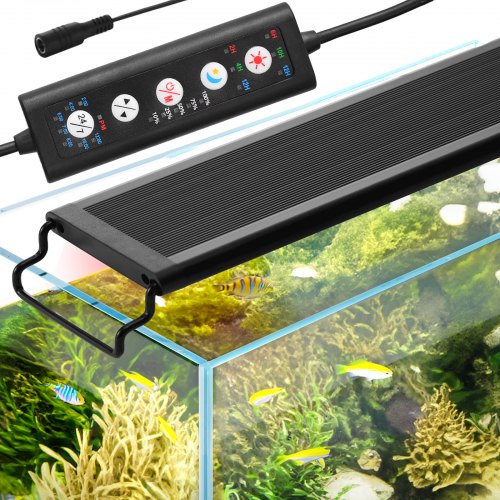
Maintaining Equipment For Longevity
Keep your lighting equipment clean and in good shape. Dust and water spots lower light output. Replace bulbs or tubes when they get old.
Check wiring and fixtures for damage. Proper care makes your light last longer and saves money on replacements.
- Clean light covers and bulbs monthly
- Replace bulbs every 6 to 12 months
- Inspect cables and plugs for damage
- Use timers to control light duration
Credit: www.vevor.ca
Popular Lighting Brands And Products
Lighting is essential for a successful planted aquarium. It supports plant growth and enhances tank beauty. Knowing popular lighting brands helps in making the right choice.
Different options are available for every budget. Explore budget-friendly, high-end, and DIY solutions to find what suits your needs best.
Budget-friendly Options
Affordable lighting options offer good quality without high costs. These are suitable for beginners or small tanks.
- NICREW ClassicLED
- BeamsWork EA Timer FSPEC
- Finnex Stingray Aquarium Light
High-end Lighting Systems
High-end lighting systems offer advanced features. They provide superior plant growth and customizable settings.
| Brand | Product |
| Kessil | A360X |
| AquaIllumination | Prime HD |
| Fluval | Plant 3.0 |
Diy Lighting Solutions
DIY lighting allows customization and creativity. It is ideal for those who enjoy hands-on projects and want to save money.

Credit: greenaqua.hu
Frequently Asked Questions
What Is The Best Light For Planted Aquariums?
LED lights with full spectrum are ideal for planted aquariums. They promote plant growth and mimic natural sunlight efficiently. Choose lights with adjustable intensity to suit different plant types and tank sizes.
How Many Hours Should Aquarium Lights Stay On?
Aquarium lights should be on for 8 to 10 hours daily. This duration balances plant photosynthesis and prevents algae overgrowth. Use a timer to maintain consistent lighting schedules easily.
Can Aquarium Lighting Affect Algae Growth?
Yes, excessive or improper lighting can cause algae blooms. Too much light or long exposure fuels algae growth. Proper light intensity and timing help control unwanted algae in planted tanks.
What Color Temperature Is Best For Planted Aquariums?
A color temperature between 5000K and 7000K is best. This range closely resembles natural daylight, enhancing plant photosynthesis and vibrant colors. Avoid lights outside this range to maintain healthy plants.
Conclusion
Choosing the right light helps plants grow strong and healthy. Good lighting makes your aquarium look bright and full of life. Different plants need different light, so pay attention to their needs. Keep the light on for about 8 to 10 hours each day.
Too much light can cause problems, so balance is key. Enjoy watching your planted aquarium thrive with simple lighting care. Small steps lead to a beautiful underwater garden.