
Your large ornamental fish tank is more than just a home for your fish—it’s a stunning centerpiece that can transform any room. But have you ever noticed how the right lighting can make your aquarium come alive with vibrant colors and mesmerizing movement?
If you want your underwater world to shine and your fish to thrive, the lighting you choose is key. You’ll discover simple yet powerful tips to pick the perfect lighting for your large ornamental fish tank. Get ready to unlock the secret to making your aquarium look breathtaking every single day.

Credit: www.reddit.com
Choosing The Right Light Type
Lighting is important for large ornamental fish tanks. It helps fish look good and plants grow well. Picking the right light makes a big difference.
Different light types work better for different tanks. You need to think about brightness, color, and energy use.
Led Vs Fluorescent
LED lights use less power and last longer than fluorescent bulbs. They give bright, clear light that shows fish colors well.
Fluorescent lights are cheaper to buy but use more energy. They produce a softer light that some plants like.
- LEDs have longer life spans
- Fluorescent bulbs need frequent replacement
- LEDs offer adjustable colors and brightness
- Fluorescent lights are less flexible
Metal Halide Benefits
Metal halide lights give very strong, bright light. They reach deep water well, helping plants grow in large tanks.
This type of light shows fish colors vividly. It is ideal for tanks with many plants and deep water areas.
- High intensity light for deep tanks
- Good for plant growth and color display
- Produces heat, so cooling may be needed
- Uses more energy than LED or fluorescent
Energy Efficiency Considerations
Energy use affects your electricity bill and the environment. Choose lights that use less power but still meet tank needs.
LED lights are the most energy-efficient. Metal halide lights use the most power. Fluorescent bulbs fall in between.
| Light Type | Energy Use | Life Span |
|---|---|---|
| LED | Low | Long (up to 50,000 hours) |
| Fluorescent | Medium | Medium (around 10,000 hours) |
| Metal Halide | High | Medium (about 15,000 hours) |
Determining Brightness Levels
Lighting is important for large ornamental fish tanks. It helps fish and plants stay healthy.
Choosing the right brightness level keeps the tank looking good and comfortable.
Calculating Lumens For Large Tanks
Lumens measure how much light a bulb gives off. Large tanks need more lumens than small ones.
To calculate lumens, multiply the tank’s surface area by the brightness needed per gallon.
- Calculate tank length × width for surface area in square feet
- Use 30-50 lumens per gallon for ornamental tanks
- Multiply gallons by lumens per gallon for total lumens needed
Balancing Intensity And Comfort
Bright lights help plants grow but can stress fish if too strong. Balance is key.
Adjust light intensity by using dimmers or timers to match fish needs and day cycles.
- Use moderate brightness to avoid stressing fish
- Provide shaded areas with decorations or plants
- Set light timers for 8-10 hours daily to mimic natural light
Adjusting For Tank Depth
Deeper tanks need stronger light so it reaches the bottom. Light weakens with depth.
Use powerful bulbs or multiple lights for tanks over 24 inches deep.
- Increase lumens for every 6-12 inches of depth
- Choose full spectrum bulbs for better light penetration
- Place lights evenly to cover all areas of the tank
Color Temperature Impact
Lighting plays a big role in large ornamental fish tanks. The color temperature of the light changes how the tank looks. It also affects fish and plants inside the tank.
Choosing the right color temperature helps create a natural and healthy environment. It also shows off the colors of your fish and plants better.
Warm Vs Cool Light Effects
Warm light has a yellow or orange tone. It feels soft and cozy. Cool light has a blue or white tone. It feels bright and fresh.
Warm light makes tanks look calm and natural. Cool light makes tanks look clear and vibrant. Both types affect how fish and plants behave.
- Warm light: 2700K to 3500K color temperature
- Cool light: 5000K to 7000K color temperature
- Warm light suits tanks with red and orange fish
- Cool light works well for green plants and blue fish
Enhancing Fish Colors
Different lights change how fish colors appear. Warm light highlights reds and oranges. Cool light makes blues and greens shine.
Good lighting helps fish look bright and healthy. It brings out their natural colors. This makes the tank more beautiful to watch.
- Use warm light for goldfish and cichlids
- Use cool light for tetras and bettas
- Mix light types to balance colors
Supporting Plant Growth
Plants need light to grow well. Color temperature affects photosynthesis. Cool light is closer to natural sunlight for plants.
Using the right light helps plants stay green and healthy. It also prevents algae from growing too fast. Balanced light keeps the tank clean.
- Choose 5000K to 7000K light for planted tanks
- Use full spectrum lights for best plant growth
- Avoid very warm light as it may harm plants
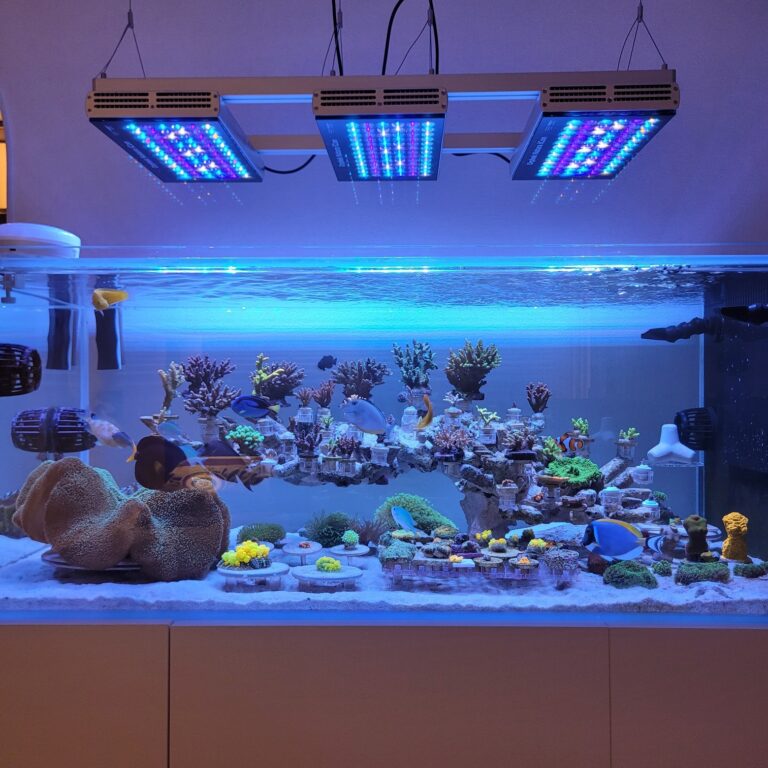
Credit: orphek.com
Light Placement Strategies
Lighting is very important for large ornamental fish tanks. Proper light placement helps fish and plants stay healthy. It also shows the tank’s beauty clearly.
Good light placement avoids dark spots and shadows. It highlights the tank’s decorations and fish. This guide explains key strategies to place lights well.
Avoiding Shadows And Dark Spots
Shadows and dark spots make the tank look dull. They hide fish and plants. To avoid this, use lights from different angles.
Place lights on the sides and top. This spreads light evenly and reduces shadows. Check the tank often and adjust lights if needed.
- Use multiple light sources
- Place lights at different heights
- Adjust light angle to cover dark areas
Layered Lighting Techniques
Layered lighting uses different types of lights together. This creates depth and interest in the tank. It also helps plants grow better.
Combine ambient, task, and accent lights. Ambient light brightens the whole tank. Task light focuses on plants or fish. Accent light highlights decorations.
- Ambient light: main source, soft and even
- Task light: stronger, for specific areas
- Accent light: small, for decorations
Positioning For Aquascape Highlights
Good light position shows the best parts of the aquascape. It makes colors brighter and shapes clearer. Focus light on plants and rocks.
Use adjustable lights to change focus. Move lights to highlight new decorations or fish. This keeps the tank looking fresh and attractive.
- Use spotlights for plants and rocks
- Place lights to show fish colors
- Adjust light angle for best effect
Controlling Light Duration
Lighting is key for large ornamental fish tanks. Proper control enhances fish health and tank beauty.
Managing light duration helps maintain an ideal environment. Let’s explore how to do this effectively.
Setting Day-night Cycles
Establishing a natural day-night cycle is crucial for fish well-being. Mimic natural lighting to make fish comfortable.
- Set lights to be on for 8-12 hours a day
- Ensure complete darkness during night hours
- Use soft lighting during transitional periods
Preventing Algae Overgrowth
Algae can be a big problem in fish tanks. Limiting light can help prevent its overgrowth.
Keep light exposure to a minimum to manage algae. Consider adding algae-eating fish to your tank for natural control.
Using Timers And Automation
Timers and automation simplify light control. They help maintain a consistent schedule effortlessly.
| Timer Feature | Benefit |
| Programmable Settings | Custom light schedules |
| Remote Control | Adjust settings from anywhere |
| Energy Efficiency | Reduces unnecessary power use |
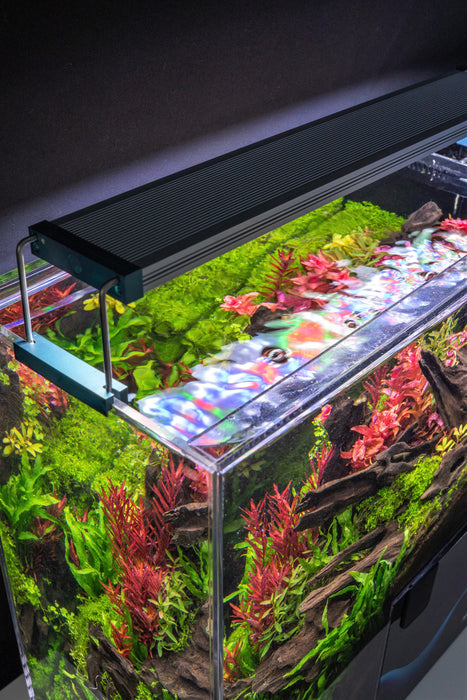
Credit: buceplant.com
Maintenance And Upkeep
Proper lighting is important for large ornamental fish tanks. Regular upkeep keeps the light working well and safe.
Good maintenance helps plants and fish stay healthy. It also makes your tank look great all the time.
Cleaning Light Fixtures
Dust and water spots can build up on light fixtures. This reduces light brightness and clarity.
Clean fixtures every few weeks with a soft cloth and mild cleaner. Avoid harsh chemicals that may damage parts.
- Turn off and unplug lights before cleaning
- Use a damp cloth to wipe surfaces gently
- Dry fixtures completely to prevent water damage
- Check for cracks or damage during cleaning
Replacing Bulbs And Components
Bulbs lose brightness over time. Replace them to keep the light strong and clear.
Use bulbs that match your fixture’s type and wattage. Replace other parts like ballasts or starters if needed.
- Check bulb life span on packaging
- Turn off power before replacing parts
- Handle bulbs with clean hands or gloves
- Dispose of old bulbs safely
Monitoring Light Performance
Watch how your lighting affects the tank environment. Look for dim spots or flickering lights.
Use a timer to keep light cycles consistent. Track any changes in fish behavior or plant growth.
- Check bulbs weekly for flicker or dimming
- Keep lighting on a daily schedule
- Adjust light intensity if plants or fish show stress
- Replace parts promptly to avoid damage
Frequently Asked Questions
What Type Of Lighting Is Best For Large Fish Tanks?
LED lighting is best for large ornamental fish tanks. It offers energy efficiency, long lifespan, and customizable brightness. LED lights enhance fish colors and plant growth, creating a vibrant aquarium environment. They also produce less heat, maintaining stable water temperatures.
How Many Hours Should Aquarium Lights Stay On Daily?
Aquarium lights should stay on for 8 to 12 hours daily. This duration mimics natural daylight and supports fish and plant health. Avoid excessive lighting to prevent algae growth and stress in fish. Using a timer ensures consistent light cycles.
Can Lighting Affect Fish Behavior In Large Tanks?
Yes, lighting directly affects fish behavior. Proper lighting reduces stress and encourages natural activity. Bright or inconsistent light may cause fish to hide or become aggressive. Adjust lighting intensity and duration to suit specific fish species.
Should I Use Colored Lights In Ornamental Fish Tanks?
Colored lights can enhance tank aesthetics but should be used carefully. Some fish may find certain colors stressful. Use soft, natural hues to highlight fish and plants. Avoid intense colored lighting for long periods to maintain fish comfort.
Conclusion
Choosing the right lighting helps your fish tank look its best. Good lights keep fish healthy and plants growing well. Brightness and color affect how you see the tank’s beauty. Too much light can cause problems like algae growth. Balance is key to a healthy, clear tank view.
Experiment with different lights to find what suits your tank. Lighting can change the whole feel of your aquarium. Enjoy the bright, lively world you create for your fish.