
Are you struggling to find the perfect lighting for your discus fish tank? The right light can make a huge difference in how your fish look and feel.
It affects their colors, behavior, and even health. But with so many options out there, how do you choose what’s best for your tank? This guide will help you understand exactly what your discus fish need and how to create a beautiful, healthy environment they will thrive in.
Keep reading, and you’ll discover simple tips that can transform your aquarium instantly.
Choosing The Right Light
Lighting is very important for discus fish tanks. It helps fish stay healthy and shows their colors well.
Choosing the right light means picking the best type, brightness, and color for your tank.
Types Of Aquarium Lights
There are many types of aquarium lights. Each type has its own benefits and uses.
- Incandescent lights are old and use more power.
- Fluorescent lights are common and cost less.
- LED lights save energy and last a long time.
- Metal halide lights are very bright but use more electricity.
Light Intensity And Color Temperature
Light intensity means how bright the light is. Discus fish need moderate light, not too bright.
Color temperature shows the light color. It is measured in Kelvins (K). A good range for discus tanks is 6500K to 8000K.
- Lower Kelvins give warm, yellow light.
- Higher Kelvins give cool, blue light.
- 6500K to 8000K looks natural and helps fish colors.
Led Vs Fluorescent Options
LED and fluorescent lights are popular for discus tanks. Both have pros and cons.
LED lights use less power and last longer. They also produce less heat and can change colors.
Fluorescent lights cost less at first. They give good light but use more energy and need more replacing.
- LED: energy-saving, long life, adjustable colors
- Fluorescent: lower cost, bright light, shorter life
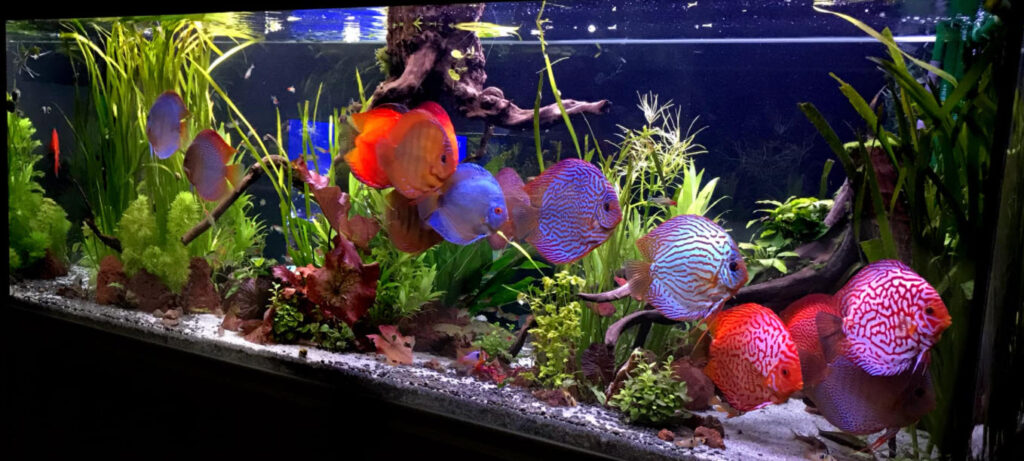
Credit: aquainfo.nl
Lighting Duration And Schedule
Lighting is important for discus fish tanks. It helps fish stay healthy and shows their colors well.
Setting the right lighting time and schedule keeps the tank balanced. Fish and plants need regular light and dark times.
Optimal Daily Light Period
Discus fish need about 8 to 10 hours of light each day. This amount supports their natural rhythm.
Too little light can make fish inactive. Too much light stresses them and grows too much algae.
Using Timers For Consistency
Timers help keep lighting consistent every day. They turn lights on and off at the same time.
Consistent light schedules reduce stress for discus fish. They learn when to rest and when to be active.
- Set timers for 8-10 hours of light
- Keep the same schedule daily
- Adjust times slowly if needed
Effects Of Overlighting
Too much light causes algae to grow fast. Algae can make the tank dirty and harm water quality.
Overlighting also stresses discus fish. It can cause them to hide or lose color.
- Algae blooms reduce oxygen in water
- Fish may become shy or sick
- Regular light periods keep the tank healthy
Enhancing Discus Colors
Discus fish are known for their bright and beautiful colors. Proper lighting can make their colors look even better.
Good lighting helps show off the natural beauty of your discus fish. It also keeps the tank lively and attractive.
Light Spectrum For Vibrant Hues
Using the right light colors helps bring out the best in discus fish. Different light spectrums highlight different colors on the fish.
Full-spectrum lights that include blue and red tones work well. These lights make the reds, blues, and greens on discus shine.
- Blue light enhances blue and green shades
- Red light makes red and orange colors bright
- Full-spectrum bulbs keep colors natural and balanced
Positioning Lights For Best Effect
Where you place the lights affects how discus colors appear. Lights should be placed to reduce shadows and glare.
Position lights above the tank and angle them slightly. This setup spreads light evenly and shows off colors well.
- Place lights directly over the tank center
- Use adjustable fixtures to change angle as needed
- Avoid placing lights too close to the water surface
- Check from different angles to see how colors look

Credit: www.youtube.com
Supporting Plant Growth
Lighting plays a key role in growing plants in discus fish tanks. Proper light helps plants make food and stay healthy.
Good plant growth improves the tank environment. It also provides hiding places for discus fish.
Light Needs Of Aquatic Plants
Aquatic plants need light to perform photosynthesis. This process helps plants create energy to grow.
The amount and type of light affect plant health. Most aquatic plants do well under moderate light.
- Low light suits slow-growing plants
- Medium light supports most common plants
- High light is for demanding plants
- Light duration usually ranges from 8 to 12 hours daily
Balancing Plant And Fish Requirements
Discus fish prefer dimmer light compared to many plants. Too much light can stress the fish.
It is important to find a balance. Use lighting that supports plants but keeps fish calm.
- Choose lights with adjustable brightness
- Use timers to control light periods
- Add floating plants to reduce light intensity
- Observe fish behavior to adjust lighting
Preventing Algae Growth
Algae can quickly take over a discus fish tank. Managing light can help keep algae at bay.
Proper lighting ensures your fish are healthy. It also keeps your tank free from excess algae.
Light Management Strategies
Control the amount of light your tank receives. This reduces the growth of algae.
Use a timer to limit light exposure. Eight to ten hours a day is ideal.
- Position the tank away from direct sunlight
- Choose LED lights for better control
- Adjust the light intensity as needed
Maintenance Tips
Regular maintenance helps prevent algae. Keep your tank clean and balanced.
Check the water quality weekly. Clean the tank regularly to remove algae.
- Change 25% of the water weekly
- Clean the glass and decorations often
- Monitor the nutrient levels in the water

Credit: www.reddit.com
Safety And Energy Efficiency
Lighting is important for discus fish tanks. It helps fish stay healthy and shows their colors well. Choosing safe and energy-efficient lights keeps your tank safe and lowers electricity bills.
Good lighting also helps plants and keeps the tank environment stable. You need lights that handle water safely and save energy.
Waterproof Lighting Fixtures
Waterproof lighting keeps water from reaching electrical parts. This stops accidents and damage. Use lights made for aquarium use. They protect fish and reduce risks.
- Look for IP65 or higher waterproof rating
- Use sealed LED lights to avoid water contact
- Place lights outside the tank if possible
- Check power cords and plugs for damage often
- Turn off lights before cleaning or touching water
Energy-saving Choices
Energy-saving lights help reduce power use. LED lights use less energy and last longer than old bulbs. This saves money and helps the environment.
| Light Type | Power Use (Watts) | Average Lifespan (Hours) |
| LED | 10-20 | 25,000 |
| Fluorescent | 20-40 | 8,000 |
| Incandescent | 40-60 | 1,000 |
Use timers to control lighting hours. This prevents wasting electricity and keeps fish on a regular day cycle.
Troubleshooting Common Issues
Lighting is important for discus fish tanks. Good lighting helps fish stay healthy and look their best.
Sometimes lighting can cause problems. This guide helps you fix common lighting issues in your tank.
Dim Or Uneven Lighting
Dim or uneven light can make your discus fish stressed and hide more. It also affects plant growth if you have live plants.
- Check if bulbs are old or dirty. Replace or clean them.
- Make sure all lights are working and have the same brightness.
- Adjust the position of lights for even coverage across the tank.
- Use reflectors to help spread light evenly.
- Measure light intensity with a meter to ensure proper levels.
Flickering Lights
Flickering lights can scare fish and cause stress. It can also signal electrical problems.
| Cause | Fix |
| Loose bulb or socket | Turn off power, tighten bulb or replace socket |
| Faulty ballast or driver | Replace the ballast or LED driver |
| Power supply issues | Check wiring and power source |
| Dimmer switch problems | Bypass or replace dimmer switch |
Fish Behavior Changes
Changes in lighting can affect how discus fish behave. Watch for signs of stress or illness.
Signs to watch for:
- Fish hiding more than usual
- Loss of color or dull appearance
- Erratic swimming or lethargy
- Loss of appetite
If you see these signs, try adjusting the light intensity or duration. Check water quality too.
Frequently Asked Questions
What Is The Best Lighting For Discus Fish Tanks?
LED lighting with adjustable intensity is best for discus tanks. It mimics natural daylight and supports plant growth. Avoid harsh or overly bright lights to reduce fish stress. Soft, warm light enhances discus colors and creates a calm environment.
How Many Hours Should Discus Tank Lights Stay On?
Discus tank lights should be on for 8 to 10 hours daily. This schedule mimics natural daylight and supports fish health. Avoid leaving lights on too long to prevent algae growth. Use a timer for consistent lighting periods.
Can Lighting Affect Discus Fish Behavior?
Yes, proper lighting affects discus behavior significantly. Bright or flashing lights cause stress and hiding. Soft, consistent lighting encourages natural activity and feeding. Balanced light cycles help maintain their internal biological clock.
Should I Use Special Bulbs For Discus Tanks?
Special full-spectrum bulbs are recommended for discus tanks. They enhance fish colors and promote plant growth. Avoid bulbs emitting excessive heat to maintain stable water temperature. Use bulbs labeled for aquatic or freshwater aquarium use.
Conclusion
Good lighting helps discus fish stay healthy and show their best colors. Choose lights that match their natural environment and avoid too much brightness. Keep a regular light schedule to support their daily habits. Watch your fish often to see how they respond to the light.
Right lighting makes your tank look nice and keeps your discus happy. Simple steps can create a calm and beautiful home for your fish. Try different options until you find what works best for your discus tank.