
If you’re caring for juvenile fish, you know how important the right environment is for their growth and health. One key factor that often gets overlooked is lighting.
Choosing the perfect lighting can make a huge difference in how your young fish thrive. LED lighting for juvenile fish tanks is not only energy-efficient but also helps create a natural and comfortable space for your fish to grow. You’ll discover why LED lights are the smart choice for your tank, how they benefit your fish, and tips on picking the best setup.
Keep reading to make sure your juvenile fish get the best start possible.
Benefits Of Led Lighting
LED lighting is a smart choice for juvenile fish tanks. It helps young fish grow in a healthy environment.
This type of lighting uses less energy and lasts a long time. It also allows adjusting colors to fit fish needs.
Energy Efficiency
LED lights use less electricity than traditional bulbs. They create less heat, which keeps the tank stable.
- Lower energy bills
- Reduced heat stress on fish
- Environmentally friendly option
Long Lifespan
LED bulbs last much longer than other lights. This means fewer replacements and less hassle.
| Light Type | Average Lifespan (Hours) |
| LED | 25,000+ |
| Fluorescent | 8,000 – 15,000 |
| Incandescent | 1,000 – 2,000 |
Customizable Light Spectrum
LED lighting allows adjusting colors to suit fish needs. Different spectrums help fish grow and stay active.
Common light spectrums for juvenile fish tanks:
- Blue light for calm and rest
- White light for natural daytime
- Red light to boost activity
Light Spectrum For Juvenile Fish
Lighting plays an important role in the health of juvenile fish. The right light spectrum helps young fish grow strong and stay active. LED lighting is popular for fish tanks because it uses less energy and gives off the right colors.
Understanding the light spectrum helps you choose the best LED lights. Different colors of light affect fish in different ways. This guide explains which wavelengths are best for juvenile fish tanks.
Optimal Wavelengths
Juvenile fish respond well to specific light wavelengths. Blue and red light are very important for their development. Blue light supports vision and feeding habits. Red light helps with growth and health.
- Blue light: 450-495 nanometers
- Red light: 620-750 nanometers
- Green light: 495-570 nanometers (less critical)
Effects On Growth And Behavior
Light colors affect how juvenile fish behave and grow. Blue light can calm fish and improve their feeding times. Red light helps with cell growth and overall health. Proper lighting also reduces stress in young fish.
Too much light or the wrong colors can cause problems. Juvenile fish may become inactive or stressed. Balanced lighting helps them swim and feed naturally.
Balancing Blue And Red Light
Using both blue and red light creates a healthy environment for juvenile fish. Blue light supports their vision and activity. Red light encourages growth and good health. A mix of these colors gives the best results.
- Use more blue light during feeding times
- Add red light to support growth phases
- Keep light intensity moderate to avoid stress
Setting Up Led Lights
LED lights are a great choice for juvenile fish tanks. They use less energy and last longer than other lights. Setting them up correctly helps fish grow healthy and active.
This guide covers how to pick the right LED lights, where to place them, and how to adjust their brightness and timing.
Choosing The Right Led Fixtures
Pick LED lights made for small fish tanks. Look for full-spectrum lights that show natural colors. Avoid lights that are too bright or too dim for young fish.
- Choose waterproof and safe fixtures for aquatic use
- Look for adjustable light settings
- Pick energy-efficient models to save power
- Select the right size to cover the tank evenly
Positioning And Installation Tips
Place LED lights above the tank to mimic natural sunlight. Avoid direct glare on the fish to reduce stress. Fix lights securely to prevent falls or water contact.
| Position | Purpose |
| Center top | Even light spread |
| Side edges | Highlight plants and decorations |
| Adjust height | Control light intensity |
| Avoid direct water contact | Protect fixtures from damage |
Adjusting Intensity And Duration
Young fish need gentle light for a few hours each day. Too much light can harm them. Adjust brightness and timing to match natural day and night cycles.
- Start with low brightness for 6 hours daily
- Increase light time slowly up to 10 hours
- Use timers to keep a regular schedule
- Lower intensity if fish show stress signs

Credit: www.amazon.ca
Safety Considerations
Using LED lighting in juvenile fish tanks can help young fish grow well. It is important to keep safety in mind to protect the fish.
Proper lighting helps fish stay healthy and avoid stress. This guide covers key safety tips for using LED lights in fish tanks.
Avoiding Overexposure
Too much light can harm young fish. It can cause stress and affect their growth.
Keep the LED light on for 8 to 10 hours each day. Use timers to control light duration easily.
- Set lights to turn off at night
- Use dimmable LEDs to reduce brightness
- Watch fish behavior for signs of stress
Preventing Heat Stress
LED lights produce less heat than other lights, but they still can warm the water. Warm water can stress young fish.
Keep LED lights at a safe distance from the tank to reduce heat. Avoid placing lights directly on the tank surface.
- Use LED fixtures designed for aquariums
- Check the light’s heat output before buying
- Ensure good airflow around the tank
Monitoring Water Temperature
Water temperature is very important for juvenile fish health. LED lights can change the water temperature slightly.
Use an aquarium thermometer to check water temperature daily. Keep the water within the right range for your fish species.
- Ideal temperature varies by fish type
- Adjust room temperature if needed
- Turn off lights if water gets too warm
Enhancing Tank Environment
LED lighting plays a big role in juvenile fish tanks. It helps create a healthy and inviting space for young fish to grow. Proper lighting improves visibility and supports the tank’s ecosystem.
Choosing the right LED lighting can balance the needs of fish, plants, and filtration systems. It also helps mimic natural conditions for better fish health.
Combining Lighting With Filtration
Good filtration keeps the water clean and clear. LED lighting works best when combined with proper filtration. Clear water allows light to reach all parts of the tank.
- Filtration removes waste and harmful chemicals
- Lighting helps monitor fish health and behavior
- Both together create a stable tank environment
- Clean water enhances light penetration
- Proper lighting supports beneficial bacteria growth
Creating Natural Day-night Cycles
Fish need a regular light cycle to stay healthy. LED lights can be timed to mimic sunrise and sunset. This helps reduce stress and supports natural behavior.
| Time of Day | Light Intensity | Effect on Fish |
| Morning | Low to Medium | Fish wake up and become active |
| Day | High | Fish feed and swim actively |
| Evening | Medium to Low | Fish calm down and prepare to rest |
| Night | Off or very low | Fish rest and recover |
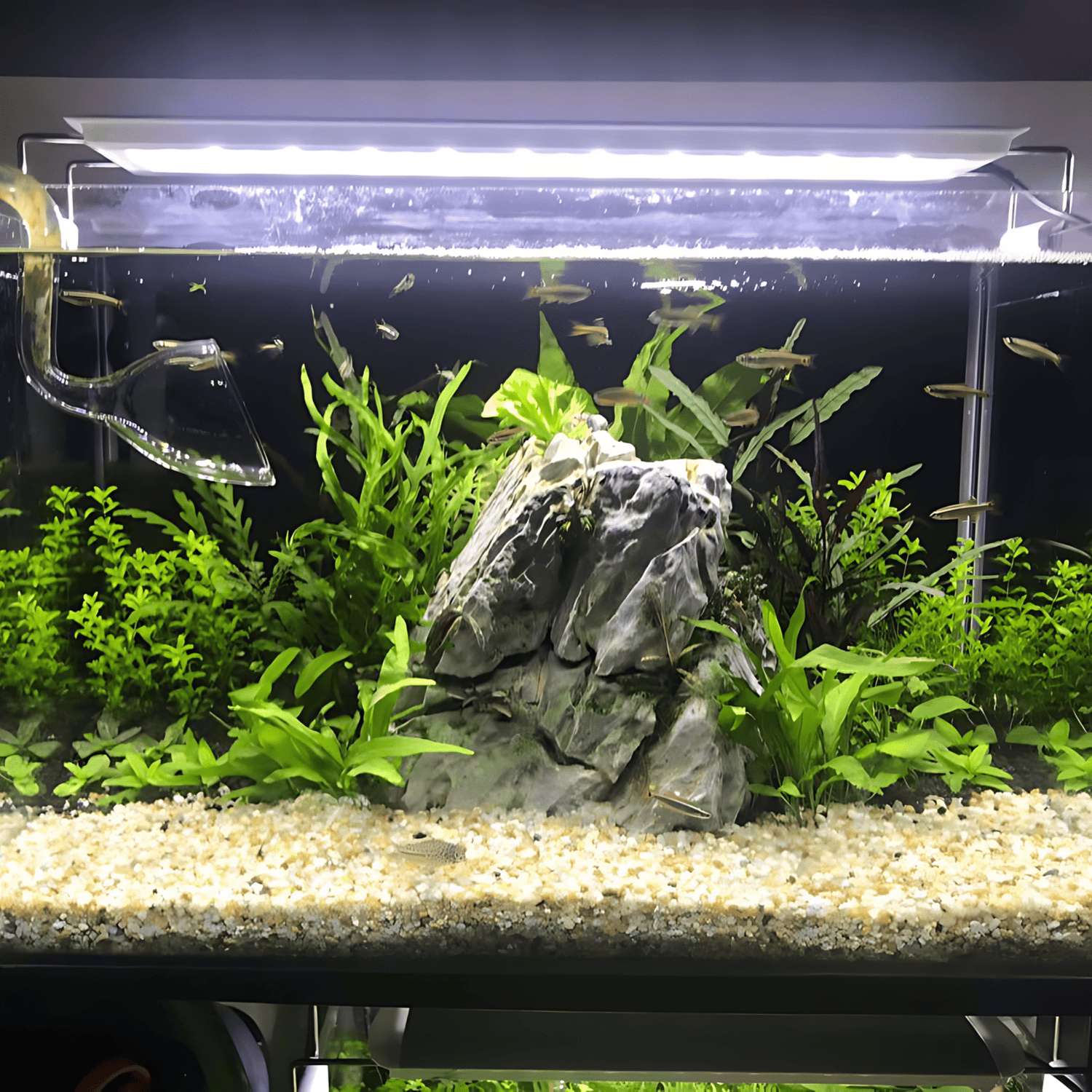
Supporting Plant Growth
LED lighting supports healthy plant growth in juvenile fish tanks. Plants improve water quality and provide hiding places for young fish.
Key LED light features for plants:
- Full spectrum light mimics sunlight
- Adjustable intensity to fit plant needs
- Energy efficient for long daily use
- Promotes photosynthesis and growth
Credit: aquascapeshop.com
Troubleshooting Common Issues
LED lighting in fish tanks can be tricky. Many face issues like algae growth and fish stress. This guide helps solve these common problems.
Proper maintenance of lighting equipment is crucial. It ensures the health of your aquatic life. Let’s dive into these common issues.
Dealing With Algae Overgrowth
Algae can quickly take over a fish tank. It blocks light and affects water quality. Here are ways to control it.
- Reduce light exposure to 8 hours a day.
- Use algae-eating fish like snails or shrimp.
- Perform regular water changes to reduce nutrients.
Adjusting For Fish Stress
Fish can become stressed under improper lighting. Stress affects their health and behavior. Follow these tips to reduce stress.
| Stress Factor | Solution |
| Too much light | Dim LED settings |
| Sudden changes | Gradually adjust lighting |
| No hiding spots | Add plants or decorations |
Maintaining Light Equipment
Keep your LED lights in top condition. This extends their life and ensures proper functioning.

Credit: www.amazon.ca
Frequently Asked Questions
What Are The Benefits Of Led Lighting For Juvenile Fish Tanks?
LED lighting provides energy efficiency, low heat emission, and customizable light spectrums. It promotes healthy fish growth and vibrant colors, enhancing tank aesthetics. LEDs also have longer lifespans, reducing maintenance and replacement costs, making them ideal for juvenile fish tanks.
How Does Led Lighting Affect Juvenile Fish Growth?
Proper LED lighting simulates natural daylight cycles, which supports juvenile fish metabolism and development. It helps regulate feeding and activity patterns. The right light intensity prevents stress, promoting healthier growth and stronger immune systems in juvenile fish.
Can Led Lighting Improve Juvenile Fish Tank Plant Growth?
Yes, LED lighting with specific spectrums can enhance aquatic plant photosynthesis. Healthy plant growth improves water quality and provides shelter for juvenile fish. Choosing full-spectrum LEDs optimizes plant health and supports a balanced juvenile fish tank ecosystem.
What Is The Ideal Led Light Spectrum For Juvenile Fish?
A full-spectrum LED light between 6500K to 8000K mimics natural daylight best. This range supports fish coloration, behavior, and plant growth. Adjustable spectrum LEDs allow customization based on specific fish species and tank requirements.
Conclusion
Choosing LED lighting helps keep juvenile fish healthy and happy. It uses less energy and lasts longer than other lights. Bright, natural light makes the tank look beautiful and helps fish grow. You can easily adjust colors and brightness to match your needs.
LED lights do not make the water too hot, which is safer for young fish. Good lighting also helps you see your fish clearly. Overall, LED lighting is a smart, simple choice for juvenile fish tanks. It supports fish health and enhances your aquarium’s appearance.