
If you want your aquascape to truly come alive, the right lighting is key. LED lighting for aquascaping gives you control over brightness, color, and energy use—all essential for healthy plants and stunning visuals.
Imagine your underwater garden glowing with vibrant colors, attracting attention and making your tank the centerpiece of any room. You’ll discover how LED lights can transform your aquascape, help your plants thrive, and save you money. Keep reading to unlock the secret to a breathtaking aquarium you’ll be proud of.
Benefits Of Led Lighting
LED lighting is popular for aquascaping. It helps plants grow and shows their true colors.
Using LED lights saves energy and lasts a long time. It also lets you change the light to fit your plants’ needs.
Energy Efficiency
LED lights use less electricity than other bulbs. This means lower power bills and less heat.
They give strong light without wasting energy. This helps keep the aquarium cool and safe.
- Consumes less power
- Produces less heat
- Reduces electricity costs
Long Lifespan
LED lights last much longer than traditional bulbs. You do not need to change them often.
A longer lifespan means less waste and fewer replacements. This saves time and money.
- Lasts up to 50,000 hours
- Requires less frequent replacement
- Durable and reliable
Customizable Light Spectrum
LED lights can change colors and brightness. This helps plants get the right light for growth.
You can adjust the light to match plant types and tank conditions. This improves plant health and color.
- Adjust light color and intensity
- Supports different plant species
- Enhances aquarium appearance
Choosing The Right Led Lights
LED lighting is a key part of aquascaping. It helps plants grow and makes your tank look beautiful. Picking the right LED light is important for a healthy aquarium.
This guide covers wattage, brightness, color temperature, and size. These factors help you find the best light for your aquascape.
Wattage And Brightness
Wattage shows how much power the light uses. Brightness tells how much light the LED gives off. Both affect plant growth and tank appearance.
- Low wattage (10-20W) fits small tanks and low-light plants.
- Medium wattage (20-40W) suits medium tanks with more demanding plants.
- High wattage (40W and above) is good for large tanks or high-light plants.
- Brightness is measured in lumens. More lumens mean brighter light.
Color Temperature Options
Color temperature affects the light’s color and how plants respond. It is measured in Kelvins (K). Different temperatures suit different plants and tank styles.
| Color Temperature (K) | Effect | Best For |
| 5000K – 6500K | Bright white light | Most freshwater plants |
| 6500K – 7500K | Cool, bluish light | Highlighting blue tones and aquatic life |
| 4000K – 5000K | Warm white light | Low-light plants and natural look |
Size And Fit For Your Aquarium
Measure your aquarium’s length and width before buying LED lights. The light should cover the whole tank evenly. Check the fixture size and mounting style.
- Choose a light that matches your tank’s length.
- Consider adjustable mounts for height changes.
- Look for waterproof or splash-proof designs.
- Make sure the light fits your aquarium hood or top frame.
Enhancing Plant Growth
LED lighting plays a key role in aquascaping. It helps plants grow healthy and strong.
Good lighting supports photosynthesis and keeps plants vibrant in your aquarium.
Light Intensity And Photosynthesis
Plants need enough light to perform photosynthesis. Light intensity affects how well plants grow.
Too little light slows growth. Too much light can harm plants or cause algae.
- Moderate light intensity helps plants produce energy.
- Measure light in lumens or PAR for best results.
- Adjust light duration to match plant needs, usually 8-10 hours daily.
Balancing Red And Blue Light
Plants use red and blue light for growth. Red light helps with flowering and leaf growth.
Blue light promotes strong stems and healthy leaves. Both colors are important.
- Red light supports photosynthesis and flowering.
- Blue light encourages leaf growth and structure.
- A good balance improves overall plant health.
Avoiding Algae Overgrowth
Too much light can cause algae to grow fast. Algae compete with plants for nutrients.
Control light intensity and duration to limit algae growth. Keep the tank clean.
- Use timers to set light periods.
- Lower light intensity if algae appear.
- Regular water changes help control nutrients.
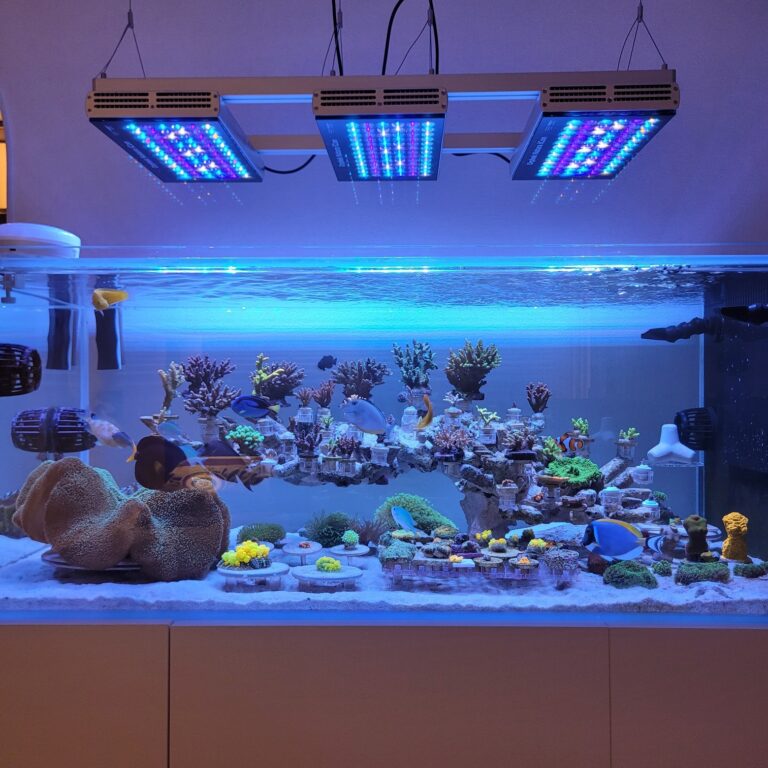
Credit: orphek.com
Creating Stunning Visual Effects
Led lighting is perfect for aquascaping. It helps create beautiful scenes underwater.
Good lighting shows the best colors and shapes of plants and fish.
Highlighting Colors And Textures
Led lights bring out bright colors in plants and fish. They make your aquascape look lively.
Adjusting light angle shows different textures on rocks and plants. It adds depth to your tank.
- Use cool white lights to brighten green plants
- Red and blue leds make fish colors pop
- Shadows highlight texture on stones and wood
Using Timers And Dimmers
Timers turn lights on and off automatically. This keeps a natural day-night cycle for your plants.
Dimmers let you change light brightness. You can create soft or bright scenes easily.
- Set lights to turn on at sunrise and off at sunset
- Use dimmers to avoid sudden bright light
- Adjust brightness to match plant needs
Dynamic Lighting For Day And Night
Dynamic lighting changes color and brightness during the day. It mimics real sunlight and moonlight.
This helps fish and plants feel safe and calm. Night light can show glowing fish and plants.
- Bright white light during the day for growth
- Soft blue light at night for a calm look
- Slow light changes to simulate sunrise and sunset
Installation Tips And Maintenance
LED lighting is vital for aquascaping. It ensures plants grow well and look vibrant. Proper installation and care of these lights make a big difference.
This guide provides helpful tips on setting up and maintaining LED lights. Each section covers specific aspects to keep your aquascape thriving.
Proper Placement Of Led Fixtures
Positioning LED fixtures correctly impacts light distribution. It helps plants get the right amount of light. Avoid placing lights too close to the water surface.
- Ensure lights cover the entire tank evenly.
- Avoid shadows by adjusting fixture angles.
- Maintain a safe distance to prevent overheating.
Cleaning And Care
Regular cleaning extends the life of LED lights. Dust and algae can accumulate, reducing efficiency. Use soft cloths to wipe fixtures clean.
| Cleaning Task | Frequency |
| Wipe dust off fixtures | Weekly |
| Check for algae buildup | Bi-weekly |
| Inspect wiring and connections | Monthly |
Troubleshooting Common Issues
LED lights can face some issues over time. Identifying problems early helps in quick fixes. Flickering lights or dimming may indicate wiring issues.

Credit: www.ebay.ca
Popular Led Brands For Aquascaping
Choosing the right LED lighting is important for a healthy aquascape. LED lights help plants grow and show their colors well.
Many brands offer LEDs designed for aquariums. These brands vary in price and features to fit different needs.
Budget-friendly Options
Budget-friendly LED lights offer good quality without high costs. These are great for beginners or small tanks.
They usually have basic settings but still support plant growth and fish health.
- NICREW Classic LED Aquarium Light
- Finnex Stingray LED Light
- Beamswork DA FSPEC LED
High-end Models
High-end LED lights offer advanced features and better control. They provide full spectrum light for complex aquascapes.
These models often include timers, dimmers, and color adjustments to mimic natural light.
- Fluval Plant 3.0 LED
- Chihiros WRGB II Series
- Current USA Satellite Plus PRO
User Reviews And Recommendations
Users like LED lights that are easy to install and adjust. Many choose lights with good plant growth results.
Reviews often mention brightness, color quality, and durability as key points.
- Look for LEDs with good customer support
- Check if light fits your tank size
- Read about how lights affect plant health
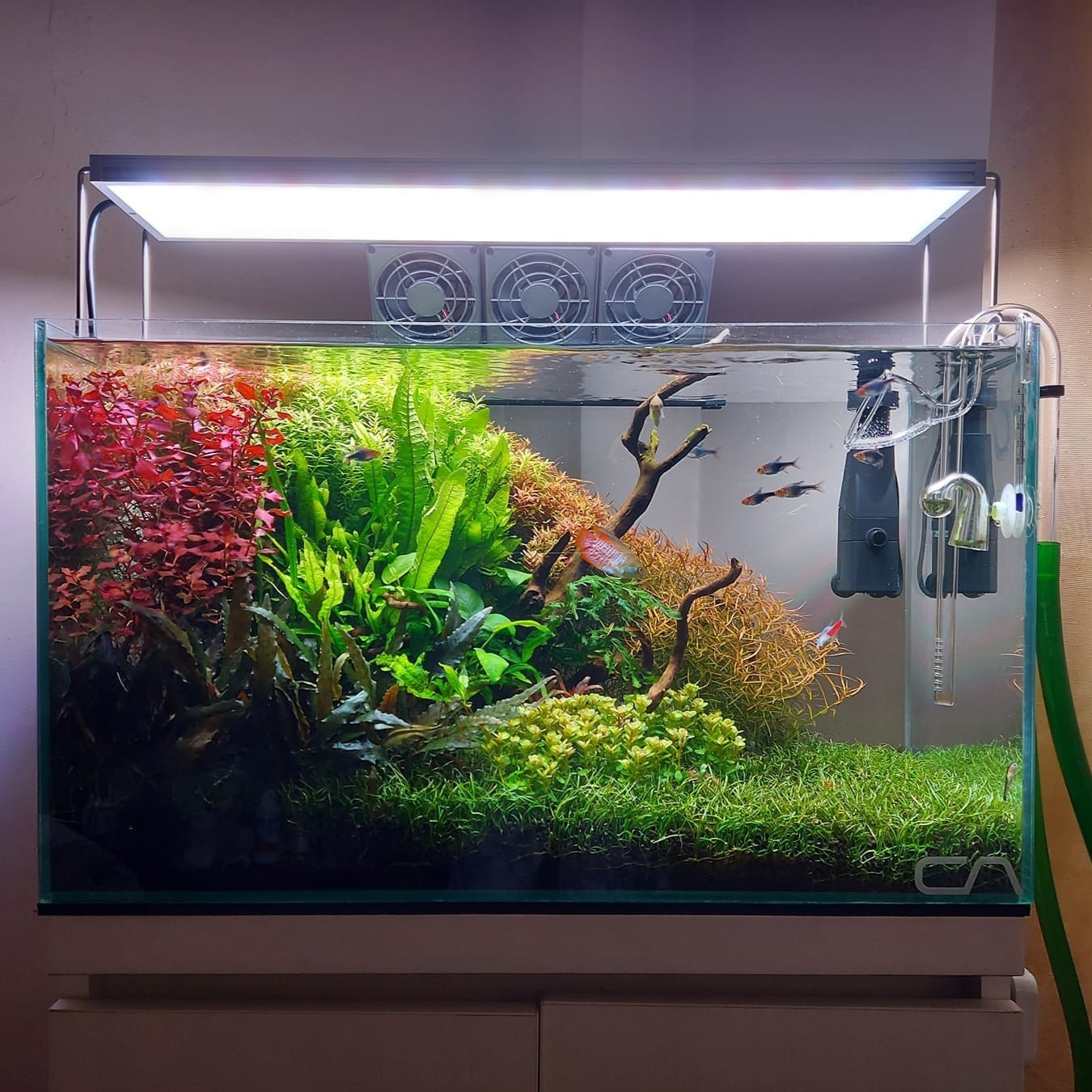
Credit: aquascapeshop.com
Frequently Asked Questions
What Are The Benefits Of Led Lighting For Aquascaping?
LED lighting offers energy efficiency, longer lifespan, and customizable light spectra. It enhances plant growth and fish health while reducing heat emission, making it ideal for aquascaping setups.
How Does Led Lighting Affect Aquatic Plant Growth?
LED lights provide specific wavelengths that promote photosynthesis. They support healthy, vibrant plant growth by delivering the right intensity and color spectrum tailored to aquatic plants.
Can Led Lights Improve Aquarium Aesthetics?
Yes, LED lights enhance colors and create dynamic lighting effects. They highlight textures and details in aquascapes, improving the overall visual appeal of the aquarium.
What Is The Ideal Led Spectrum For Aquascaping?
A balanced spectrum with red, blue, and white light is ideal. It supports photosynthesis and displays natural colors, fostering healthy plant growth and a vibrant aquarium environment.
Conclusion
Choosing the right LED lighting helps plants grow strong and healthy. It also makes your aquascape look bright and colorful. LEDs use less energy and last a long time. They create the perfect environment for fish and plants. Simple to install and adjust, LEDs fit any tank size.
Great lighting brings your underwater world to life. Try LED lights to enjoy a beautiful, lively aquarium every day.