
Is your heater not turning on when you need it most? It’s frustrating and uncomfortable, especially when the cold won’t wait.
But don’t worry—there are simple solutions you can try right now to get your heater working again. You’ll discover easy steps to troubleshoot your heater and bring warmth back to your home quickly. Keep reading, and you’ll be cozy again in no time.
Check Power Supply
If your heater does not turn on, the power supply might be the cause. Checking the power supply is an important first step.
Make sure your heater is connected to a working power source. Follow these checks to find any power issues.
Inspect Power Source
Look at the power cord and plug for damage. A broken cord or loose plug can stop the heater from working.
Check if the outlet has power by plugging in another device. If the device does not work, the outlet may be the problem.
Reset Circuit Breaker
A tripped circuit breaker can cut power to your heater. Find your home’s breaker panel and look for any switches in the off position.
- Open the breaker panel door.
- Look for breakers that are off or between on and off.
- Flip the breaker fully to off, then back to on.
- Try turning on your heater again.
Test Power Outlet
| Test Method | What to Check | Next Step |
|---|---|---|
| Use a voltage tester | Check if the outlet has power | If no power, call an electrician |
| Plug in a lamp or phone charger | See if the device turns on | If not, try a different outlet |
| Check for loose wiring | Look for sparks or burning smell | Stop use and call a professional |
Examine Thermostat Settings
Your heater might not turn on because of thermostat problems.
Check the thermostat settings first before calling a technician.
Adjust Temperature
Make sure the thermostat temperature is set higher than the room temperature.
- Check if the temperature is set to “Heat” mode.
- Raise the temperature setting a few degrees.
- Wait a few minutes to see if the heater starts.
Replace Thermostat Batteries
Weak or dead batteries can stop the thermostat from working correctly.
| Signs of Dead Batteries | Actions to Take |
| Blank display | Replace batteries immediately |
| Unresponsive buttons | Check battery contacts and replace |
| Incorrect temperature readings | Change batteries and recalibrate |
Calibrate Thermostat
Thermostat calibration ensures it reads the room temperature correctly.
To calibrate your thermostat:
- Use a reliable room thermometer.
- Compare it with the thermostat reading.
- If readings differ, adjust the thermostat setting.
- Follow the thermostat manual for calibration steps.
Inspect Heater Components
If your heater does not turn on, checking its parts can help find the problem. Some parts may be dirty or broken.
Inspecting the heater components can save time and money before calling a technician.
Clean Air Filters
Dirty air filters block airflow and make the heater work harder. This can stop it from turning on.
Remove the air filter and clean it with water or vacuum. Replace it if very dirty or damaged.
Check Pilot Light Or Igniter
The pilot light or igniter starts the heater’s flame. If it is off or broken, the heater won’t heat.
Look for a small blue flame in the pilot light. For an igniter, listen for clicking sounds when turning on.
- Relight the pilot light following safety rules.
- Replace the igniter if it does not spark.
Look For Loose Wiring
Loose or damaged wires can stop electricity from reaching the heater parts. This can prevent it from turning on.
Unplug the heater and open its panel. Check all wires to see if they are connected tightly and not broken.
- Tighten any loose wire connections.
- Replace wires that look worn or damaged.
- Do not touch wires if the heater is plugged in.
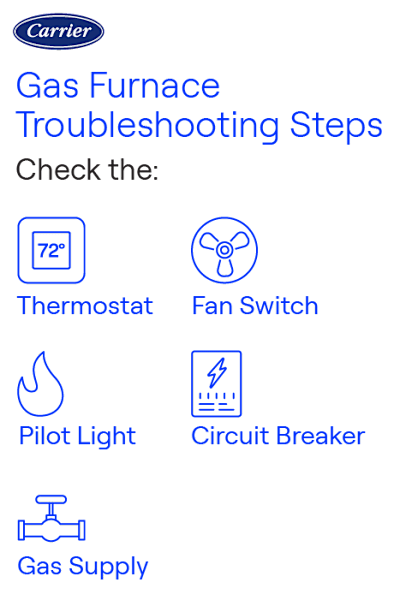
Credit: www.carrier.com
Address Common Mechanical Issues
Heaters may stop working because of simple mechanical problems. Fixing these issues can help your heater turn on again.
Check parts like fuel lines, blower motors, and sensors. These parts often cause heating failures.
Unclog Fuel Lines
Fuel lines can get blocked by dirt or debris. This stops fuel from reaching the heater.
Cleaning or replacing clogged fuel lines helps the heater get fuel properly and start working again.
- Turn off the heater and fuel supply first
- Locate the fuel lines and inspect for blockages
- Use compressed air or a brush to clear small clogs
- Replace fuel lines if they are damaged or heavily clogged
- Turn the fuel back on and test the heater
Fix Blower Motor Problems
The blower motor pushes warm air out of the heater. If it fails, the heater may not turn on.
Check if the motor is running or making strange noises. Clean or replace parts to fix blower motor issues.
- Listen for unusual sounds when the heater tries to start
- Check for dust or dirt blocking the motor blades
- Test the motor with a multimeter for electrical faults
- Clean the motor and blades gently with a soft brush
- Replace the motor if it does not work after cleaning
Replace Faulty Sensors
Sensors detect temperature and fuel flow to control the heater. Broken sensors stop the heater from turning on.
Test sensors for errors and replace any that do not work properly to restore heater function.
- Identify sensors connected to the heater control system
- Use a diagnostic tool to check sensor readings
- Look for sensor error codes on the heater display
- Remove and replace sensors that fail tests
- Reset the heater system after sensor replacement
Use Temporary Warmth Alternatives
If your heater is not turning on, you need other ways to stay warm. Using temporary warmth options helps you avoid cold rooms. These simple solutions keep you cozy until the heater is fixed.
Here are some easy and safe alternatives to keep your body temperature up. Each option works well for different situations.
Space Heaters
Space heaters are electric devices that warm up small areas quickly. They are good for warming one room without using the central heater.
- Place the heater on a flat, stable surface.
- Keep flammable items away from the heater.
- Use heaters with safety features like tip-over switches.
- Do not leave the heater unattended.
- Choose the right size heater for the room.
Electric Blankets
Electric blankets warm you directly by using low electrical heat. They are perfect for use in bed or on a couch. These blankets come with settings to control warmth.
| Feature | Description |
|---|---|
| Heat Settings | Adjust temperature to your comfort level |
| Timer | Automatically turns off after set time |
| Safety | Overheat protection to avoid risks |
| Portability | Easy to move and use anywhere |
Layered Clothing
Wearing several layers of clothing traps heat close to your body. This method is simple and effective when you cannot use electric devices.
Try layering clothes in this order for best warmth:
- Base layer:Wear tight-fitting clothes that wick away sweat.
- Middle layer:Add fleece or wool for insulation.
- Outer layer:Use a windproof or waterproof jacket to block cold air.

Credit: www.youtube.com
When To Call A Professional
Heaters can stop working at the worst times. Sometimes, you can fix minor issues yourself. But, other times require a professional’s touch. Knowing when to call a professional can save time and money.
Understanding when to reach out for expert help ensures your heater works safely and efficiently. Let’s explore some signs and precautions to guide you.
Signs Of Serious Malfunctions
Not all heater issues are simple. Some signs indicate a deeper problem. Recognizing these can prevent further damage.
- Unusual noises like banging or screeching
- Strange smells, especially burning odors
- Heater cycles on and off frequently
- Temperature inconsistencies across rooms
- Sudden increase in energy bills
Safety Precautions
Working with heaters can be risky. Safety should always come first. Follow these precautions to stay safe.
- Turn off power before inspecting the heater
- Never try to fix gas leaks yourself
- Keep flammable items away from the heater
- Ensure proper ventilation in the room
- Wear protective gloves when handling parts
Choosing A Reliable Technician
Finding the right technician is key to a quick and safe repair. Consider these factors when selecting a professional.
- Check for proper licensing and certification
- Read reviews from past customers
- Ask for a written estimate before starting work
- Verify their experience with your heater type
- Ensure they offer a warranty on repairs

Credit: www.youtube.com
Frequently Asked Questions
Why Is My Heater Not Turning On At All?
Your heater may not turn on due to power issues, tripped breakers, or faulty thermostats. Check the power supply and reset breakers first. Inspect the thermostat settings and replace batteries if needed. If problems persist, call a professional technician to diagnose internal faults.
How Do I Reset A Heater That Won’t Start?
To reset your heater, turn off the power at the breaker panel. Wait a few minutes, then switch it back on. Some heaters have a reset button near the motor or control panel—press it gently. If resetting fails, consult the user manual or contact support.
Can A Dirty Filter Cause A Heater Not To Start?
Yes, a clogged or dirty filter restricts airflow and can prevent heater startup. Replace or clean the air filter regularly to maintain proper function. Dirty filters also reduce heating efficiency and increase energy consumption. Regular maintenance helps avoid this common issue.
What Should I Check If My Electric Heater Won’t Turn On?
First, check the power outlet and circuit breaker. Ensure the heater’s power switch is on and the thermostat is set correctly. Inspect the power cord for damage. If all seems fine, the internal components might be faulty, requiring professional repair.
Conclusion
Heaters not turning on can cause discomfort and worry. Simple checks often fix the problem fast. Always start with power and thermostat settings. Clean or replace filters to help too. When problems persist, call a professional for help. Regular maintenance keeps heaters working well longer.
Staying warm is important, so don’t ignore issues. Small steps can make a big difference. Keep your home cozy and safe all winter.