
Setting up a fish tank can be exciting, but choosing the right plants makes all the difference. Midground plants are the perfect choice to bring balance and beauty to your aquarium.
They add depth, create hiding spots for your fish, and improve water quality. If you want your tank to look natural and inviting, understanding how to arrange midground plants is key. Keep reading to discover simple tips that will transform your fish tank into a stunning underwater world you’ll love watching every day.

Credit: www.reddit.com
Choosing Midground Plants
Midground plants are key for a balanced fish tank design. They fill space between foreground and background plants. This helps create depth and natural beauty.
Selecting the right midground plants means considering their size, shape, and care needs. These plants should not block the view but still add lush greenery.
Popular Midground Species
Many species work well in the midground. Some have broad leaves, while others have fine, feathery foliage. Choose plants that match your tank’s style.
- Anubias Nana: slow-growing, hardy, and low light
- Cryptocoryne Wendtii: medium size, tolerant of many conditions
- Java Fern: easy care, grows well on rocks or wood
- Amazon Sword: larger leaves, needs moderate light
- Bucephalandra: small, colorful leaves, slow growth
Plant Growth And Size
| Plant | Average Height | Growth Speed |
|---|---|---|
| Anubias Nana | 4–6 inches | Slow |
| Cryptocoryne Wendtii | 6–12 inches | Medium |
| Java Fern | 6–10 inches | Slow to Medium |
| Amazon Sword | 12–20 inches | Fast |
| Bucephalandra | 3–6 inches | Slow |
Pick plants that will not outgrow your tank space. Slow to medium growth is best for midground. Fast growers may need frequent trimming.
Light And Nutrient Needs
Midground plants need moderate light for good health. Too much light can cause algae growth. Too little light slows their growth.
| Plant | Light Level | Nutrient Demand |
|---|---|---|
| Anubias Nana | Low to Medium | Low |
| Cryptocoryne Wendtii | Medium | Medium |
| Java Fern | Low to Medium | Low |
| Amazon Sword | Medium to High | High |
| Bucephalandra | Low to Medium | Low to Medium |
Use root tabs or liquid fertilizers to provide nutrients. Test water regularly and adjust light to keep plants healthy.

Credit: buceplant.com
Tank Preparation Tips
Setting up a fish tank with midground plants needs good preparation. Proper steps help plants grow well and keep fish happy.
Start by choosing the right materials and conditions. Careful planning makes your aquarium look natural and healthy.
Selecting The Right Substrate
Substrate supports plant roots and helps them get nutrients. Pick a substrate that is good for midground plants.
Gravel or sand can work, but nutrient-rich soil is best. Avoid sharp or too large particles that can hurt roots.
- Use fine to medium grain substrate for root stability
- Choose nutrient-rich options like aqua soil or laterite
- Rinse substrate before adding to the tank
- Layer substrate about 2-3 inches deep for good root growth
Water Parameters For Plant Health
Plants need stable water conditions to thrive. Check temperature, pH, and hardness before adding plants.
Most midground plants grow well in water between 72-78°F. Keep pH near neutral, around 6.5 to 7.5.
- Temperature: 72-78°F (22-26°C)
- pH level: 6.5 to 7.5
- Water hardness: Soft to medium (3-10 dGH)
- Maintain low nitrate and phosphate levels
Setting Up Filtration And Lighting
Good filtration keeps water clean and healthy for plants and fish. Choose a filter that moves water gently without disturbing plants.
Lighting is key for photosynthesis. Provide 8 to 10 hours of light daily with moderate intensity to support midground plants.
- Use a filter with gentle water flow
- Choose LED or fluorescent lights made for planted tanks
- Set lighting timer for 8-10 hours per day
- Avoid direct sunlight to prevent algae growth
Designing With Midground Plants
Midground plants play a key role in fish tank setups. They connect the foreground and background. Choosing the right plants helps create a natural look.
These plants add height and fullness without blocking the view. They also provide hiding spots for fish. Using midground plants well improves tank balance.
Balancing Foreground And Background
Midground plants should fit well between foreground and background. They fill empty spaces and make the tank look complete. Choose plants that do not grow too tall or too short.
- Place low plants in the foreground to keep the view clear.
- Use mid-size plants in the middle to add volume.
- Taller plants go in the background to create height.
- Keep open areas for fish to swim freely.
Creating Depth And Layers
Depth makes the tank look bigger and more natural. Layering plants helps achieve this effect. Use plants with different heights and shapes.
| Layer | Plant Type | Effect |
| Foreground | Short grasses, moss | Clear view, open space |
| Midground | Bushy and medium plants | Volume and interest |
| Background | Tall stem plants | Height and backdrop |
Color And Texture Combinations
Mixing colors and textures makes the tank lively. Use plants with different leaf shapes and colors. This contrast draws attention to the midground.
Try combining these midground plants for variety:
- Java Fern:Dark green, broad leaves
- Anubias:Thick, rounded leaves
- Cryptocoryne:Wavy, textured leaves
- Amazon Sword:Long, sword-like leaves
Planting Techniques
Setting up midground plants in your fish tank needs careful planning. Good planting helps plants grow well and look nice.
Use the right methods to place, handle, and fix plants in the tank. This keeps them healthy and secure.
Proper Plant Placement
Place midground plants between the foreground and background plants. This creates a natural depth in the aquarium.
Choose spots where plants get enough light but do not block the view. Keep taller plants behind shorter ones.
- Leave space for fish to swim
- Avoid crowding plants together
- Use midground plants to fill gaps
Using Aquascaping Tools
Aquascaping tools make planting easier and cleaner. Use tweezers and scissors to handle plants gently.
Tweezers help place plants deep in the substrate without disturbing other plants or decorations.
- Tweezers for precise plant placement
- Scissors to trim dead leaves
- Spatulas to smooth the substrate
Anchoring Plants Securely
Secure plants so fish do not uproot them. Use planting weights or bury roots well in the substrate.
Press the substrate gently around the roots to hold plants in place. Avoid harming the plant while doing this.
- Use gravel or sand to cover roots
- Place plant weights if needed
- Check plants regularly to adjust anchoring
Maintenance And Care
Setting up a fish tank with midground plants needs regular care. Proper maintenance keeps plants healthy and fish happy.
Good care includes trimming plants, adding nutrients, and controlling algae. These tasks help your tank look clean and fresh.
Trimming And Pruning Tips
Trim midground plants to stop overgrowth and keep shape. Cut dead or yellow leaves to improve plant health.
Use sharp scissors and cut at the base of the stem. Trim regularly to let light reach lower parts of the tank.
- Trim plants every 2 to 3 weeks
- Remove old or damaged leaves
- Cut stems to control height
- Keep tools clean to avoid infections
Fertilizing Midground Plants
Midground plants need nutrients to grow well. Use liquid or root fertilizers based on plant type and tank setup.
Follow instructions on fertilizer packaging. Avoid over-fertilizing, as it can cause algae problems.
- Use root tabs for heavy root feeders
- Add liquid fertilizer for leaf feeders
- Fertilize once or twice a week
- Test water regularly to check nutrient levels
Controlling Algae Growth
Algae can cover plants and decorations. Control algae by balancing light, nutrients, and cleaning the tank often.
Remove algae manually and keep fish that eat algae. Avoid leaving tank lights on for too long.
- Clean glass and decorations weekly
- Use algae-eating fish or snails
- Limit light to 8-10 hours daily
- Keep nutrient levels balanced
Aquascape Inspiration
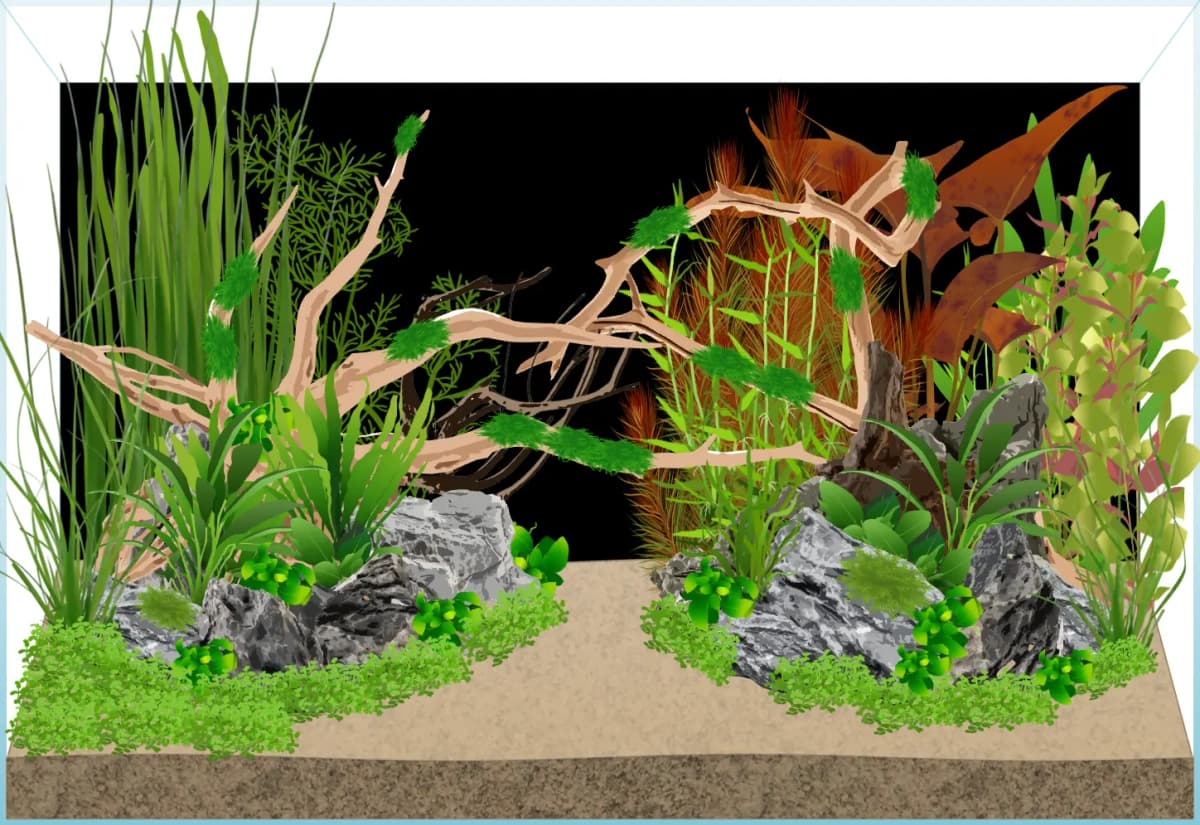
Creating a fish tank with midground plants can be an exciting project. Aquascaping lets you design a beautiful underwater scene.
Inspiration can come from nature, minimalist art, or themed designs. Each style has its unique charm and appeal.
Nature-inspired Layouts
Nature-inspired layouts mimic environments like rivers and forests. They create a peaceful and natural look in your tank.
- Use rocks to form natural-looking caves.
- Choose plants that resemble underwater foliage.
- Add driftwood for a natural aesthetic.
Minimalist Designs
Minimalist designs focus on simplicity and space. These layouts use fewer elements to create a clean look.
| Element | Purpose |
| Single Large Stone | Focal Point |
| Sand Substrate | Simple Base |
| Few Plant Species | Low Maintenance |
Themed Aquascapes
Themed aquascapes tell a story or evoke a specific atmosphere. You can choose a theme like a sunken ship or a fairy garden.
Credit: myaquariumbuilder.com
Frequently Asked Questions
What Are The Best Midground Plants For Fish Tanks?
Best midground plants include Anubias, Java Fern, and Cryptocoryne. They provide good coverage and thrive in moderate light. These plants create natural hiding spots and improve water quality, making your tank visually appealing and healthier for fish.
How Do Midground Plants Benefit Fish Tanks?
Midground plants improve oxygen levels and reduce toxins. They offer shelter and reduce stress for fish. These plants also enhance tank aesthetics and help balance the ecosystem by absorbing excess nutrients.
How To Position Midground Plants In A Fish Tank?
Place midground plants between foreground and background plants for depth. Ensure they have enough space to grow and receive adequate light. Proper positioning creates a natural, layered look and improves tank harmony.
What Lighting Do Midground Plants Need In Aquariums?
Midground plants require moderate lighting, around 2-3 watts per gallon. Use LED or fluorescent lights with a timer for 8-10 hours daily. Proper lighting promotes healthy growth and vibrant colors in plants.
Conclusion
Midground plants add depth and beauty to any fish tank. They create a natural look and provide hiding spots for fish. Choosing the right plants keeps your tank healthy and balanced. Regular care helps plants grow strong and vibrant. A well-planted midground makes your aquarium more enjoyable to watch.
Simple steps lead to a stunning underwater scene. Start small, and watch your tank come alive with life.