
Setting up your fish tank the right way can make all the difference in keeping your aquatic friends healthy and happy. If you want crystal-clear water and a thriving underwater environment, using a canister filter is one of the smartest moves you can make.
But how do you get started? What steps should you follow to make sure your tank runs smoothly? You’ll discover simple, effective tips to set up your fish tank with a canister filter – making maintenance easier and your fish more vibrant.
Keep reading, and you’ll soon have a stunning aquarium that you’ll be proud to show off.

Credit: www.youtube.com
Choosing The Right Canister Filter
A canister filter is great for keeping your fish tank clean. It helps remove dirt and harmful substances from the water.
Picking the right canister filter makes your tank healthier. You need to think about size, features, and energy use.
Filter Types And Features
There are different canister filters with various ways to clean water. Some use mechanical, chemical, and biological methods.
Look for features like easy cleaning, quiet operation, and strong water flow. These make your tank easier to manage.
- Mechanical filtration removes debris and particles
- Chemical filtration uses activated carbon to remove odors and toxins
- Biological filtration helps good bacteria break down waste
- Easy to clean filters save time
- Quiet filters reduce noise in your room
Sizing Your Canister Filter
Choose a filter that matches your tank size. A small filter will not clean big tanks well.
Check the filter’s flow rate. It should cycle the whole tank water 4 to 6 times every hour.
- For tanks up to 20 gallons, pick a filter with 80-120 GPH (gallons per hour)
- For tanks 20-50 gallons, pick 150-250 GPH
- For tanks over 50 gallons, pick filters with 300+ GPH
- Use a larger filter if you have many fish or plants
Energy Efficiency Considerations
Canister filters run all day. Energy use can add up and raise your bills.
Choose filters made with energy-saving motors. They clean well but use less power.
- Look for filters with adjustable flow rates
- Pick models with efficient pump designs
- Choose filters with automatic shut-off or standby modes
- Consider long-term electricity costs, not just price
Preparing Your Fish Tank
Setting up a fish tank with a canister filter needs careful planning. Good preparation helps keep your fish healthy and happy.
This guide covers how to pick the right tank size, choose decorations, and maintain water quality.
Selecting Tank Size And Location
Choose a tank size that fits your space and fish needs. Bigger tanks are easier to keep stable.
Place the tank away from direct sunlight and drafts. Find a flat, sturdy surface near a power outlet.
- Minimum tank size: 20 gallons for beginners
- Avoid placing near windows to control temperature
- Keep away from heaters or air conditioners
- Use a stand that can hold the tank’s weight
Substrate And Decoration Tips
Choose substrate that matches your fish type. Gravel or sand are popular choices.
Decorations give fish places to hide and explore. Use natural items like rocks and plants.
- Rinse substrate before adding it to the tank
- Use smooth decorations to prevent fish injury
- Avoid sharp or toxic materials
- Arrange plants and hiding spots for fish comfort
Water Quality Basics
Good water quality is key for fish health. Test water before adding fish.
Use a canister filter to keep water clean and clear. Change water regularly to remove waste.
- Check pH, ammonia, nitrite, and nitrate levels
- Keep temperature stable for your fish species
- Change 10-20% of water weekly
- Use water conditioner to remove chlorine
Installing The Canister Filter
Setting up a canister filter is important for keeping your fish tank clean. This guide helps you install the filter correctly.
Follow each part carefully. Proper installation will keep water clear and healthy for your fish.
Positioning The Filter Unit
Place the canister filter below the aquarium. It should be close to the tank to avoid long tubes. Make sure it is on a stable surface to prevent vibrations.
- Keep the filter dry and away from water spills
- Ensure easy access for maintenance
- Check that the filter is level
- Use a drip loop on tubes to stop backflow
Connecting Inlet And Outlet Tubes
Attach the inlet tube to the water intake valve on the aquarium. Connect the outlet tube to the water return valve. Make sure tubes are secure and not kinked.
| Tube | Connection Point | Tip |
| Inlet Tube | Water intake valve | Use clamps to secure |
| Outlet Tube | Water return valve | Check for smooth bends |
Priming And Starting The Filter
Priming fills the filter with water before starting. This step stops airlocks and helps the filter work well.
- Close all valves on the tubes
- Fill the canister with water manually
- Open the valves slowly to let water flow
- Plug in the filter and switch it on
- Check for leaks or unusual noises
Maintaining Crystal Clear Water
Keeping water clear in your fish tank is important for your fish’s health. Clean water helps fish stay active and happy.
A canister filter can help you keep water clean by removing dirt and waste. You must follow some key steps to maintain it well.
Regular Cleaning Schedule
Cleaning your fish tank regularly keeps the water clear and safe. Dirt and debris build up over time and must be removed.
- Clean the tank glass weekly to remove algae
- Vacuum the gravel to remove leftover food and waste
- Rinse decorations and plants to keep them free of dirt
- Perform a partial water change every two weeks
Replacing Filter Media
Filter media inside your canister needs regular replacement. Old media cannot clean water well and may harm fish.
| Type of Media | Replacement Frequency | Purpose |
| Mechanical Media | Every 3-4 weeks | Traps debris and particles |
| Chemical Media | Every 4-6 weeks | Removes odors and toxins |
| Biological Media | Replace only if damaged | Houses beneficial bacteria |
Monitoring Water Parameters
Check your tank’s water often. Good water quality keeps fish healthy and water clear.
- Test pH levels weekly to keep water balanced
- Check ammonia and nitrite levels to avoid poison
- Measure nitrate levels to prevent algae growth
- Keep water temperature steady for fish comfort
Troubleshooting Common Issues
Setting up a fish tank with a canister filter can be rewarding. Yet, you might face some challenges. Let’s explore solutions for common issues.
Understanding these problems helps maintain a healthy environment for your fish.
Dealing With Low Water Flow
Low water flow can harm your fish tank’s ecosystem. It might be due to clogs or incorrect setup.
- Check the filter for clogs and clean it.
- Ensure hoses are not kinked or blocked.
- Verify the pump is functioning properly.
Handling Unpleasant Odors
Bad smells in your tank can be a sign of poor water quality. This can affect your fish’s health.
Consider regular water changes and check for excess waste. Make sure your filter is properly maintained to reduce odors.
Preventing And Fixing Leaks
Leaks can cause water loss and damage your home. Identifying the source quickly is crucial.
| Problem | Solution |
| Loose connections | Tighten all fittings |
| Cracked hoses | Replace damaged parts |
| Worn-out seals | Replace seals |
Credit: www.vevor.ca
Enhancing Tank Health
Setting up a fish tank with a canister filter helps keep the water clean. Clean water is important for healthy fish.
A canister filter removes debris and harmful chemicals. It also supports good bacteria that keep the tank balanced.
Balancing Beneficial Bacteria
Beneficial bacteria break down fish waste and reduce toxins. A canister filter gives these bacteria a place to live.
Keep the bacteria healthy by not cleaning the filter media too much. Use tank water to rinse it gently.
- Beneficial bacteria reduce ammonia and nitrite
- Filter media provides surface for bacteria growth
- Avoid over-cleaning to keep bacteria alive
- Use tank water for rinsing filter parts
Using Additional Filtration Methods
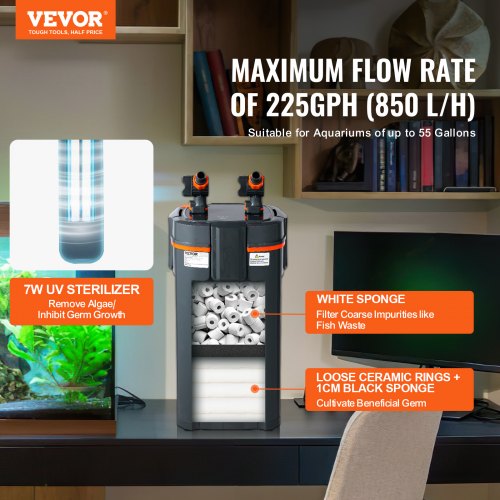
Besides the canister filter, use other filters to improve water quality. Sponge filters and UV sterilizers help a lot.
Sponge filters add more bacteria surface. UV sterilizers kill harmful germs and algae in the water.
- Sponge filters increase beneficial bacteria
- UV sterilizers reduce algae and disease
- Regular water changes support filtration
- Test water to check filter effectiveness
Optimizing Fish Stocking Levels
Do not add too many fish in the tank. Too many fish create more waste than the filter can handle.
Choose the right number of fish for your tank size. This helps keep water clean and fish healthy.
- Stock fish based on tank size and filter capacity
- Avoid overcrowding to reduce stress and waste
- Research fish adult size before buying
- Feed fish properly to limit excess food waste
Credit: www.fleuristesavard.com
Frequently Asked Questions
What Is The Best Canister Filter For Fish Tanks?
The best canister filter depends on tank size and fish type. Choose one with strong flow, multi-stage filtration, and easy maintenance. Popular brands include Fluval, Eheim, and Marineland. Always match filter capacity to your aquarium volume for optimal water clarity and health.
How Do I Set Up A Canister Filter For My Aquarium?
Place the canister filter below the tank to ensure proper water flow. Connect intake and output tubes securely. Prime the filter to remove air, then plug it in. Follow the manufacturer’s instructions for media placement and ensure a tight seal to prevent leaks.
How Often Should I Clean My Canister Filter?
Clean your canister filter every 4-6 weeks to maintain efficiency. Rinse filter media in tank water only to preserve beneficial bacteria. Avoid harsh chemicals. Regular cleaning prevents clogging and keeps water quality high, promoting a healthy environment for your fish.
Can Canister Filters Support Large Fish Tanks?
Yes, canister filters are excellent for large fish tanks. They provide powerful mechanical, chemical, and biological filtration. Their high flow rates and large media capacity handle heavy bioloads efficiently. Choose a filter rated for your tank size to ensure optimal performance.
Conclusion
Setting up a fish tank with a canister filter keeps water clean and clear. The filter helps remove dirt and harmful substances. It creates a healthy space for your fish to live. Regular maintenance of the filter is important for best results.
Choose the right size filter for your tank. With care, your fish will stay happy and healthy. Enjoy watching your beautiful aquarium thrive every day. Simple steps make fish tank care easy and rewarding.