
Setting up your fish tank the right way can make all the difference in keeping your aquatic friends healthy and happy. One simple tool that can transform your tank’s environment is an aerator.
If you want to boost oxygen levels, reduce water stagnation, and create a lively underwater world, you need to know how to set up your fish tank with an aerator properly. Keep reading, because this guide will show you step-by-step how to bring fresh life into your aquarium and make your fish thrive like never before.

Credit: www.youtube.com
Choosing The Right Fish Tank
Setting up a fish tank with an aerator starts with picking the right tank. The tank size and shape affect fish health and water quality.
You also need to consider the material and where to place the tank in your home. These choices help create a good environment for your fish.
Tank Sizes And Shapes
Choose a tank size that fits your space and fish needs. Bigger tanks are easier to maintain and keep stable water conditions.
Shape matters too. Rectangular tanks offer more swimming space. Tall tanks are good for certain fish but may reduce surface area.
- Small tanks (5-10 gallons) suit beginners with few fish
- Medium tanks (20-40 gallons) support more fish and plants
- Large tanks (50+ gallons) offer stable environments for many fish
- Rectangular tanks provide better water circulation
- Bow-front tanks give a unique view but less space
Material Options
Fish tanks come mainly in glass or acrylic. Each has pros and cons for clarity, weight, and durability.
Glass tanks resist scratches and are cheaper. Acrylic tanks are lighter and stronger but scratch easier.
- Glass tanks are heavier and usually less expensive
- Acrylic tanks are lighter and clearer
- Acrylic is better for large or custom-shaped tanks
- Both materials hold water well with proper care
Placement Tips
Place the fish tank in a stable, quiet spot away from direct sunlight. Sunlight can cause algae growth and temperature swings.
Make sure the stand or surface can hold the tank’s weight when full. Check power outlets for the aerator and other equipment.
- Choose a level surface that supports tank weight
- Avoid spots near windows or heaters
- Keep the tank away from heavy foot traffic
- Place near power outlets for aerator and filters
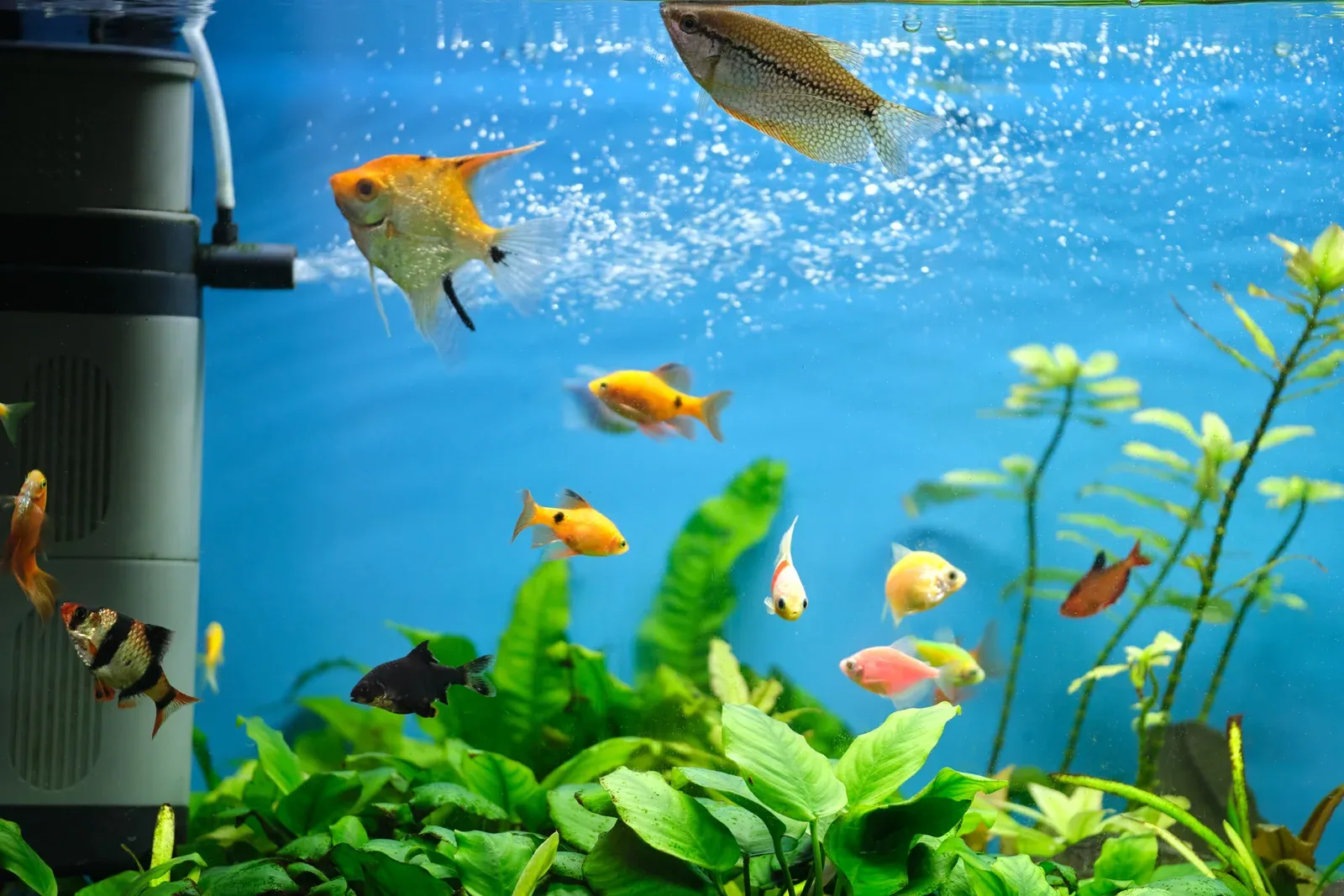
Credit: aquadecorbackgrounds.com
Benefits Of Using An Aerator
Using an aerator in your fish tank helps keep the water healthy for your fish. It adds air to the water, which makes the environment better for fish to live.
Aerators support the natural balance inside the tank. They help with oxygen, water movement, and fish comfort.
Improved Oxygen Levels
Aerators increase the oxygen in the water by bringing air from above the surface. Fish need oxygen to breathe, and more oxygen means healthier fish.
- Prevents oxygen shortage
- Supports fish breathing
- Helps bacteria break down waste
Enhanced Water Circulation
Good water flow stops the water from becoming still. An aerator moves water around the tank, which spreads oxygen and keeps the tank clean.
| Benefit | Effect |
| Even temperature | Keeps fish comfortable |
| Waste removal | Reduces harmful build-up |
| Prevents algae | Stops algae from growing fast |
Reduced Stress For Fish
Aerators create small bubbles and gentle movement. This helps fish feel safe and lowers their stress levels.
- Calms fish in the tank
- Improves fish health
- Supports natural behavior
Types Of Aerators
Aerators help add oxygen to the water in a fish tank. They keep the water fresh for the fish.
There are different types of aerators. Each one works in a special way to move air into the tank.
Air Stones And Diffusers
Air stones and diffusers break air into tiny bubbles. These bubbles spread oxygen through the water.
They are simple to use. You connect them to an air pump with a tube.
- Air stones are small and come in many shapes.
- Diffusers create finer bubbles than air stones.
- Tiny bubbles help oxygen reach fish better.
Bubble Walls
Bubble walls are long tubes with many tiny holes. They make a wall of bubbles in the tank.
They look nice and help mix the water well. Fish enjoy swimming through the bubbles.
- Create a strong flow of oxygen in the water
- Good for large tanks that need more air
- Make the tank more interesting to watch
Undergravel Air Pumps
Undergravel air pumps push air under the gravel at the tank bottom. This moves water through the gravel.
This helps clean the water and adds oxygen. The gravel acts like a filter for the tank.
- Improves water flow from the bottom
- Helps keep gravel clean and healthy
- Supports natural biological filtration
Setting Up The Aerator
Adding an aerator to your fish tank helps keep the water healthy. It adds oxygen and improves circulation. Setting up the aerator correctly is important for your fish’s well-being.
This guide covers how to choose the right pump, where to place the aerator, and how to connect and test it properly.
Selecting The Right Pump
Choose a pump that fits your tank size. A pump that is too strong can stress the fish. One that is too weak will not circulate enough air.
- Check the pump’s air output in liters per minute (L/min)
- Match the pump size to your tank’s volume
- Look for energy-efficient and quiet models
- Consider durability and ease of maintenance
Positioning The Aerator
Place the aerator where it can spread oxygen evenly. Avoid spots with strong water flow that can disturb the fish. The aerator should work with the tank’s shape and decorations.
| Location | Reason |
| Near tank bottom | Improves oxygen circulation at all levels |
| Close to filter outlet | Enhances water movement |
| Avoid corners | Prevents dead water zones |
| Away from fish resting areas | Reduces stress |
Connecting And Testing
Securely connect the aerator tubing to the pump. Check for leaks or loose fittings. Turn on the pump and observe the air bubbles. They should be steady and spread evenly.
- Attach tubing firmly to the pump outlet
- Use clips or suction cups to hold tubing in place
- Plug in the pump and switch it on
- Look for steady, fine bubbles in the tank
- Adjust tubing or position if airflow is uneven
Maintaining Water Quality
Keeping the water in your fish tank clean is important for healthy fish. An aerator helps by adding oxygen to the water.
Regular checks and maintenance keep the water quality high. This ensures a safe environment for your fish.
Regular Cleaning
Cleaning the tank often prevents buildup of harmful substances. This keeps the water clear and fresh for your fish.
- Change 10-15% of the water weekly
- Remove uneaten food and debris
- Clean the tank walls and decorations
Monitoring Ph And Temperature
Fish need stable pH levels and temperatures. Checking these regularly helps keep the fish healthy.
Use a reliable pH test kit and a thermometer. Keep the pH between 6.8 to 7.5, and the temperature around 72-78°F.
Using Filters Effectively
Filters remove waste and toxins from the water. They are essential for maintaining a clean tank.
| Filter Type | Function |
| Mechanical | Traps debris |
| Chemical | Removes toxins |
| Biological | Breaks down waste |
Fish Compatibility With Aerated Tanks
Aerators add oxygen to fish tanks by moving water. This helps fish breathe better and stay healthy.
Not all fish like strong aeration. Some need calm water. Knowing which fish live well with aerators is important.
Species That Thrive With Aeration
Many fish enjoy well-oxygenated water. Active swimmers and tropical fish usually do best with aeration.
- Goldfish: They like cool, oxygen-rich water.
- Tetras: Small and active, they need good oxygen.
- Guppies: They swim a lot and prefer aerated tanks.
- Barbs: These fish are energetic and thrive on oxygen.
- Cichlids: Many types like flowing water with oxygen.
Adjusting Aeration For Sensitive Fish
Some fish get stressed by strong water flow or bubbles. Lower aeration helps these fish feel safe.
Use gentle aerators or reduce air output. Watch your fish for signs of stress, like hiding or slow swimming.
- Betta fish prefer calm water with low aeration.
- Discus fish need stable, gentle water movement.
- Angelfish like moderate aeration but avoid strong currents.
Troubleshooting Common Issues
Setting up a fish tank with an aerator helps keep fish healthy. Sometimes, issues can occur with the aerator. Fixing these problems is important for a good tank environment.
This guide covers common problems like noise, bubble flow, and algae growth. Follow simple tips to keep your aerator working well.
Aerator Noise Problems
Sometimes, the aerator makes loud or strange noises. This can scare fish and disturb the tank.
Noise often happens because of loose parts or air leaks. Check the tubing and connections. Tighten or replace any loose or damaged parts.
- Make sure the aerator is on a flat surface
- Check for cracks or holes in the air tube
- Clean the air stone to remove blockages
Inconsistent Bubble Flow
Uneven bubbles can reduce oxygen in the water. This happens if the aerator or air stone is clogged.
Clean the air stone regularly. Also, check if the air pump is working well. Replace the pump if it is weak or broken.
- Remove dirt from the air stone with water and brush
- Check air pump for steady airflow
- Replace old or worn air stones
Algae Growth Control
Too much algae can harm fish and make the tank look dirty. Aerators can help control algae by moving water.
To control algae, keep the tank clean and avoid overfeeding fish. Use a timer for the aerator to keep water moving but not too much.
- Change water regularly to reduce nutrients
- Limit light exposure to prevent algae growth
- Use algae eaters or plants to balance the tank
Enhancing Aquarium Aesthetics
A well-designed fish tank is more than just a home for fish. It is a beautiful part of your room. An aerator helps keep the water clean and adds charm.
With the right setup, your aquarium becomes a living piece of art. It enhances the room’s ambiance and relaxes the mind.
Incorporating Plants And Decorations
Plants and decorations bring life to your tank. They add natural beauty and provide hiding spots for fish.
Choose plants that are easy to maintain. Add decorations that match your style and make the tank inviting.
- Use silk plants for easy care
- Arrange rocks to create caves
- Add driftwood for a natural look
Using Lighting To Complement Aeration
Lighting enhances the tank’s look and supports plant growth. It makes the colors of fish and decorations stand out.
Set the lights to mimic natural day and night cycles. This keeps fish healthy and active.
- LED lights save energy and last long
- Blue lights create a calming effect
- Adjust lights to prevent algae growth

Credit: www.amazon.ca
Frequently Asked Questions
What Is The Purpose Of An Aerator In A Fish Tank?
An aerator increases oxygen levels by circulating air in the water. It improves fish health and reduces harmful gases. Proper aeration supports beneficial bacteria and keeps the tank environment stable and clean.
How Do I Install An Aerator In My Fish Tank?
Place the aerator near the tank bottom for best oxygen distribution. Connect the air pump to the aerator with tubing. Ensure the pump is outside the tank and check for continuous airflow.
Can An Aerator Prevent Fish Tank Algae Growth?
Yes, an aerator helps by improving water circulation. This reduces stagnant areas where algae thrive. Proper oxygenation also supports beneficial bacteria that compete with algae for nutrients.
What Size Aerator Is Best For My Fish Tank?
Choose an aerator based on your tank’s volume and fish load. Larger tanks or more fish need stronger aeration. Check product guidelines to match aerator capacity with your tank size.
Conclusion
Setting up a fish tank with an aerator keeps water fresh and oxygen-rich. Fish stay healthy and active with good air circulation. Aerators help prevent water from getting dirty fast. They also support beneficial bacteria that clean the tank naturally.
Simple steps can make your tank a safe home for fish. Enjoy watching your fish swim happily in clean, fresh water. A well-aerated tank creates a better life for your aquatic pets. Keep the aerator running daily for best results and happy fish.