
Setting up a fish tank can be exciting, but what happens when your fish start acting territorial? If you’ve noticed your fish chasing or hiding from each other, it’s a sign you need to rethink your tank setup.
Understanding territorial behavior is key to creating a peaceful underwater home. In this guide, you’ll discover simple tips and tricks to design a tank that keeps your fish calm and happy. Ready to transform your aquarium and enjoy a harmonious fish community?
Let’s dive in!
Choosing The Right Tank Size
Setting up a fish tank for territorial fish requires careful planning. Tank size plays a big role in keeping peace among fish.
Fish that defend their space need enough room to avoid fights and stress. Choosing the right tank size helps create a healthy environment.
Space Needs For Territorial Species
Territorial fish claim areas in the tank as their own. They need space to swim and hide without feeling crowded.
Smaller tanks cause stress and fighting. Bigger tanks help fish keep their distance and reduce aggression.
- Each fish needs enough room for its territory
- Fish need hiding spots to feel safe
- Open swimming space helps fish avoid conflicts
Benefits Of Larger Tanks
Larger tanks give fish more room to spread out. This lowers stress and keeps fish healthier.
Big tanks also let you add more decorations and plants. These create natural barriers and places to hide.
- More space reduces fish fights
- Better water quality with bigger volume
- More room for natural behaviors
- Can house more fish comfortably

Credit: www.blessingsaquarium.com
Selecting Compatible Fish
Choosing the right fish is key to a peaceful tank. Fish with strong territorial behavior need special care.
Understanding which fish can live together helps keep your aquarium healthy and stress-free.
Identifying Territorial Fish Types
Territorial fish defend their space against others. They often chase or nip at tank mates.
- Cichlids are known for strong territorial instincts.
- Betta fish guard their area fiercely.
- Some catfish species claim parts of the tank bottom.
- Damselfish hold specific coral spots in marine tanks.
Mixing Aggressive And Peaceful Species
Mixing fish with different temperaments can cause fights. Choose tank mates carefully.
| Fish Type | Behavior | Compatibility Tips |
|---|---|---|
| Aggressive (e.g., Cichlids) | Highly territorial, may attack others | Keep with similar sized, tough fish only |
| Peaceful (e.g., Tetras) | Non-aggressive, shy | Avoid placing with aggressive fish |
| Semi-aggressive (e.g., Gouramis) | Moderate territorial behavior | Use lots of hiding spots and space |
Creating Natural Boundaries
Fish often show territorial behavior in tanks. Creating natural boundaries helps reduce fights. It gives each fish its own space to feel safe.
Using decorations and natural items can divide the tank into clear zones. These zones help fish know where their territory begins and ends.
Using Decorations To Define Territories
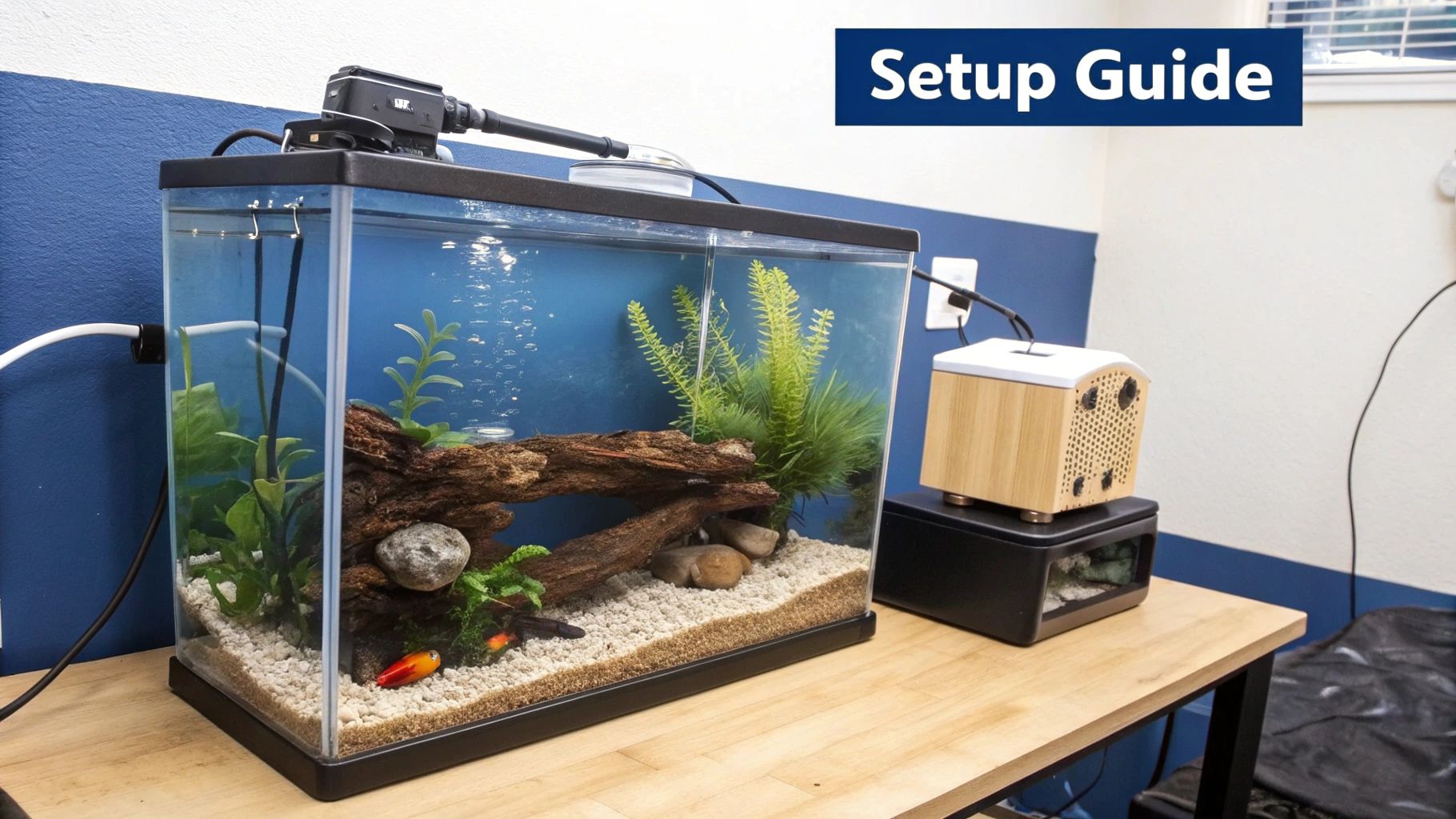
Decorations like caves, driftwood, or themed ornaments create visual barriers. Fish see these as borders and avoid crossing into others’ spaces.
- Place caves or tunnels to give hiding spots
- Use driftwood to break open areas
- Arrange ornaments to form separate zones
- Keep spaces around decorations open for swimming
Plants And Rocks As Dividers
Live plants and rocks work well as natural dividers. They block sight lines and create physical barriers fish respect.
| Divider Type | Benefits | Placement Tips |
| Live Plants | Softens tank look, offers hiding spots | Group plants in clusters between territories |
| Rocks | Creates solid barriers, prevents swimming across zones | Stack rocks firmly to avoid collapse |
| Combination | Provides both cover and physical borders | Use rocks as base, plants around edges |
Credit: clixfueling.com
Optimizing Tank Layout
Setting up a fish tank for territorial fish requires careful planning. A good tank layout reduces fights and stress among fish.
Creating spaces where fish can hide and see barriers helps them feel safe. This guide covers key ways to arrange your tank.
Placement Of Hiding Spots
Hiding spots give fish places to escape and claim as their own. They lower aggression and protect weaker fish.
- Use rocks, caves, or driftwood to build shelters
- Place hiding spots near the bottom and mid-levels of the tank
- Arrange several hiding spots evenly around the tank
- Ensure each fish can find its own space without crowding others
- Keep some open swimming areas between hiding spots
Establishing Visual Barriers
Visual barriers break the line of sight between fish. This reduces fights over territory and helps fish feel secure.
| Type of Barrier | Material | Placement Tips |
|---|---|---|
| Rock Walls | Natural stones | Stack in corners or along tank sides |
| Plant Clusters | Live or artificial plants | Group densely to create cover |
| Decorative Items | Driftwood, ceramic caves | Place between open spaces to block views |
Maintaining Water Quality
Maintaining water quality is crucial for fish tanks with territorial behavior. Clean water helps fish thrive and reduces stress.
Proper water quality ensures a healthy environment. It prevents disease and supports fish well-being.
Filtration Systems For Stability
Filtration systems remove waste and toxins. They keep the water stable and clean for fish.
- Mechanical filters trap debris and particles.
- Biological filters support beneficial bacteria.
- Chemical filters remove toxins and impurities.
Regular Testing And Maintenance
Regular testing checks water parameters. This includes pH, ammonia, and nitrate levels.
| Parameter | Ideal Range |
| pH | 6.5 – 7.5 |
| Ammonia | 0 ppm |
| Nitrate | <20 ppm |
Feeding Practices To Reduce Conflict
Feeding fish correctly helps lower fights in a territorial tank. Careful feeding keeps peace among fish.
Two key ways to reduce conflict are spreading food well and picking the right diets.
Distributing Food Evenly
Give food in many spots to stop fights over one area. Fish get their share and do not compete as much.
- Scatter flakes or pellets across the tank surface
- Use multiple feeding rings or zones
- Feed small amounts several times daily
- Place food near hiding spots for shy fish
- Keep the feeding routine steady and calm
Choosing Appropriate Diets
Pick food types that suit your fish species. Good diets keep fish healthy and less aggressive.
| Fish Type | Best Diet | Notes |
| Cichlids | High-protein pellets | Supports growth and color |
| Bottom Dwellers | Sinking wafers | Food reaches the tank bottom |
| Herbivores | Vegetable flakes | Prevents hunger and fights |
| Omnivores | Mixed diet | Includes flakes and frozen food |
Monitoring Fish Behavior
Keeping an eye on your fish helps you spot problems early. Fish show signs that tell you if they are okay or stressed.
Watching fish closely allows you to keep peace in a tank with territorial species. Knowing what to look for keeps your fish healthy.
Signs Of Stress And Aggression
Stress and aggression can make fish sick or cause fights. Look for these signs to act fast.
- Fish hiding more than usual
- Fins clamped close to the body
- Rapid breathing or gasping at the surface
- Chasing or biting other fish
- Loss of color or unusual spots
- Refusing to eat
Intervening When Necessary
Taking action can stop fights and reduce stress. Use these steps to help your fish.
| Action | Description | Purpose |
| Separate Aggressive Fish | Move the aggressive fish to another tank or section. | Prevent injury and calm the tank |
| Adjust Tank Decor | Add plants or rocks to break sight lines. | Reduce territorial disputes |
| Check Water Quality | Test and maintain clean water parameters. | Lower fish stress |
| Feed on Schedule | Offer food at regular times and amounts. | Keep fish healthy and less aggressive |
Adjusting Tank Conditions Over Time
Setting up a fish tank involves more than adding water and fish. Over time, you need to adjust conditions to keep fish happy. Fish can be territorial, so changes help maintain peace.
Regular monitoring allows you to adapt the environment. Adjustments ensure the tank stays healthy for all inhabitants. Pay attention to fish behavior and tank balance.
Adapting To Growth And Changes
Fish grow and change over time, impacting the tank’s dynamics. Larger fish need more space, and their behavior can shift. Adjust tank size as fish grow to reduce stress.
Young fish might be peaceful, but adults can become territorial. Monitor their interactions and be ready to separate aggressive fish if necessary.
| Growth Stage | Action Required |
| Juvenile | Frequent feeding, observe interactions |
| Adult | Check space, observe for aggression |
Rearranging Decor For Balance
Decor plays a vital role in a tank’s harmony. Fish use rocks and plants to hide and establish territory. Rearranging decor helps in preventing dominance by a single fish.
Move items around to create new hiding spots. This helps in breaking established territories and reducing aggression. Variety in decor keeps fish curious and active.
- Rocks provide hiding spots
- Plants offer cover and reduce stress
- Decor changes encourage exploration

Credit: www.aqqapet.com
Frequently Asked Questions
How To Prevent Fish Territorial Aggression In Tanks?
To prevent territorial aggression, provide ample hiding spots and visual barriers. Use larger tanks with enough space. Avoid overcrowding and mix compatible species. Regularly monitor fish behavior and rearrange decorations if needed.
What Tank Size Is Ideal For Territorial Fish?
A larger tank, typically 30 gallons or more, reduces territorial disputes. Bigger spaces allow fish to establish separate zones. Size depends on species, but more room generally means less aggression and stress.
Which Fish Species Show Strong Territorial Behavior?
Cichlids, bettas, and some gouramis are highly territorial. These species defend space aggressively. Knowing this helps in tank planning and species selection to minimize conflicts.
How To Design Tank Layout For Territorial Fish?
Use rocks, plants, and caves to create distinct territories. Visual barriers reduce direct line of sight. This setup lowers aggression by giving fish private spaces and hiding spots.
Conclusion
Setting up a fish tank for territorial fish needs care and patience. Give each fish enough space to claim its own area. Add plenty of hiding spots with rocks and plants. Watch your fish daily to spot any signs of stress or fighting.
A well-planned tank keeps fish happy and peaceful. Small changes can make a big difference in their behavior. Enjoy your fish and their natural actions in a balanced tank. Keep learning and adjusting for the best results.