
Are you thinking about adding a splash of life and color to your apartment? Setting up a fish tank might be the perfect way to do it.
But you might wonder, how do you create a beautiful, thriving aquarium in a small space without stress or hassle? This guide will show you simple steps to design a fish tank setup that fits your apartment perfectly. You’ll discover easy tips to keep your fish happy and your tank stunning.
Keep reading to transform your space and enjoy the calming presence of your very own underwater world.
Choosing The Right Tank
Setting up a fish tank in an apartment needs careful thought. Picking the right tank makes sure your fish stay healthy and happy.
Your tank should fit your space and lifestyle. This guide helps you choose the best tank for your apartment.
Size And Shape Considerations
Choose a tank size that fits your apartment space. Bigger tanks need more care but give fish more room.
The shape of the tank affects fish swimming and tank placement. Some shapes fit better in corners or narrow spaces.
- Small tanks (5-10 gallons) fit tight spaces but need more cleaning
- Medium tanks (20-30 gallons) balance size and maintenance
- Rectangular tanks offer more swimming space than tall tanks
- Bow-front tanks add style but take up more room
Material Options
Fish tanks usually come in glass or acrylic. Each material has pros and cons for apartment living.
Glass tanks resist scratches well and are cheaper. Acrylic tanks are lighter and less likely to break.
- Glass tanks are heavy and fragile but clear
- Acrylic tanks weigh less and are impact-resistant
- Acrylic may scratch easily but can be polished
- Check tank quality and thickness for safety
Space Assessment
Measure your available space before buying a tank. Consider floor strength and nearby furniture.
Make sure you can reach the tank for cleaning and feeding. Leave space for equipment like filters and lights.
- Measure tank length, width, and height carefully
- Check floor weight limits for large tanks
- Allow extra space around the tank for maintenance
- Think about sunlight exposure and temperature changes

Credit: talis-us.com
Essential Equipment
Setting up a fish tank in an apartment needs the right tools. Good equipment keeps fish healthy and happy.
This guide covers the basic gear you need to start your tank properly.
Filters And Pumps
Filters clean the water by removing waste and debris. Pumps help move water through the filter and add oxygen.
Without filters and pumps, water can get dirty fast. Choose a filter that fits your tank size and fish type.
- Internal filters fit inside the tank and are easy to install
- External filters sit outside and handle bigger tanks
- Air pumps improve water circulation and oxygen levels
Lighting Choices
Good lighting shows off your fish and helps plants grow. It also keeps a natural day-night cycle in the tank.
Use LED lights for energy savings and low heat. Avoid bright lights that stress the fish.
- Choose lights designed for aquariums
- Use timers to control light hours
- Adjust brightness based on fish and plants
Heaters And Thermometers
Most tropical fish need warm water to stay healthy. A heater keeps the tank at the right temperature.
A thermometer helps you check the water temperature every day. Avoid sudden temperature changes.
- Pick a heater with the right wattage for your tank size
- Use a reliable thermometer to monitor temperature
- Place heater and thermometer where you can easily see them
Selecting Suitable Fish
Setting up a fish tank in an apartment needs careful fish selection. Small spaces require fish that stay healthy and happy in limited water.
Choosing the right species helps keep your tank balanced and your fish active. Learn about fish types, social habits, and tank compatibility.
Species For Small Spaces
Some fish species are perfect for small tanks. They grow slowly and do not need much swimming room.
- Betta fish: colorful and small, good for single tanks.
- Neon tetras: small schooling fish that add bright colors.
- Guppies: active and easy to care for in small spaces.
- Cherry shrimp: tiny and help keep the tank clean.
- Corydoras catfish: bottom dwellers that stay small and peaceful.
Community Vs. Solo Fish
Decide if you want one fish or a group. Some fish live well alone, others need friends.
| Type | Example Fish | Notes |
| Solo | Betta | Territorial, needs own space |
| Community | Neon Tetras | Swim in groups, peaceful |
| Community | Guppies | Social, colorful |
| Solo or Pair | Corydoras | Bottom dwellers, prefer groups |
Compatibility Tips
Keep fish peaceful and healthy by choosing compatible species. Avoid mixing aggressive with shy fish.
- Match fish with similar water and temperature needs.
- Keep fish size differences small to avoid bullying.
- Avoid overcrowding to reduce stress and disease.
- Research fish behavior before adding to your tank.
- Provide hiding spots for shy fish to feel safe.
Setting Up The Aquarium
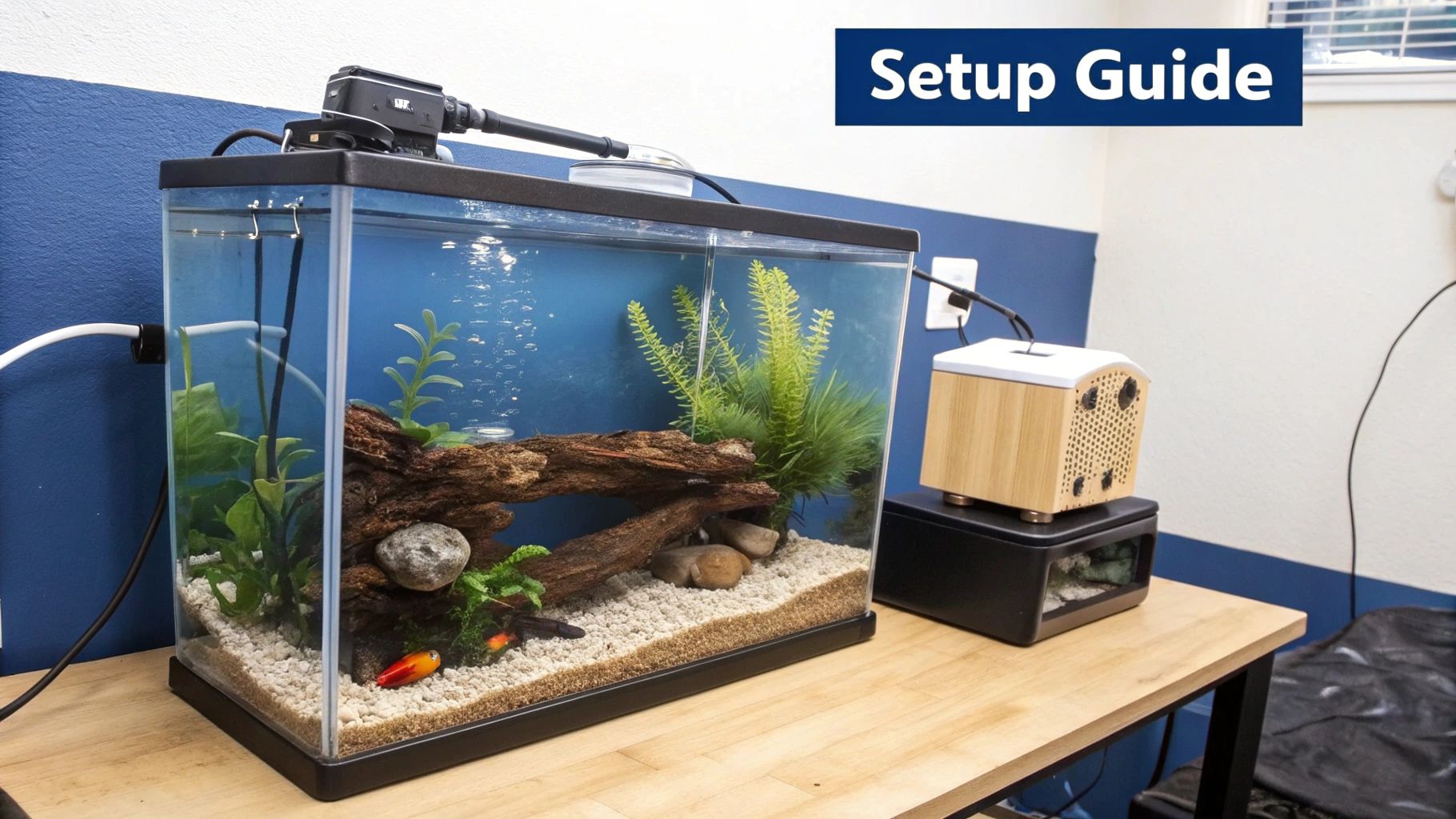
Setting up a fish tank in an apartment is a fun and calming hobby. It needs careful planning to keep fish healthy and happy.
This guide helps you prepare the tank step-by-step. You will learn about substrate, decorations, and cycling the tank.
Preparing The Substrate
Substrate is the material on the tank bottom. It supports plants and fish and helps good bacteria grow.
Choose substrate based on your fish and plants. Rinse it well to remove dust before adding it to the tank.
- Gravel is good for most fish and plants
- Sand works well for bottom feeders
- Plant substrate helps aquatic plants grow
- Rinse substrate with water until clear
Arranging Decorations
Decorations provide hiding spots and make the tank look nice. Use natural and safe items to avoid harming fish.
Place decorations carefully. Leave enough space for fish to swim and for cleaning the tank later.
- Use rocks, driftwood, or aquarium-safe ornaments
- Add live or fake plants for shelter and beauty
- Do not overcrowd the tank with decorations
- Secure decorations so they do not fall or float
Filling And Cycling The Tank
Fill the tank slowly to avoid disturbing the substrate. Use dechlorinated water safe for fish.
Cycling the tank builds good bacteria that clean fish waste. This process takes 4 to 6 weeks before adding fish.
- Fill tank with clean, treated water
- Turn on filter and heater if needed
- Test water regularly for ammonia and nitrites
- Wait until ammonia and nitrites are zero before adding fish
Maintaining Water Quality
Setting up a fish tank in your apartment is exciting. Keeping the water clean is important for fish health. Follow these steps to maintain water quality.
Testing Parameters
Regularly test water to ensure a safe environment for fish. Use a water testing kit to check key parameters.
- pH levels should be between 6.5 and 7.5.
- Ammonia and nitrite levels must be at zero.
- Nitrate levels should be below 40 ppm.
Regular Water Changes
Changing water is important for removing waste. It keeps the tank clean and healthy for fish.
Replace 10-15% of the water weekly. Use a siphon to remove debris from the gravel.
Dealing With Algae
Algae can make your tank look dirty. It grows when there is too much light or nutrients.
Reduce tank lighting to 8 hours a day. Add algae-eating fish like snails or shrimp.

Credit: www.reddit.com
Lighting And Plant Care
Setting up a fish tank in an apartment needs careful attention. Lighting and plant care are key parts.
Good light helps plants grow and keeps fish healthy. You must balance light and plant needs.
Choosing Aquarium Plants
Pick plants that fit small spaces and low light. Some plants grow well in apartments.
Easy plants need less care and light. They stay healthy in apartment tanks.
- Java Fern
- Anubias
- Marimo Moss Balls
- Amazon Sword
- Cryptocoryne
Balancing Light And Growth
Plants need enough light to grow but not too much. Too much light causes algae.
Use LED or fluorescent lights for 8 to 10 hours daily. This helps plants thrive.
- Use a timer to control light hours
- Keep lights 6 to 12 inches above the tank
- Adjust light based on plant type
- Watch for algae growth as a light sign
Preventing Plant Diseases
Healthy plants stay green and strong. Watch for spots, holes, or slimy leaves.
Remove dead leaves and clean the tank regularly. This stops diseases from spreading.
- Keep water clean with regular changes
- Avoid overfeeding fish to reduce waste
- Quarantine new plants before adding
- Use plant-safe treatments if needed
Daily And Weekly Care
Setting up a fish tank in an apartment needs daily and weekly attention. Regular care keeps fish healthy and the tank clean. This guide covers feeding, health checks, and cleaning routines.
Simple daily and weekly tasks help maintain a balanced environment. Consistency is key to avoid problems and keep fish happy.
Feeding Schedules
Feed your fish small amounts once or twice a day. Overfeeding can pollute the water and harm fish.
- Feed only as much as fish eat in 2-3 minutes.
- Use high-quality fish food suitable for your species.
- Skip feeding once a week to help fish digest well.
- Remove leftover food after feeding time.
Monitoring Fish Health
Check fish daily for signs of stress or illness. Healthy fish swim actively and have clear eyes and colors.
| Symptom | Possible Cause | Action |
| Clamped fins | Stress or poor water | Test water and improve quality |
| White spots | Ich parasite | Treat with medication |
| Gasping at surface | Low oxygen | Increase aeration |
| Loss of appetite | Illness or stress | Isolate fish and observe |
Cleaning Routine
Clean the tank weekly to keep water clear and safe. Remove waste and change part of the water regularly.
- Change 20-30% of water weekly.
- Use a gravel vacuum to clean the substrate.
- Wipe inside glass to remove algae.
- Rinse filter parts in tank water monthly.
- Do not clean all equipment at once to keep beneficial bacteria.
Credit: clixfueling.com
Troubleshooting Common Issues
Setting up a fish tank in an apartment can be rewarding. But, problems may arise that need fixing.
This guide will help you tackle common issues to keep your fish healthy and your tank clear.
Handling Fish Stress
Fish stress can occur due to sudden changes in the tank. It is important to keep the environment stable.
Ensure the water temperature is consistent. Check for overcrowding and provide enough hiding spots.
- Keep the tank away from loud noises
- Feed your fish at the same time daily
- Monitor water quality with a testing kit
Dealing With Cloudy Water
Cloudy water can make your tank look unappealing. It may result from overfeeding or poor filtration.
Reduce the amount of food you give your fish. Check the filter and clean it if necessary.
- Perform regular water changes
- Avoid overstocking your tank
- Consider adding live plants
Fixing Equipment Failures
Equipment failures can disrupt your tank’s balance. Filters, heaters, and lights must work properly.
Check power connections if equipment stops working. Replace any broken parts immediately.
- Keep spare parts handy
- Regularly inspect equipment for wear and tear
- Read the manufacturer’s instructions carefully
Frequently Asked Questions
What Size Fish Tank Is Best For Apartments?
A 10 to 20-gallon tank suits most apartments well. It fits small spaces and is easier to maintain. This size supports a healthy aquatic environment and allows for a variety of fish species.
How Do I Maintain Water Quality In An Apartment Fish Tank?
Regular water changes, proper filtration, and testing are key. Change 10-20% of the water weekly. Use a reliable filter and test water parameters to keep fish healthy and stress-free.
Which Fish Species Thrive In Small Apartment Tanks?
Betta fish, guppies, and tetras do well in small tanks. They require minimal space and adapt easily to apartment life. Always research species compatibility before stocking your tank.
How Can I Reduce Fish Tank Noise In Apartments?
Choose a quiet filter and place the tank on a soft surface. Avoid loud air pumps and seal any gaps to minimize vibration and noise disturbances.
Conclusion
Setting up a fish tank in your apartment can bring calm and beauty. Choose the right size and place carefully. Keep the tank clean and feed fish on time. Watch your fish grow and enjoy their colors. Small steps make a big difference in fish care.
Start simple, then add decorations or plants later. A fish tank can brighten your home and mood. It’s a fun hobby that anyone can try. With patience and care, your fish will thrive happily.