
Are you curious about dwarf cichlids and want to know how to identify them with confidence? Whether you’re a beginner or an experienced fish keeper, recognizing these small but stunning fish can be tricky.
Your aquarium will thank you when you can spot the unique colors, shapes, and behaviors that set dwarf cichlids apart. Keep reading, and you’ll discover simple tips and tricks that make identification easy and fun—helping you choose the perfect additions for your tank.

Credit: ukaquarist.wordpress.com
Dwarf Cichlids Basics
Dwarf cichlids are small freshwater fish popular in home aquariums. They come from many parts of South America and Africa. These fish are known for their bright colors and interesting behaviors.
Learning about dwarf cichlids helps keep them healthy and happy. This guide covers their size, habitat, features, and behavior.
Size And Habitat
Dwarf cichlids usually grow between 2 to 4 inches long. They live in calm waters like streams, rivers, and small lakes. These fish prefer areas with plants and hiding places.
- Size range: 2 to 4 inches
- Habitat: slow-moving rivers and streams
- Environment: areas with plants and rocks
- Water type: soft and slightly acidic
Common Features
| Feature | Description |
|---|---|
| Body Shape | Compact and oval |
| Color | Bright with spots or stripes |
| Fins | Rounded or slightly pointed |
| Size | Small, under 4 inches |
Behavior Patterns
Dwarf cichlids show interesting social behaviors. They can be shy but may become bold over time. These fish often defend small territories and care for their eggs.
- Territorial but less aggressive than larger cichlids
- Pairs form strong bonds during breeding
- They clean and guard their eggs carefully
- Active swimmers that enjoy exploring
Popular Species
Dwarf cichlids are small, colorful fish popular in home aquariums. They come in many species with unique traits.
Learning to identify popular dwarf cichlid species helps keepers choose the best fish for their tanks.
Apistogramma Varieties
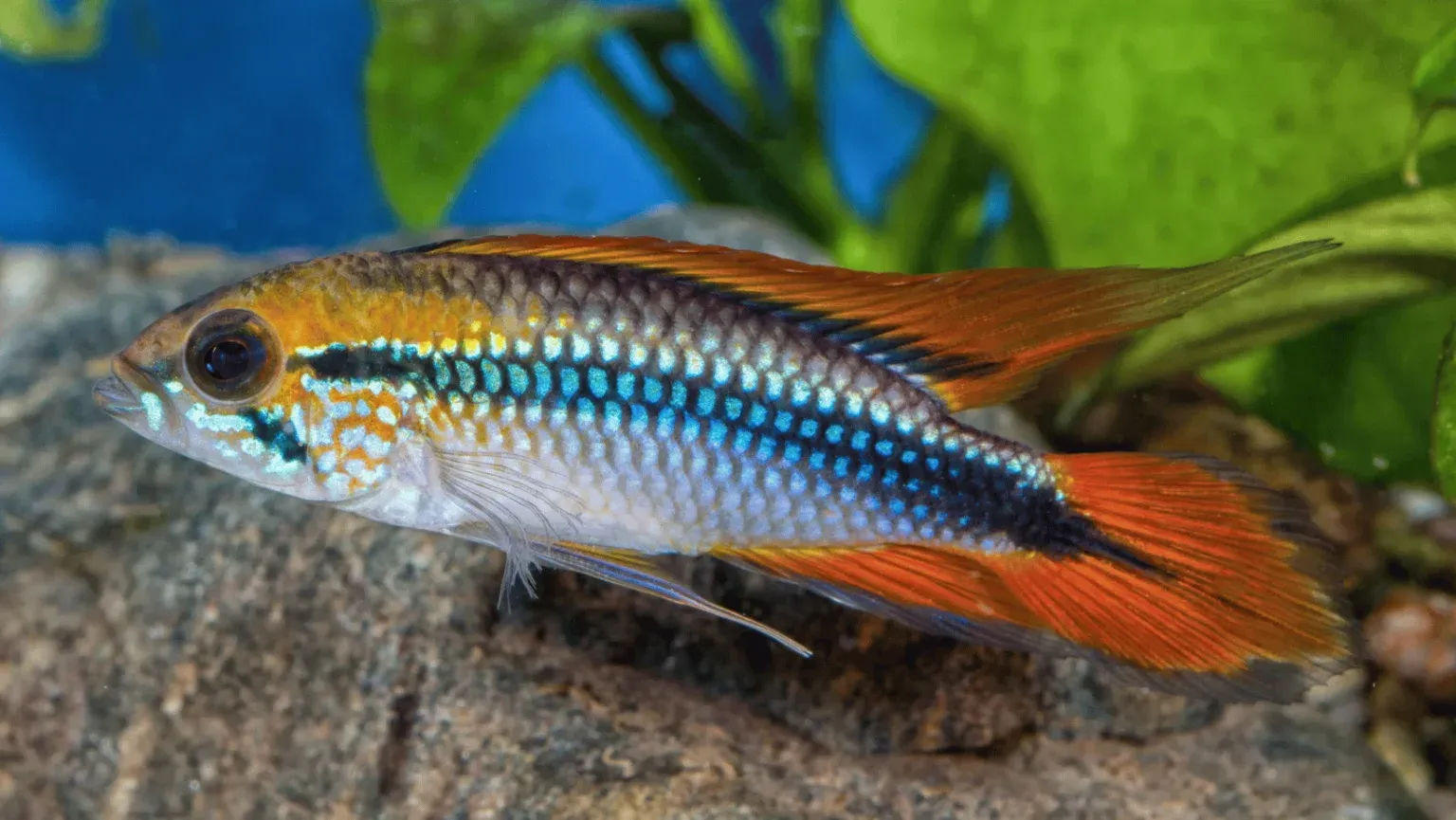
Apistogramma is a large group of dwarf cichlids from South America. They show many colors and patterns.
They are known for their bright fins and active behavior. Many hobbyists enjoy their variety.
- Apistogramma cacatuoides: Yellow with red fins
- Apistogramma agassizii: Brown with blue highlights
- Apistogramma borellii: Stripes with red spots
- Apistogramma trifasciata: Three distinct stripes
Ram Cichlids
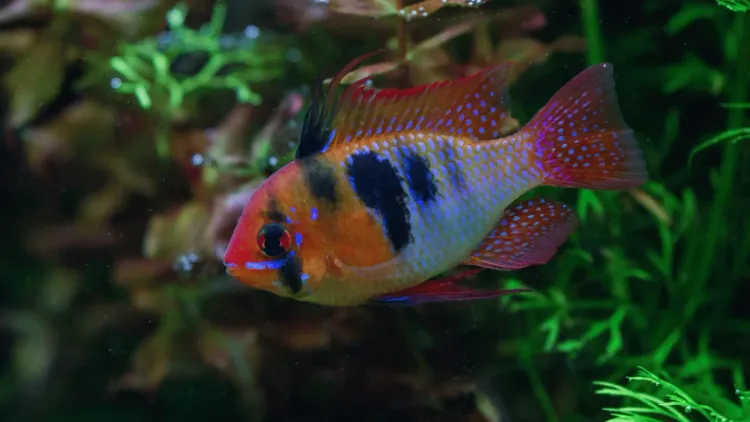
Ram cichlids are small, peaceful fish with bright colors. They come from Venezuela and Colombia.
Rams have rounded bodies and large eyes. They are easy to spot due to their vibrant blue and red markings.
- Mikrogeophagus ramirezi: Blue and yellow with red spots
- Mikrogeophagus altispinosus: More muted colors, sandy tones
Shell Dwellers
Shell dwellers live in empty snail shells. They are tiny and shy but very interesting to watch.
These cichlids use shells for shelter and breeding. They come mostly from Lake Tanganyika in Africa.
- Neolamprologus multifasciatus: Small with stripes
- Neolamprologus brevis: Larger, brownish with patterns
- Lamprologus ocellatus: Bright spots on body and fins
Keyhole Cichlids
Keyhole cichlids are named for the keyhole-shaped mark on their sides. They are peaceful and grow a bit larger.
They have silver to gray bodies with a dark spot. These fish come from South America and like calm waters.
Color Patterns
Dwarf cichlids show many color patterns. These colors help identify different species.
The colors can vary by age, mood, and environment. Knowing these patterns helps in recognition.
Body Markings
Body markings are distinct spots, stripes, or bars on dwarf cichlids. They make each species unique.
Some species have vertical stripes, while others have horizontal bands. Markings can change with stress or breeding.
- Vertical bars are common in Apistogramma species
- Spots appear on bodies of some species like Mikrogeophagus
- Horizontal lines may run along the body in certain fish
Fin Colors
Fin colors vary a lot among dwarf cichlids. Bright fins often signal health and breeding readiness.
Some fins have clear edges, while others are fully colored. Color intensity may increase during courtship.
- Red or orange edges on dorsal fins are common
- Blue or green shades appear on anal fins in some species
- Tail fins can have spots or solid colors
Sexual Dimorphism
Males and females often look different. This difference is called sexual dimorphism.
Males usually show brighter colors and longer fins. Females tend to have duller colors and smaller fins.
- Males have more vivid body markings
- Females are smaller with less intense fin colors
- Breeding males show the brightest patterns
Credit: aquadecorbackgrounds.com
Physical Traits
Dwarf cichlids have unique physical traits that help identify them easily. These traits include body shape, eyes, and fins. Knowing these features helps fishkeepers and enthusiasts recognize different species.
Each trait plays a role in how dwarf cichlids look and behave in their environment. Below are detailed descriptions of their body shape, eye features, and fin structure.
Body Shape
Dwarf cichlids usually have a small, compact body. Their shape can be rounded or slightly elongated. This helps them move quickly in tight spaces among plants and rocks.
- Size ranges from 1.5 to 3 inches
- Body is laterally compressed
- Rounded head with a short snout
- Streamlined for quick movements
Eye Features
Dwarf cichlids have distinct eyes that stand out on their small faces. Their eyes are often large compared to their head size, aiding in spotting food and predators.
| Feature | Description |
| Eye Size | Large, relative to head |
| Eye Color | Varies from red to black |
| Position | Slightly forward-facing |
| Visibility | Clear and bright |
Fin Structure
The fins of dwarf cichlids are delicate but important for identification. They use their fins for balance and quick bursts of speed. The fin shapes and sizes vary between species.
- Dorsal fin: long and often pointed
- Anal fin: shorter but broad
- Caudal fin: rounded or slightly forked
- Pectoral fins: transparent and fan-shaped
Habitat Preferences
Dwarf cichlids come from small rivers and streams in South America. They live in areas with gentle water flow and many plants.
Understanding their habitat helps create a good home in your aquarium. This keeps them healthy and happy.
Water Conditions
Dwarf cichlids prefer soft, slightly acidic water. Their natural water is usually warm, between 75°F and 82°F.
The water should be clean with low minerals. A pH between 6.0 and 7.0 is best for most species.
- Temperature: 75°F – 82°F (24°C – 28°C)
- pH level: 6.0 – 7.0
- Water hardness: Soft to medium
- Good filtration for clean water
Tank Setup Tips
Use a tank size of at least 20 gallons for dwarf cichlids. Provide hiding spots with rocks and driftwood.
Keep the water flow gentle to match their natural streams. Avoid strong currents that stress the fish.
- Minimum tank size: 20 gallons
- Add rocks and driftwood for hiding
- Keep water flow gentle
- Use a secure lid to prevent jumping
Plant And Substrate Choices
Choose live plants that grow well in soft, acidic water. Plants provide shelter and reduce stress for dwarf cichlids.
Use fine sand or smooth gravel as substrate. This mimics their natural environment and helps protect their delicate fins.
- Plant types: Java fern, Anubias, Amazon sword
- Substrate: Fine sand or smooth gravel
- Plants offer hiding places and improve water quality
- Avoid sharp or rough substrate
Behavioral Traits
Dwarf Cichlids are fascinating fish with unique behaviors. They are known for their vibrant colors and intricate social dynamics.
Understanding their behavior helps in identifying them and ensuring their well-being in aquariums.
Territoriality
Dwarf Cichlids are highly territorial. They often claim specific spots in the aquarium as their own.
- They defend their territory vigorously.
- Chasing away intruders is common.
- Owners should provide enough hiding spaces.
Breeding Habits
Breeding habits of Dwarf Cichlids are fascinating to observe. They engage in specific rituals during mating.
| Behavior | Description |
| Nesting | They prepare nests for eggs. |
| Guarding | Parents guard the eggs closely. |
| Fanning | They fan the eggs for oxygen. |
Social Interactions
Dwarf Cichlids have complex social interactions. They communicate through body movements and color changes.
Understanding these interactions helps in creating a harmonious aquarium environment. Observing them closely provides insights into their social structure.
Identification Tips
Dwarf cichlids are small, colorful fish often found in freshwater aquariums. Correctly identifying them can enhance your fish-keeping experience.
With many species available, it’s important to know how to tell them apart. Here are some tips to help you identify dwarf cichlids.
Spotting Species Differences
Each species of dwarf cichlid has unique features. Look at colors, fin shapes, and size to spot differences.
- Colors range from bright blues to deep reds.
- Some species have distinct patterns on their fins.
- Body size varies slightly among species.
Photographic Guides
Using photographs can help with identifying dwarf cichlids. Compare your fish to images in guidebooks or online resources.
For better accuracy, use images with clear, high-resolution photos. This helps in noticing small details.
Common Mistakes
Misidentifying dwarf cichlids can lead to improper care. Avoid these common mistakes when identifying them.
| Mistake | Correct Approach |
| Ignoring size differences | Check mature size of species |
| Overlooking fin patterns | Observe fin shapes carefully |
| Confusing similar colors | Use multiple identification features |
Care Considerations
Dwarf cichlids are small, colorful fish that need special care. Proper care helps them stay healthy and active.
Understanding their needs will make your aquarium a safe and happy place for them.
Diet Needs
Dwarf cichlids need a varied diet to stay healthy. They eat both plant and animal foods.
Feed them small amounts two times a day. Avoid overfeeding to keep the tank clean.
- High-quality flakes or pellets made for cichlids
- Live or frozen foods like brine shrimp and bloodworms
- Vegetable matter such as blanched spinach or peas
Tank Mates Compatibility
Dwarf cichlids can live with other peaceful fish. Avoid large or aggressive species.
Choose tank mates that do not compete for space or food. This reduces stress and fights.
- Small tetras and rasboras
- Corydoras catfish
- Snails and peaceful shrimp
Health Monitoring
Watch your dwarf cichlids daily for signs of illness. Early detection helps treat problems fast.
Check for changes in color, behavior, or appetite. Keep the water clean to prevent diseases.
- Look for faded colors or spots
- Notice if fish hide more than usual
- Remove sick fish to a quarantine tank
- Test water regularly for ammonia, nitrite, and nitrate
Credit: aquadecorbackgrounds.com
Frequently Asked Questions
What Are The Common Traits Of Dwarf Cichlids?
Dwarf cichlids are small, colorful fish, typically under 4 inches. They have vibrant patterns and distinct body shapes. These traits help identify species and determine their care needs in aquariums.
How To Differentiate Dwarf Cichlid Species Easily?
Observe color patterns, fin shapes, and body size to identify species. Behavioral traits like territoriality and breeding habits also help distinguish dwarf cichlids effectively.
What Habitats Do Dwarf Cichlids Prefer?
Dwarf cichlids thrive in soft, acidic water with plenty of plants. They prefer slow-moving streams or lakes with hiding spots like rocks and roots.
Are Dwarf Cichlids Suitable For Community Tanks?
Yes, many dwarf cichlids are peaceful and fit well in community tanks. However, avoid aggressive species and provide enough space to reduce territorial conflicts.
Conclusion
Dwarf cichlids show many colors and shapes to explore. Knowing their key features helps with easy identification. Each species has unique traits to watch for. Careful observation makes spotting them simple and fun. Keep learning about their habits and needs.
This knowledge leads to better care and enjoyment. Small fish, big personality. Enjoy discovering your perfect dwarf cichlid today.