
Is your heater acting up just when you need it most? Before calling a costly repair service, you might be surprised at how many minor heater problems you can fix yourself.
Imagine saving time and money by tackling simple repairs with easy steps you can follow right now. You’ll discover straightforward DIY heater repair tips that anyone can do—even if you’re not a handyman. Keep reading to regain control of your comfort and avoid those chilly nights without breaking the bank.

Credit: allbetterapp.com
Common Heater Problems
Heaters are important for comfort in cold weather. Sometimes, small issues can stop them from working well.
Knowing common heater problems helps you fix them yourself. Here are some frequent troubles and simple repairs.
Heater Won’t Turn On
If your heater does not start, check the power supply first. Look for tripped breakers or unplugged cords.
Other causes include a faulty thermostat or a blown fuse. Testing these parts can help find the issue.
Uneven Heating
Some rooms may feel colder than others. This happens when airflow is blocked or vents are closed.
- Check if vents are open and clean.
- Inspect filters for dirt and dust.
- Make sure the heater is the right size for your space.
- Look for leaks in ductwork.
Strange Noises
Rattling or banging sounds can mean loose parts or debris inside the heater. Squealing may show a worn belt.
| Noise Type | Possible Cause |
| Rattling | Loose screws or panels |
| Banging | Expansion of metal parts |
| Squealing | Worn or slipping belt |
| Clicking | Ignition or relay issues |
Heater Shuts Off Unexpectedly
The heater may turn off if it overheats or has electrical problems. A dirty filter or blocked vents cause overheating.
Check these points to fix unexpected shutdowns:
- Clean or replace air filters regularly.
- Ensure vents and airways are clear.
- Test the thermostat for errors.
- Look for signs of electrical faults or loose wiring.
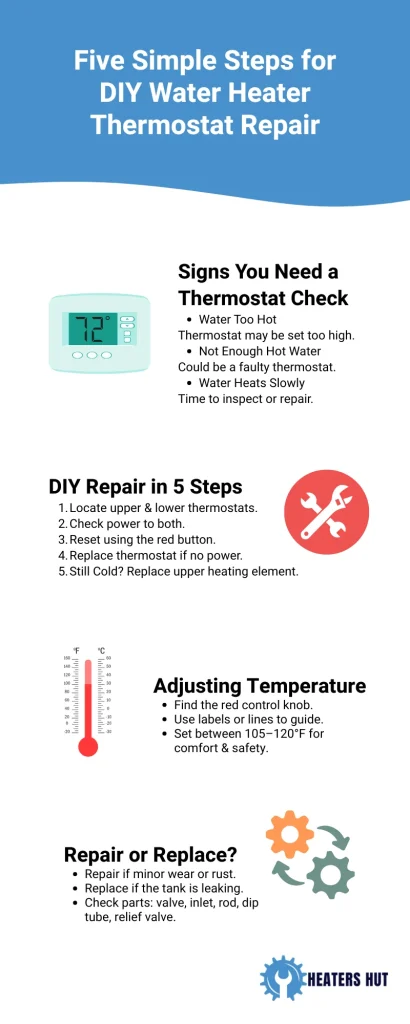
Credit: heatershut.com
Safety Tips Before Repairs
Fixing your heater yourself can save time and money. Safety comes first to avoid accidents.
Follow these tips to prepare before starting any minor heater repairs.
Power Off And Unplug
Always turn off the heater and unplug it from the power source. This stops electricity from flowing and lowers the risk of shocks.
Use Proper Tools
Using the right tools helps you work safely and avoid damaging the heater parts.
- Use insulated screwdrivers to prevent electric shocks.
- Have a multimeter ready to check electrical parts.
- A flashlight can help you see inside small spaces.
- Keep a wrench set handy for bolts and nuts.
Check For Gas Leaks
Gas leaks can cause fires or explosions. Inspect all gas lines before starting repairs.
| Check Area | What to Look For | Action |
| Gas Hose | Cracks or loose connections | Tighten or replace hose |
| Valve | Unusual smell or hissing sound | Turn off gas and call a professional |
| Fittings | Corrosion or damage | Clean or replace fittings |
Wear Protective Gear
Wear safety gear to protect yourself from burns, cuts, and electric shocks.
- Wear gloves to protect your hands.
- Use safety glasses to guard your eyes.
- Wear long sleeves to avoid skin burns.
- Use a dust mask if cleaning dusty parts.
Fixing Heater Ignition Issues
Heaters sometimes fail to start because of ignition problems. These issues are often easy to fix yourself.
This guide shows simple ways to repair your heater ignition at home. You can save time and money.
Cleaning The Igniter
Dirt and dust can stop the igniter from working well. Cleaning it can help the heater start properly.
Turn off the heater and unplug it before cleaning. Use a soft cloth or brush to remove dirt gently.
- Remove any dust on the igniter tip
- Use a soft brush to clean hard spots
- Do not use water or liquid cleaners
- Check for damage while cleaning
Replacing Faulty Ignition Components
If cleaning does not help, some ignition parts may be broken. Replacing them can fix the problem.
Common parts to check include the igniter, spark electrode, and wiring. Make sure to get the right replacements.
- Turn off power before replacing parts
- Remove the faulty component carefully
- Install the new part correctly
- Test the heater after replacement
Adjusting Pilot Light
The pilot light helps start the heater’s main flame. If it is too low or too high, the heater may not ignite.
You can adjust the pilot light by turning the adjustment screw. Find the right flame size for your heater model.
- Turn off heater before adjusting
- Locate the pilot light adjustment screw
- Turn the screw slowly to change flame size
- Light the pilot and check flame stability
Resolving Thermostat Problems
Thermostats control your heater’s temperature. If the heater is not working well, the thermostat might be the problem. Fixing small thermostat issues can save you money and keep your home warm.
This guide covers three easy ways to repair minor thermostat problems yourself. You will learn how to calibrate the thermostat, replace its batteries, and check wiring connections.
Calibrating The Thermostat
Sometimes the thermostat shows the wrong temperature. Calibrating it can fix this. First, compare the room temperature with the thermostat reading. Use a separate accurate thermometer for this.
- Turn off the heater to avoid changes while you adjust.
- Use a small screwdriver to open the thermostat cover.
- Look for the calibration screw or dial inside.
- Turn the screw slowly until the thermostat matches the room thermometer.
- Close the cover and turn the heater back on.
Replacing Batteries
Many thermostats use batteries. Weak or dead batteries can cause problems. Replace old batteries with new ones to keep the thermostat working well.
| Battery Type | Replacement Frequency |
| AA or AAA | Every 6-12 months |
| 9-Volt | Every 12 months |
| Button Cell | Every 12-24 months |
Checking Wiring Connections
Loose or damaged wires can stop the thermostat from working. Check the wiring connections carefully to fix minor issues.
Follow these tips to check wiring:
- Turn off power to the heater at the circuit breaker.
- Remove the thermostat cover.
- Look for loose, disconnected, or broken wires.
- Tighten any loose screws holding wires in place.
- If wires look damaged, replace them or call a professional.
- Replace the cover and turn the power back on.
Clearing Blocked Airflow
Blocked airflow can reduce your heater’s efficiency. It may cause the heater to work harder and waste energy.
Fixing minor airflow problems yourself can save money and keep your heater running smoothly.
Cleaning Air Filters
Dirty air filters block air and lower heater performance. Clean or replace filters regularly to keep air flowing.
- Turn off the heater before removing the filter.
- Remove the filter carefully from its slot.
- Use a vacuum or wash with water if the filter is reusable.
- Let the filter dry completely before reinstalling it.
- Replace disposable filters with new ones as needed.
Removing Debris From Vents
Vents can collect dust and small objects that block airflow. Cleaning vents helps warm air spread evenly.
- Turn off the heater before cleaning.
- Use a soft brush or vacuum to remove dust.
- Check for any small debris or objects stuck inside vents.
- Clear any blockages carefully to avoid damage.
Inspecting Ductwork
Damaged or disconnected ducts cause air leaks and poor airflow. Inspect ducts for holes or loose joints.
| Issue | Signs | Action |
| Holes or cracks | Cold spots, dust near ducts | Seal with duct tape or mastic |
| Loose connections | Noise, air leaks | Tighten or reattach ducts |
| Collapsed ducts | Reduced airflow | Replace or repair damaged sections |
Handling Noisy Heaters
Noisy heaters can be annoying, especially during the quiet of the night. Understanding how to fix minor issues can save time and money.
Simple DIY repairs can often resolve these noises. Let’s explore some common fixes.
Tightening Loose Parts
Loose parts in a heater can cause rattling sounds. Tightening them can reduce noise significantly.
Use a screwdriver to secure screws or bolts. Ensure all components are firmly attached.
- Check all visible screws
- Secure any loose panels
- Examine brackets and supports
Lubricating Moving Components
Over time, moving parts can become dry and create noise. Lubricating them helps maintain smooth operation.
Apply a few drops of oil to the moving parts. This reduces friction and noise.
- Identify all moving parts
- Use suitable lubricant oil
- Avoid over-lubrication
Identifying Fan Issues
The fan is a common source of heater noise. It can become misaligned or obstructed.
Inspect the fan blades for debris or misalignment. Adjust or clean as needed.
- Turn off the heater before inspection
- Check for debris in the fan
- Ensure fan blades rotate freely
When To Call A Professional
Fixing your heater can be tricky. Some issues need expert help. Knowing when to call a professional saves time and money.
If your heater problem seems too big, get a professional. They have the right tools and skills for the job.
Complex Electrical Issues
Electricity problems are dangerous. If you see sparks or smell burning, call a professional. They will safely handle it.
DIY fixes can be risky. Professionals know how to fix wiring and other complex electrical parts.
Gas Leak Detection
Gas leaks are serious. If you smell gas, leave your home and call an expert. They have the gear to find and fix leaks.
Gas safety is important. Professionals check for leaks and ensure everything is safe.
Persistent Heater Failures
Heaters that keep breaking need expert care. If you fix it and it breaks again, call a professional. They find the root cause.
Persistent problems can be costly. Experts save you money by fixing it right the first time.
- Electrical issues can cause fires
- Gas leaks can lead to explosions
- Persistent failures may need parts replacement

Credit: allbetterapp.com
Frequently Asked Questions
How Can I Fix A Heater Not Turning On?
Check the power source and thermostat settings first. Replace blown fuses or reset circuit breakers. Inspect wiring for damage and ensure the heater is plugged in properly.
What Causes A Heater To Blow Cold Air?
Cold air often means a dirty filter or blocked vents. Also, check if the pilot light is out or if the thermostat is set too low.
How Do I Reset My Heater Safely?
Turn off the heater and unplug it. Wait five minutes before plugging it back in. Press the reset button if available, following the manufacturer’s instructions carefully.
When Should I Clean My Heater Filters?
Clean filters every 1-3 months during heavy use. Dirty filters reduce efficiency and air quality. Regular cleaning ensures better performance and energy savings.
Conclusion
Fixing small heater problems can save time and money. Simple repairs often restore warmth quickly. Always turn off the heater before starting work. Check wires, filters, and thermostats for common issues. Small tools and clear steps make repair easier. Stay safe and follow instructions carefully.
Regular care helps avoid bigger problems later. You can keep your home cozy without waiting for a technician. Try these tips to handle minor heater repairs yourself. Simple fixes bring comfort back fast.