
Keeping your discus tank clean is key to healthy, vibrant fish. But how often should you clean it?
If you want to avoid cloudy water, harmful bacteria, and stressed fish, having a solid cleaning schedule is essential. You’ll discover the best routine to keep your discus tank sparkling and your fish thriving. Stick with me, and you’ll learn simple steps that fit easily into your day—making tank care less of a chore and more of a rewarding habit.
Ready to create the perfect cleaning schedule for your discus tank? Let’s dive in!
Discus Tank Basics
Discus fish are beautiful and need special care. Their tank setup is very important for their health.
This guide covers key points about tank size, water conditions, and decorations for discus fish.
Ideal Tank Size
Discus fish need plenty of space to swim. A larger tank keeps water stable and fish happy.
- A minimum of 50 gallons for 4-5 discus fish
- 10 gallons added for each extra fish
- Long tanks are better than tall ones
- Good filtration is needed to keep water clean
Water Parameters
| Parameter | Ideal Range |
| Temperature | 82°F to 86°F (28°C to 30°C) |
| pH Level | 6.0 to 7.0 |
| Hardness | Soft to moderately hard (1-8 dGH) |
| Ammonia & Nitrite | 0 ppm |
| Nitrate | Below 20 ppm |
Keep water stable and clean. Test water weekly to avoid sudden changes.
Substrate And Decorations
Choose soft substrates and safe decorations for discus tanks. Avoid sharp edges.
- Use fine sand or smooth gravel as substrate
- Add driftwood for hiding spots
- Include live plants like Amazon sword or Java fern
- Keep decorations minimal for easy cleaning
Importance Of Regular Cleaning
Keeping your discus tank clean is important for the health of your fish. Regular cleaning helps keep the water safe and clear.
Without cleaning, waste and harmful substances can build up. This harms your fish and makes the tank look dirty.
Health Benefits For Discus
Clean water supports discus fish health. It lowers the risk of disease and stress.
- Reduces harmful bacteria and parasites
- Improves oxygen levels in water
- Supports natural fish behavior and growth
- Prevents fin rot and other infections
Preventing Algae Growth
Algae can grow quickly in dirty tanks. It blocks light and uses oxygen needed by your fish.
| Cause | Effect |
| Excess nutrients from fish waste | Algae blooms and green water |
| Too much light | Faster algae growth |
| Irregular cleaning | Algae buildup on tank walls |
Maintaining Water Clarity
Clear water makes your discus look healthy and bright. It also helps you spot problems early.
- Remove leftover food and debris
- Change water regularly
- Use filters to trap dirt
- Test water quality often
Daily Cleaning Tasks
Keeping your discus tank clean every day is important. It helps your fish stay healthy and happy.
Daily tasks are simple but must be done regularly. They keep the water quality good and the fish comfortable.
Checking Water Temperature
Check the water temperature every day. Discus fish like warm water between 82°F and 86°F. Use a reliable aquarium thermometer.
If the water is too cold or too hot, adjust the heater. Consistent temperature prevents stress and illness in fish.
Removing Uneaten Food
Remove any uneaten food daily. Leftover food can pollute the water and cause bacteria growth.
- Use a small net or siphon to pick out leftover food.
- Feed small amounts to avoid waste.
- Clean the substrate gently if food sinks to the bottom.
Monitoring Fish Behavior
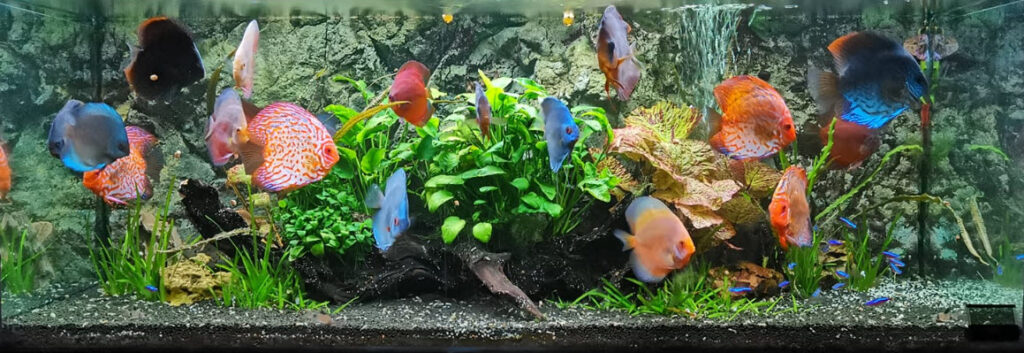
Watch your discus fish for signs of health or stress. Look for changes in swimming, color, or appetite.
| Behavior | Normal | Warning Signs |
| Swimming | Active and smooth | Listless or erratic |
| Color | Bright and vibrant | Dull or faded |
| Appetite | Eats regularly | Refuses food |
Credit: aquainfo.nl
Weekly Cleaning Routine
Keeping your discus tank clean helps fish stay healthy. A weekly routine prevents dirt build-up.
This guide covers partial water changes, cleaning glass, and vacuuming the substrate.
Partial Water Changes
Change about 25% of the tank water every week. This keeps water fresh and removes toxins.
- Use a siphon to remove water
- Replace with dechlorinated water at the same temperature
- Do not change all water at once to avoid stress
Cleaning Glass Surfaces
Clean the inside glass weekly to remove algae and grime. Use a soft algae scraper or sponge.
- Do not use household cleaners
- Scrape gently to avoid scratching
- Clean outside glass with a damp cloth
Vacuuming Substrate
Vacuum the substrate to remove fish waste and leftover food. This keeps the tank clean.
| Tool | Purpose |
| Gravel vacuum | Removes debris from substrate |
| Siphon hose | Helps with water changes and cleaning |
| Bucket | Collects dirty water |
Monthly Deep Cleaning
Keeping your discus tank clean every month helps fish stay healthy. Deep cleaning removes dirt and waste that build up over time.
This schedule covers important tasks for a thorough cleaning. Follow these steps to maintain a clean and safe tank environment.
Filter Maintenance
Clean the filter parts to keep water clear and fresh. Replace or rinse filter media with tank water to avoid killing good bacteria.
- Turn off and unplug the filter before cleaning.
- Rinse sponges and filter pads in old tank water.
- Check for clogs or damage in tubes and pump.
- Replace worn-out filter media as needed.
- Reassemble and restart the filter.
Inspecting Equipment
Check all equipment to ensure it works well and is safe for your fish. Look for leaks, cracks, or worn parts.
| Equipment | What to Check | Action If Needed |
| Heater | Temperature accuracy and cracks | Replace or fix if broken |
| Air Pump | Air flow and noise level | Clean or replace filter |
| Lighting | Bulb brightness and wiring | Change bulbs or repair wiring |
| Thermometer | Correct temperature reading | Replace if faulty |
Cleaning Decorations
Remove decorations to clean algae and debris. Use safe methods to avoid harming your fish or tank.
Follow these tips to clean decorations:
- Take decorations out of the tank carefully.
- Use a soft brush to scrub off algae and dirt.
- Soak items in a vinegar solution to remove tough stains.
- Rinse well with clean water before returning to the tank.
- Avoid soap or chemicals that can harm fish.

Credit: www.aquariumsource.com
Water Testing Schedule
Keeping the water clean in your discus tank is crucial. Regular testing ensures a healthy environment for the fish.
This guide will help you understand what to test and how often to do it. Follow these guidelines to maintain the best water quality.
Key Parameters To Test
Testing the right parameters keeps your fish safe and healthy. Focus on these key areas to maintain balance.
- pH Level
- Ammonia
- Nitrite
- Nitrate
- Temperature
Frequency Of Testing
Regular testing helps catch problems early. Follow this schedule to keep your tank in top shape.
| Parameter | Frequency |
| pH Level | Weekly |
| Ammonia | Weekly |
| Nitrite | Weekly |
| Nitrate | Monthly |
| Temperature | Daily |
Adjusting Based On Results
Adjustments may be needed after testing. Make sure to take action if results are outside safe ranges.
Tips For Crystal Clear Water
Keeping your discus tank water crystal clear is important. Clean water helps your fish stay healthy and happy.
Follow these tips to ensure your tank water remains pristine. These methods are simple and effective for all tank owners.
Using Beneficial Bacteria
Beneficial bacteria break down waste in your tank. They help keep the water clean and clear naturally.
- Add a bacterial starter when setting up your tank
- Use bio-media in your filter to house bacteria
- Regularly check ammonia and nitrite levels
Avoiding Overfeeding
Overfeeding leads to excess waste and cloudy water. Feed your discus only what they can eat in a few minutes.
| Food Type | Feeding Frequency |
| Flakes | Once a day |
| Frozen Bloodworms | Twice a week |
| Pellets | Twice a day |
Proper Aeration Techniques
Adequate aeration is vital for oxygen levels in your tank. This helps maintain clear water and healthy fish.
Consider using air stones or a sponge filter to enhance oxygen levels. These tools create gentle water movement.
Troubleshooting Common Issues
Keeping a discus tank clean can be tricky. Many common problems affect water quality and fish health.
Knowing how to fix these issues helps keep your discus fish safe and happy.
Cloudy Water Causes
Cloudy water often means something is wrong in the tank. It can happen from waste, food, or bacteria.
Too much leftover food or fish waste causes bacteria to grow fast. This makes the water look foggy.
- Overfeeding fish
- Dirty filter or poor filtration
- New tank with growing bacteria
- Too many fish in the tank
Algae Control Methods
Algae can grow fast and make the tank dirty. It also uses up oxygen needed by fish.
Control algae by keeping the tank clean and limiting light. Use algae eaters if needed.
- Clean tank walls regularly
- Limit tank light to 8-10 hours daily
- Use live plants to compete with algae
- Introduce algae-eating fish or snails
- Change water regularly to reduce nutrients
Dealing With Fish Stress
Fish stress weakens discus fish and makes them sick. Stress comes from poor water or sudden changes.
Watch fish behavior and keep water stable. Use gentle cleaning and avoid loud noises near the tank.
- Keep water temperature steady
- Avoid sudden water changes
- Provide hiding places with plants or decorations
- Do not overcrowd the tank
- Feed fish a balanced diet
Credit: www.capitalcichlids.org
Frequently Asked Questions
How Often Should I Clean My Discus Tank?
Clean your discus tank weekly to maintain water quality. Partial water changes and substrate vacuuming prevent waste buildup and keep fish healthy.
What Is The Best Method For Discus Tank Cleaning?
Use a siphon to remove debris and change 25-30% of water. Clean algae gently off glass with a soft scraper to avoid stress.
Can Frequent Cleaning Harm Discus Fish?
No, regular cleaning improves water quality and fish health. However, avoid drastic changes to prevent stress and maintain stable water parameters.
What Supplies Are Needed For Discus Tank Cleaning?
You need a siphon, algae scraper, bucket, water conditioner, and test kits. These tools help maintain a clean, safe environment for your discus.
Conclusion
Keeping a discus tank clean helps your fish stay healthy and happy. Regular cleaning removes waste and keeps water clear. A good schedule makes the job easy and less stressful. Small, consistent efforts prevent big problems later. Stick to your cleaning plan and watch your discus thrive.
Clean water means strong fish and a beautiful tank. Simple steps make a big difference in tank care. Start today for a cleaner, healthier discus home.