
Setting up a discus fish tank can feel overwhelming, but it doesn’t have to be. If you want your discus fish to thrive, you need the right environment from the start.
This guide will walk you through every step, making it simple and clear. By the end, you’ll know exactly how to create a healthy, beautiful home for your discus fish. Ready to turn your tank into a stunning underwater world?
Let’s dive in!
Choosing The Right Tank
Choosing the right tank is important for discus fish health. A good tank gives them space and comfort.
Different sizes and materials affect how well your tank works. Think about where you will place it too.
Tank Size Recommendations
Discus fish need plenty of room to swim. A tank that is too small causes stress and health problems.
Start with a tank that holds at least 50 gallons for a small group. Bigger tanks are better for more fish.
- 50 gallons for 4-5 discus fish
- 75 gallons for 6-8 discus fish
- 100+ gallons for larger groups or community tanks
Material Options
Most tanks are made from glass or acrylic. Each has good points and things to watch out for.
Glass tanks are heavy and clear. Acrylic tanks are lighter and stronger but can scratch easily.
- Glass: Clear view, heavier, hard to scratch
- Acrylic: Lightweight, strong, easier to scratch
Placement Tips
Place your tank where it will stay stable and safe. Avoid spots with direct sunlight or drafts.
Make sure the surface can hold the tank’s weight. Keep it near power outlets for equipment.
- Choose a sturdy, level surface
- Avoid windows and direct sunlight
- Keep away from heating or cooling vents
- Place near electrical outlets
Essential Equipment
Setting up a discus fish tank requires the right tools. Good equipment keeps your fish healthy and happy.
This guide covers three key parts: filtration, heating, and lighting. Each part is important for your tank.
Filtration Systems
A clean tank needs a strong filtration system. It removes waste and keeps the water clear for your discus fish.
- Canister filters offer good water flow and cleaning.
- Hang-on-back filters are easy to maintain.
- Sponge filters provide gentle filtration for young fish.
- Choose filters with biological, mechanical, and chemical cleaning stages.
Heaters And Thermometers
Discus fish need warm water, usually between 82 and 86 degrees Fahrenheit. A heater keeps this steady.
| Equipment | Purpose | Tip |
|---|---|---|
| Aquarium Heater | Keeps water temperature stable | Pick one with a thermostat |
| Thermometer | Measures water temperature | Check temperature daily |
| Backup Heater | Prevents temperature drops | Use for larger tanks |
Lighting Choices
Light helps discus fish show their colors and keeps plants healthy. Choose lighting that is not too bright.
- LED lights save energy and last long.
- Full spectrum lights support plant growth.
- Use a timer to give fish regular day and night cycles.
Water Parameters
Discus fish need clean and stable water. Proper water parameters help them stay healthy. This guide covers key water details for your discus tank.
Keeping water conditions stable reduces stress and illness. Focus on temperature, pH, hardness, and water changes for the best setup.
Optimal Temperature
Discus fish prefer warm water. The ideal temperature range is between 82°F and 86°F (28°C to 30°C). Keeping temperature steady is important.
Use a reliable heater and thermometer. Avoid sudden changes as they can harm your fish.
Ph And Hardness Levels
Discus fish thrive in soft, slightly acidic water. The pH should be between 6.0 and 7.0. Water hardness should be low to moderate.
| Parameter | Recommended Range |
|---|---|
| pH Level | 6.0 – 7.0 |
| General Hardness (GH) | 1 – 8 dGH |
| Carbonate Hardness (KH) | 1 – 3 dKH |
Test water regularly using aquarium test kits. Adjust levels with water conditioners if needed.
Water Change Schedule
Regular water changes keep the tank clean and healthy. Change about 25% to 50% of the water weekly to remove waste and toxins.
- Prepare clean, conditioned water at the same temperature.
- Remove 25% to 50% of the tank water carefully.
- Add the prepared water slowly to avoid stressing the fish.
- Check water parameters after each change.

Credit: www.reddit.com
Substrate And Decorations
Setting up a discus fish tank needs careful thought about substrate and decorations. These elements affect fish health and tank appearance.
Choose materials that are safe and support a natural environment for your discus fish. This guide covers substrates, plants, and hiding spots.
Best Substrate Types
Discus fish prefer soft substrates that do not harm their delicate bodies. Avoid sharp or rough materials.
- Fine sand: gentle on fish and easy to clean
- Aquarium gravel: smooth, small-sized stones
- Clay-based substrates: help maintain stable water pH
- Amazonian soil: natural look and good for plants
Safe Plants And Decorations
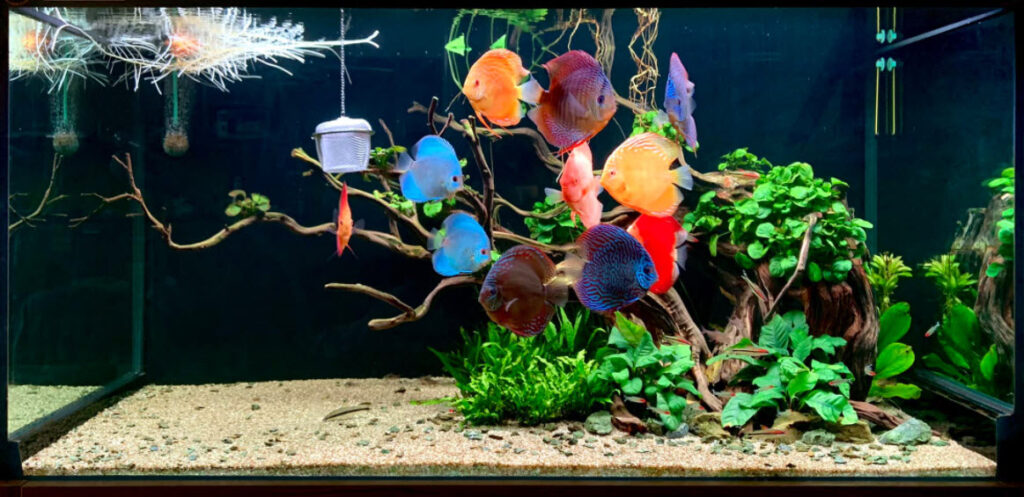
Choose decorations and plants that do not release toxins. Avoid sharp edges to protect discus fish.
| Plant or Decoration | Benefit | Notes |
| Amazon Sword | Good cover and oxygen | Easy to grow |
| Anubias | Low light, tough leaves | Attach to driftwood |
| Driftwood | Natural hiding spots | Soaks tannins, lowers pH |
| Indian Fern | Dense foliage | Provides shelter |
Creating Hiding Spots
Discus fish feel safe with places to hide. Use plants and decorations to build these spots.
- Arrange driftwood to form caves
- Place dense plants in corners
- Add smooth rocks to create small caves
- Use PVC pipes covered with plants for extra shelter
Selecting Discus Fish
Choosing the right discus fish is important for a healthy tank. Good choices lead to a strong and beautiful fish community.
This guide covers how to pick healthy discus, find tankmates that get along, and keep new fish safe before adding them.
Choosing Healthy Specimens
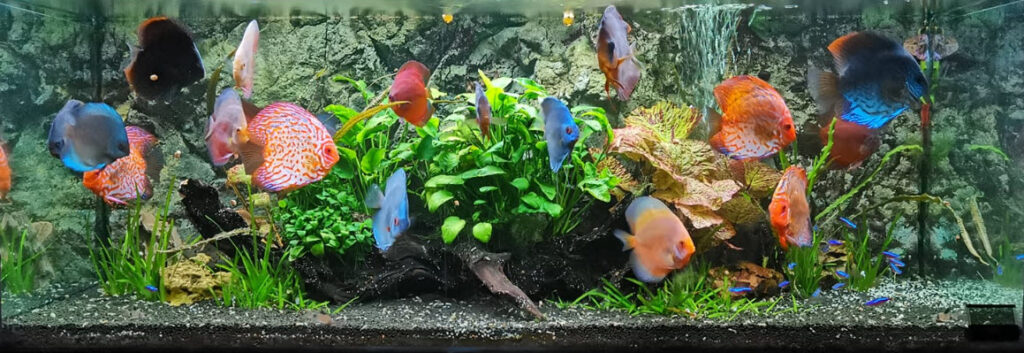
Look for discus fish with bright colors and clear eyes. Healthy fish swim actively and have no visible damage or spots.
- Check the fins for tears or white spots
- Observe breathing; it should be steady and calm
- Avoid fish with swollen bellies or sunken areas
- Pick fish that respond to movement outside the tank
- Choose fish with smooth scales and no slime buildup
Compatible Tankmates
Discus fish live peacefully with certain species. Pick tankmates that share similar water needs and behavior.
| Fish Species | Temperament | Water Temperature (°F) | Notes |
|---|---|---|---|
| Cardinal Tetra | Peaceful | 79-82 | Small, colorful, good group swimmers |
| Corydoras Catfish | Calm | 75-80 | Bottom dweller, helps clean tank |
| Ram Cichlid | Peaceful | 78-85 | Small, colorful, shy |
| Angelfish | Can be aggressive | 78-84 | May bully discus, watch closely |
Quarantine Procedures
Quarantine new discus fish before adding to the main tank. This stops disease spread and helps fish adjust.
- Set up a separate tank with clean water
- Keep temperature and pH similar to main tank
- Observe fish daily for signs of illness
- Feed high-quality food in small amounts
- Quarantine lasts two to four weeks
- Treat any detected illnesses before moving fish
Credit: aquainfo.nl
Feeding Your Discus
Discus fish are beautiful and need special care. Feeding them properly is important for their health.
Understanding their dietary needs and feeding habits will help them thrive. Let’s explore how to feed your discus fish effectively.
Dietary Needs
Discus fish need a varied diet to stay healthy. They enjoy both protein and plant-based foods.
Good options include high-quality flakes, pellets, and frozen foods like bloodworms and brine shrimp.
- High-quality flakes or pellets
- Frozen or live bloodworms
- Brine shrimp
- Vegetable-based foods
Feeding Frequency
Feed your discus fish small amounts several times a day. Younger fish need more frequent meals.
Adults can be fed two to three times daily. This helps them grow strong and healthy.
Avoiding Overfeeding
Overfeeding can harm your fish. It can cause water quality issues and health problems.
Only give them what they can eat in a few minutes. Remove uneaten food to keep the tank clean.
Maintaining Water Quality
Discus fish need clean water to stay healthy. Keeping water quality high is important for their well-being.
Regular testing helps ensure the water is safe for your fish. Address common issues quickly to prevent harm.
Regular Testing
Test the water weekly to monitor its quality. Use a test kit to check pH, ammonia, nitrites, and nitrates.
Keep a log of your test results. This helps track changes and identify potential problems early.
- pH should be between 6.0 and 7.5
- Ammonia levels should be at 0 ppm
- Nitrite levels should be at 0 ppm
- Nitrate levels should be below 20 ppm
Common Issues And Solutions
Cloudy water is a common problem. It can be caused by overfeeding or bacterial blooms. Reduce feeding and clean the tank.
High ammonia can harm fish. Perform partial water changes to reduce ammonia levels. Check your filter for clogs.
- Reduce feeding to prevent waste buildup
- Clean or replace the filter media regularly
- Perform 25% water changes weekly
Using Water Conditioners
Water conditioners help keep the tank safe. They remove harmful chemicals like chlorine and chloramine from tap water.
Add conditioners during water changes. Follow the instructions on the bottle for the correct dosage.
| Conditioner Type | Purpose |
| Dechlorinator | Removes chlorine and chloramine |
| Ammonia remover | Neutralizes ammonia |
Credit: aquainfo.nl
Health Monitoring
Keeping your discus fish healthy means watching them closely. You need to spot any sickness early. Regular checks help prevent big problems.
Good health monitoring includes knowing the signs of illness, doing preventative care, and treating fish when needed. This guide covers these key points.
Signs Of Illness
Discus fish show clear signs when they are sick. Watch their behavior and appearance every day. Early signs include changes in color, swimming, and appetite.
- Loss of appetite or refusal to eat
- Clamped fins or faded colors
- Slow or erratic swimming
- Visible spots or lesions on the body
- Gasping at the water surface
- Excessive hiding or lethargy
Preventative Care
Preventing disease is better than curing it. Keep the tank clean and water stable. Feed your discus a balanced diet and avoid overcrowding.
| Care Aspect | Recommended Action |
| Water Quality | Test weekly, change 25% water |
| Temperature | Maintain 82-86°F (28-30°C) |
| Feeding | Feed small amounts 2-3 times daily |
| Tank Maintenance | Clean filters monthly, remove debris |
| Stress Reduction | Provide hiding spots and stable environment |
Treatment Options
If you spot illness, act fast. Quarantine sick fish to stop spread. Use medicines suitable for discus fish after research or advice.
- Identify symptoms carefully before treatment.
- Isolate the sick fish in a separate tank.
- Use recommended antibiotics or antifungal medicines.
- Keep water clean and warm to aid healing.
- Monitor fish daily and adjust treatment if needed.
Breeding Tips
Discus fish are beautiful and popular among aquarium lovers. Breeding them takes care and patience. This guide gives simple tips to help you breed discus fish successfully.
Understanding their needs and behavior is key. You will learn how to set up a breeding tank, what to watch during spawning, and how to care for the young fish.
Setting Up A Breeding Tank
Choose a separate tank for breeding. It should be quiet and clean. Keep the water temperature between 82°F and 86°F. Use soft water with a pH around 6.5.
- Tank size: 20 to 30 gallons
- Soft, acidic water
- Good filtration with gentle flow
- Provide flat surfaces for egg laying
- Keep the tank dimly lit
- Maintain stable water conditions
Spawning Behavior
Discus pairs clean a flat spot to lay eggs. They show signs like chasing and cleaning. The female lays eggs, and the male fertilizes them quickly.
| Behavior | Description |
| Pair bonding | Male and female swim close and clean a spot |
| Egg laying | Female deposits eggs on a flat surface |
| Fertilization | Male fertilizes eggs right after laying |
| Egg care | Parents fan eggs to keep them clean and oxygenated |
Raising Fry
After hatching, fry eat mucus from their parents for several days. After that, start feeding them small foods. Keep the water very clean to help fry grow.
- Feed baby brine shrimp or finely crushed flakes
- Change 20% of the water daily
- Keep water temperature steady around 86°F
- Remove uneaten food to prevent pollution
- Watch for signs of illness or stress
Frequently Asked Questions
What Is The Ideal Tank Size For Discus Fish?
A minimum of 50 gallons is recommended for a discus tank. Larger tanks provide stability and more swimming space, promoting healthier fish and easier maintenance.
How Do I Maintain Water Quality For Discus Fish?
Regular water changes of 25-30% weekly keep water clean. Use a good filtration system and monitor parameters like pH, ammonia, and nitrate levels consistently.
What Temperature Is Best For Discus Fish Tanks?
Discus thrive in water temperatures between 82°F and 86°F. Maintaining stable warmth supports their immune system and vibrant coloration.
Can Discus Fish Live With Other Species?
Discus are peaceful but sensitive. They do best with calm, non-aggressive tank mates that thrive in similar water conditions.
Conclusion
Setting up a discus fish tank takes care and patience. Keep water clean and warm for healthy fish. Use gentle filters to avoid stress on discus. Provide enough space for swimming and hiding spots. Feed them quality food for vibrant colors and growth.
Watch your fish daily to catch problems early. Enjoy the calm beauty these fish bring to your home. A well-kept tank means happy discus fish. Start simple, learn, and improve your tank over time.