
If you own a discus fish or are thinking about getting one, you know how special these beautiful creatures are. But keeping discus happy and healthy means more than just clean water and good food—you also need the right tankmates.
Choosing the wrong companions can lead to stress, disease, or even fights. So, how do you find the perfect discus compatible tankmates that will thrive alongside your prized fish? Keep reading, because you’ll discover the best fish to create a peaceful, vibrant community tank that keeps your discus calm and colorful.
Your discus deserves the best—let’s make sure their home is just right.
Choosing Tankmates For Discus
Discus fish are beautiful but sensitive. Choosing the right tankmates is very important for their health.
Good tankmates must live well with discus and not cause stress or harm.
Key Traits For Compatibility
Tankmates should be peaceful and gentle. They must not bully or chase discus fish.
Look for fish that are calm and avoid aggressive or fast swimmers.
- Peaceful nature
- Similar size to discus
- Non-aggressive behavior
- Slow or moderate swimming speed
Water Parameter Needs
Discus prefer warm, soft, and slightly acidic water. Tankmates must share these needs.
Keep temperature around 82°F to 86°F and pH between 6.0 and 7.0 for all fish.
- Temperature: 82°F to 86°F (28°C to 30°C)
- pH level: 6.0 to 7.0
- Soft water with low hardness
- Clean and stable water conditions
Behavioral Considerations
Discus fish are shy and need calm tankmates. Avoid fish that are too active or territorial.
Choose species that swim in different tank levels to reduce stress and competition.
- Non-territorial fish
- Calm and shy species
- Fish that swim at different tank levels
- Avoid fin-nippers and aggressive fish
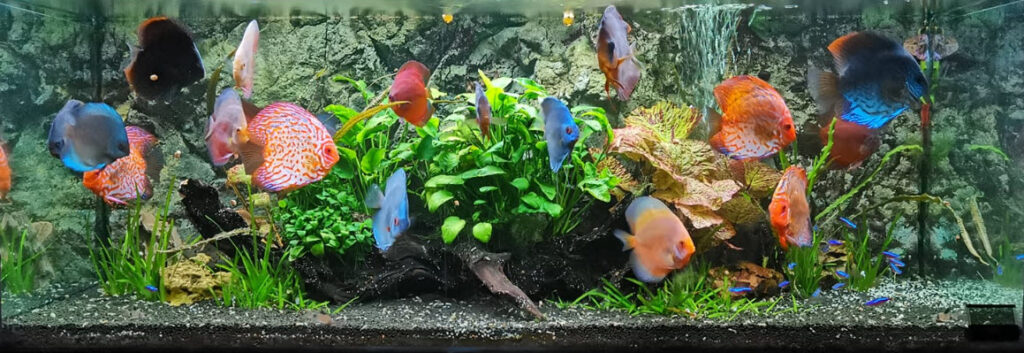
Credit: aquainfo.nl
Top Peaceful Fish For Discus Tanks
Discus fish need calm tankmates to reduce stress. Choosing peaceful species helps keep the tank balanced. These fish live well with discus and add beauty to your aquarium.
Here are some of the best peaceful fish to consider for your discus tank. Each species has unique traits that suit a calm environment.
Cardinal Tetras
Cardinal tetras are small, bright fish with red and blue stripes. They swim in groups and bring lively colors to your tank. They thrive in warm, soft water like discus fish.
Rummy Nose Tetras
Rummy nose tetras have a red nose and striped tail. They are peaceful and active swimmers. They prefer to stay in schools and help keep the tank clean by eating leftover food.
Corydoras Catfish
Corydoras catfish are bottom dwellers that eat uneaten food. They have armored bodies and peaceful nature. These fish like to live in groups and enjoy soft, sandy tank floors.
- Size: 2 to 3 inches
- Temperature: 72-78°F (22-26°C)
- Tank level: Bottom
- Diet: Omnivore, scavenger
- Behavior: Peaceful, schooling
Ram Cichlids
Ram cichlids are small, colorful fish that stay calm around discus. They add bright colors and are easy to care for. Rams like warm water and planted tanks with hiding spots.
Otocinclus Catfish
Otocinclus catfish are tiny algae eaters. They help keep the tank clean and do not bother other fish. These fish prefer calm water and lots of plants.
| Fish | Size | Tank Level | Diet | Temperament |
| Cardinal Tetras | 1.5-2 inches | Mid-level | Omnivore | Peaceful |
| Rummy Nose Tetras | 1.5-2 inches | Mid-level | Omnivore | Peaceful |
| Corydoras Catfish | 2-3 inches | Bottom | Scavenger | Peaceful |
| Ram Cichlids | 2-3 inches | Bottom/Mid | Omnivore | Peaceful |
| Otocinclus Catfish | 1-2 inches | Bottom | Algae eater | Peaceful |
Invertebrates That Coexist Well
Discus fish need peaceful tankmates that do not cause stress. Invertebrates are good companions for them. They help keep the tank clean and add variety.
Choose invertebrates that live calmly and do not compete for food. This keeps the discus healthy and happy.
Amano Shrimp
Amano shrimp are great for discus tanks. They eat leftover food and algae without bothering the fish. Their size makes them safe from being eaten.
They stay active and help keep the tank clean. Amano shrimp prefer plants and hiding spots to feel safe.
Cherry Shrimp
Cherry shrimp are small and colorful invertebrates. They eat algae and tiny debris, helping with tank cleanliness. Their peaceful nature suits discus tanks well.
They breed easily and add life to the aquarium. Make sure the tank has plants for hiding places.
Snails For Algae Control
Snails help control algae growth in discus tanks. They clean glass, plants, and decorations without harm. Choose snails that are gentle and not too large.
Popular snails include Nerite snails, Mystery snails, and Ramshorn snails. They do well with discus fish and improve tank health.
- Nerite Snails:Excellent algae eaters, do not reproduce in freshwater.
- Mystery Snails:Larger, peaceful, and colorful.
- Ramshorn Snails:Small, help clean leftover food and algae.
Fish To Avoid With Discus
Discus fish are peaceful and sensitive. Choosing the wrong tankmates can cause stress and harm. Some fish do not mix well with discus because of their behavior or size.
It is important to know which fish to avoid in your discus tank. This helps keep your discus healthy and happy.
Aggressive Species
Aggressive fish often attack or chase discus. This causes stress and injury. Avoid these species in your tank.
- Cichlids (other than peaceful ones)
- Oscar fish
- Jack Dempsey
- Green Terror
- Convict Cichlid
Fast Swimmers
Fast swimmers can outcompete discus for food. They also cause stress by constant movement. Keep these fish separate from discus tanks.
| Fish | Reason to Avoid |
| Tiger Barb | Fast and nippy, stresses discus |
| Danios | Too active, outcompete for food |
| Guppies | Fast movement disturbs discus |
| Hatchetfish | Quick swimmers, may frighten discus |
Large Or Territorial Fish
Large or territorial fish bully discus. They take over space and food. Avoid these fish to keep discus safe.
Examples of Large or Territorial Fish to Avoid:
- Arowanas
- Silver Dollars
- Flowerhorns
- Large Plecos
- Green Severum
Tips For Introducing New Tankmates
Adding new fish to a discus tank can be tricky. It is important to keep the discus calm and safe.
Follow good steps to help new tankmates adjust without stress or illness.
Quarantine Procedures
Always quarantine new fish before adding them to the discus tank. This stops diseases from spreading.
Keep the new fish in a separate tank for at least two weeks. Watch for signs of illness during this time.
- Use a clean quarantine tank with filtered water
- Check for spots, redness, or strange behavior
- Treat any illness before moving fish to the main tank
- Keep water temperature similar to the main tank
Acclimation Methods
Slowly introduce new tankmates to the discus tank environment. This helps reduce shock and stress.
Use the drip acclimation method to adjust fish to water conditions. This method is safe and easy.
- Float the bag with the new fish in the tank for 15 minutes
- Start a slow drip of tank water into the bag
- Continue the drip for 1-2 hours
- Gently release fish into the tank after acclimation
Monitoring And Adjustments
Watch the discus and new fish closely after introduction. Early detection of problems is key.
If you see aggression or stress, separate the fish or adjust tank conditions. Keep the water clean and stable.
- Look for hiding or chasing behavior
- Check water parameters daily
- Feed all fish well to reduce competition
- Be ready to move fish if needed

Credit: www.youtube.com
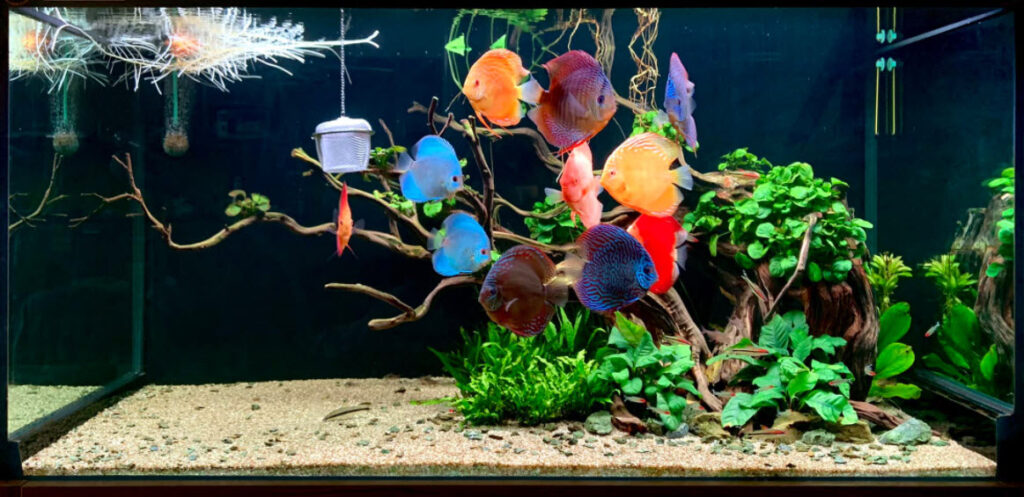
Credit: aquainfo.nl
Frequently Asked Questions
What Fish Are Compatible With Discus Tanks?
Peaceful, non-aggressive fish like Cardinal Tetras, Corydoras, and Ram cichlids are ideal. They thrive in similar water conditions and won’t stress Discus.
Can Discus Live With Other Cichlids?
Yes, but only with calm cichlids like German Blue Rams. Avoid aggressive species to prevent territorial disputes and stress.
How Many Tankmates Can Discus Handle?
Typically, 1-2 tankmates per Discus fish work well. Overcrowding causes stress, poor water quality, and health issues.
Are Live Plants Good For Discus Tanks?
Live plants improve water quality and provide hiding spots. They also create a natural environment that helps Discus feel secure.
Conclusion
Choosing the right tankmates keeps your discus fish happy and healthy. Peaceful, similar-sized fish work best together. Avoid aggressive or very active species to reduce stress. Watch their behavior and water needs closely. Regular care helps maintain a balanced aquarium environment.
Enjoy the beauty and calm of a well-matched discus tank. Small steps make a big difference in tank harmony. Keep learning and adjusting for the best results.