
Are you curious about the stunning colors of discus fish and how to spot the different variations? Whether you’re a beginner or an experienced aquarist, understanding discus color variations can transform how you appreciate these beautiful creatures.
This guide will help you recognize the unique patterns and hues that make each discus fish special. By the end, you’ll feel confident identifying your favorite types and even choosing the perfect discus for your aquarium. Ready to discover the vibrant world of discus colors?
Let’s dive in!

Credit: www.youtube.com
Discus Fish Basics
Discus fish are popular freshwater fish known for their bright colors. They are a favorite among aquarium lovers worldwide.
These fish need specific care to thrive. Understanding their natural environment and needs helps keep them healthy.
Natural Habitat
Discus fish live in the Amazon River basin in South America. They prefer warm, slow-moving water with lots of plants and roots.
The water in their habitat is soft and slightly acidic. They hide among plants to stay safe from predators.
Common Species
- Symphysodon aequifasciatus (Green Discus)
- Symphysodon discus (Heckel Discus)
- Symphysodon tarzoo (Blue Discus)
- Symphysodon haraldi (Blue Diamond Discus)
Each species has unique colors and patterns. They vary in size and behavior but share similar care needs.
Lifespan And Size
| Aspect | Details |
| Average Lifespan | 10 to 15 years |
| Adult Size | 6 to 8 inches (15 to 20 cm) |
| Growth Rate | Slow to moderate |
| Care Needs | Stable water conditions, balanced diet |
Discus fish grow slowly and live long with proper care. They need clean water and good nutrition to stay healthy.
Credit: www.plantedtank.net
Popular Color Variations
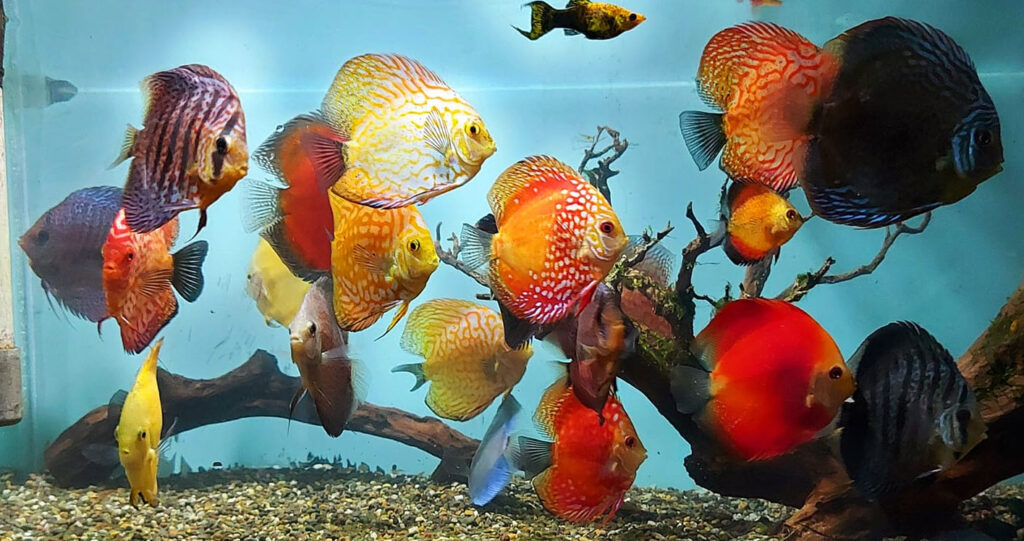
Discus fish show many beautiful colors. These colors make them popular in fish tanks. Some colors are common, while others are rare.
This guide explains the main color types you will find in discus fish. Learn about solid colors, patterns, and rare varieties.
Solid Colors
Solid color discus have one main color. These colors can be bright or soft. They are easy to recognize and popular among fish lovers.
- Red discus: bright red or orange shade
- Blue discus: deep blue or turquoise
- Green discus: light or dark green
- Yellow discus: soft yellow to gold
- White discus: pure or cream white
Patterned Varieties
Patterned discus have designs on their bodies. These patterns add beauty and variety. They can include spots, stripes, or lines.
| Pattern Type | Description |
| Spotted | Small dots in different colors |
| Striped | Vertical or horizontal lines |
| Marbled | Swirled mix of colors |
| Checkerboard | Square patches of color |
Rare And Exotic Types
Some discus colors are very rare. These types come from special breeding or wild fish. They are prized by collectors.
- Alenquer: wild type with green and red shades
- Golden: bright yellow with orange highlights
- Symphysodon Aequifasciatus: wild blue-green discus
- Leopard: spotted pattern with rare color mix
Factors Affecting Color
Discus fish are known for their vibrant colors. These colors can change based on several factors.
Understanding these factors helps in maintaining their beauty. Let’s explore what affects discus color.
Genetics
The color of a discus fish is largely influenced by its genetics. Different breeds have distinct colors.
Breeders often select fish with desirable colors. This practice enhances specific color traits.
Diet
A healthy diet is crucial for vibrant colors. Foods rich in carotenoids enhance red and orange hues.
Feeding discus fish a variety of foods ensures balanced nutrition. This helps maintain their color.
- Bloodworms for protein
- Spirulina for blue tones
- Carrots for orange hues
Water Quality
Clean water is essential for healthy discus fish. Poor water quality can dull their colors.
Regular water changes keep toxins low. This practice supports vibrant color expression.
| Factor | Impact |
| pH level | Affects color brightness |
| Ammonia | Causes stress and color loss |
Lighting
Proper lighting helps showcase discus colors. Bright lights can enhance their natural hues.
Adjusting light intensity affects how colors appear. Too much light can cause stress in fish.
- Use LED lights for energy efficiency
- Control duration to mimic natural cycles
- Ensure even light distribution
Enhancing Fish Vibrancy
Discus fish come in many beautiful colors. Keeping their colors bright makes your aquarium look great.
Several factors affect how vibrant your discus fish appear. You can improve their colors by caring for them well.
Optimal Nutrition
Good food helps discus show their true colors. Feed them a mix of high-quality flakes, pellets, and live food.
Foods rich in carotenoids and vitamins boost red and orange tones. Avoid overfeeding to keep fish healthy.
- Include bloodworms and brine shrimp
- Add vegetables like spinach and peas
- Use color-enhancing flakes or pellets
- Feed small amounts 2-3 times daily
Tank Environment
Clean water keeps discus healthy and colorful. Regular water changes remove waste and toxins that dull colors.
Maintain stable water temperature and pH to reduce stress. Proper tank size gives fish space to swim freely.
- Change 25% of water weekly
- Keep temperature between 82-86°F (28-30°C)
- Maintain pH around 6.0 to 7.0
- Use gentle filtration to avoid strong currents
Stress Reduction
Stress makes discus lose color quickly. Keep the tank quiet and avoid sudden changes.
Provide hiding spots with plants or decorations. Limit the number of tank mates to reduce competition.
- Use soft lighting to calm fish
- Keep noise and vibrations low
- Avoid overcrowding the tank
- Observe fish daily for signs of stress
Proper Lighting Setup
Good lighting shows the true colors of discus fish. Use full-spectrum LED lights to mimic natural sunlight.
Set a regular light schedule with about 8-10 hours per day. Avoid very bright lights that can stress the fish.
- Use LED lights with a color temperature of 6500K
- Turn lights on and off at the same times daily
- Place plants to create shaded areas
- Adjust brightness to suit your fish’s behavior
Breeding For Color
Breeding discus fish for color takes patience and care. Good colors come from choosing the right parents and caring for their young.
Understanding color traits and how to raise fry can help improve the brightness and patterns of your discus fish.
Selecting Breeding Pairs
Pick healthy discus fish with strong colors for breeding pairs. Look for fish that show the color traits you want to pass on.
Try to avoid fish with dull colors or signs of illness. Pairing fish with complementary colors can create better offspring.
- Choose fish with clear, bright colors
- Select pairs with similar or complementary patterns
- Avoid fish with faded or patchy colors
- Use healthy, active fish for breeding
Color Traits To Look For
Focus on traits like hue, saturation, and pattern sharpness. Strong and even colors usually pass better to fry.
Watch for unique markings or rare colors. These traits can make your discus fish stand out when bred carefully.
- Bright and even color distribution
- Clear, defined patterns or stripes
- Strong contrast between colors
- Unique color variations like turquoise or red
Raising Fry For Best Color
Raise fry in clean, stable water with good nutrition. Healthy fry develop better colors as they grow.
Feed them small, high-quality foods often. Keep the tank free from stress to help colors become vivid.
- Maintain warm, clean water conditions
- Feed fry with protein-rich foods
- Keep lighting moderate to enhance colors
- Remove weak fry to focus care on strong ones
Common Color Issues
Discus fish show beautiful colors that can change for many reasons. Understanding why colors fade or change helps keep your fish healthy.
This guide covers common color problems and what causes them in discus fish.
Fading Colors
Fading colors happen when discus lose their bright shades. This can make the fish look dull or pale.
- Poor water quality lowers color brightness.
- Old age can cause natural color fading.
- Low light reduces color intensity.
- Poor diet lacks nutrients for color.
Color Changes Due To Stress
Stress causes discus to show different colors. Stress can come from many sources in the tank.
| Stress Cause | Color Effect |
| Overcrowding | Dark stripes appear |
| Temperature change | Colors become dull |
| New tank mates | Fading or patchy spots |
| Handling | Temporary pale color |
Disease Impact On Appearance
Diseases can change discus colors in serious ways. Sick fish may lose color or show unusual marks.
Common signs of disease affecting color include:
- White spots or patches
- Red streaks or bleeding
- Dark or blackened areas
- Sudden loss of all color
Maintenance Tips
Discus fish are known for their vibrant colors and require special care. Proper maintenance ensures they stay healthy and beautiful.
Maintaining the right conditions in your aquarium is essential. Here are some tips to keep your discus thriving.
Regular Water Changes
Changing water regularly is crucial for discus health. It removes waste and toxins that build up over time.
Fresh water helps maintain a stable environment. Aim to change 20-30% of the water every week.
- Use a siphon to remove debris from the tank
- Ensure the new water is the same temperature as the tank
- Add water conditioner to remove chlorine
Tank Cleaning
Keeping the tank clean is vital. This prevents the growth of harmful bacteria and algae.
Clean the glass and decorations regularly. This keeps your tank looking nice and your fish healthy.
- Wipe the glass with a sponge or scraper
- Rinse decorations with warm water
- Vacuum the substrate to remove waste
Monitoring Fish Health
Watching your discus closely helps catch health issues early. Healthy discus are active and have bright colors.
Check for any signs of illness. Look for changes in behavior, appetite, or appearance.
- Observe fish daily for any unusual behavior
- Check fins and scales for damage
- Monitor for signs of stress like rapid breathing
Credit: aquainfo.nl
Frequently Asked Questions
What Are The Common Discus Color Variations?
Discus fish come in many colors like blue, red, green, and yellow. Patterns include solid, spotted, and striped varieties. These colors make them popular in aquariums worldwide.
How Do Discus Colors Change With Age?
Discus colors often intensify as they mature. Young discus may appear dull but gain vibrant hues over time. Proper diet and environment also influence their color development.
Can Discus Colors Indicate Fish Health?
Yes, bright and vivid colors usually show healthy discus fish. Pale or faded colors can suggest stress, poor diet, or illness. Regular care helps maintain their vibrant appearance.
Which Discus Color Variations Are Rare?
Red melon, panda, and turquoise discus are among the rarest. These unique colors are highly sought after by hobbyists and can be more expensive.
Conclusion
Discus fish come in many beautiful colors and patterns. Each color tells a story of its origin and care. Choosing the right discus adds charm to your aquarium. Remember, healthy fish show their best colors. Keep water clean and stable for vibrant discus.
Enjoy the variety and beauty these fish bring. Your tank can become a lively, colorful world. Explore different discus types and find your favorite. Caring for discus is simple with the right knowledge. Bright colors make any aquarium more exciting and alive.