
Your aquarium is a beautiful window into an underwater world, but dirty glass can ruin the view. You want to keep your tank sparkling clear without leaving scratches that distract from the scene inside.
Cleaning aquarium glass without scratching it may seem tricky, but with the right tips and tools, you can achieve a flawless shine every time. Keep reading to discover simple, effective ways to clean your aquarium glass safely and protect your fish’s home.
Choosing The Right Tools
Cleaning aquarium glass needs care to keep it clear and scratch-free. Using the right tools helps protect your tank and fish.
Wrong tools can cause scratches that hurt the look and health of your aquarium. Choose tools made for delicate surfaces.
Magnetic Cleaners
Magnetic cleaners use magnets to clean both inside and outside glass. They move easily and reduce the risk of scratching.
They are good for quick cleaning and help you avoid putting your hands inside the tank. Choose magnets with soft pads.
Soft Scrubbers
Soft scrubbers are gentle tools made for aquarium glass. They clean without damaging the surface.
Use scrubbers made from sponge or soft cloth. Avoid harsh brushes or rough materials that can scratch the glass.
Avoiding Abrasive Materials
Abrasive materials like steel wool or rough pads can scratch aquarium glass. These scratches can harm fish and plants.
Always check the tool’s surface before use. Avoid anything hard or rough that can leave marks on the glass.
- No steel wool or metal scrubbers
- Avoid rough sponges or pads
- Choose tools labeled safe for aquarium glass

Credit: www.boodleshireaquatics.com
Safe Cleaning Techniques
Cleaning aquarium glass keeps your tank clear and your fish healthy. It is important to clean without scratching the glass.
Using the right tools and methods helps protect your aquarium and its inhabitants. Here are safe cleaning techniques to try.
Gentle Scrubbing Motions
Use soft, gentle scrubbing motions to clean the glass. Avoid hard scrubbing that can cause scratches.
Move your hand in small circles or back and forth lightly. This removes algae without damaging the surface.
- Use a soft sponge or a magnetic algae cleaner
- Never use metal scrapers or rough pads
- Keep pressure light and steady
Cleaning In Sections
Clean the aquarium glass in small sections. This helps you focus and avoid missing spots.
Work on one area at a time, then rinse your cleaning tool before moving on. This keeps the glass clean and scratch-free.
- Divide the glass into top, middle, and bottom parts
- Clean each part carefully before going to the next
- Rinse tools often to remove debris
Regular Maintenance Tips
Regular cleaning prevents tough buildup and keeps glass clear. Set a cleaning schedule for your aquarium.
Use safe tools and clean often to avoid hard scrubbing. This protects the glass and your fish.
- Clean the glass once or twice a week
- Use a soft algae scraper or magnetic cleaner
- Check water quality to reduce algae growth
- Remove uneaten food and debris daily
Natural Cleaning Solutions
Cleaning aquarium glass is important to keep your fish healthy. Use gentle, natural solutions to avoid scratches.
Natural cleaners work well and are safe for your aquatic pets. They remove algae and dirt without harsh chemicals.
Vinegar And Water Mix
Mix equal parts white vinegar and water in a spray bottle. Vinegar helps break down algae and mineral deposits.
Spray the solution on the glass and let it sit for a few minutes. Wipe gently with a soft cloth or sponge to clean.
- Use a 1:1 ratio of vinegar and water
- Do not use vinegar inside the aquarium
- Rinse cloth well before wiping glass inside tank
Baking Soda Paste
Make a paste by mixing baking soda with a little water. Baking soda gently scrubs away algae without scratching glass.
Apply the paste on a soft cloth and rub the glass carefully. Rinse the cloth often and wipe off the residue with water.
- Use a soft cloth or sponge to apply paste
- Do not use abrasive scrubbers
- Rinse glass thoroughly after cleaning
Commercial Aquarium Cleaners
Choose cleaners made for aquarium use. They are safe for fish and plants and clean without scratching glass.
Follow the instructions on the label carefully. Use soft cloths or sponges to apply and avoid harsh scrubbing.
- Pick non-toxic, fish-safe products
- Test cleaner on a small glass area first
- Always rinse glass after cleaning
Preventing Algae Buildup
Algae buildup makes aquarium glass look dirty and cloudy. It can harm fish and plants if left unchecked. Cleaning without scratching the glass helps keep your tank clear and healthy.
Preventing algae starts with good tank care. Controlling light, using proper filtration, and doing regular water changes all help stop algae growth.
Controlling Light Exposure
Algae need light to grow. Too much light causes algae to multiply quickly. Keep your aquarium away from direct sunlight. Use a timer for aquarium lights to limit light to 8-10 hours a day.
- Place tank in a shaded area
- Use LED lights with adjustable brightness
- Set a daily light schedule with a timer
- Turn off lights at night
Proper Filtration
Filters remove waste and particles that feed algae. Choose a filter that fits your tank size. Clean or replace filter media regularly to keep it working well.
| Filter Type | Use Case | Maintenance |
| Hang-on-back | Small to medium tanks | Clean every 2 weeks |
| Canister | Large tanks | Clean monthly |
| Sponge | Breeding or small tanks | Rinse weekly |
Regular Water Changes
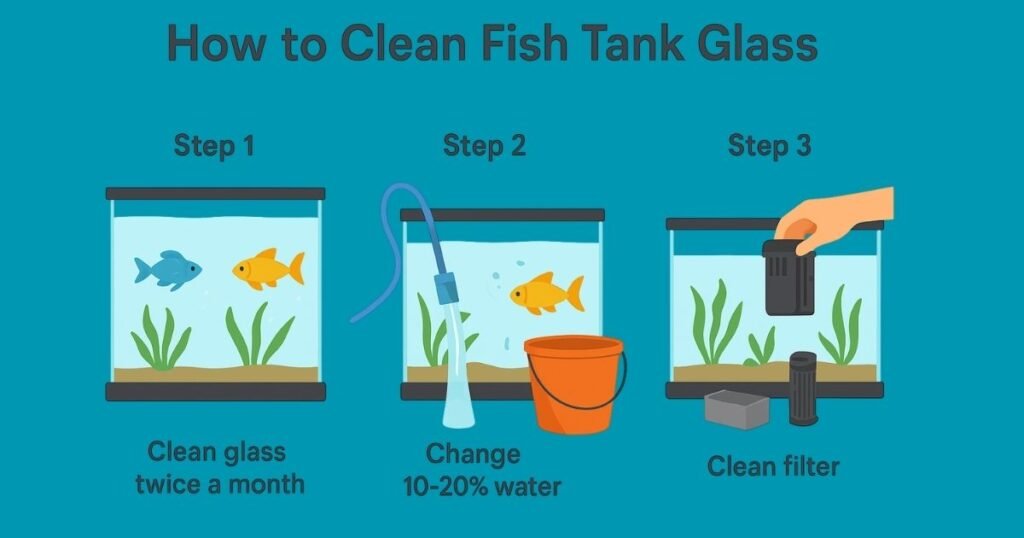
Changing water removes nutrients algae need to grow. Do partial water changes weekly. Use a gravel vacuum to clean the tank bottom without scratching glass.
- Change 10-20% of water each week
- Use dechlorinated water at the same temperature
- Vacuum gravel gently to remove debris
- Avoid harsh scrubbing on glass
Handling Stubborn Stains
Cleaning aquarium glass can be hard when stains stick tightly. Stubborn stains need careful cleaning to avoid damage.
Using the right tools and methods helps remove stains without scratching the glass. Always be gentle and patient.
Using Razor Blades Safely
Razor blades can scrape off tough stains on aquarium glass. Use them with care to avoid scratching or injury.
Hold the blade at a low angle and push gently. Do not press hard or drag the blade sideways.
- Use a clean, sharp blade for best results
- Keep the glass wet to reduce scratch risk
- Wear gloves to protect your hands
- Test on a small spot before full cleaning
Soaking Methods
Soaking aquarium glass can loosen stubborn stains. Use safe soaking solutions that will not harm fish or plants.
Fill a container with warm water and vinegar or aquarium-safe cleaner. Soak the glass for 10 to 20 minutes.
- Use white vinegar to dissolve mineral deposits
- Rinse glass well before putting back in the tank
- Repeat soaking if stains remain
- Avoid harsh chemicals that can harm the aquarium
When To Replace The Glass
Sometimes stains or damage cannot be fixed. Scratches or cracks reduce glass clarity and strength.
Replace the glass if stains are deep or glass is cracked. This keeps the tank safe for fish and plants.
- Check for deep scratches that trap dirt
- Look for cracks that may grow over time
- Replace glass if it clouds and cleaning fails
- Use proper glass replacement to avoid leaks
Credit: fishhunted.com

Credit: www.amazon.com
Frequently Asked Questions
How Do I Clean Aquarium Glass Without Scratching It?
Use a soft microfiber cloth or a dedicated algae scraper. Avoid abrasive materials or harsh chemicals. Clean gently in circular motions to prevent scratches and maintain clear glass.
What Materials Are Safe For Aquarium Glass Cleaning?
Soft sponges, microfiber cloths, and plastic scrapers are safe. Avoid metal or rough scrubbers as they can easily scratch the glass surface.
Can Vinegar Be Used To Clean Aquarium Glass Safely?
Yes, diluted white vinegar is effective for removing mineral deposits. Use a 50/50 vinegar-water mix, apply gently, and rinse thoroughly to avoid harming fish.
How Often Should I Clean My Aquarium Glass?
Clean the glass once a week to prevent algae buildup. Regular cleaning maintains visibility and a healthy environment for your aquatic pets.
Conclusion
Cleaning aquarium glass without scratching takes care and the right tools. Use soft cloths or special scrapers made for tanks. Avoid harsh chemicals that damage glass and harm fish. Regular cleaning keeps your aquarium clear and healthy. A clean tank shows off your fish beautifully.
Small efforts make a big difference over time. Keep your fish happy with gentle glass care. Simple steps protect both your tank and your pets.