
Are you struggling to keep your community tank fish fed on time? Managing multiple fish with different feeding needs can be stressful and time-consuming.
What if you could simplify this routine and ensure your aquatic friends never miss a meal? Automatic feeders for community tanks offer a smart, reliable solution that takes the guesswork out of feeding. Keep reading to discover how these devices can save you time, reduce stress, and help maintain a healthy, thriving tank.
Benefits Of Automatic Feeders
Automatic feeders help keep fish tanks clean and healthy. They feed fish at set times without the need for you to be there.
Using automatic feeders saves time and makes tank care easier for everyone in the community.
Consistent Feeding Schedule
Automatic feeders give fish food at the same time every day. This helps fish get used to a routine.
- Prevents overfeeding and underfeeding
- Supports fish digestion and growth
- Reduces stress caused by irregular feeding
Reduced Maintenance Effort
Automatic feeders cut down on daily chores. You do not need to feed fish by hand each day.
| Task | Manual Feeding | Automatic Feeding |
| Daily Feeding | Required | Automatic |
| Feeding Time | Variable | Fixed |
| Effort Needed | High | Low |
| Risk of Missed Feeding | High | Low |
Improved Fish Health
Feeding fish the right amount at the right time keeps them healthy. Automatic feeders help avoid too much or too little food.
- Maintains water quality by reducing leftover food
- Prevents fish diseases caused by poor feeding habits
- Keeps fish active and happy with steady nutrition

Credit: www.reddit.com
Types Of Automatic Feeders
Automatic feeders help keep community tanks fed without daily effort. They release food at set times or as needed. These devices come in different styles to fit various tank setups.
Choosing the right type of feeder can improve tank health and reduce overfeeding. Below are common types of automatic feeders used for community tanks.
Timer-based Feeders
Timer-based feeders release food at specific times during the day. You can set feeding schedules depending on your fish needs. These feeders use mechanical or digital timers for accuracy.
- Easy to program and reliable
- Feed multiple times per day
- Good for consistent feeding routines
- May require batteries or power source
Gravity Feeders
Gravity feeders use the weight of food to drop flakes or pellets into the tank. They work without power by slowly releasing food as fish eat. These feeders are simple and low maintenance.
| Feature | Details |
| Power | None needed |
| Food Type | Flakes, pellets |
| Release Control | Based on food weight |
| Best Use | Small tanks, simple setups |
Smart Feeders With Apps
Smart feeders connect to your phone via an app. You can feed fish remotely and adjust schedules easily. Some models include cameras to watch your tank while feeding.
Benefits of smart feeders:
- Remote control feeding
- Customizable feeding portions
- Notifications for low food levels
- Integration with other smart devices
Choosing The Right Feeder
Automatic feeders help keep your community tank fish well-fed on time. Picking the right feeder takes some thought. You want a feeder that fits your tank and fish needs well.
Consider how big your tank is, what kind of fish you have, and how the feeder gets power. These factors make sure your fish stay healthy and happy.
Tank Size Considerations
The size of your tank affects what type of feeder you need. A small tank needs a feeder with less capacity. A large tank needs a feeder that holds more food.
- Small tanks under 20 gallons need small feeders.
- Medium tanks from 20 to 50 gallons use medium feeders.
- Large tanks over 50 gallons require large feeders or multiple units.
Fish Species And Feeding Needs
Different fish eat different types of food. Some need flakes, others pellets or frozen food. Some fish eat once a day, others need more frequent meals.
| Fish Type | Food Type | Feeding Frequency |
| Tropical Fish | Flakes or pellets | 1-2 times daily |
| Cichlids | Pellets or frozen food | 2 times daily |
| Goldfish | Flakes or pellets | 1-3 times daily |
| Bottom Feeders | Sinking pellets | 1-2 times daily |
Power Source Options
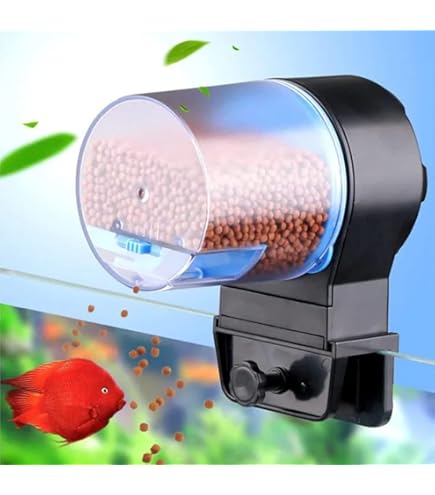
Feeders use different power sources. Some run on batteries, others use electricity. Your choice depends on convenience and tank location.
- Batteries:Portable and easy to place anywhere.
- Electric:Needs a power outlet, good for fixed locations.
- Rechargeable:Combines battery and electric benefits.
Credit: www.amazon.in
Installation Tips
Automatic feeders can make feeding your community tank easier. Correct installation ensures your fish get the right amount of food.
Follow these tips to install your automatic feeder efficiently and effectively. This will help maintain a healthy environment for your aquatic pets.
Placement For Optimal Dispersion
Proper placement of the feeder is crucial for even food distribution. This prevents overfeeding and maintains water quality.
- Place the feeder away from the filter outflow.
- Ensure it’s above an open area for even food spread.
- Avoid placing it near heaters to prevent food spoilage.
Securing The Feeder
Securing the feeder prevents it from falling into the tank. It keeps the device stable and functional over time.
Use the following tools to secure your feeder:
- Zip ties for attachment to tank frame
- Suction cups for glass tanks
- Adhesive strips for non-permanent solutions
Testing Before Use
Testing the feeder before regular use ensures it works correctly. This helps in avoiding malfunctions that can affect your fish.
| Test | Action |
| Power Test | Check battery or plug-in |
| Dispersion Test | Run a cycle without food |
| Timing Test | Set and verify the timer |
Maintenance And Troubleshooting
Automatic feeders help keep community tanks fed without daily effort. Regular care keeps them working well. Troubleshooting fixes common problems fast.
Below are key tips on cleaning, refilling, and solving issues with your feeder. Following these steps will save time and protect your fish.
Cleaning Procedures
Clean the feeder regularly to avoid clogs and mold growth. Use mild soap and water to wash all parts. Dry completely before reassembling.
- Remove the food container and empty leftover food.
- Wash the container, lid, and feeding mechanism with warm soapy water.
- Use a soft brush to clear small openings and moving parts.
- Rinse well to remove soap residue.
- Let all parts dry fully before refilling.
Refilling Tips
Refill the feeder with dry food only, like flakes or pellets. Do not overfill to avoid jams. Store extra food in a cool, dry place.
| Food Type | Storage Advice | Feeder Use |
| Flakes | Keep sealed and dry | Best for small feeders |
| Pellets | Use airtight container | Good for larger tanks |
| Freeze-dried | Store in cool area | Use sparingly |
Common Issues And Fixes
Automatic feeders can stop working due to power, food, or mechanical problems. Check these common issues and their solutions.
- Feeder not turning:Check batteries or power supply. Replace if needed.
- Food stuck in dispenser:Clean the feeding mechanism thoroughly. Avoid overfilling.
- Uneven food release:Adjust the timer settings. Ensure the food size fits the feeder opening.
- Moist food clumping:Use only dry food. Keep the feeder in a dry place.

Credit: www.amazon.in
Enhancing Convenience With Accessories
Automatic feeders make feeding community tanks easy and consistent. Accessories add more convenience and reliability.
These tools help keep your tank healthy and reduce daily work.
Backup Power Supplies
Backup power supplies keep feeders running during power outages. This prevents missed feedings that can stress fish.
They come in different types like batteries or UPS systems. Choose one that fits your tank size and feeder model.
- Battery packs offer portability and ease of use
- Uninterruptible power supplies provide longer backup time
- Some models automatically switch to backup power
Feeder Timers And Controllers
Timers and controllers let you set feeding schedules precisely. They help feed your fish at the same time every day.
Advanced controllers allow multiple feedings and portion control. This is useful for tanks with many species or feeding needs.
- Simple timers have basic on/off scheduling
- Digital controllers offer programmable feeding times
- Some models connect to apps for remote control
Monitoring Tools
Monitoring tools track feeding performance and tank conditions. They alert you if a feeder stops working or food runs out.
These tools improve care by giving real-time data. You can act quickly to fix problems and keep fish healthy.
- Feed level sensors detect low food supply
- Remote alerts notify you about feeding issues
- Some systems track feeding history and patterns
Frequently Asked Questions
What Are The Benefits Of Automatic Feeders For Community Tanks?
Automatic feeders provide consistent feeding schedules, reduce overfeeding, and save time. They help maintain water quality and support fish health in community tanks by delivering precise food portions.
How Do Automatic Feeders Work In Community Fish Tanks?
Automatic feeders use timers and motors to dispense food at set intervals. They release measured amounts of food, ensuring all fish receive adequate nutrition without manual intervention.
Can Automatic Feeders Prevent Overfeeding In Community Tanks?
Yes, automatic feeders control portion sizes and feeding frequency. This reduces waste and prevents water pollution caused by excess food in community tanks.
Which Types Of Food Can Automatic Feeders Dispense?
Most automatic feeders can dispense flakes, pellets, and freeze-dried food. Choose a feeder compatible with your fish’s diet for optimal feeding results.
Conclusion
Automatic feeders save time and keep fish healthy in community tanks. They deliver food in the right amount and at set times. This helps avoid overfeeding or hunger. Fish stay happy and tanks stay clean. Choosing a good feeder means less stress for you.
It also ensures your fish get regular meals. A simple tool with big benefits. Give your community tank the care it needs with automatic feeders.