
Imagine transforming your aquarium into a stunning underwater world where every detail captures attention. Aquascaping with driftwood caves lets you create natural hiding spots and focal points that make your tank come alive.
If you want your fish to feel safe and your aquarium to stand out, driftwood caves are a game-changer. Ready to discover how these beautiful wood formations can elevate your aquascape and keep your aquatic friends happy? Keep reading, because what you learn here will inspire your next aquarium masterpiece.

Credit: aquascapebonsai.com
Choosing Driftwood For Aquascapes
Driftwood adds natural beauty and hiding spots to aquascapes. Picking the right driftwood helps create a balanced and healthy aquarium.
Learn about types of driftwood, size and shape choices, and how to prepare it safely for your tank.
Types Of Driftwood
Different kinds of driftwood give unique looks and benefits to aquascapes. Some woods are dense, while others float at first.
- Mopani wood: dense and dark with a smooth surface
- Malaysian driftwood: light, with many branches and holes
- Manzanita: hard wood with twisted shapes
- Cholla wood: hollow and light, perfect for caves
Selecting The Right Size And Shape
Choose driftwood that fits your tank size and design. Large pieces make a bold statement. Small pieces fit better in tight spaces.
| Size | Best Use |
| Small (under 6 inches) | Accent spots and caves |
| Medium (6 to 12 inches) | Main focus or multiple hiding spots |
| Large (over 12 inches) | Centerpiece or large caves |
Shapes with curves and holes create natural caves for fish. Flat or straight wood fits better as background pieces.
Preparing Driftwood For Aquarium Use
Clean driftwood before adding it to your aquarium. This removes dirt and unwanted bacteria.
- Rinse the wood under running water.
- Soak it in water for several days to soften and sink.
- Boil the wood for 1-2 hours to kill germs and speed up sinking.
- Scrub off any remaining debris with a brush.
- Allow the wood to dry before placing it in the tank.
Credit: www.etsy.com
Designing With Driftwood Caves
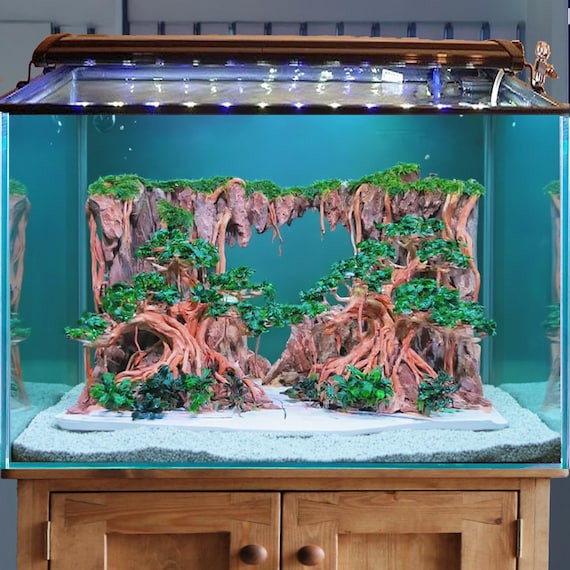
Driftwood caves add a natural look to aquascapes. They create interesting shapes and textures.
Using driftwood caves helps fish feel safe and adds depth to the aquarium design.
Creating Natural Hiding Spots
Driftwood caves offer good hiding places for fish and small animals. These spots reduce stress and keep them calm.
Place caves where fish like to rest or hide. Make sure entrances are wide enough for easy access.
- Use curved driftwood to form natural cave shapes
- Combine wood pieces to create larger shelters
- Add plants near caves for extra cover
Balancing Open Space And Shelter
Too many caves can crowd the tank and limit swimming space. Open areas let fish move freely.
Keep a balance by adding driftwood caves on one side and open space on the other.
- Place caves near the bottom or corners
- Leave central areas open for swimming
- Check fish behavior to adjust shelter and space
Incorporating Driftwood Into Layouts
Driftwood caves can be the main feature or part of a larger design. Position them to create flow and interest.
Use different sizes and shapes to add variety. Combine with rocks and plants for a natural feel.
- Start with a focal driftwood cave
- Place smaller pieces around it for balance
- Use driftwood to guide the eye through the tank
Complementary Plant Choices
Driftwood caves add natural beauty to aquascapes. Choosing the right plants helps create a balanced look.
Plants can grow around or on the driftwood. This creates a lively and natural underwater scene.
Plants That Thrive Around Driftwood
Some plants grow well near driftwood because they like shade and stable roots. These plants also add texture and color.
- Anubias: They attach easily to wood and rocks.
- Java Fern: Prefers low light and can grow on driftwood.
- Cryptocoryne: Grows well in substrate near driftwood caves.
- Buces (Bucephalandra): Slow-growing plants that cling to wood.
- Amazon Sword: Good for background planting around caves.
Attaching Moss And Ferns To Wood
Moss and ferns look natural on driftwood. Attaching them creates a lush, green effect.
Use thread or fishing line to tie moss or ferns to the wood. They will slowly attach and grow on their own.
- Java Moss: Easy to attach and grows fast.
- Christmas Moss: Adds a bushy, textured look.
- Java Fern: Attach rhizomes carefully to avoid damage.
- Bolbitis Fern: Prefers shaded spots on driftwood.
Enhancing Depth With Plant Placement
Plant placement around driftwood caves creates a sense of depth. Use tall plants in the back and small plants in front.
Layer plants to give the tank a 3D effect. This makes the aquascape look bigger and more natural.
- Place tall stem plants behind driftwood caves.
- Use mid-sized plants like Anubias around the sides.
- Add small foreground plants like dwarf hairgrass or moss in front.
- Keep open spaces near the cave openings for contrast.
Fish And Invertebrates For Driftwood Caves
Driftwood caves offer natural hiding places in aquariums. They help fish and invertebrates feel safe and reduce stress.
This guide explores which species use caves, the benefits of these shelters, and how to keep a community tank with driftwood caves.
Species That Use Caves For Shelter
Many fish and invertebrates prefer caves made from driftwood for resting or protection. These spots mimic their natural habitats.
- Corydoras catfish like to hide inside caves during the day.
- Apistogramma cichlids use caves for breeding and shelter.
- Freshwater shrimps such as Amano shrimp find safety in driftwood caves.
- Otocinclus catfish rest in shaded spots offered by caves.
- Snails use caves to avoid strong light and predators.
Behavioral Benefits Of Driftwood Hiding Spots
Driftwood caves encourage natural behaviors like hiding, resting, and breeding. These reduce stress and aggression.
| Benefit | Description |
| Stress Reduction | Hiding spots lower fish anxiety and stress levels. |
| Breeding Areas | Caves provide safe places for laying and protecting eggs. |
| Territorial Boundaries | Fish claim caves as territories, reducing fights. |
| Resting Zones | Fish rest in shaded, secure cave spaces. |
Community Tank Compatibility
Not all fish get along in a tank with driftwood caves. Choose species that share space peacefully.
- Pick calm, non-aggressive fish that use caves without fighting.
- Avoid large cichlids that may guard caves aggressively.
- Include bottom dwellers that enjoy hiding in caves.
- Add invertebrates that benefit from shelter but do not harm fish.
- Keep an eye on fish behavior to prevent bullying.
Maintenance And Longevity
Aquascaping with driftwood caves adds a natural look to your tank. Caring for driftwood helps keep it beautiful and strong. Proper maintenance stops damage and extends its life.
Regular checks and gentle cleaning protect the wood. Knowing how to prevent problems like algae and rot is key to lasting aquascapes.
Cleaning Driftwood Without Damage
Clean driftwood carefully to avoid scratches or weakening. Use soft brushes and avoid harsh chemicals. Rinse with warm water only.
- Remove loose debris with a soft brush
- Soak wood in warm water for a few hours
- Use a toothbrush for crevices
- Do not use soap or detergents
- Dry wood completely before returning to the tank
Preventing Algae Growth On Wood
Algae can cover driftwood and spoil its look. Controlling light and nutrients reduces algae growth. Adding algae-eating fish helps keep wood clean.
| Method | How It Helps |
| Limit light exposure | Reduces algae photosynthesis |
| Control feeding | Limits excess nutrients |
| Add algae eaters | Natural algae removal |
| Regular water changes | Removes algae spores |
Replacing And Rotting Prevention
Driftwood can rot if left too long or damaged. Watch for soft spots and bad smells. Replace wood that shows rot to protect fish and plants.
- Check wood monthly for softness or odor
- Remove rotten wood promptly
- Keep water clean and well-circulated
- Use driftwood soaked and cured before use
- Replace old driftwood every 1-2 years
Credit: www.etsy.com
Creative Aquascape Inspirations
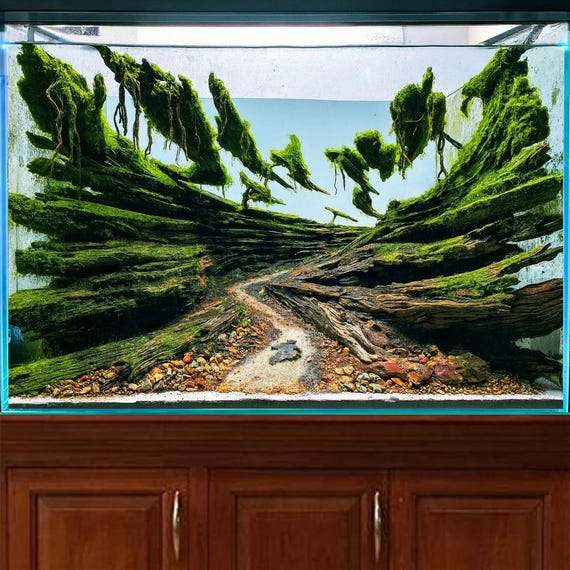
Aquascaping with driftwood caves creates beautiful underwater scenes. Driftwood adds natural beauty to aquariums.
Explore different styles to find the best design for your aquatic environment. Enjoy the creative process and watch your aquarium come to life.
Biotope-style Driftwood Caves
Biotope-style aquascapes mimic natural habitats. Use driftwood to create realistic caves for fish and plants.
Choose driftwood that fits the natural environment you want to replicate. Add leaves and stones to enhance authenticity.
- Research the habitat you wish to mimic
- Select compatible plants and fish
- Use natural elements like rocks and leaves
Minimalist Driftwood Designs
Minimalist designs focus on simplicity and space. Use driftwood sparingly to create open, airy aquascapes.
Focus on clean lines and simple arrangements. This style is perfect for highlighting specific plants or fish.
- Choose a few key pieces of driftwood
- Arrange for maximum visual impact
- Leave space for fish to swim freely
Combining Rocks And Driftwood
Mixing rocks with driftwood adds texture and depth. This combination creates a dynamic underwater landscape.
Use rocks to anchor driftwood or create contrast. This method adds stability and visual interest to your aquascape.
- Use rocks to balance driftwood shapes
- Experiment with different rock types
- Create layers for added depth
Frequently Asked Questions
What Are Driftwood Caves In Aquascaping?
Driftwood caves are hollow formations created by arranging driftwood pieces. They add natural shelter and hiding spots for fish. These caves enhance tank aesthetics and provide a realistic underwater environment. They also help establish territories for aquatic creatures, promoting healthy behavior.
How Do Driftwood Caves Benefit Aquarium Fish?
Driftwood caves offer shelter and reduce stress for fish. They create hiding spots that simulate natural habitats. These caves encourage natural behaviors and improve fish well-being. Additionally, they help fish feel secure, boosting their overall health and longevity in the aquarium.
Can Driftwood Caves Affect Water Quality?
Properly prepared driftwood caves can improve water quality. Driftwood releases tannins, mildly lowering pH and softening water. This mimics natural aquatic environments, benefiting many fish species. However, untreated driftwood may cause water cloudiness, so thorough soaking and cleaning are essential before use.
How To Safely Add Driftwood Caves To Aquariums?
Clean and soak driftwood for several days before adding. This removes impurities and tannins that discolor water. Arrange pieces securely to prevent collapse and injury. Monitor water parameters regularly after introducing driftwood caves. This ensures a safe, stable environment for fish and plants.
Conclusion
Driftwood caves bring life and charm to any aquarium. They create hiding spots for fish and add natural beauty. These caves also help build a healthy environment for aquatic creatures. Experiment with different shapes and sizes to find what fits best.
Keep the wood clean and safe for your tank. Enjoy watching your fish explore and relax inside the caves. Aquascaping with driftwood caves makes your aquarium a peaceful, vibrant space. Simple, natural, and rewarding.