
Are you ready to transform your small tank into a stunning underwater paradise? Aquascaping for small tanks is a creative way to bring nature’s beauty right into your home.
You might think that limited space means limited possibilities, but that’s far from true. With the right techniques, you can create a vibrant, eye-catching aquarium that feels much bigger than it is. You’ll discover simple tips and tricks to make your small tank stand out.
Get ready to unlock the full potential of your aquarium and impress everyone who sees it!
Choosing The Right Tank
Picking the right tank is key for aquascaping small spaces. The tank size and material affect plant growth and fish health.
Learn about ideal sizes and materials to make your small tank a thriving aquatic world.
Ideal Sizes For Small Aquariums
Small tanks usually range from 2.5 to 10 gallons. Each size suits different aquascaping needs and space limits.
- 2.5 to 5 gallons: Good for tiny plants and shrimp.
- 5 to 7 gallons: Allows a few small fish and more plants.
- 7 to 10 gallons: Offers room for diverse plants and fish.
Material Options And Benefits
Tank materials impact durability, clarity, and price. Glass and acrylic are common choices for small tanks.
| Material | Benefits | Considerations |
|---|---|---|
| Glass | Scratch-resistant, clear view, affordable | Heavier, can break if dropped |
| Acrylic | Lightweight, strong, better insulation | Scratches easily, may yellow over time |

Credit: buceplant.com
Selecting Plants And Decorations
Aquascaping small tanks needs careful plant and decoration choices. Space is limited, so select items that fit well and look good.
Choosing the right plants and decorations helps create a balanced and healthy environment for your aquatic life.
Best Plants For Limited Space
Small tanks work best with plants that stay compact and grow slowly. These plants need less trimming and keep the tank tidy.
- Anubias: Grows slowly and sticks to rocks or wood.
- Java Fern: Low light and easy to care for.
- Dwarf Hairgrass: Adds a grassy look without taking much space.
- Cryptocoryne: Compact and colorful varieties available.
- Bucephalandra: Small leaves and grows well in low light.
Incorporating Driftwood And Rocks
Driftwood and rocks add natural shapes and hiding spots. Use them to build structure and contrast with plants.
| Decoration | Purpose | Tips |
| Driftwood | Creates natural look and shelter | Soak before adding to remove tannins |
| Rocks | Add texture and anchor plants | Choose smooth stones to avoid sharp edges |
| Peat wood | Good for attaching mosses | Check for chemical treatments before use |
Using Mosses And Carpet Plants
Mosses and carpet plants cover surfaces and create green carpets. They help fill empty spaces and soften hard decorations.
- Java Moss: Easy to grow on wood or rocks.
- Christmas Moss: Dense and bushy for hiding spots.
- Dwarf Baby Tears: Forms a green carpet but needs good light.
- Monte Carlo: Low-growing and fast spreading.
- Glossostigma: Popular for bright green carpets in tanks.
Design Styles For Small Tanks
Small aquariums need special design styles to look great. Using the right layout helps plants and fish thrive.
Choosing a style that fits the tank size makes aquascaping easier and more beautiful.
Nature-inspired Layouts
Nature-inspired designs copy the natural world inside the tank. They use rocks, wood, and plants to create a wild look.
These layouts make small tanks feel like tiny forests or riverbeds.
- Use curved shapes to mimic rivers or hills
- Plant dense greenery for a forest feel
- Place stones to form natural barriers
Minimalist And Modern Designs
Minimalist designs focus on simplicity and clean lines. These layouts use few plants and decorations.
The modern style often uses geometric shapes and clear spaces to create a calm look.
- Choose a few plants with simple shapes
- Use smooth stones or glass pieces
- Keep open space for water flow
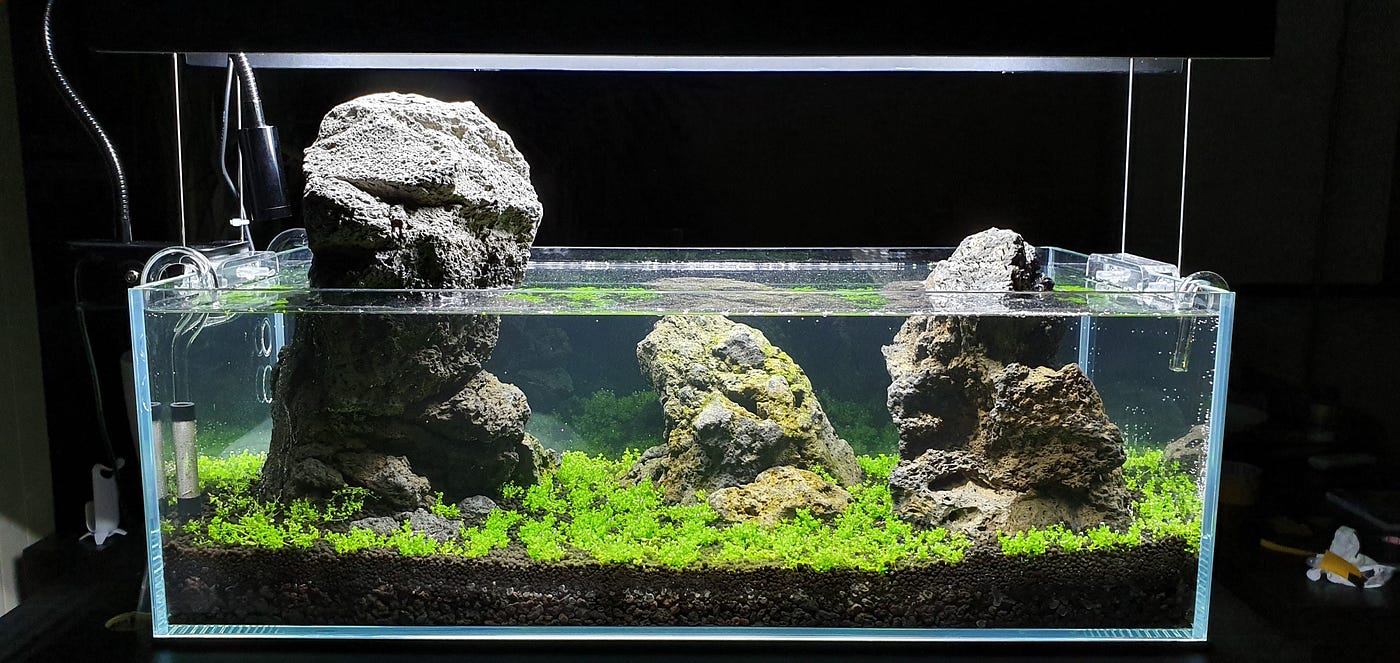
Japanese Iwagumi Style
The Iwagumi style uses a small number of stones as the main focus. It creates a balanced and peaceful scene.
Plants are kept low to highlight the stones’ shapes and positions.
- Use three or five stones with different sizes
- Arrange stones to form a triangle or line
- Plant small ground covers around the stones
Lighting And Filtration
Aquascaping small tanks needs careful attention to lighting and filtration. Both help plants and fish stay healthy.
Good lighting supports plant growth. Proper filtration keeps water clean and clear.
Choosing Proper Lighting
Small tanks need lights that fit their size. Choose lights that give enough brightness without too much heat.
LED lights are popular because they use less energy. They also last longer and stay cool.
- Pick lights with the right color for plants (around 6500K).
- Use a timer to give plants 8-10 hours of light daily.
- Avoid strong lights that can cause algae growth.
- Place lights close to the tank but not touching water.
Compact Filtration Solutions
Small tanks need filters that fit well and clean water effectively. Choose filters made for small spaces.
Hang-on-back (HOB) filters or sponge filters work well in small tanks. They provide good water flow and easy maintenance.
- Look for filters with adjustable flow rates to avoid strong currents.
- Use biological media to help break down waste naturally.
- Clean or replace filter parts regularly to keep water clear.
- Choose quiet filters for a peaceful tank environment.
Maintaining Balance And Health
Keeping a small aquascape healthy needs care and attention. A balanced tank supports plants and fish well.
Good habits help prevent common problems. They make your tank look beautiful for a long time.
Nutrient Management
Plants need nutrients like nitrogen, phosphorus, and potassium. These help plants grow strong and green.
- Use a balanced fertilizer for small tanks
- Test water regularly to check nutrient levels
- Add nutrients slowly to avoid spikes
- Remove dead leaves to prevent decay
Algae Control Techniques
Algae can overgrow and harm your tank. Controlling algae keeps the water clear and plants healthy.
| Technique | Description |
| Limit Light | Keep tank light under 8 hours daily |
| Add Algae Eaters | Use snails or small fish that eat algae |
| Regular Water Changes | Change 20% of water weekly to reduce nutrients |
| Manual Removal | Wipe tank walls and remove algae by hand |
Regular Maintenance Tips
Routine care keeps the tank balanced and healthy. It stops problems before they grow.
- Test water parameters weekly
- Trim plants to avoid overcrowding
- Clean filters every month
- Feed fish small amounts daily
- Observe fish and plants for signs of stress

Credit: www.pond-planet.co.uk
Expert Tips For Success
Aquascaping in small tanks presents unique challenges. With careful planning and technique, you can create a stunning aquatic display. These expert tips will guide you to success.
Learn how to design and maintain an aquascape that thrives in a compact environment. Follow these guidelines to avoid common pitfalls and enhance visual appeal.
Planning Your Aquascape
Start with a clear vision of your aquascape. Consider the size of your tank and the types of plants and fish you want to include.
- Research suitable plant species for small tanks.
- Sketch a layout to visualize plant placement.
- Choose a focal point to draw the eye.
Avoiding Common Mistakes
Many beginners make common errors that can hinder their aquascape’s success. Understanding these mistakes helps prevent them.
Avoid overcrowding the tank with too many plants or fish. Maintain water quality with regular monitoring and cleaning.
Enhancing Visual Depth
Creating visual depth in a small tank enhances its beauty. Use different techniques to achieve this effect.
| Technique | Description |
| Layering | Plant taller species at the back, shorter in front. |
| Color Contrast | Combine plants with varying colors for depth. |
| Hardscape Elements | Use rocks or wood to add dimension. |
Credit: medium.com
Frequently Asked Questions
What Plants Are Best For Small Aquascaping Tanks?
Low-maintenance plants like Java moss, Anubias, and Cryptocoryne thrive in small tanks. They require minimal light and grow slowly, perfect for compact aquascapes.
How Do I Maintain Water Quality In Small Aquascapes?
Regular water changes and a good filter are essential. Monitor parameters like pH, ammonia, and nitrate weekly to keep your tank healthy.
What Substrate Is Ideal For Small Tank Aquascaping?
Fine gravel or nutrient-rich aqua soil works best. These substrates support plant roots and promote healthy growth in small aquascapes.
How To Create Depth In A Small Aquascaping Tank?
Use layering techniques with rocks and plants. Place taller plants and hardscape elements at the back for a sense of depth.
Conclusion
Creating a beautiful aquascape in a small tank is possible. Choose plants and decorations that fit the space well. Keep the setup simple to avoid overcrowding. Regular care helps plants grow healthy and strong. Small tanks bring a piece of nature indoors.
Enjoy the calming effect of your tiny underwater world. With patience, your small tank can look amazing. Start small, watch it grow, and have fun.