
Are you ready to transform your saltwater aquarium into a stunning underwater paradise? Aquascaping for saltwater species is more than just arranging rocks and corals—it’s about creating a vibrant, balanced environment where your marine life can thrive and captivate your eyes every day.
Whether you’re a beginner or looking to elevate your tank’s beauty, this guide will help you design a breathtaking aquascape that brings out the best in your saltwater creatures. Keep reading to discover simple tips and expert secrets that will make your aquarium the highlight of your space.

Credit: m.youtube.com
Choosing The Right Tank
Picking the right tank is very important for saltwater aquascaping. The tank must support your saltwater species and plants well.
The tank size, shape, and material all affect your aquascaping success. Choose carefully to create a healthy environment.
Tank Size And Shape
Tank size affects water stability and space for species. Bigger tanks keep water conditions stable longer. Small tanks need more care.
The shape changes how you arrange plants and rocks. Wide tanks give more surface area for light. Tall tanks show vertical designs well.
- Larger tanks suit many fish and plants
- Shallow tanks help grow light-loving species
- Long tanks offer more horizontal space for layout
- Tall tanks allow layered aquascaping
Material Considerations
Tank material affects durability and clarity. Glass tanks are clear and scratch-resistant. Acrylic tanks are lighter and easier to shape.
Material also impacts cleaning and maintenance. Choose a material that fits your budget and tank size.
- Glass: strong, clear, heavier, scratch-resistant
- Acrylic: lightweight, flexible shapes, easier to crack
- Check seals and joints to avoid leaks
- Consider UV resistance for long-lasting clarity
Selecting Substrate And Rocks
Creating a saltwater aquascape is fun and challenging. Choosing the right substrate and rocks is important for a healthy marine environment.
The substrate forms the base of your tank, while rocks offer structure and hiding spots for fish. Let’s explore the options available.
Types Of Substrates
Different substrates suit different species. Choose carefully to match your saltwater creatures’ needs.
Sand is a popular choice for many tanks. It is natural and looks like the ocean floor.
- Aragonite sand helps maintain stable pH levels.
- Crushed coral improves water hardness.
- Live sand has beneficial bacteria.
Live Rock Benefits
Live rock is more than just decoration. It provides many benefits for your saltwater aquarium.
Live rock has natural bacteria that help break down waste. It also helps with biological filtration.
| Benefit | Description |
| Filtration | Helps remove toxins from water. |
| Habitat | Provides hiding spots for fish. |
| Natural Look | Makes the tank look like a real reef. |
Incorporating Marine Plants
Aquascaping with saltwater species is a great way to create a natural underwater scene. Marine plants add color and life to your saltwater tank.
Using marine plants helps improve water quality and offers hiding spots for fish and invertebrates. They bring balance to the aquarium ecosystem.
Popular Saltwater Plants
There are many marine plants suited for saltwater aquariums. Some are easy to care for and grow well under aquarium conditions.
- Caulerpa: A fast-growing green algae that adds texture.
- Halimeda: Known for its bright green segmented leaves.
- Gracilaria: A red algae that provides food for herbivores.
- Chaetomorpha: A tangled green algae that helps control nutrients.
- Avrainvillea: Offers a bushy look with long, thin leaves.
Plant Placement Tips
Place taller plants at the back or sides of the tank to create depth. Shorter plants work well in front for better visibility.
Keep plants away from strong water currents to avoid damage. Make sure they receive enough light to grow healthy and green.
- Use rocks or sand to anchor plants firmly.
- Group plants with similar light needs together.
- Leave open swimming space for fish.
- Trim plants regularly to maintain shape.
Design Styles For Saltwater Aquascapes
Saltwater aquascapes create beautiful underwater environments. They combine coral, rocks, and marine life to mimic ocean habitats. Choosing the right design style helps keep your tank healthy and stunning.
Two popular styles for saltwater tanks are the Natural Reef Look and Modern Minimalist Designs. Each style uses different elements and layouts to suit various tastes.
Natural Reef Look
The Natural Reef Look copies real coral reefs found in the ocean. It uses a mix of live rocks and colorful corals. This style supports diverse marine life and offers many hiding spots for fish.
- Use various rock shapes to build height and caves
- Include multiple coral species for color and texture
- Arrange corals for natural growth patterns
- Add sand or crushed coral as substrate
- Include fish and invertebrates native to reefs
Modern Minimalist Designs
Modern Minimalist Designs focus on simple layouts with clean lines. They use fewer rocks and corals to create open space. This style highlights select pieces and reduces maintenance.
| Element | Description |
| Rocks | Few, large pieces with smooth shapes |
| Corals | Minimal, often a single type or color |
| Substrate | Plain sand or fine gravel |
| Fish | Small groups or solitary species |
| Lighting | Bright and focused to enhance shapes |
Choosing Compatible Saltwater Species
Creating a beautiful aquascape for saltwater species needs careful planning. You must pick fish and invertebrates that live well together.
Compatibility helps keep your tank healthy and reduces stress among animals. It also makes your aquarium look more natural.
Fish Selection
Choose fish that have similar sizes and temperaments. Avoid mixing aggressive species with peaceful ones.
Some fish like clownfish, gobies, and blennies work well in community tanks. They often stay peaceful and add color.
- Check if fish share the same water needs
- Avoid species that eat smaller fish
- Pick fish that live in similar tank zones
- Start with a few species before adding more
Invertebrate Options
Invertebrates help clean the tank and add movement. Choose types that do not harm your fish or plants.
Popular choices include snails, shrimps, and crabs. Each has unique care needs and behaviors to consider.
- Snails eat algae and keep glass clean
- Shrimps scavenge leftovers and debris
- Crabs can be territorial; watch for aggression
- Avoid invertebrates that damage corals or plants

Credit: www.youtube.com
Lighting And Filtration Setup
Aquascaping for saltwater species needs proper lighting and filtration. Both help keep the tank healthy and beautiful.
Good lighting supports coral growth and shows vibrant colors. Efficient filtration keeps water clean and safe for fish.
Lighting Types And Effects
Saltwater tanks need lighting that mimics natural sunlight. LED lights are popular because they save energy and last long.
Proper lighting helps corals grow and shows their true colors. Different lights can change how the tank looks and feels.
- LED lights offer different color settings and brightness
- Metal halide lights give strong, intense light for deep tanks
- Fluorescent lights are affordable and good for beginners
- Blue actinic lights highlight coral fluorescence and colors
Efficient Filtration Systems
Filtration keeps the water clean by removing waste and toxins. Saltwater tanks need strong filtration to protect sensitive species.
Many systems use mechanical, chemical, and biological filters together. This combination clears debris, chemicals, and harmful bacteria.
- Mechanical filters trap particles and debris
- Chemical filters remove toxins and impurities
- Biological filters use beneficial bacteria to break down waste
- Protein skimmers remove organic waste before it breaks down
- Regular water changes support filtration and tank health
Maintenance And Care Tips
Caring for a saltwater aquascape requires regular attention. Keeping your environment stable helps your species thrive.
This guide covers key points on water quality and algae control to maintain a healthy tank.
Water Quality Monitoring
Check water quality often to keep saltwater species safe. Monitor key factors like pH, salinity, and temperature.
| Parameter | Ideal Range | Importance |
| pH | 8.1 – 8.4 | Supports biological functions |
| Salinity | 1.023 – 1.025 Specific Gravity | Maintains osmotic balance |
| Temperature | 24°C – 27°C (75°F – 80°F) | Ensures species comfort |
| Ammonia | 0 ppm | Toxic to fish and invertebrates |
| Nitrite | 0 ppm | Indicates waste buildup |
| Nitrate | < 20 ppm | Prevents algae growth |
Algae Control
Algae can harm your tank’s health if it grows too much. Use these tips to keep it under control.
- Keep lighting to 8-10 hours daily
- Do regular water changes every 1-2 weeks
- Introduce algae-eating species like snails or fish
- Remove visible algae manually during maintenance
- Avoid overfeeding to reduce excess nutrients
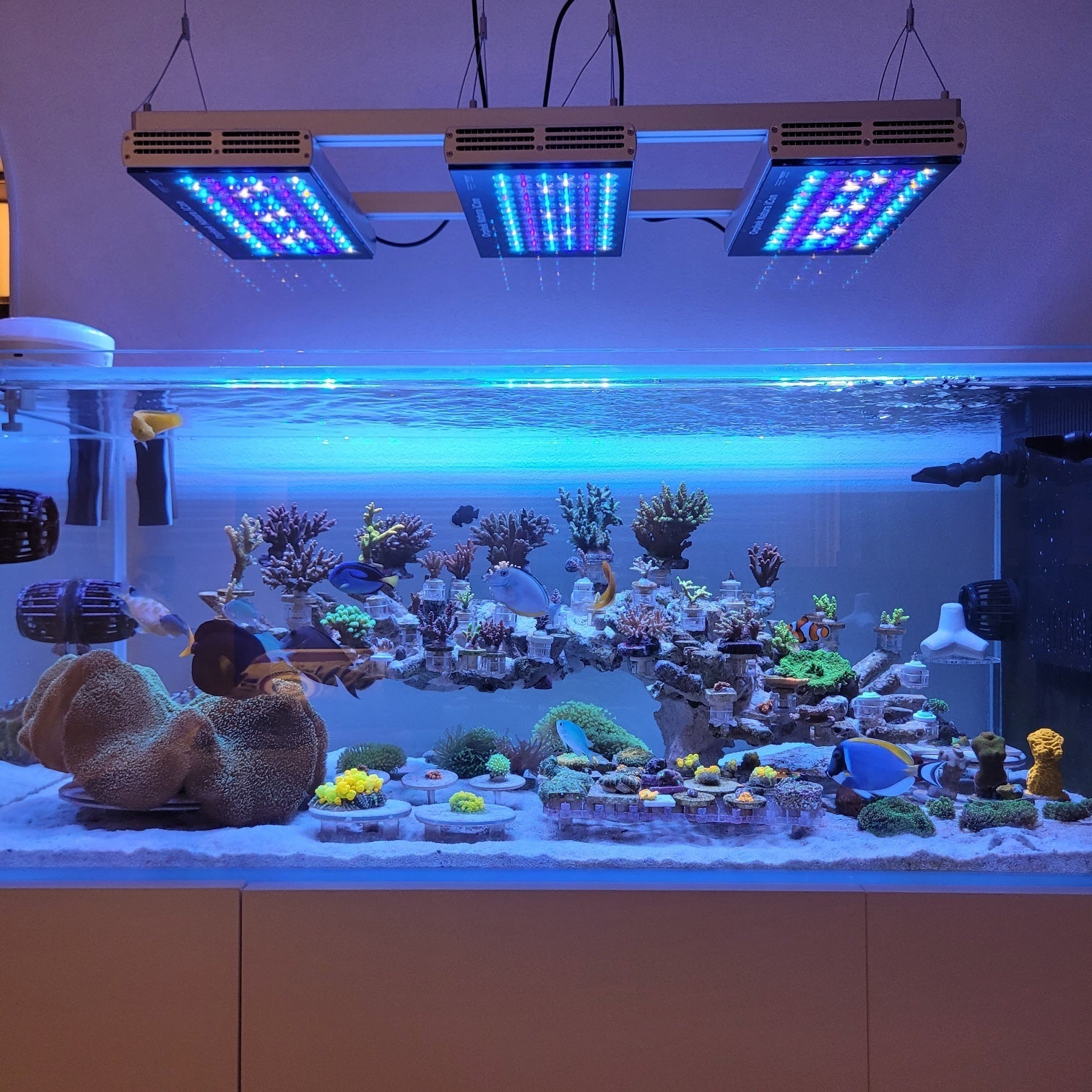
Credit: shop.orphek.com
Common Challenges And Solutions
Aquascaping for saltwater species brings many challenges. These issues affect the health of your aquarium. Knowing common problems helps you keep a thriving tank.
This guide covers two main challenges: algae overgrowth and coral stress. You will find simple solutions to manage these problems.
Dealing With Algae Overgrowth
Algae can grow fast and cover corals and rocks. It blocks light and uses nutrients needed by other species. Controlling algae is important for a healthy tank.
- Keep lighting time to 8-10 hours daily to prevent excess algae growth.
- Use algae-eating fish or snails to control algae naturally.
- Perform regular water changes to remove excess nutrients.
- Clean tank surfaces and decorations weekly to reduce algae buildup.
- Test and maintain proper nitrate and phosphate levels below 10 ppm.
Preventing Coral Stress
Corals react to sudden changes and poor water quality. Stress can cause color loss or coral death. Avoiding stress keeps corals healthy and colorful.
| Cause of Stress | Solution |
| Rapid temperature changes | Keep water temperature stable between 75°F and 80°F (24°C-27°C) |
| High nitrate or phosphate levels | Test water weekly and do partial water changes |
| Strong water flow hitting corals directly | Adjust pumps to create gentle, indirect flow |
| Sudden changes in lighting | Introduce new lights gradually over several days |
Frequently Asked Questions
What Is Aquascaping For Saltwater Species?
Aquascaping for saltwater species involves designing underwater landscapes using live rock, corals, and marine plants. It creates a natural habitat that supports saltwater fish and invertebrates, enhancing their health and aesthetics. Proper aquascaping also ensures water flow and space for species to thrive.
How To Choose Rocks For Saltwater Aquascaping?
Choose rocks that are porous and safe for marine environments, like live rock or dry reef rock. These rocks provide beneficial bacteria and natural hiding spots. Avoid sharp or non-marine rocks that may alter water chemistry or harm species.
Which Corals Are Best For Beginner Saltwater Aquascaping?
Soft corals like zoanthids, mushrooms, and leather corals are ideal for beginners. They are hardy, require moderate light, and tolerate a range of water conditions. These corals add color and texture without demanding complex care routines.
How To Maintain Water Quality In Saltwater Aquascapes?
Regularly test parameters like salinity, pH, nitrate, and phosphate levels. Perform weekly water changes and clean filters to remove waste. Stable water conditions prevent stress and disease, promoting vibrant coral growth and healthy marine species.
Conclusion
Creating a saltwater aquascape takes patience and care. Choose rocks, corals, and plants that suit your species well. Keep water clean and stable to help them thrive. Small changes can make a big difference in your tank. Enjoy watching your underwater world grow and change.
Aquascaping brings beauty and life to your saltwater species. It offers a peaceful and rewarding hobby for all. Stay curious, keep learning, and have fun with your aquascape.