
If you love keeping fish, you know that creating the perfect underwater world is both an art and a science. But when it comes to large species, aquascaping can feel tricky.
How do you design a tank that lets your big fish thrive and still looks stunning? This guide is made just for you. You’ll discover simple yet powerful tips to build an aquascape that matches your fish’s size and personality.
Keep reading, and you’ll soon have a breathtaking tank that’s as healthy as it is beautiful.
Credit: medium.com
Choosing The Right Large Species
Picking large fish for aquascaping needs care and planning. Large species need enough space and proper environment to thrive.
This guide helps you select the right big fish for your aquarium. Consider their size, behavior, and tank compatibility.
Popular Large Fish Options
Many large fish species fit well in aquascaped tanks. Each species has unique needs and looks.
- Arowana: Known for its long body and shimmering scales.
- Oscar Fish: Bright colors and interactive behavior.
- Silver Dollar: Round shape and peaceful nature.
- Clown Knife Fish: Sleek body and nocturnal habits.
- Flowerhorn Cichlid: Vibrant colors and distinctive head shape.
Compatibility Considerations
Large fish must live well with other tank mates. Check their temperament and needs before mixing species.
| Species | Temperament | Recommended Tank Size |
| Arowana | Aggressive | 250+ gallons |
| Oscar Fish | Semi-aggressive | 125+ gallons |
| Silver Dollar | Peaceful | 75+ gallons |
| Clown Knife Fish | Shy but territorial | 180+ gallons |
| Flowerhorn Cichlid | Aggressive | 100+ gallons |
Behavioral Traits To Note
Understanding behavior helps keep fish healthy and safe. Some large species show aggression or need hiding spots.
- Arowanas jump often; a covered tank is best.
- Oscars may rearrange plants and decorations.
- Silver Dollars prefer groups and swim actively.
- Clown Knife Fish hide during the day and hunt at night.
- Flowerhorns can be territorial and chase others.

Credit: www.reddit.com
Selecting Suitable Tank Size
Choosing the right tank size is vital for aquascaping large species. The tank must give enough room for fish and plants to grow. It also affects the water quality and overall health of the aquatic life.
Think about the tank size before setting up your aquascape. Proper planning helps avoid stress and overcrowding in the aquarium.
Minimum Space Requirements
Large species need enough space to swim freely and stay healthy. A small tank can cause stress and limit their growth. Each species has its own minimum space needs.
- Check the adult size of the species you want to keep.
- Allow at least 20 gallons (75 liters) per large fish.
- Consider extra space for plants and decorations.
- Provide depth for bottom-dwelling species.
- Make sure the tank is wide enough for turning and movement.
Tank Shape And Layout
The shape of the tank affects the aquascape design and fish behavior. Some shapes suit large species better than others. Layout includes plant placement and open swimming areas.
| Tank Shape | Advantages | Best Use |
| Long and rectangular | More swimming space | Active swimmers and schooling fish |
| Tall and narrow | Good for vertical plants | Species that stay near surface or bottom |
| Square or cube | Balanced space and volume | Mixed species and varied layout |
Future Growth Planning
Plan for the fish to grow bigger. Young fish need less space but will need more as adults. The tank should support their full size.
- Research the maximum size of your species.
- Choose a tank larger than the current fish size.
- Think about adding more fish in the future.
- Keep room for plant growth and decorations.
- Regularly check water quality as the tank population grows.
Designing With Scale In Mind
Aquascaping for large species needs careful planning. The size of your tank and fish affects every design choice.
Thinking about scale helps create a balanced and natural look. It also keeps large species comfortable in their space.
Balancing Hardscape Elements
Hardscape includes rocks, driftwood, and other solid features in the tank. These must be sized well to match the fish and tank.
- Use large rocks or logs to fill space without crowding
- Avoid small pieces that get lost in the tank
- Place hardscape to create hiding spots and open swimming areas
- Keep balance by spreading elements evenly
Plant Selection For Large Tanks
Choose plants that grow well in big tanks and suit large fish needs. Plants should add scale and texture to the space.
| Plant Type | Growth Rate | Size | Care Level |
| Amazon Sword | Moderate | Large | Easy |
| Java Fern | Slow | Medium | Easy |
| Vallisneria | Fast | Large | Medium |
| Cryptocoryne | Slow | Medium | Medium |
Creating Visual Depth
Visual depth makes a tank look bigger and more natural. Use size, color, and placement to create layers.
Tips for Depth:
- Place taller plants and hardscape at the back
- Use medium-sized elements in the middle
- Keep smaller plants and open space in front
- Use darker colors in the back and lighter ones in front
Filtration And Water Quality
Keeping water clean is key for large aquascapes. Good filtration helps remove waste and toxins.
Balanced water quality supports healthy fish and plants. Regular checks keep conditions safe.
High-capacity Filters
Large species produce more waste. Use filters that handle big volumes of water.
- Canister filters offer strong mechanical and biological cleaning.
- Sump filters increase water volume and filtration area.
- Power filters provide easy setup and good flow rates.
- Choose filters rated for double the tank size for safety.
Maintaining Water Parameters
| Parameter | Ideal Range | Notes |
| pH | 6.5 – 7.5 | Stable pH supports fish health |
| Ammonia | 0 ppm | Highly toxic, must be zero |
| Nitrite | 0 ppm | Also toxic, avoid build-up |
| Nitrate | < 20 ppm | Keep low with water changes |
| Temperature | 24 – 28°C (75 – 82°F) | Depends on species |
Test water weekly. Adjust conditions with treatments or water changes.
Regular Maintenance Tips
- Change 20-30% of water every week.
- Clean filter media in tank water only.
- Remove dead plants and debris daily.
- Check equipment and repair leaks or cracks.
- Observe fish for stress or illness signs.
Lighting And Temperature Control
Aquascaping large species needs the right lighting and temperature. These factors help plants grow and keep fish healthy.
Good control of light and heat creates a stable and beautiful underwater environment.
Lighting Needs For Plants And Fish
Plants need light for photosynthesis. Large species fish need light to see and behave naturally.
Use full-spectrum lights that mimic natural sunlight. Adjust the light time to about 8 to 10 hours a day.
- Low light plants need softer light
- High light plants need stronger light
- Fish prefer moderate lighting without glare
- Use timers to keep a consistent schedule
Temperature Stability
Large species need steady water temperature to avoid stress and disease. Sudden changes can harm fish and plants.
Keep the temperature between 72°F and 82°F, depending on the species. Use heaters and chillers if needed.
- Check temperature daily with a reliable thermometer
- Place the tank away from heat or cold sources
- Use insulation to keep temperature steady
- Adjust equipment based on seasonal changes
Energy Efficiency Tips
Control lighting and temperature without wasting energy. This helps save money and protect the environment.
Choose energy-saving devices and use timers to limit running hours.
- Use LED lights for low power use and long life
- Turn off lights during night hours
- Set heaters to appropriate temperatures
- Use automatic timers for lights and heaters
- Consider solar-powered aquarium equipment
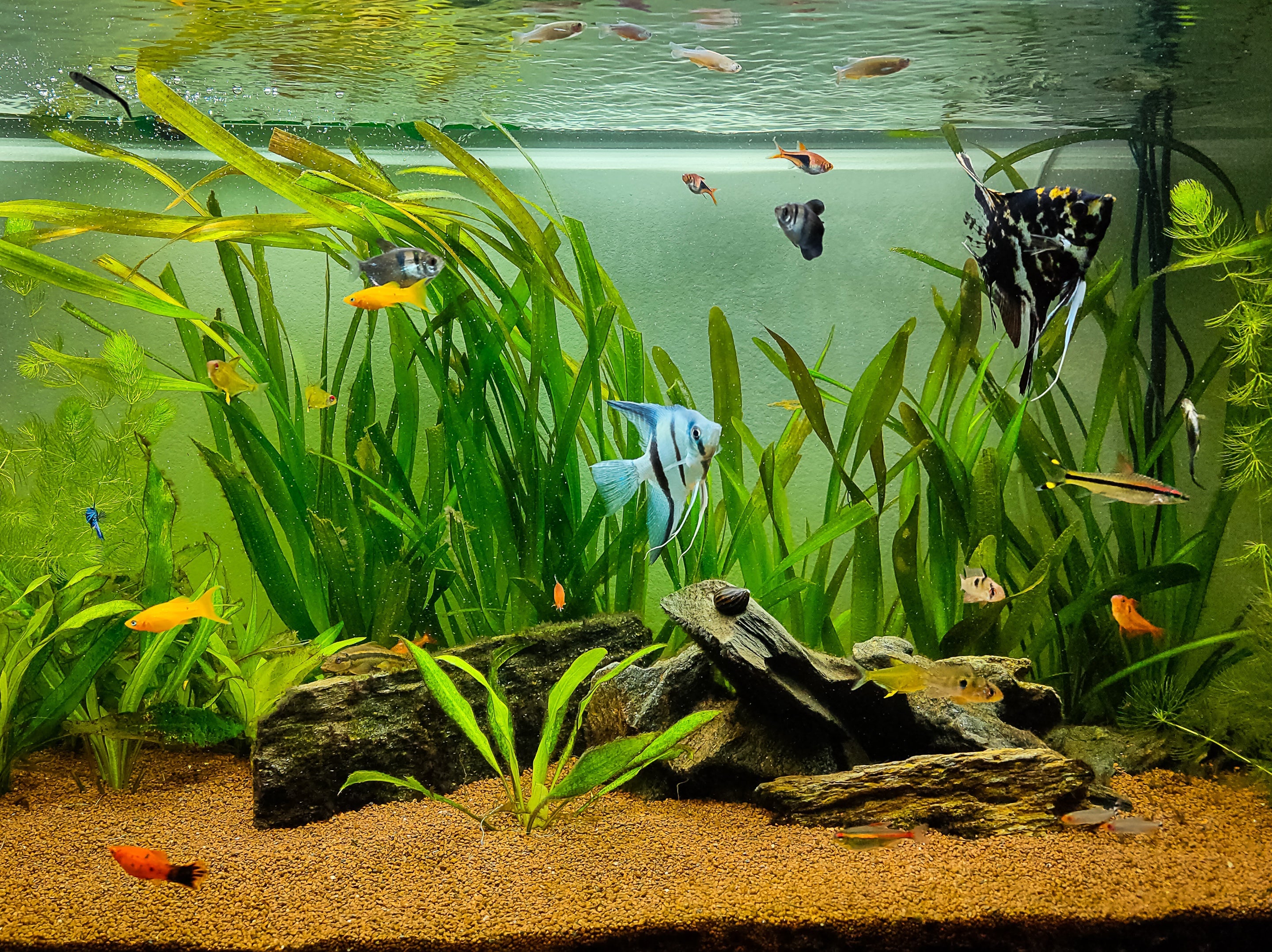
Credit: splashyfishstore.com
Feeding And Nutrition
Feeding large aquatic species requires careful planning. Proper nutrition supports their health and growth.
Understanding dietary needs and feeding techniques is key. Avoiding overfeeding helps maintain a healthy environment.
Dietary Requirements For Large Species
Large species often need a diverse diet. They require proteins, fats, and carbohydrates in balanced amounts.
| Nutrient | Source |
| Protein | Fish, Shrimp |
| Fats | Fish Oil, Algae |
| Carbohydrates | Vegetables, Algae |
Feeding Techniques
Use varied techniques to feed large species. This ensures all fish get the nutrients they need.
- Spread food evenly across the tank.
- Use feeding rings to reduce waste.
- Feed at different tank levels to reach all species.
Avoiding Overfeeding
Overfeeding can harm water quality. It may also lead to health issues in fish.
Preventing Common Issues
Aquascaping for large species can be challenging. Issues like aggression, disease, and algae growth are common.
Understanding these issues and how to prevent them helps maintain a healthy aquatic environment.
Managing Aggression
Large species may become aggressive in confined spaces. This behavior can harm other fish.
- Provide ample space for each fish.
- Introduce peaceful species first.
- Monitor interactions daily.
Disease Prevention
Diseases spread quickly in aquariums. Prevention is key to maintaining healthy fish.
| Action | Benefit |
| Regular water changes | Reduces toxins |
| Quarantine new fish | Prevents disease spread |
| Balanced diet | Boosts immunity |
Handling Algae Growth
Algae can overtake aquariums if not controlled. It affects water quality and aesthetics.
Showcasing Your Large Aquascape
Large aquascapes create a stunning view in any room. They bring nature’s beauty into your home or office. Showing them off well helps others appreciate your work.
Good display also helps your aquascape thrive. Lighting, angles, and details all matter. Use these tips to capture and highlight your large aquascape.
Photography Tips
Clear photos show the true colors and shapes in your aquascape. Use a camera or phone with a good lens. Avoid glare from lights or windows. Try natural light in the morning or late afternoon.
- Use a tripod for steady shots
- Take photos at eye level with the tank
- Focus on the main features of the aquascape
- Use a plain background to reduce distractions
- Try close-up shots to show fine details
Highlighting Key Features
Large species and plants create focal points in your aquascape. Highlight these features to draw attention. Lighting can help bring out colors and textures.
| Feature | How to Highlight | Best Time to Show |
| Large Fish Species | Use side lighting and clear water | When they are active and swimming |
| Unique Plants | Spotlight with soft overhead light | During plant growth season |
| Rock Formations | Use shadows for depth | Any time with proper lighting |
Seasonal Adjustments
Seasons affect your aquascape’s look and care. Plants grow differently and fish behavior changes. Adjust lighting, temperature, and maintenance to fit the season.
- In spring, increase light for plant growth
- In summer, watch water temperature closely
- In autumn, trim plants to remove dead leaves
- In winter, reduce feeding and lower light hours
- Keep water clean year-round for best display
Frequently Asked Questions
What Plants Are Best For Aquascaping Large Species Tanks?
Hardy plants like Anubias, Java Fern, and Amazon Sword work well. They withstand large fish activity and provide shelter.
How To Choose Substrate For Large Species Aquascaping?
Use coarse gravel or sand to support plant roots and prevent fish from disturbing the substrate.
What Tank Size Suits Aquascaping With Large Species?
A tank of at least 55 gallons is ideal. It offers enough space for plants and swimming.
How To Maintain Water Quality In Large Species Aquascapes?
Regular water changes, strong filtration, and monitoring parameters keep water clean and healthy for large fish.
Conclusion
Creating a beautiful aquascape for large fish takes care and planning. Choose strong plants and sturdy decorations to suit their size. Give them plenty of space to swim freely and hide when they want. Keep water clean and balanced for their health.
Watch how your fish move and grow with your design. Enjoy the calm and beauty your aquarium brings every day. Aquascaping large species can be simple and fun with these tips.