
Imagine transforming your living space with a natural masterpiece that changes every day. Aquascaping for display aesthetics lets you create stunning underwater landscapes that captivate anyone who sees them.
Whether you’re a beginner or looking to refine your skills, this art form gives you the power to design a peaceful, vibrant scene right in your own home. Ready to discover how simple changes can turn your aquarium into a breathtaking display?
Keep reading to unlock the secrets that make aquascaping truly mesmerizing.
Credit: www.maono.com
Choosing A Theme
Choosing a theme helps create a clear look for your aquascape. It guides your design choices and makes the display more attractive.
The theme sets the mood and style of your underwater world. Picking one makes arranging plants, rocks, and decorations easier.
Nature-inspired Designs
Nature-inspired themes use real-world scenes like forests, mountains, or rivers. They aim to copy natural beauty inside the tank.
- Use stones and driftwood that look like natural formations
- Choose plants that grow in similar conditions outdoors
- Create depth with layered layout and open spaces
- Add small details like moss or leaf litter for realism
Minimalist Layouts
Minimalist aquascapes focus on simplicity and clean lines. They use few elements to create a calm and elegant space.
| Feature | Minimalist Style |
| Number of plants | Few, carefully placed |
| Decorations | Simple and uncluttered |
| Color scheme | Neutral or monochrome |
| Focus | Shape and space |
Fantasy And Abstract Styles
Fantasy themes use bright colors and unusual shapes. Abstract styles focus on patterns and artistic layouts.
Ideas for fantasy and abstract aquascapes include:
- Using colored substrates or artificial decorations
- Arranging plants in geometric or swirling patterns
- Mixing textures and colors for visual contrast
- Adding LED lights to enhance the surreal effect
Credit: myaquariumbuilder.com
Selecting Plants And Hardscape
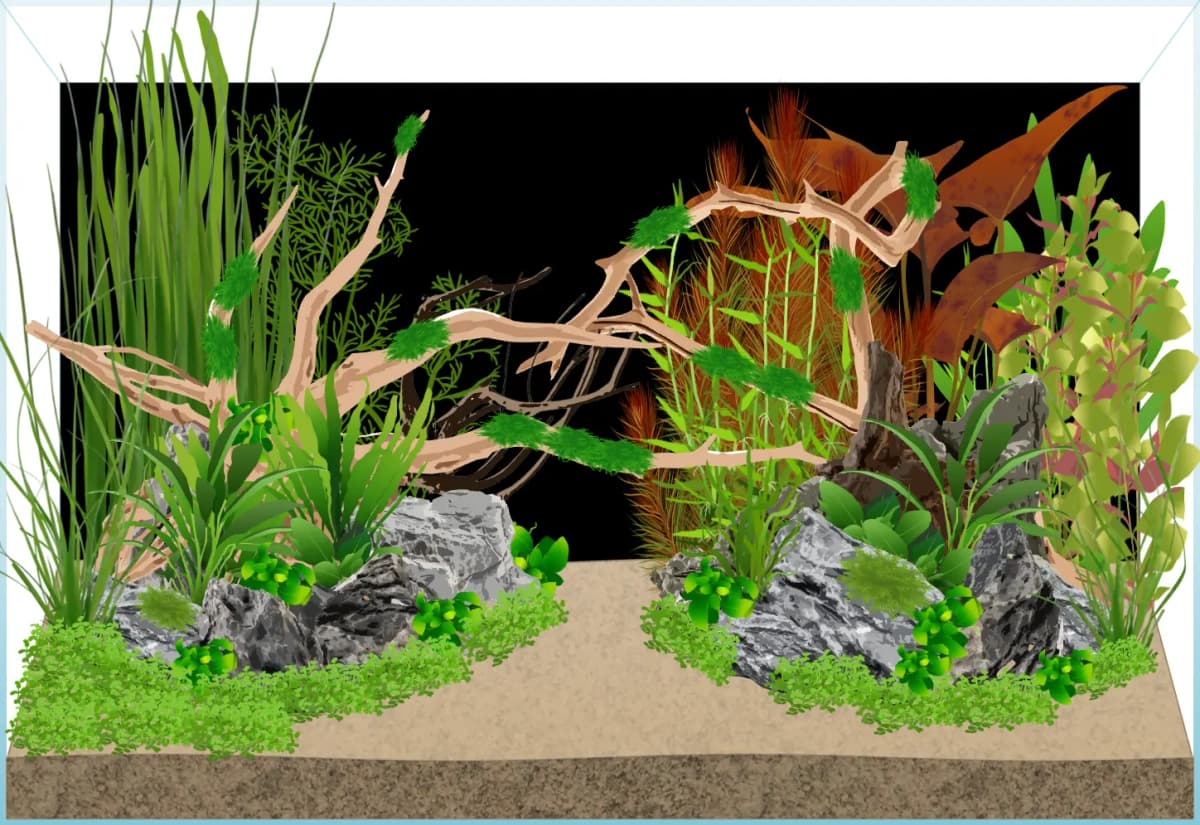
Aquascaping shapes the look of your aquarium using plants and hardscape. Choosing the right plants and materials is key for a good display.
Plants bring color and life. Hardscape adds structure and style. Both must match to create balance and beauty.
Popular Aquatic Plants
Select plants that suit your tank size and light conditions. Use a mix of tall and short plants for depth.
- Java Fern – Easy to grow and hardy.
- Anubias – Slow growing with thick leaves.
- Amazon Sword – Tall and bright green.
- Cryptocoryne – Good for shaded areas.
- Dwarf Hairgrass – Great as foreground cover.
Rocks And Driftwood Choices
Hardscape sets the frame for your plants. Choose rocks and driftwood that look natural and fit your theme.
| Material | Description | Care Tips |
| Seiryu Rock | Sharp edges, gray color | Rinse well, avoid soft water |
| Dragon Stone | Textured surface, brownish | Soak to remove dust |
| Manzanita Driftwood | Twisted branches, dark color | Boil to remove tannins |
| Spider Wood | Thin, web-like branches | Soak for weeks before use |
Balancing Elements
Balance plants and hardscape so no part looks crowded or empty. Use empty spaces to highlight key features.
- Place tall plants in the back or corners.
- Use rocks to create focal points.
- Mix textures for visual interest.
- Keep open areas for fish movement.
- Arrange driftwood to guide the eye.
Tank Layout Techniques
Setting up a beautiful aquascape starts with good tank layout techniques. These methods help create a balanced and attractive underwater scene. You can use simple rules to guide your design choices.
This guide covers key techniques like the rule of thirds, creating depth, and arranging focal points for smooth flow.
Rule Of Thirds
The rule of thirds divides your tank into three parts horizontally and vertically. Place important elements along these lines or where they cross. This makes the layout more natural and appealing.
- Avoid centering all objects in the tank.
- Put plants or rocks at one-third or two-thirds positions.
- Use empty spaces to balance the composition.
- Keep the background and foreground in mind when placing elements.
Creating Depth And Perspective
Depth makes your aquascape look larger and more natural. Use size and placement to add perspective. Smaller plants and decorations should go near the back. Larger ones go in front.
| Element | Placement | Effect |
| Large rocks or plants | Front or middle | Draw attention and add detail |
| Small plants | Back | Create background and depth |
| Mid-sized elements | Middle ground | Connect front and back layers |
Focal Points And Flow
A focal point is where viewers look first. Choose a strong object or plant for this spot. Arrange other elements to guide the eye smoothly around the tank.
Tips for good flow:
- Use curved lines or paths with plants and rocks.
- Place taller plants near the focal point.
- Keep open spaces to prevent clutter.
- Use color contrast to highlight key areas.
Credit: www.pond-planet.co.uk
Lighting And Color Effects
Lighting plays a big role in aquascaping. It affects how your tank looks and how plants grow.
Color effects from lighting can make your aquascape more attractive and lively.
Choosing The Right Light Spectrum
Different plants need different light colors to grow well. The light spectrum means the range of colors in the light.
- Blue light helps plants grow leaves and stems strong.
- Red light helps plants bloom and keeps colors bright.
- Green light lets us see the true colors of plants and fish.
Highlighting Key Areas
Use lighting to focus on important parts of your aquascape. This brings attention to your favorite plants or decorations.
| Lighting Technique | Purpose | Effect |
| Spotlighting | Highlight one plant | Draws eye to that plant |
| Backlighting | Light from behind | Creates shadow and depth |
| Side Lighting | Light from the side | Shows texture and shape |
Enhancing Plant Colors
Light can make plant colors brighter and richer. This adds beauty to your aquarium.
Tips to enhance colors:
- Use full-spectrum LED lights for natural colors.
- Adjust light intensity to avoid bleaching.
- Combine warm and cool lights for balance.
- Use timer to give plants regular light cycles.
Maintaining Visual Appeal
Aquascaping is about creating beautiful underwater landscapes. Keeping the display looking fresh and neat is important.
Regular care helps plants and decorations stay attractive. Small actions make a big difference in the tank’s look.
Regular Trimming And Cleaning
Trim plants often to stop them from overgrowing. This keeps shapes clear and space open for fish.
Clean the tank glass and decorations to remove dirt. Clean surfaces help light reach plants better.
- Cut back fast-growing plants weekly
- Remove dead leaves to prevent decay
- Wipe algae off the glass regularly
- Clean decorations with a soft brush
Algae Control Strategies
Algae can cover plants and stones, hiding their beauty. Controlling algae keeps the aquascape clear and bright.
Use balanced light and nutrients to prevent too much algae growth. Adding algae eaters can help keep it low.
- Limit tank lighting to 6-8 hours daily
- Do regular water changes to reduce nutrients
- Add algae-eating fish or snails
- Remove visible algae by hand
Adjusting Layout Over Time
Plants grow and fish move around, changing the tank’s look. Adjust the layout to keep it balanced and neat.
Move plants or decorations if some spots look crowded or empty. Change the design to keep it interesting.
- Shift plants to fill empty areas
- Trim or remove plants that block views
- Rearrange stones or wood for new shapes
- Watch how fish use the space
Incorporating Fish And Invertebrates
Aquascaping creates beautiful underwater landscapes. Adding fish and invertebrates enhances the display. They bring color and life to the aquascape.
Choosing the right species is important. Fish and invertebrates should complement the aquascape’s design. They should also live harmoniously together.
Species Selection For Aesthetics
Choose species that match your aquascape theme. Brightly colored fish add vibrant touches. Transparent shrimp create subtle movements.
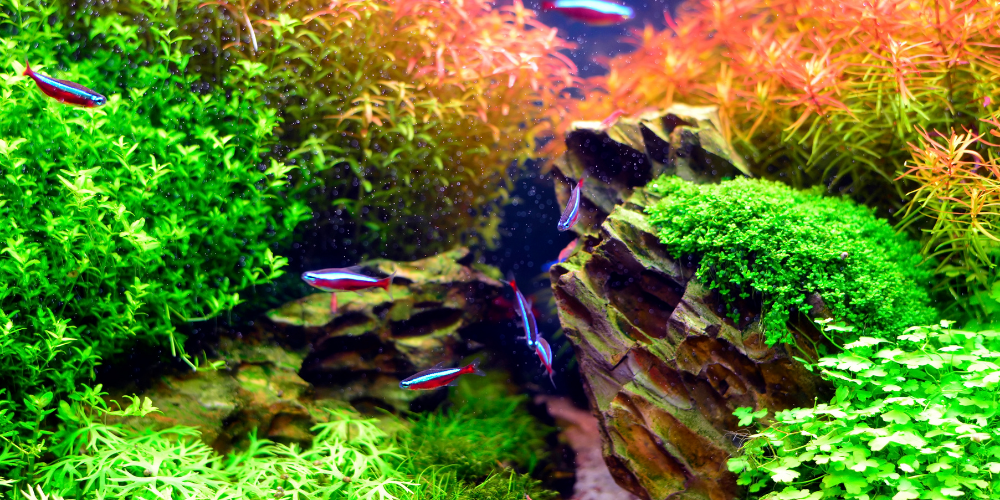
- Neon tetras for bright blue accents
- Cherry shrimp for red highlights
- Betta fish for a singular focal point
Behavior And Compatibility
Fish and invertebrates should coexist peacefully. Some species are aggressive. Others prefer to hide. Understand their behavior before adding them.
Compatibility ensures a stress-free environment. Avoid mixing species that do not get along. Happy fish and invertebrates enhance the aquascape.
Complementing The Aquascape
Fish and invertebrates should enhance the aquascape’s design. They can highlight specific features. Use them to draw attention to plants or rocks.
| Feature | Species |
|---|---|
| Rock formations | Corydoras catfish |
| Plant clusters | Otocinclus catfish |
| Open spaces | Schooling fish like rasboras |
Frequently Asked Questions
What Is Aquascaping For Display Aesthetics?
Aquascaping for display aesthetics involves designing underwater landscapes that enhance visual appeal. It focuses on plant arrangement, hardscape materials, and balance to create stunning, natural-looking aquariums that captivate viewers and complement room decor.
How Do I Choose Plants For Aquascaping Displays?
Select plants based on size, color, and growth rate to suit your aquascape theme. Use a mix of foreground, midground, and background plants for depth and contrast, ensuring they thrive in your aquarium’s lighting and water conditions.
What Hardscape Materials Work Best In Aquascaping?
Common hardscape materials include rocks, driftwood, and stones. Choose natural-looking, aquarium-safe pieces that complement your plant selection. Hardscape adds structure, texture, and focal points, enhancing the overall aesthetics of your display.
How Often Should I Maintain My Aquascape Display?
Regular maintenance is essential. Trim plants weekly, clean algae off surfaces, and perform partial water changes every 1-2 weeks. Consistent care keeps your aquascape healthy and visually appealing over time.
Conclusion
Aquascaping creates beautiful underwater scenes anyone can enjoy. Simple designs bring calm and charm to any space. Choosing the right plants and decorations makes a big difference. Small changes can improve your tank’s look instantly. Keep experimenting to find what suits your style best.
Aquascaping offers a fun way to express creativity. It turns ordinary tanks into living art pieces. Try it today and watch your aquarium shine.