
Are you looking to transform your adult fish tank into a stunning underwater masterpiece? Aquascaping for adult tanks isn’t just about decoration—it’s about creating a healthy, balanced environment that brings out the best in your fish and plants.
Imagine a tank that captures attention, calms your mind, and becomes the centerpiece of any room. You’ll discover simple yet powerful tips to design and maintain an aquascape that fits your adult tank perfectly. Ready to make your aquarium something truly special?
Keep reading to unlock the secrets that will elevate your tank to the next level.
Choosing The Right Tank
Aquascaping for adult tanks needs careful tank selection. The right tank size and material help plants and fish thrive.
Choosing a tank that fits your space and aquascaping style makes maintenance easier and improves tank health.
Ideal Tank Sizes For Adults
Adult aquascaping tanks usually need more space than beginner tanks. Larger tanks keep water stable and support diverse plants.
- 20 gallons or more suits small adult setups.
- 30 to 50 gallons offer room for complex designs.
- Over 50 gallons fits larger plants and fish.
- Long tanks give more surface area for gas exchange.
- Taller tanks help grow plants that need height.
Material Options And Their Benefits
Tank material affects weight, clarity, and cost. The two main choices are glass and acrylic.
| Material | Benefits | Drawbacks |
|---|---|---|
| Glass | Scratch resistant, clear, affordable | Heavier, breaks easier |
| Acrylic | Lighter, stronger, better insulation | Scratches easily, more expensive |
Selecting Substrates
Choosing the right substrate is important for adult aquascaping tanks. Substrate supports plant roots and helps keep the tank healthy.
The wrong substrate can slow plant growth or cause algae problems. Knowing substrate types and their effects helps you create a thriving tank.
Types Of Substrates
There are many substrates to choose from. Each type suits different plants and tank conditions. Some hold nutrients, while others offer good water flow.
- Aquarium Soil: Rich in nutrients and good for rooted plants.
- Sand: Smooth texture but low in nutrients.
- Gravel: Common and easy to clean but may not hold nutrients well.
- Clay-based Substrates: Help release minerals slowly.
- Laterite: High in iron, supports strong plant growth.
How Substrate Affects Plant Growth
Substrate type changes how plants get nutrients and anchor their roots. The right substrate supports healthy roots and steady growth.
| Substrate Type | Nutrient Level | Root Support | Best For |
| Aquarium Soil | High | Excellent | Most aquatic plants |
| Sand | Low | Moderate | Plants with fine roots |
| Gravel | Low | Good | Hardy plants and fish tanks |
| Clay-based | Medium | Good | Iron-loving plants |
| Laterite | High | Fair | Iron-demanding plants |
Picking Aquatic Plants
Choosing the right aquatic plants is key for a healthy adult tank. Plants add beauty and help keep water clean.
Select plants that fit your tank size and lighting. Some plants need more care than others.
Low-maintenance Plants
Low-maintenance plants are perfect for beginners or busy tank owners. They grow well without much effort.
These plants need less light and fewer nutrients. They help keep your tank balanced easily.
- Anubias: Slow-growing and tough
- Java Fern: Hardy and low light
- Cryptocoryne: Adapts to many conditions
- Marimo Moss Ball: Easy and decorative
Colorful Plant Varieties
Adding colorful plants makes your tank lively and eye-catching. They come in red, purple, and green shades.
Choose plants that contrast with your fish and tank background for a stunning look.
- Red Ludwigia: Bright red leaves
- Rotala: Red and pink tones
- Alternanthera: Deep purple color
- Amazon Sword: Bright green large leaves
Plant Placement Tips
Place plants based on their size and light needs. Taller plants go in the back of the tank.
Use shorter plants in front for better visibility. Group plants with similar care needs together.
- Back: Tall plants like Amazon Sword
- Middle: Medium plants like Cryptocoryne
- Front: Small plants like Marimo Moss Ball
- Avoid overcrowding to keep plants healthy
Design Styles To Inspire
Aquascaping for adult tanks offers many design styles to explore. Each style brings a unique look and feel to your aquarium.
Choosing the right style helps create a beautiful and balanced underwater world. Here are some popular ideas to inspire you.
Nature-inspired Layouts
Nature-inspired layouts mimic natural environments like rivers, forests, or mountains. They use rocks, wood, and plants to create a wild look.
This style feels calm and peaceful. It helps fish feel at home by copying their natural surroundings.
- Use driftwood and stones to build natural shapes
- Plant mosses and ferns for a lush effect
- Create small hills or valleys with substrate
- Keep plant growth dense but balanced
Minimalist And Modern Designs
Minimalist aquascapes use fewer decorations and plants. They focus on clean lines and simple layouts.
Modern designs often feature open space and bold shapes. This style highlights each element clearly.
- Select one or two types of plants
- Use large stones or a single wood piece
- Keep substrate smooth and even
- Leave open water space for balance
Themed Aquascapes
Themed aquascapes tell a story or recreate a special place. Themes can be inspired by movies, seasons, or fantasy worlds.
This style allows creativity and personal touches. You can add decorations that fit the theme well.
- Choose a clear theme like “Japanese garden” or “desert canyon”
- Pick plants and rocks that match the theme
- Add small decorations for detail
- Arrange elements to create a scene
Hardscape Elements
Hardscape elements shape the look of an adult aquascape tank. They create structure and focal points.
Choosing the right materials helps to build a natural and balanced underwater scene.
Using Rocks And Stones
Rocks and stones add texture and depth to the aquascape. They serve as anchors for plants and decorations.
Pick stones with smooth surfaces or interesting shapes. Avoid sharp edges to protect fish.
- Arrange stones in groups for a natural look
- Use different sizes to add variety
- Place heavier stones at the bottom for stability
Incorporating Driftwood
Driftwood creates a natural feel and provides hiding spots for fish. It can also support epiphyte plants.
Choose wood pieces that fit the tank size and style. Clean and soak driftwood to avoid water issues.
- Use driftwood to create focal points
- Combine with moss or ferns for a lush look
- Place securely to prevent movement
Balancing Hardscape And Plants
Hardscape and plants must work together for a pleasing aquascape. Balance hard and soft textures.
Leave open spaces to avoid overcrowding. Use plants to soften hard edges of rocks and wood.
- Use tall plants behind hardscape for depth
- Place small plants near stones and driftwood
- Keep the layout open and natural
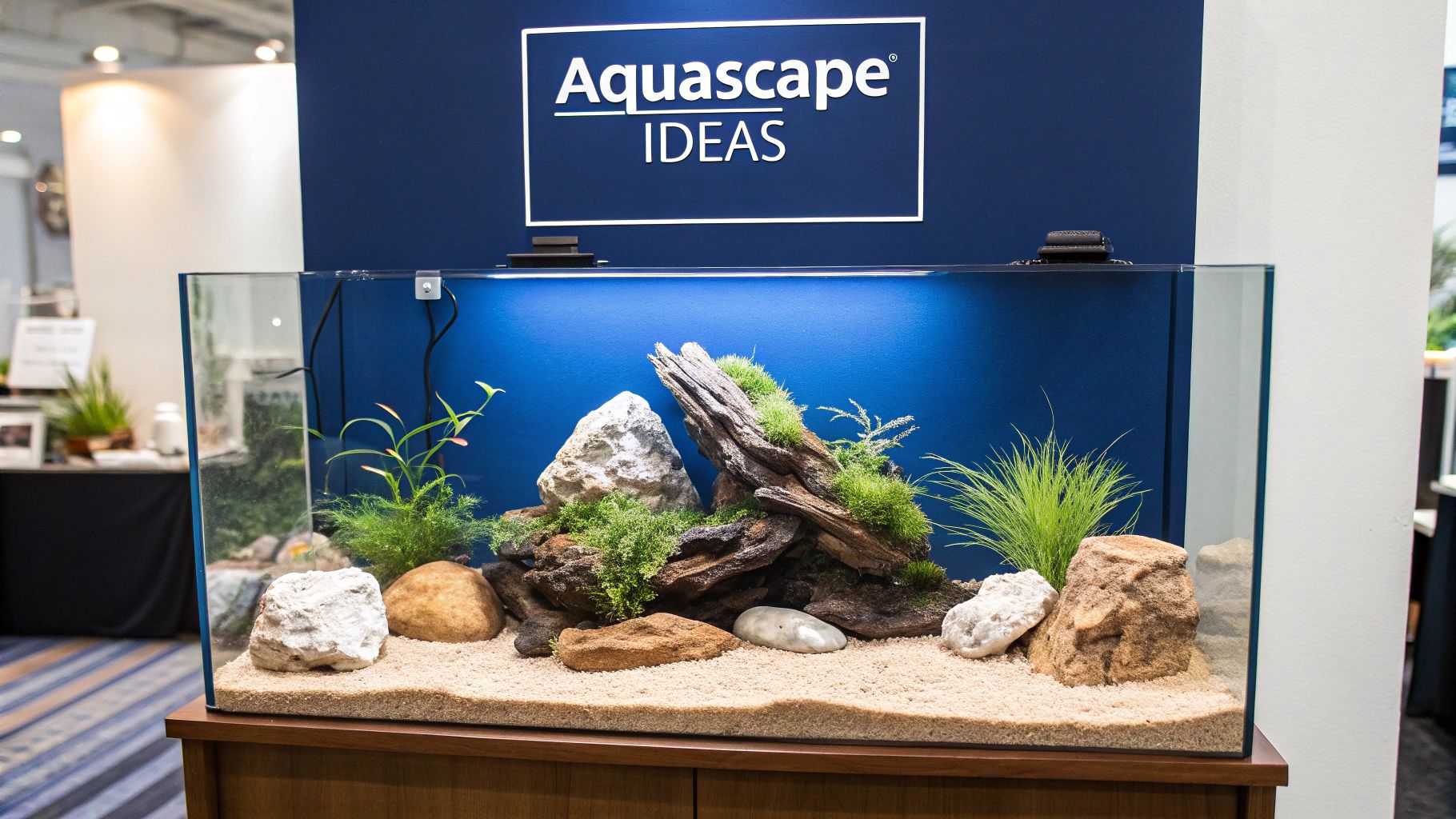
Credit: clixfueling.com
Lighting And Equipment
Aquascaping is creating a beautiful underwater scene in your aquarium. Proper lighting and equipment are essential for healthy aquatic life.
Good lighting helps plants grow and shows off their colors. Equipment like filters and CO2 systems keep the environment balanced.
Choosing The Right Lighting
Lights help plants photosynthesize and stay healthy. LED lights are popular because they use less energy.
Make sure to choose lights that match your tank size. Different plants need different light strengths.
- Low-light plants need less intense lights
- High-light plants need stronger lights
- Adjust light duration to mimic natural cycles
Filters And Co2 Systems
Filters keep water clean by removing debris. Canister filters are effective for larger tanks.
CO2 systems help plants grow faster. They add carbon dioxide to the water, which plants need.
- Choose filters based on tank size
- Check filter maintenance needs
- CO2 systems are optional but beneficial
Maintaining Water Quality
Clean water is vital for fish and plants. Regular water changes help keep the tank healthy.
Test water parameters weekly. Look for pH, ammonia, nitrites, and nitrates.
| Parameter | Ideal Range |
| pH | 6.5 – 7.5 |
| Ammonia | 0 ppm |
| Nitrite | 0 ppm |
| Nitrate | 20 – 40 ppm |
Fish And Invertebrate Choices
Aquascaping is a creative way to design underwater landscapes in tanks. Choosing the right fish and invertebrates is key to a balanced ecosystem.
In planted tanks, species should complement each other. It’s important to consider their behavior and care needs.
Compatible Species For Planted Tanks
Many species live well in planted tanks. They should be peaceful and plant-friendly. Here are some top choices:
- Neon Tetras
- Cherry Shrimp
- Otocinclus Catfish
- Amano Shrimp
- Guppies
Behavior And Care Needs
Understanding fish behavior helps in maintaining a healthy tank. Some species may require specific care.
| Species | Behavior | Care Needs |
| Neon Tetras | Peaceful, schooling | Regular water changes |
| Cherry Shrimp | Active, peaceful | Algae and detritus feeding |
| Otocinclus Catfish | Shy, peaceful | Algae-based diet |
| Amano Shrimp | Hardy, peaceful | Clean water conditions |
| Guppies | Active, social | Balanced diet |
Maintenance Tips
Keeping an adult aquascape tank healthy takes regular care. Proper maintenance helps plants and fish thrive.
Following simple routines keeps your tank clean and beautiful for a long time.
Regular Cleaning Routines
Clean your tank every week to remove debris and waste. This keeps water clear and safe for plants and fish.
Change 10-20% of the water weekly to keep water quality high. Use a gravel vacuum to clean the substrate.
- Remove uneaten food daily
- Clean glass surfaces with an algae scraper
- Check filters and rinse filter media monthly
- Test water parameters regularly
Trimming And Pruning Plants
Trim plants often to keep them healthy and looking good. Remove dead or yellow leaves quickly.
Pruning helps plants grow better and prevents overcrowding. Use sharp scissors made for aquariums.
- Cut stems above new growth points
- Thin out dense areas to improve light flow
- Remove plants that block fish swimming space
Preventing Algae Growth
Algae can harm your tank’s plants and water quality. Control it by balancing light and nutrients.
Keep algae under control with these steps to prevent overgrowth and keep your tank clean.
- Limit tank light to 8-10 hours per day
- Avoid excess feeding to reduce nutrients
- Add algae-eating fish or snails
- Clean algae from surfaces weekly
Troubleshooting Common Issues
Aquascaping adult tanks can face problems that affect plants and fish. Identifying these issues early helps keep the tank healthy.
This guide covers how to handle plant diseases, fish health problems, and water parameter imbalances.
Dealing With Plant Diseases
Plant diseases can cause leaves to yellow, rot, or grow spots. These signs show your plants are unhealthy.
Remove infected leaves quickly to stop the disease from spreading. Use clean tools to cut damaged parts.
- Check for algae or fungus on leaves
- Keep water clean and change it regularly
- Use plant-safe treatments if needed
- Keep good lighting but avoid too much direct light
Managing Fish Health Problems
Fish may show signs like strange swimming, spots, or loss of appetite. These signs mean the fish might be sick.
Isolate sick fish to stop infections. Check water quality and feed them balanced food to support recovery.
- Look for white spots or fuzzy patches
- Watch for rapid breathing or hiding
- Keep tank clean and stable
- Use medicine only if needed and safe for plants
Fixing Water Parameter Imbalances
Water problems can cause stress to fish and plants. Test water regularly to find issues early.
Adjust pH, ammonia, nitrite, and nitrate levels to keep them in safe ranges. Use water conditioners if needed.
| Parameter | Safe Range | Fix |
|---|---|---|
| pH | 6.5 – 7.5 | Use pH adjusters or change water |
| Ammonia | 0 ppm | Do water changes, add biofilter |
| Nitrite | 0 ppm | Water changes and filter maintenance |
| Nitrate | < 20 ppm | Regular water changes, plants absorb nitrate |

Credit: www.aqqapet.com

Credit: www.reddit.com
Frequently Asked Questions
What Is Aquascaping For Adult Tanks?
Aquascaping for adult tanks involves designing natural, artistic underwater landscapes. It focuses on plants, rocks, and wood to create a balanced environment that suits mature fish and enhances the tank’s aesthetic appeal.
How Do I Choose Plants For Adult Tanks?
Select hardy plants that thrive in stable conditions. Choose species with moderate growth to avoid overcrowding. Consider lighting, CO2 levels, and fish compatibility for a healthy aquascape.
What Substrate Is Best For Adult Aquascaping?
Nutrient-rich substrates like aquarium soil or clay-based options support plant growth. They provide essential minerals and promote root development, ensuring a vibrant and sustainable aquascape in adult tanks.
How Often Should I Maintain An Adult Aquascape?
Perform weekly water changes of 20-30%. Trim plants regularly to prevent overgrowth. Clean algae and check equipment to maintain a healthy, balanced environment for adult tank aquascaping.
Conclusion
Aquascaping adult tanks creates a peaceful and beautiful space. It helps fish feel safe and happy. Using plants, rocks, and wood adds natural charm. Keep the tank clean and balanced for healthy life. Small changes can make a big difference in looks.
Enjoy the calming effect of your aquascape every day. Try new ideas and watch your tank grow. Simple steps bring joy to both you and your fish.