
If you own a large freshwater tank, you know how important it is to have a sturdy and reliable stand. Your aquarium stand isn’t just a piece of furniture—it supports the weight of your entire ecosystem and keeps your tank safe.
Choosing the right stand can protect your investment and make maintaining your aquarium much easier. You’ll discover what to look for in an aquarium stand for large freshwater tanks and how to pick one that fits your needs perfectly. Keep reading to find out how to keep your underwater world secure and stunning.

Credit: www.amazon.com
Choosing The Right Material
Building a strong aquarium stand is key for large freshwater tanks. The right material keeps the tank safe and stable.
Consider durability, weight, and water resistance when choosing materials. Each type has its own benefits and drawbacks.
Wood Types And Durability
Wood is a popular choice for aquarium stands. It offers a natural look and good support if properly treated.
- Oak: Very strong and durable but heavy.
- Pine: Lightweight and affordable, less durable.
- Marine plywood: Water-resistant and stable.
- Teak: Naturally resistant to moisture and decay.
Metal Frames Benefits
Metal frames provide excellent strength and longevity. They are less likely to warp or crack over time.
| Metal Type | Advantages | Considerations |
| Steel | Strong and durable | Needs rust protection |
| Aluminum | Lightweight and rust-resistant | Less strong than steel |
| Iron | Very sturdy | Prone to rust without coating |
Composite Materials
Composite materials mix wood fibers with plastic. They resist water and are low maintenance.
Composite stands offer:
- Resistance to moisture and insects
- Less warping than natural wood
- Easy cleaning and long life
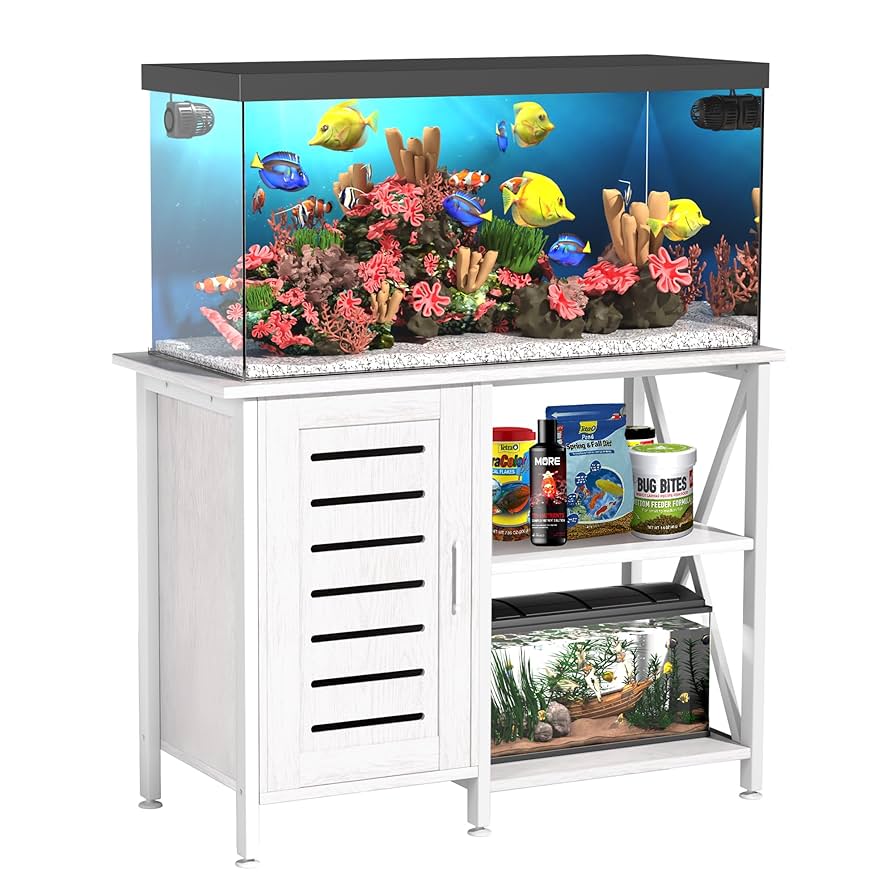
Credit: www.amazon.com
Weight Capacity Considerations
Choosing the right aquarium stand is important for large freshwater tanks. The stand must support the tank’s full weight safely.
Understanding weight capacity helps prevent damage and accidents. This guide explains key points to consider.
Calculating Tank Weight
Calculate the total weight by adding water, tank, decorations, and substrate weights. Water weighs about 8.34 pounds per gallon.
| Component | Weight per Unit | Example Amount | Total Weight |
| Water | 8.34 lbs/gallon | 100 gallons | 834 lbs |
| Tank Glass | Varies | Depends on size | 120 lbs |
| Decorations | Varies | 10 pieces | 50 lbs |
| Substrate | Varies | 50 lbs | 50 lbs |
| Total Estimated Weight | 1054 lbs |
Safety Margins And Load Distribution
Always add a safety margin to the total weight. This covers unexpected extra weight and stress.
- Use a safety margin of 20% over the estimated weight.
- Check that the stand can hold the total weight plus the margin.
- Make sure the weight spreads evenly across the stand.
- Use levelers or pads to balance the stand on uneven floors.
Design Features For Stability
An aquarium stand must hold large freshwater tanks safely. Stability is key to prevent accidents and damage. Design features focus on strong support and balance.
This guide covers three main design features that improve stand stability. These include leg and base support, cross bracing techniques, and leveling adjustments.
Leg And Base Support
Strong legs and a sturdy base keep the aquarium stand steady. Legs made from hardwood or metal give good strength. The base should spread the tank’s weight evenly.
- Use thick legs to prevent bending or wobbling.
- Wide bases reduce pressure on the floor.
- Secure legs firmly to the base for extra support.
- Consider adding rubber pads under legs to avoid slipping.
Cross Bracing Techniques
Cross bracing adds extra strength to the aquarium stand frame. It stops the stand from twisting or swaying under the tank’s weight. Proper bracing keeps everything square and stable.
| Type of Bracing | Benefits | Common Materials |
| Diagonal Bracing | Prevents side-to-side movement | Metal rods, wood strips |
| X-Bracing | Increases rigidity in both directions | Metal cables, wooden beams |
| Horizontal Bracing | Supports weight distribution | Wood planks, metal bars |
Leveling Adjustments
Leveling keeps the aquarium stand balanced on uneven floors. Adjustable feet or shims help correct height differences. This prevents stress on the tank glass and frame.
Common leveling methods include:
- Adjustable screw feet that can be turned to raise or lower each leg.
- Rubber or plastic shims placed under legs to fill gaps.
- Using a spirit level tool to check balance before placing the tank.
Custom Vs. Pre-made Stands
Choosing the right stand is important for large freshwater tanks. The stand supports the heavy weight and fits the room well.
There are two main types of stands: custom-built and pre-made. Each has different features and benefits.
Advantages Of Custom Builds
Custom stands are made to fit your tank size exactly. You can choose the style and materials that match your room.
These stands offer strong support and can include extra storage or special designs. They fit unique spaces well.
- Perfect fit for any tank size
- Custom style and color options
- Extra storage or compartments available
- Strong and durable materials
- Can be built to fit odd room shapes
Popular Pre-made Stand Options
Pre-made stands come in standard sizes and styles. They are ready to use and easy to find in stores or online.
These stands are often made of wood or metal. They offer a good balance of price and quality for many fish tank owners.
- Standard sizes fit common tank dimensions
- Many styles from simple to decorative
- Quick to purchase and set up
- Usually less expensive than custom builds
- Durable materials like metal and wood
Protecting Your Stand And Floor
An aquarium stand holds a large freshwater tank filled with water. Protecting the stand and the floor beneath it is very important. Water spills, leaks, and heavy weight can cause damage over time. Taking simple steps helps keep your stand strong and your floor safe.
Using waterproof materials and floor protection pads can stop water damage and scratches. These measures make your aquarium setup last longer and look better.
Waterproofing And Sealants
Waterproofing your aquarium stand prevents water from soaking into the wood or material. Use sealants to create a strong, water-resistant layer on all surfaces of the stand. This helps avoid warping and mold growth caused by moisture.
- Choose a waterproof sealant suitable for your stand’s material.
- Apply the sealant evenly on all sides and edges.
- Let the sealant dry fully before placing the tank on the stand.
- Check sealants regularly and reapply if you see cracks or wear.
Floor Protection Pads
Floor protection pads go under the aquarium stand to stop scratches and water damage. They also help spread the tank’s weight evenly to protect your floor.
| Type of Pad | Material | Benefits |
| Foam Pad | High-density foam | Absorbs vibrations and cushions weight |
| Rubber Mat | Non-slip rubber | Prevents sliding and protects from scratches |
| Cork Pad | Cork | Water-resistant and eco-friendly |

Credit: www.ebay.com
Maintenance Tips For Longevity
Maintaining your aquarium stand is essential for the safety of your large freshwater tank. Regular care ensures it remains sturdy and lasts longer.
Follow these simple tips to keep your aquarium stand in top condition. This helps prevent accidents and extends the life of your setup.
Regular Inspections
Inspecting your aquarium stand regularly helps catch problems early. This can prevent costly repairs or replacements.
- Check for any signs of rust or corrosion.
- Ensure all screws and bolts are tight.
- Look for any warping or damage to the wood or metal.
Handling Wear And Tear
Over time, wear and tear can affect your aquarium stand. Proper handling minimizes damage and maintains its appearance.
| Issue | Action |
| Scratches | Use furniture polish to reduce visibility. |
| Loose joints | Tighten with a screwdriver. |
| Rust | Apply rust remover and repaint if necessary. |
Frequently Asked Questions
What Is The Best Material For Large Aquarium Stands?
Wood and metal are the best materials for large aquarium stands. Wood offers strength and aesthetic appeal. Metal stands provide superior durability and support. Both materials can safely hold heavy freshwater tanks when properly constructed.
How Do I Choose The Right Size Aquarium Stand?
Measure your tank’s length, width, and height first. Choose a stand slightly larger than the tank base. Ensure it can support the tank’s full weight, including water and decorations. A properly sized stand prevents accidents and ensures stability.
Can I Build My Own Aquarium Stand For Large Tanks?
Yes, you can build your own stand if you have basic carpentry skills. Use sturdy materials like plywood and strong joints. Follow plans designed for large freshwater tanks. Ensure the stand supports the tank’s total weight safely.
How Much Weight Can A Large Aquarium Stand Hold?
A quality stand for large freshwater tanks can hold 200 to 500 pounds or more. The exact capacity depends on the material and construction quality. Always check manufacturer specifications or build standards to ensure safety.
Conclusion
Choosing the right aquarium stand keeps your tank safe and stable. It supports the weight and fits your room space well. Good stands also make maintenance easier and look nice. Think about material, size, and style before buying. A strong stand helps your fish tank last longer.
Enjoy your large freshwater tank with confidence and peace of mind.