
Setting up an aquarium for beautiful fish like Discus and Tetras can be both exciting and a little overwhelming. You want your fish to thrive and show off their vibrant colors, but getting the right environment isn’t always simple.
What if you could create a peaceful underwater world that makes your fish feel right at home? In this guide, you’ll discover easy steps to set up your aquarium just right. Keep reading, and you’ll learn how to make your tank a healthy, stunning place for your Discus and Tetras to flourish.

Credit: www.reddit.com
Choosing The Right Tank
Setting up an aquarium for discus and tetras starts with choosing the right tank. The tank size, shape, and placement all affect the health of your fish.
Picking the right tank helps create a stable environment. It also makes maintenance easier and keeps fish comfortable.
Tank Size Recommendations
Discus fish need larger tanks than tetras. A spacious tank helps reduce stress and allows natural behavior. Tetras can live in smaller groups but need enough space to swim freely.
- A minimum of 50 gallons is good for a small discus group.
- For tetras, 20 gallons can hold a small school.
- Combine species only if the tank is at least 75 gallons.
- Keep water stable by avoiding overstocking.
Tank Shape And Material
Tank shape affects swimming space and decoration layout. Rectangular tanks offer more surface area, which helps oxygen levels. Round tanks limit swimming space and are not ideal.
| Material | Pros | Cons |
|---|---|---|
| Glass | Scratch resistant, clear view | Heavier, can break if dropped |
| Acrylic | Lighter, better insulation | Scratches easier, can yellow over time |
Placement And Lighting
Choose a quiet spot away from direct sunlight. Avoid places near heaters or air conditioners. Stable temperature helps fish stay healthy.
- Place the tank on a strong, level surface.
- Use LED lights that mimic natural daylight.
- Keep lighting on for about 8 to 10 hours daily.
- Turn off lights at night to mimic natural cycles.
Water Parameters For Discus And Tetras
Setting up an aquarium for Discus and Tetras needs careful water control. Both fish need clean, stable water to stay healthy.
Knowing the right water conditions helps keep your fish happy and active. This guide explains the key water parameters.
Ideal Temperature Range
Discus fish prefer warmer water than Tetras. Keeping the temperature steady is important for both species.
Discus do best between 82°F and 86°F (28°C to 30°C). Tetras are comfortable from 75°F to 80°F (24°C to 27°C). Choose a middle range around 80°F for both.
- Discus: 82°F to 86°F (28°C to 30°C)
- Tetras: 75°F to 80°F (24°C to 27°C)
- Recommended tank temperature: about 80°F (27°C)
Ph And Hardness Levels
Both Discus and Tetras need soft, slightly acidic water. pH and hardness affect their health and color.
Keep pH between 6.0 and 7.0. Water hardness should be low to moderate for best results.
| Parameter | Discus | Tetras | Recommended Range |
|---|---|---|---|
| pH | 6.0 – 7.0 | 6.0 – 7.0 | 6.0 – 7.0 |
| Hardness (dGH) | 1 – 8 | 1 – 12 | 1 – 8 |
Water Filtration Needs
Clean water is key for Discus and Tetras. Use a good filter to keep water clear and safe.
Choose a gentle filter to avoid strong currents. Regular water changes help remove waste and keep water quality high.
- Use filters with gentle flow
- Change 20-30% of water weekly
- Check filter media and clean monthly
Substrate And Decorations
Setting up an aquarium for discus and tetras needs careful choice of substrate and decorations. These elements create a natural environment for the fish.
Proper substrate and decorations help fish feel safe and show their best colors. They also support plants and water quality.
Best Substrate Types
Soft and smooth substrates work well for discus and tetras. These fish like gentle surfaces to swim over and rest on.
A sandy substrate is ideal because it mimics their natural habitat. Avoid sharp gravel that can hurt the fish.
- Fine sand keeps fish safe and comfortable
- Dark substrates show off fish colors better
- Substrates that support plants help tank health
Plant Selection
Plants add beauty and oxygen to the aquarium. They also offer shelter and reduce stress for discus and tetras.
Choose plants that grow well in warm water and low light. Hardy plants need less care and last longer.
- Anubias plants attach to rocks and wood
- Java Fern grows well in shaded areas
- Amazon Sword plants provide large leaf cover
Hiding Spots And Structures
Discus and tetras feel safe with places to hide. Decorations create shelter and reduce fish stress.
Use smooth rocks, driftwood, and caves to build hiding spots. Avoid sharp edges that can injure the fish.
- Driftwood adds natural hiding spaces
- Rock caves offer shelter and resting spots
- Leaf litter mimics natural forest floors
Selecting Compatible Species
Setting up an aquarium with Discus and Tetras needs careful species choice. Both fish have different needs and behaviors.
Choosing the right tank mates helps keep your aquarium peaceful and healthy.
Discus Behavior And Needs
Discus fish are calm and shy. They need warm water and clean tanks. They prefer to live in groups of five or more.
Discus may get stressed if kept with aggressive or very active fish. They eat soft foods and need stable water conditions.
Tetra Species Choices
Tetras are small and peaceful fish. Many types live well with Discus. Some popular choices include Neon Tetras and Rummy Nose Tetras.
- Neon Tetras – Bright colors, peaceful nature
- Cardinal Tetras – Similar to Neon but a bit larger
- Rummy Nose Tetras – Active but calm schooling fish
- Ember Tetras – Small and gentle, good for small tanks
Avoiding Aggressive Fish
| Fish Species | Behavior | Reason to Avoid |
| Angelfish | Territorial | Can attack Discus |
| Oscar Fish | Aggressive | Too large and hostile |
| Barbs | Fin nippers | May stress Discus |
| Gouramis | Sometimes aggressive | Can bully smaller fish |
Feeding Guidelines
Proper feeding is essential for maintaining the health and well-being of your aquatic pets. In this section, we will discuss the dietary needs of two popular species: Discus and Tetras.
Diet For Discus
Discus are carnivorous fish that require a diet rich in protein. They feed on small fish, crustaceans, and insects in the wild.
In captivity, you can feed your Discus a variety of foods, including high-quality commercial pellets, frozen or live brine shrimp, and bloodworms.
- Frozen or live brine shrimp (2-3 times a week)
- Bloodworms (1-2 times a week)
- High-quality commercial pellets (daily)
Diet For Tetras
Tetras are omnivorous fish that require a balanced diet that includes both protein and plant-based foods. In the wild, they feed on small insects, crustaceans, and algae.
In captivity, you can feed your Tetras a variety of foods, including high-quality commercial pellets, frozen or live brine shrimp, and spirulina flakes.
- Frozen or live brine shrimp (2-3 times a week)
- Spirulina flakes (daily)
- High-quality commercial pellets (daily)
Feeding Schedules
Feeding your fish at regular intervals is essential for maintaining their health and preventing overfeeding. Here are some general guidelines for feeding Discus and Tetras:
| Feeding Schedule | Discus | Tetras |
|---|---|---|
| Breakfast | Feed high-quality commercial pellets | Feed high-quality commercial pellets |
| Lunch | Feed frozen or live brine shrimp | Feed spirulina flakes |
| Dinner | Feed bloodworms | Feed high-quality commercial pellets |
Maintenance Tips
Setting up an aquarium for discus and tetras needs care and attention. Regular maintenance keeps the water clean and fish healthy.
Good habits help your fish live longer and stay active. Use simple steps to keep your tank in great shape.
Regular Water Changes
Change part of the water every week to keep it fresh. Clean water stops harmful chemicals from building up.
Use a siphon to remove dirt from the gravel. Replace about 20-30% of the water with clean, treated water.
- Remove 20-30% of water weekly
- Use water conditioner to remove chlorine
- Check water temperature before adding
Filter Cleaning
Filters keep the water clear by removing waste. Clean the filter every month to avoid clogging.
Rinse filter parts with tank water to keep beneficial bacteria. Avoid using tap water that can kill bacteria.
- Clean filter monthly
- Rinse parts with aquarium water only
- Check filter flow rate regularly
Monitoring Fish Health
Watch your fish daily for signs of sickness. Healthy fish swim actively and eat well.
Look for spots, torn fins, or unusual behavior. Early detection helps treat problems fast.
- Observe fish behavior every day
- Check for physical changes or injuries
- Isolate sick fish to prevent spread
Common Challenges
Setting up an aquarium for species like discus and tetras can be rewarding. These fish need special care to thrive. Understanding common challenges helps create a healthy tank environment.
Many aquarists face issues related to diseases, stress, and water quality. Each problem affects fish health and tank balance. Addressing them early keeps your fish happy and safe.
Disease Prevention
Diseases spread quickly in a closed aquarium. Prevent illness by keeping the tank clean and fish healthy. Quarantine new fish before adding them to the main tank.
- Regularly test water parameters
- Feed a balanced diet to boost immunity
- Remove sick fish promptly
- Maintain proper tank temperature
- Clean filters and substrate often
Managing Stress
Stress weakens fish and causes illness. Discus and tetras are sensitive to changes. Keep the tank environment stable to reduce stress.
| Cause of Stress | Effect on Fish |
| Sudden temperature change | Weakened immune system |
| Overcrowding | Aggression and injury |
| Poor water quality | Breathing difficulty |
| Improper lighting | Disrupted sleep cycles |
Troubleshooting Water Quality
Water quality affects fish health daily. Test water regularly for harmful chemicals. Fix problems quickly to avoid fish stress or death.
- Check ammonia, nitrite, and nitrate levels
- Adjust pH to suit discus and tetras
- Use water conditioners to remove chlorine
- Perform regular partial water changes
- Clean filters without killing good bacteria
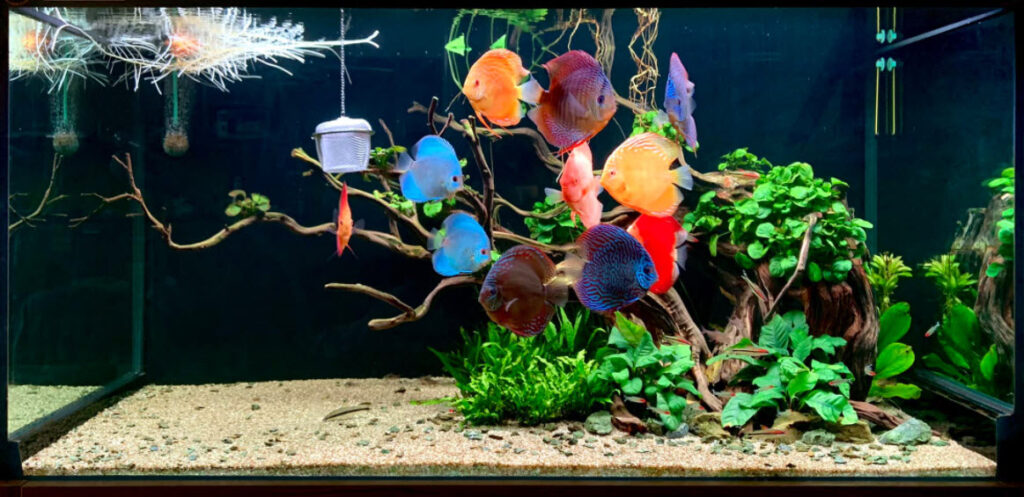
Credit: aquainfo.nl

Credit: www.blessingsaquarium.com
Frequently Asked Questions
What Tank Size Is Ideal For Discus And Tetras?
A 30 to 50-gallon tank suits Discus and Tetras well. This size provides enough swimming space and stable water conditions. Larger tanks help maintain water quality, essential for these sensitive species.
How To Maintain Water Parameters For Discus And Tetras?
Keep water temperature between 78-82°F for Discus and 72-78°F for Tetras. Maintain pH around 6. 0-7. 0. Regularly test ammonia, nitrite, and nitrate levels. Stable, clean water prevents stress and disease in both fish types.
Can Discus And Tetras Coexist Peacefully?
Yes, Discus and small Tetras coexist well. Tetras are peaceful schooling fish that complement Discus’s calm nature. Ensure ample space and hiding spots to reduce stress and aggression.
What Substrate Is Best For A Discus And Tetras Tank?
Fine sand or smooth gravel works best. It mimics natural habitats and supports plant growth. Avoid sharp or large gravel that may harm delicate Discus fish.
Conclusion
Setting up an aquarium for Discus and Tetras needs care and patience. Choose the right tank size and water conditions. Keep the water clean and stable for healthy fish. Add plants and hiding spots for comfort and safety. Feed them balanced food regularly to keep them strong.
Watch your fish daily for signs of stress or illness. A well-planned tank makes fish happy and colorful. Enjoy the calm and beauty they bring to your home. Simple steps lead to a thriving aquarium.