
If you want your shrimp tank to thrive, the right lighting is one of the most important factors you need to get right. Proper aquarium lighting doesn’t just make your tank look beautiful—it helps your shrimp stay healthy and active.
But with so many options out there, how do you choose the perfect light for your shrimp? You’ll discover simple tips and expert advice to transform your shrimp tank with lighting that supports growth, color, and overall well-being. Keep reading, and you’ll learn how to create the ideal environment your shrimp will love.
Choosing The Right Light
Good lighting helps shrimp grow and stay healthy. Picking the right light can be confusing.
This guide explains key points for choosing lighting for shrimp tanks.
Types Of Aquarium Lights
There are several light types for shrimp tanks. Each has pros and cons.
- LED lights: Energy-saving and long-lasting.
- Fluorescent lights: Affordable but produce more heat.
- Incandescent lights: Rarely used, high heat output.
- Compact fluorescent lights (CFL): Brighter but use more power.
Light Intensity And Spectrum
Shrimp need moderate light intensity. Too bright can stress them.
| Light Type | Intensity | Spectrum |
| LED | Adjustable | Full spectrum available |
| Fluorescent | Moderate | Mostly cool white |
| Incandescent | High | Warm white |
Energy Efficiency And Heat Output
Energy use and heat matter for shrimp health and your bills.
- LED lights use less power and create little heat.
- Fluorescent lights use more energy and emit some heat.
- Incandescent lights waste energy and produce much heat.
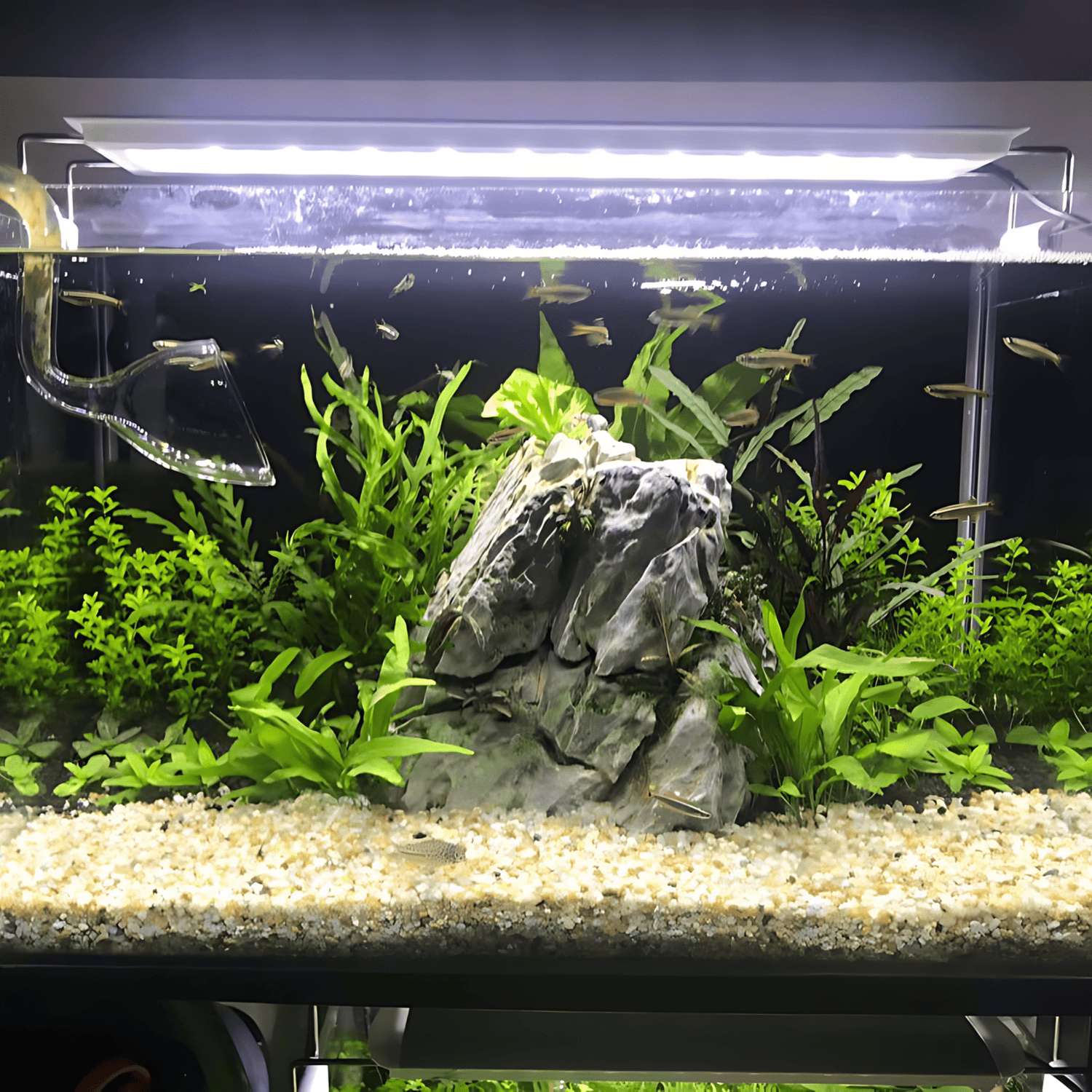
Credit: aquascapeshop.com
Benefits Of Proper Lighting
Proper lighting is important for shrimp tanks. It helps shrimp and plants live well. Good light makes the tank look nice too.
Using the right light helps shrimp show their best colors. It also supports plants to grow strong. Proper light can keep shrimp active and healthy.
Enhancing Shrimp Colors
The right light shows shrimp colors clearly. Bright and balanced light helps colors look natural. This makes shrimp more beautiful to see.
Light with the correct brightness brings out red, blue, and green hues. This helps shrimp stand out in the tank.
Supporting Plant Growth
Plants need light to make food through photosynthesis. Proper lighting helps plants grow strong and healthy. This creates a good environment for shrimp.
Healthy plants clean the water and add oxygen. They also give shrimp places to hide and explore.
Promoting Healthy Behavior
Good lighting helps shrimp stay active and eat well. It sets a natural day and night cycle. This supports shrimp’s health and growth.
Proper light reduces stress for shrimp. It helps them feel safe and behave normally in the tank.
Lighting Duration And Scheduling
Proper lighting helps shrimp stay healthy and active. Setting the right light duration is key for shrimp tanks.
Scheduling light times mimics natural day and night cycles. This keeps shrimp comfortable and supports tank life.
Optimal Photoperiod For Shrimp
Shrimp need about 8 to 10 hours of light daily. This amount supports their natural behavior and growth.
Too much light can stress shrimp and harm plants. Too little light slows plant growth and algae control.
- 8 to 10 hours of light is ideal
- Keep light periods consistent every day
- Provide a dark period for rest and activity balance
Using Timers And Automation
Timers help keep light schedules steady without manual work. Automation gives shrimp a stable environment.
Use simple timers to turn lights on and off at set times. This mimics sunrise and sunset for the tank.
- Set lights to turn on in the morning
- Turn off lights after 8 to 10 hours
- Use consistent timing every day
Avoiding Algae Overgrowth
Too much light causes algae to grow fast. Algae can harm shrimp and make tanks dirty.
Control light duration to keep algae under control. Balanced lighting helps plants and shrimp thrive.
- Limit light to 8-10 hours per day
- Use timers to avoid extra light
- Reduce light if algae appears quickly
Setting Up Lighting In Shrimp Tanks
Lighting is important for shrimp tanks to keep shrimp healthy and happy. Good lighting helps plants grow and shows the shrimp’s colors well.
Setting up the right lights takes care and planning. You must think about where to place lights and how bright they should be.
Positioning And Mounting Lights
Place lights above the tank to spread light evenly. Avoid putting lights too close to the water to stop overheating.
Use adjustable mounts or brackets. This makes it easy to change the light’s height and angle as needed.
- Keep lights at least 6 inches above water
- Use clamps or brackets for firm mounting
- Adjust light angle for better coverage
- Secure wires to avoid hazards
Balancing Light With Tank Size
Small tanks need less light, while large tanks need more. Too much light can cause algae growth in small tanks.
Choose light wattage based on the tank’s size. A good rule is 1 to 3 watts per gallon of water.
- For tanks under 10 gallons, use low-watt lights
- 10 to 20 gallons need medium brightness
- Over 20 gallons require stronger lights
- Watch for algae as a sign of too much light
Adjusting For Different Shrimp Species
Different shrimp species need different light levels. Some like dim light, while others enjoy brighter light.
Check your shrimp’s needs and adjust the lighting time and brightness. Avoid sudden changes to keep shrimp stress low.
- Cherry shrimp prefer moderate light
- Crystal shrimp do better with low light
- Keep lighting on for 8 to 10 hours daily
- Use timers to keep light consistent
Common Lighting Mistakes
Lighting is important for shrimp tanks. It affects shrimp health and tank beauty. Many people make lighting mistakes. Learn how to avoid these errors.
Understanding lighting needs helps your tank thrive. Let’s explore common mistakes people make with lighting in shrimp tanks.
Excessive Brightness
Too much light can stress shrimp. Bright lights make shrimp hide. This affects their health and activity.
Bright lighting can also heat the water. This can be harmful to shrimp. It’s important to monitor your tank’s light levels.
- Use dimmable lights if possible
- Check tank temperature regularly
- Observe shrimp behavior for stress signs
Inconsistent Light Cycles
Light cycles should be regular. Irregular cycles confuse shrimp. This can disrupt their natural habits.
Consistent light helps maintain a stable environment. It’s best to mimic natural daylight patterns.
- Set timers for lights
- Aim for 8-10 hours of light daily
- Adjust cycles gradually
Ignoring Plant And Algae Needs
Plants need light to grow. Algae also grow with light. Balancing light for both is crucial.
Too little light weakens plants. Too much light leads to algae overgrowth. This can affect shrimp health.
- Choose lights suitable for plant growth
- Monitor algae levels regularly
- Adjust light duration based on tank needs

Credit: www.amazon.co.uk
Advanced Lighting Techniques
Proper lighting is crucial for shrimp tanks. It affects shrimp health and plant growth. Using advanced lighting helps create a balanced environment.
This guide covers LED spectrum control, combining lights, and mimicking natural light. These methods improve tank life and look.
Using Led Spectrum Control
LED lights let you change colors and brightness. Adjusting the light spectrum helps plants grow and shrimp stay active.
- Use blue light for plant photosynthesis.
- Add red light to promote growth.
- Include white light for natural appearance.
- Adjust intensity to avoid stress on shrimp.
Combining Multiple Light Sources
Mixing different lights can cover all tank needs. Use LED strips, spotlights, and ambient lights together.
| Light Source | Purpose | Placement |
| LED Strips | General illumination | Top of tank |
| Spotlights | Highlight plants | Side or front |
| Ambient Lights | Soft background glow | Behind or below tank |
Simulating Natural Light Conditions
Natural light cycles support shrimp health. Imitate sunrise, daylight, and sunset phases with timers.
- Start with dim, warm light for morning.
- Increase brightness and cool tones midday.
- Lower light gradually to mimic sunset.
- Keep lights off during night for rest.
Troubleshooting Lighting Issues
Proper lighting is key for healthy shrimp in your aquarium. Problems with lighting can cause stress and algae growth.
Knowing how to fix these issues helps keep your shrimp safe and your tank clean.
Identifying Light Stress In Shrimp
Shrimp show signs when they get too much or too little light. Watch for color changes or hiding behavior.
- Faded or pale color
- Shrimp hide more than usual
- Erratic swimming or twitching
- Molting problems
Managing Algae Problems
Too much light causes algae to grow fast. Algae can harm water quality and block light for shrimp plants.
| Cause | Solution |
| Light on too long | Reduce lighting time to 6-8 hours |
| Light too strong | Use dimmer lights or raise fixture |
| High nutrients | Change water regularly and avoid overfeeding |
| Poor water flow | Improve filtration and circulation |
Adjusting Light For Tank Changes
Changes like adding plants or shrimp need light adjustments. Slowly change light to avoid shocking shrimp.
Follow this simple schedule for light adjustments:
- Reduce light by 10% daily if increasing intensity
- Increase light by 10% daily if decreasing intensity
- Watch shrimp behavior and adjust as needed
- Keep a consistent light cycle each day

Credit: www.reddit.com
Frequently Asked Questions
What Is The Best Lighting For Shrimp Tanks?
LED lights with full-spectrum are ideal for shrimp tanks. They promote healthy plant growth and enhance shrimp colors. Avoid intense lights that stress shrimp. Use adjustable lighting to mimic natural day-night cycles for shrimp comfort and tank balance.
How Many Hours Should Aquarium Lights Be On?
Keep aquarium lights on for 8 to 10 hours daily. This duration supports plant photosynthesis without encouraging excessive algae growth. Use a timer to maintain consistent lighting. Adjust based on shrimp behavior and tank plant needs for optimal health.
Can Aquarium Lighting Affect Shrimp Behavior?
Yes, lighting impacts shrimp activity and stress levels. Bright or harsh lights may cause shrimp to hide. Soft, natural light encourages normal feeding and breeding. Proper lighting creates a comfortable environment, promoting shrimp vitality and tank ecosystem balance.
Should I Use Colored Lights In Shrimp Tanks?
Colored lights can enhance shrimp colors but avoid blue or red hues alone. Balanced white light supports plant growth and shrimp health. Colored lighting is best used as an accent, not the primary light source, to maintain natural tank conditions.
Conclusion
Proper lighting helps shrimp stay healthy and active. It supports plant growth and keeps the tank bright. Choose lights that fit your tank size and shrimp needs. Avoid too much light to prevent algae problems. Regularly check and adjust the light schedule.
This keeps the tank environment stable and safe. Good lighting makes your shrimp tank more beautiful. It also helps you enjoy watching your shrimp. Simple care with the right light makes a big difference. Keep learning and adjusting to find what works best.
Your shrimp will thank you with vibrant colors and lively behavior.