
If you want a healthy, vibrant aquarium, choosing the right filter is key. Especially when your tank has many fish or plants, you need an aquarium filter with high bio-load capacity.
This means it can handle more waste without compromising water quality. Imagine clear water, happy fish, and less hassle for you. You’ll discover how to pick the perfect filter that keeps your aquarium clean and balanced, no matter how busy your underwater world gets.
Keep reading to find the secret to stress-free aquarium care!
Choosing Filters For High Bio-load
Aquariums with many fish create a high bio-load. This means more waste builds up. Filters must handle this to keep water clean.
Choosing the right filter helps keep fish healthy. It removes harmful substances and keeps water clear.
Types Of Aquarium Filters
There are several filter types for aquariums. Each has a way to clean water and manage bio-load.
- Mechanical Filters:Remove solid waste from water by trapping debris.
- Biological Filters:Use beneficial bacteria to break down harmful ammonia and nitrites.
- Chemical Filters:Remove toxins and impurities with activated carbon or other media.
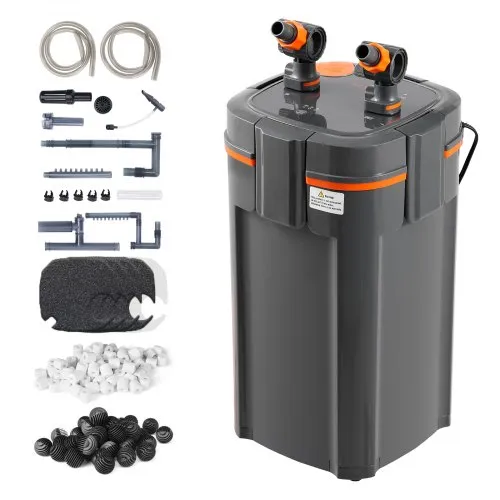
- Canister Filters:Powerful external filters that combine all three filtering methods.
- Sponge Filters:Provide gentle mechanical and biological filtration, good for small tanks.
Key Features For Bio-load Management
Filters designed for high bio-load have special features. These help keep the tank safe for fish.
| Feature | Benefit |
| High Flow Rate | Processes more water quickly to remove waste faster. |
| Large Filter Media Volume | Offers more surface area for beneficial bacteria growth. |
| Multi-Stage Filtration | Combines mechanical, biological, and chemical cleaning. |
| Easy Maintenance | Allows quick cleaning without disturbing bacteria colonies. |
| Adjustable Flow Control | Lets you set water flow suitable for different fish types. |
Credit: www.vevor.ca
Mechanical Filtration Techniques
Mechanical filtration removes solid waste from aquarium water. It helps keep the water clean and clear.
Filters with high bio-load capacity use strong mechanical methods. They trap debris before it breaks down.
Removing Solid Waste Effectively
Solid waste includes uneaten food, fish waste, and plant debris. Removing it quickly stops water pollution.
Mechanical filters use sponges, pads, or mesh to catch solids. They stop particles from reaching the tank water.
- Foam pads trap large and small particles
- Filter floss captures fine debris
- Filter socks collect bigger waste pieces
- Regular cleaning keeps filters working well
Materials For High Efficiency
Good filter materials let water flow but catch waste. They must be durable and easy to clean.
Common materials include foam, sponge, and polyester. Each offers different levels of filtration.
- Foam: porous and reusable, traps large debris
- Sponge: soft and dense, good for fine particles
- Polyester pads: disposable, capture small solids
- Filter floss: very fine, used for polishing water
Biological Filtration Essentials
Biological filtration is key for healthy aquariums. It removes harmful waste using natural processes.
A good filter supports beneficial bacteria that break down fish waste. This keeps water clean and safe.
Beneficial Bacteria Role
Beneficial bacteria help convert toxic ammonia into less harmful substances. They turn ammonia into nitrites and then nitrates.
This process is called the nitrogen cycle. It keeps the water safe for fish and plants by lowering toxins.
- Ammonia from fish waste is toxic
- Bacteria change ammonia into nitrites
- Another type of bacteria changes nitrites into nitrates
- Nitrates are less harmful and removed by water changes
Maximizing Surface Area
Bacteria live on surfaces inside the filter. More surface area means more space for bacteria to grow.
Filters use materials with many small pores or shapes. These materials hold a large amount of bacteria.
- Foam pads with tiny holes increase surface space
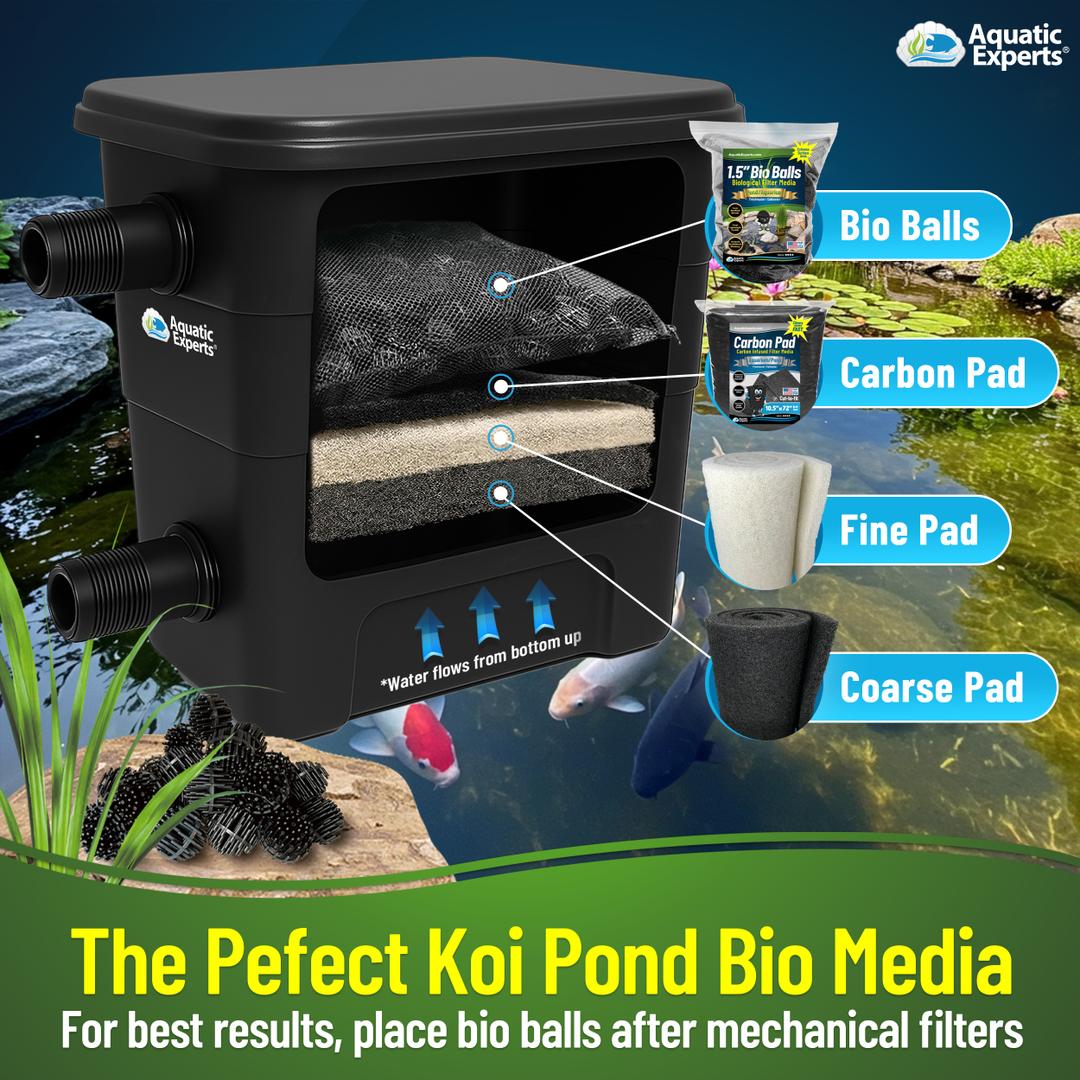
- Ceramic rings provide hard surfaces for bacteria
- Bio balls have many ridges and crevices
- More surface area means better biological filtration
Credit: www.aquaticexperts.com
Chemical Filtration Options
Chemical filtration removes harmful substances from aquarium water. It helps keep the water clean and safe for fish.
Filters with high bio-load capacity need strong chemical filtration. This prevents toxins and odors from building up.
Activated Carbon
Activated carbon is a common chemical filter media. It traps impurities, colors, and smells from the water.
It works by attracting molecules to its surface. This process is called adsorption. It helps keep the water clear.
- Removes chlorine and chloramine
- Eliminates odors
- Reduces discoloration
- Traps organic waste
Beyond Handling Toxins And Odors
Chemical filtration options include more than just activated carbon. Other materials also help control toxins and odors.
Zeolite absorbs ammonia and other harmful chemicals. It helps protect fish from toxic buildup. Resin filters target specific pollutants like heavy metals.
- Zeolite removes ammonia
- Resin targets heavy metals
- Phosphate removers reduce algae growth
- Specialized media absorb medications and chemicals
Filter Maintenance Tips
Maintaining your aquarium filter is crucial for a healthy aquatic environment. Proper care ensures long-lasting performance and keeps your fish happy.
This guide provides simple tips to help you manage your filter, focusing on cleaning schedules and avoiding common mistakes.
Cleaning Schedules
Regular cleaning of your aquarium filter is essential. It prevents clogs and ensures efficient operation. Establishing a cleaning schedule helps keep your filter in top shape.
- Clean the filter media every two weeks.
- Rinse the mechanical filter with tank water monthly.
- Replace chemical filter media every four to six weeks.
Avoiding Common Mistakes
Many aquarium owners make mistakes that reduce filter efficiency. Avoid these common errors to maintain optimal performance.
| Common Mistake | Solution |
| Over-cleaning the filter | Clean only as needed to retain beneficial bacteria. |
| Using tap water for rinsing | Rinse filter media with tank water to avoid chlorine. |
| Ignoring filter noise | Check for blockages or worn parts if noise increases. |

Credit: www.amazon.ca
Upgrading For Ultimate Efficiency
Upgrading your aquarium filter can lead to a healthier environment for your fish. A filter with high bio-load capacity is essential for maintaining water quality.
Efficient filtration ensures that harmful substances are removed, keeping your aquatic life safe and thriving.
Combining Filter Types
Using multiple types of filters can enhance your aquarium’s cleaning power. Different filters target various contaminants, providing a comprehensive cleaning solution.
- Mechanical filters remove debris.
- Biological filters promote beneficial bacteria growth.
- Chemical filters eliminate toxins.
Enhancing Flow Rates
Adjusting the flow rate of your filter can improve its efficiency. A higher flow rate helps in better oxygenation and waste removal.
| Tank Size | Recommended Flow Rate |
| 20 gallons | 100-150 GPH |
| 50 gallons | 250-300 GPH |
| 100 gallons | 400-500 GPH |
Monitoring And Adjusting Bio-load
Managing bio-load in an aquarium is essential for healthy fish and clean water. Bio-load means the amount of waste produced by all living creatures in the tank.
Regular monitoring helps keep the bio-load balanced. Adjustments may be needed when the tank changes to prevent problems.
Testing Water Parameters
Testing water parameters gives clues about the bio-load health. Important parameters include ammonia, nitrite, nitrate, and pH levels.
- Check ammonia and nitrite weekly to catch toxic build-up early.
- Measure nitrate to avoid high levels that stress fish.
- Monitor pH to keep water stable and safe for all species.
- Record results to see trends and spot changes fast.
Adapting To Stock Changes
Adding or removing fish affects the bio-load. Adjust the filter and care routine to match the new population.
| Change in Stock | Recommended Action | Frequency |
| Adding Many Fish | Increase filtration power and test water daily | First 2 weeks |
| Removing Fish | Reduce filter flow and test water twice a week | First week |
| Changing Species | Research species needs and adjust feeding | Before and after change |
Frequently Asked Questions
What Is A High Bio-load Aquarium Filter?
A high bio-load aquarium filter handles large amounts of waste efficiently. It supports more fish by promoting beneficial bacteria growth. This filter maintains water quality and reduces harmful toxins in crowded tanks, ensuring a healthy aquatic environment.
How Does Bio-load Capacity Affect Aquarium Health?
Bio-load capacity determines how much waste your filter can process. Higher capacity means better waste breakdown and cleaner water. Proper bio-load management prevents ammonia spikes and fish stress, promoting a stable and healthy aquarium ecosystem.
Which Filter Types Have High Bio-load Capacity?
Canister filters, wet/dry filters, and sponge filters often handle high bio-loads well. They provide ample surface area for beneficial bacteria. Choosing the right filter depends on tank size, fish load, and maintenance preferences.
How To Maintain A High Bio-load Aquarium Filter?
Regular cleaning and media replacement keep the filter efficient. Avoid over-cleaning beneficial bacteria to preserve biological filtration. Monitor water parameters frequently to ensure optimal filter performance and fish health.
Conclusion
Choosing an aquarium filter with high bio-load capacity keeps water clean. It supports many fish without harming their health. Such filters remove waste and harmful toxins fast. They help maintain a balanced, healthy tank environment. This means less work for you and happier fish.
Think of it as a strong cleaning team inside your aquarium. Good filtration makes fish thrive and grow well. Keep your tank clear and safe with the right filter. Simple, effective, and reliable—just what your aquarium needs.