
Are you tired of struggling with aquarium filters that either flood your tank or barely keep it clean? Finding the right balance in water flow is crucial for your fish’s health and your tank’s clarity.
An aquarium filter with an adjustable flow rate puts you in control, letting you customize the water movement to suit your tank’s unique needs. Imagine having crystal-clear water without stressing your fish or wasting energy. You’ll discover why adjustable flow filters are a game-changer and how to choose the perfect one for your aquarium.
Keep reading to unlock the secret to a healthier, happier underwater world.
Benefits Of Adjustable Flow Filters
Aquarium filters with adjustable flow rates help keep fish tanks clean. They allow you to control how fast water moves through the filter.
This control lets you create the best environment for different fish and plants. It also improves water quality and helps fish stay healthy.
Tailoring Water Flow To Fish Needs
Different fish prefer different water flow speeds. Some like strong currents, while others need calm water.
Adjustable flow filters let you set the water flow just right for your fish. This helps them swim comfortably and stay active.
- Fast flow suits active fish like danios and barbs
- Slow flow fits shy or slow swimmers like bettas and goldfish
- Plants also benefit from gentle water movement
Reducing Stress For Sensitive Species
Strong water currents can stress some fish. Stress makes them weak and prone to illness.
Using an adjustable flow filter helps lower water speed. This creates a peaceful tank for sensitive fish.
- Lower flow reduces fish fatigue
- It prevents injury from fast currents
- Creates safe hiding spots with calm water
Enhancing Filtration Efficiency
Adjusting flow rate can improve how well the filter cleans the water. Too fast or too slow flow can reduce filter performance.
Setting the right flow helps trap waste and debris better. It also keeps beneficial bacteria healthy in the filter media.
- Optimal flow moves water through filter media evenly
- Prevents clogging by avoiding overly strong currents
- Maintains good oxygen levels for bacteria

Credit: www.amazon.com
Types Of Aquarium Filters With Flow Control
Aquarium filters keep tank water clean and healthy. Filters with adjustable flow rate let you control how fast water moves.
Different filter types offer various ways to change the water flow. This helps protect delicate fish and plants.
Canister Filters
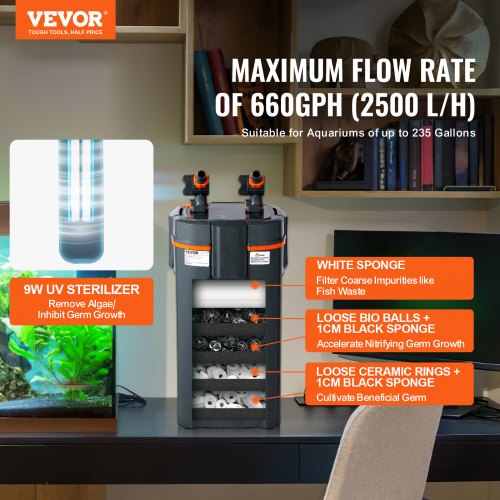
Canister filters sit outside the tank. They pull water through tubes and push it back after cleaning.
Most canister filters have a flow control knob or valve. You can increase or decrease water speed easily.
Hang-on-back Filters
Hang-on-back filters hang on the tank’s edge. They draw water up and filter it before returning it to the tank.
- Easy to install and maintain
- Usually have a flow adjustment lever
- Good for small to medium tanks
- Flow rate controls help avoid strong currents
Internal Filters
Internal filters sit inside the tank. They use a pump to move water through the filter media.
| Feature | Description |
| Placement | Inside the aquarium |
| Flow Control | Usually a dial or switch on the unit |
| Suitable For | Small tanks or breeding tanks |
| Advantages | Compact and quiet operation |
Sponge Filters
Sponge filters use air pumps to push water through a sponge. This cleans water gently.
Flow rate control on sponge filters depends on the air pump used. Adjusting air pump output changes water flow.
- Safe for fry and small fish
- Low flow prevents stress on aquatic life
- Easy to clean sponge material
How To Adjust Flow Rate
Adjusting the flow rate of your aquarium filter helps keep the water clean and safe. Proper flow keeps fish healthy and plants growing well.
You can control the flow rate using different methods. Each way fits different filter types and tank needs.
Manual Flow Control Mechanisms
Many aquarium filters have manual controls to change flow speed. These controls are easy to use and do not need power.
- Rotary knobs allow you to increase or decrease flow by turning.
- Sliding levers open or close the filter outlet partially.
- Adjustable nozzles let you direct and control water flow.
Electronic Flow Regulators
Some filters use electronic parts to control water flow. These parts adjust flow smoothly and precisely.
| Type | Control Method | Benefit |
| Digital Pump | Buttons or remote control | Easy to set exact flow |
| Variable Speed Motor | Dial or app control | Energy efficient and quiet |
| Flow Sensor | Automatic adjustment | Keeps flow steady over time |
Using Valves And Flow Dividers
Valves and flow dividers help split or limit water flow in your aquarium system. They give more control over where water goes.
Common valve types for flow control:
- Ball valves: Turn a handle to open or close water flow fully or partially.
- Gate valves: Adjust flow by moving a wedge inside the valve.
- Flow dividers: Split water into two or more streams with adjustable rates.
Choosing The Right Filter For Your Aquarium
Choosing the right aquarium filter is key to keeping your fish healthy. Filters clean the water and remove waste. An adjustable flow rate filter lets you control water speed.
Understanding your tank’s needs helps you pick the best filter. Consider your tank size, fish types, and filter capacity before buying.
Considering Tank Size And Stock
The size of your tank affects the filter choice. Larger tanks need stronger filters to clean more water. Also, think about how many fish you have.
- Small tanks (under 20 gallons) usually need low to medium flow filters.
- Medium tanks (20 to 50 gallons) require filters with medium flow rates.
- Large tanks (over 50 gallons) need high-capacity filters with adjustable flow.
- More fish means more waste, so choose a filter that can handle the load.
Matching Flow Rate To Aquatic Life
Different fish and plants need different water flow speeds. Some fish like fast water, while others prefer calm water. Adjust the flow rate to suit your aquatic life.
| Type of Aquatic Life | Preferred Flow Rate |
|---|---|
| Delicate fish (e.g., bettas, tetras) | Low to medium flow |
| Active swimmers (e.g., goldfish, danios) | Medium to high flow |
| Plants and corals | Low to medium flow |
| Bottom dwellers (e.g., catfish, loaches) | Low flow |
Assessing Filter Capacity And Media
Filter capacity means how much water it can clean per hour. Filter media removes debris, toxins, and waste. Choose media types that match your tank’s needs.
Common filter media types include:
- Mechanical media: traps solid waste
- Biological media: supports good bacteria growth
- Chemical media: removes toxins and odors
Check your filter’s capacity to ensure it fits your tank size and fish load.
Maintenance Tips For Optimal Performance
An aquarium filter with adjustable flow rate helps keep the water clean. Proper maintenance keeps it working well for a long time.
Regular care prevents problems and keeps your fish healthy. Follow these tips to get the best from your filter.
Regular Cleaning Schedules
Clean your filter parts often to stop dirt from building up. A clogged filter lowers water flow and can harm fish.
Set a cleaning schedule based on your tank size and fish load. Some filters need cleaning every two weeks.
- Rinse filter media with tank water, not tap water
- Remove debris from the intake and outflow areas
- Check for worn or damaged parts during cleaning
Monitoring Flow Rate Changes
Watch the flow rate to make sure it stays steady. A drop may mean a clog or a failing motor.
Adjust the flow rate as needed for your fish and plants. Too much flow can stress fish; too little reduces cleaning.
- Check flow rate weekly for changes
- Clean or replace parts if flow drops
- Adjust flow to match tank needs
Replacing Filter Media
Filter media collects dirt and breaks down waste. Replace it on time to keep the filter effective.
Use the right type of media for your filter. Some need replacement every month, others last longer.
- Check manufacturer guidelines for replacement frequency
- Replace media when it looks dirty or worn
- Do not replace all media at once to keep beneficial bacteria
Troubleshooting Common Issues
An aquarium filter with an adjustable flow rate is essential. It helps maintain a clean and healthy environment for your fish. Sometimes, these filters face issues that can affect their performance.
Here are common problems you may encounter and how to address them. This guide will help you ensure your filter works effectively and keeps your fish happy.
Low Flow Problems
Low flow in your filter can lead to poor water quality. This happens when debris clogs the filter media or impeller. Regular maintenance can prevent this issue.
Check for blockages and clean the filter parts. Make sure the intake and outflow are not obstructed. Adjust the flow control if needed.
- Clean filter media regularly
- Inspect and clean the impeller
- Ensure intake and outflow are clear
- Adjust flow control settings
Excessive Flow And Fish Stress
Too much flow can stress your fish. It creates strong currents they struggle against. Adjust the flow rate to make it suitable for your fish species.
Research your fish’s needs. Some prefer calm waters while others like stronger currents. Adjust the filter to provide the right environment.
- Observe fish behavior
- Lower flow rate if fish seem stressed
- Check compatibility of fish with flow rate
Noise And Vibration Concerns
Noisy filters can be annoying. Vibration may disturb both you and your fish. Check if the filter is securely placed and parts are tight.
Use padding under the filter to reduce noise. Make sure the filter is not touching the tank’s sides. Regular maintenance helps keep the filter quiet.
- Secure filter placement
- Use padding to reduce noise
- Tighten loose parts
- Perform regular maintenance
Enhancing Water Quality Beyond Flow Control
An aquarium filter with adjustable flow rate can help keep fish healthy. But, there is more to water quality than just controlling flow. Using the right combination of filtration methods can make a big difference.
Let’s explore how different filtration techniques improve water quality. From mechanical to chemical, each plays a role in maintaining a clean and healthy tank.
Combining Mechanical And Biological Filtration
Mechanical filtration removes debris from the water. This includes leftover food and waste. It works by trapping particles in a sponge or pad.
Biological filtration uses beneficial bacteria. These bacteria break down harmful chemicals. Combining both methods keeps the water clear and safe for fish.
- Mechanical: Traps dirt and particles
- Biological: Breaks down toxic ammonia
- Both: Essential for a balanced ecosystem
Using Chemical Media For Specific Contaminants
Chemical media targets specific water impurities. Activated carbon is a common choice. It removes odors and discoloration.
Other chemical media can tackle metals or phosphates. Using the right media keeps the water healthy for fish and plants.
- Carbon: Removes smells and colors
- Phosphate removers: Reduce algae growth
- Metal binders: Protect fish from heavy metals
Supplementing With Aeration And Circulation
Aeration increases the oxygen in the water. This helps fish breathe better. It also supports healthy bacteria growth.
Good circulation distributes heat and nutrients evenly. It prevents dead spots where waste can build up. Aeration and circulation work together for a thriving aquarium.
- Aeration: Boosts oxygen levels
- Circulation: Spreads nutrients and heat
- Combined: Supports overall aquarium health

Credit: www.amazon.com
Credit: www.vevor.ca
Frequently Asked Questions
What Is An Aquarium Filter With Adjustable Flow Rate?
An aquarium filter with adjustable flow rate lets you control water flow speed. It suits various fish species and tank sizes. This feature helps maintain ideal water conditions and reduces stress for aquatic life.
How Does Adjustable Flow Benefit Aquarium Fish?
Adjustable flow reduces strong currents, preventing fish stress and injury. It helps simulate natural habitats and improves oxygen distribution. This feature makes the tank environment safer for delicate or slow-swimming fish.
Can I Use Adjustable Flow For Different Tank Sizes?
Yes, adjustable flow filters are versatile for all tank sizes. You can lower flow in small tanks or increase it in larger ones. This flexibility supports optimal filtration and water movement regardless of tank volume.
Does Adjustable Flow Affect Filter Efficiency?
Adjustable flow can maintain filter efficiency when set correctly. Lower flow rates may reduce filtration speed but improve water clarity. Proper adjustment balances filtration and water circulation for a healthy aquarium.
Conclusion
Choosing an aquarium filter with adjustable flow helps keep fish healthy. You control the water speed for different tank sizes and fish types. It reduces stress and keeps the tank clean. Easy adjustments make maintenance simple and quick. This filter fits well in any home aquarium setup.
Enjoy clear water and happy fish every day. Small changes can make a big difference in your tank’s life. Select a filter that suits your aquarium’s needs best. Keep your underwater world fresh and balanced.