
If you want your freshwater tank to thrive, choosing the right aquarium filter is key. You might not realize it, but a good filter does more than just keep the water clear—it creates a healthy home for your fish.
Without the right filter, your tank could quickly become a source of stress for your aquatic friends. You’ll discover how to pick the perfect aquarium filter that fits your tank’s needs and keeps your underwater world sparkling clean. Ready to make your fish happier and your tank easier to maintain?
Let’s dive in.
Credit: www.vevor.ca
Types Of Aquarium Filters
A clean aquarium keeps fish healthy and happy. Filters help by removing dirt and waste from the water. There are different types of filters for freshwater tanks.
Each filter type works in a special way. Some remove particles, others help good bacteria grow. Some filters do both jobs at the same time.
Mechanical Filters
Mechanical filters trap solid particles like fish waste and uneaten food. They work like a net or sponge to catch dirt. This helps keep the water clear.
- Sponge filters
- Filter floss or pads
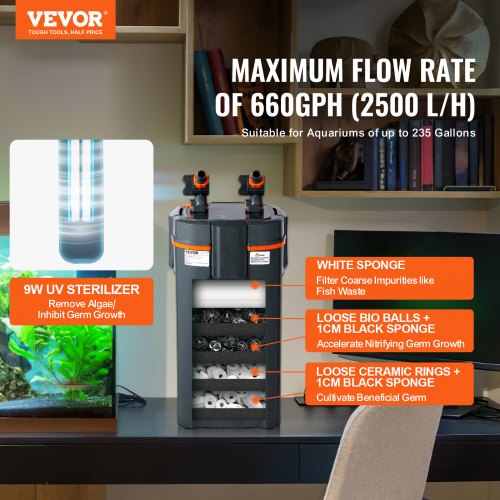
- Canister filter mechanical parts
- Power filter baskets
Biological Filters
Biological filters use good bacteria to break down harmful waste. These bacteria live on filter surfaces. They change ammonia and nitrites into safer substances.
| Filter Type | Main Function | Example |
| Biological | Break down waste chemically | Ceramic rings, bio balls |
| Mechanical | Trap solid particles | Sponge, filter floss |
| Chemical | Remove chemicals and odors | Activated carbon |
Chemical Filters
Chemical filters remove harmful chemicals and odors from the water. They use special materials like activated carbon. These filters keep water clear and fresh.
Common chemical filter media include:
- Activated carbon
- Zeolite
- Resins
Combination Filters
Combination filters mix mechanical, biological, and chemical methods. They clean water in many ways at once. These filters are good for larger or busy tanks.
- Hang-on-back filters
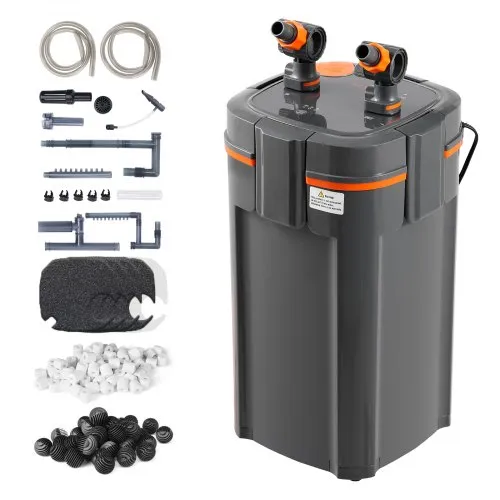
- Canister filters
- Sponge filters with added media

Credit: www.amazon.ca
Choosing The Right Filter
Picking the correct aquarium filter is key for a healthy freshwater tank. The filter keeps the water clean and safe for fish.
Different filters suit different tanks. Consider tank size, fish type, and other factors before buying.
Tank Size Considerations
The size of your tank affects the kind of filter you need. Bigger tanks need stronger filters to clean more water.
Small tanks use compact filters. Large tanks need filters with higher capacity to keep water clear.
Fish Species And Bioload
Different fish produce different amounts of waste. This waste is called bioload. More waste means a stronger filter is needed.
Some fish need gentle water flow. Choose filters that fit the needs of your fish species.
- High waste fish need powerful filters
- Delicate fish prefer gentle water flow
- Community tanks need balanced filtration
Filter Flow Rate
Flow rate shows how much water the filter cleans each hour. It is measured in gallons per hour (GPH).
Choose a flow rate that cleans all the water in your tank at least four times per hour. Avoid too strong flow for small or delicate fish.
- Calculate tank volume in gallons
- Multiply by 4 for minimum flow rate
- Adjust for fish needs and plants
Noise And Maintenance
Filters should run quietly. Loud filters can disturb you and your fish.
Choose filters that are easy to clean. Regular maintenance keeps the filter working well and your tank healthy.
- Look for quiet filter models
- Check how easy it is to replace parts
- Clean filter media every 2-4 weeks
Installation Tips
Installing an aquarium filter properly helps keep your freshwater tank clean. A good setup ensures healthy water for your fish.
Follow these tips to place, prime, and set up your filter for the best performance.
Placement In The Tank
Place the filter where it will clean the water evenly. Avoid spots blocked by decorations or plants.
- Set the filter intake near the bottom for debris removal
- Keep the output near the water surface to promote oxygen exchange
- Ensure the filter is easy to reach for maintenance
- Avoid placing the filter too close to the tank walls
Priming The Filter
Priming fills the filter with water to start its operation without air pockets. This step is crucial for many filter types.
- Turn off the filter before priming
- Fill the filter chamber with tank water
- Use the priming button or pump if available
- Check that water flows smoothly through the filter
- Restart the filter and watch for leaks
Ensuring Proper Water Flow
Proper water flow helps remove waste and keeps your fish healthy. Too strong or weak flow can stress the fish.
| Flow Rate | Effect |
| Too High | Can stress small fish and plants |
| Too Low | May cause poor water circulation |
| Just Right | Maintains clean water and happy fish |
Maintenance And Cleaning
Keeping your aquarium filter clean is important for a healthy tank. It helps remove waste and keeps water clear.
Regular care of the filter keeps fish safe and water quality high. This guide explains how to maintain your filter.
Regular Filter Media Replacement
Filter media traps dirt and toxins in the water. It needs to be replaced often to work well.
Replace media every 3 to 4 weeks or as the instructions say. Old media can clog and stop cleaning well.
- Check media for dirt or smell
- Replace only part of the media at once
- Use the right type of media for your filter
Cleaning Procedures
Cleaning the filter keeps it running smoothly. Use tank water to rinse the media to keep good bacteria alive.
Do not use tap water or soap. Clean the filter parts carefully and avoid damaging them.
- Turn off and unplug the filter before cleaning
- Remove and rinse the media with tank water
- Clean the filter housing and impeller
- Reassemble and restart the filter
Signs Of Filter Problems
Watch your filter for signs it is not working well. Early problems can save your fish and tank.
Common signs include slow water flow, strange noises, or cloudy water. Check the filter and clean or replace parts as needed.
- Water flows slower than normal
- Filter makes loud or unusual sounds
- Water looks cloudy or dirty
- Fish act stressed or sick
Enhancing Filtration Efficiency
Keeping freshwater tanks clean is important for fish health. Good filters help remove dirt and harmful substances.
Improving filter efficiency makes your tank water clearer and safer. This guide covers three ways to boost filtration.
Adding Beneficial Bacteria
Beneficial bacteria break down fish waste and harmful chemicals. They help keep the tank water clean and balanced.
You can add these bacteria with starter cultures or filter media that already has bacteria growing on it.
- Bacteria convert ammonia to nitrites and then to less harmful nitrates
- Adding bacteria speeds up the natural cleaning process
- Keep the filter media moist to support bacterial growth
Using Filter Additives
Filter additives improve water quality by removing toxins and odors. They can also boost bacterial activity.
Choose additives that suit your tank size and the type of fish you keep. Follow instructions carefully to avoid harm.
- Activated carbon removes chemicals and discoloration
- Zeolite absorbs ammonia and other harmful substances
- Bio-enhancers support beneficial bacteria growth
Optimizing Water Circulation
Good water flow pushes debris toward the filter and spreads oxygen. It helps keep the whole tank clean.
Adjust the filter’s flow rate to match your tank size. Avoid strong currents that stress your fish.
- Place the filter output to create gentle water movement
- Use circulation pumps if needed to improve flow
- Regularly check and clean filter parts to keep flow steady
Common Filtration Issues
Maintaining a freshwater aquarium requires a good filtration system. Filters help keep the water clean and healthy for fish.
Sometimes, filters can face common issues that affect their performance. Let’s explore these problems and how to address them.
Clogging And Reduced Flow
Filters can get clogged with debris, reducing water flow. This can affect the tank’s cleanliness and fish health.
Algae Growth
Excessive algae can clog filters and make tanks look dirty. Proper filtration and light management help control algae.
- Reduce tank lighting to slow algae growth
- Use algae-eating fish or snails
- Regularly clean the tank and filter
Unpleasant Odors
Aquarium filters can develop odors if not maintained well. Odors often result from waste buildup in the filter media.
Change filter media regularly and perform partial water changes to keep the tank fresh.
Handling Filter Failures
Sometimes filters stop working altogether. This can be due to power issues or mechanical failures.
| Issue | Solution |
| Power outage | Check power supply and connections |
| Mechanical breakdown | Inspect and replace faulty parts |
| Airlock | Prime the filter to remove air |
Credit: www.vevor.ca
Frequently Asked Questions
What Type Of Aquarium Filter Is Best For Freshwater Tanks?
The best filter depends on tank size and fish type. Hang-on-back filters suit small tanks. Canister filters work well for larger setups. Choose one that offers mechanical, biological, and chemical filtration for optimal water quality.
How Often Should I Clean My Freshwater Aquarium Filter?
Clean the filter every 3-4 weeks to maintain efficiency. Rinse filter media in tank water to preserve beneficial bacteria. Avoid over-cleaning, which can disrupt the biological balance and harm fish health.
Can I Use A Saltwater Filter For Freshwater Tanks?
Saltwater filters can work but are not ideal for freshwater tanks. Freshwater filters are designed to handle different waste types. Using the correct filter ensures better water quality and a healthier environment for freshwater fish.
What Size Aquarium Filter Do I Need For My Tank?
Choose a filter rated for your tank’s gallon size or higher. A stronger filter improves water circulation and filtration efficiency. Over-filtering is better than under-filtering to keep freshwater tanks clean.
Conclusion
Choosing the right aquarium filter keeps your freshwater tank clean. It helps remove dirt and harmful chemicals. Fish stay healthy and water looks clear. Filters also create good water flow for fish comfort. Regular filter care makes your tank last longer.
Clean water means happy fish and less work for you. A simple, reliable filter suits most freshwater tanks well. Take time to pick one that fits your tank size. Your fish will thank you with bright colors and energy. Clean water is the key to a thriving freshwater aquarium.