
If you want your saltwater tank to thrive, clean and clear water is a must. But keeping your tank spotless can be a challenge.
That’s where canister filters come in. These powerful devices work quietly behind the scenes to keep your water pure and your marine life healthy. You’ll discover how canister filters can transform your saltwater tank, making maintenance easier and your underwater world more vibrant.
Ready to see your tank at its best? Let’s dive in.

Credit: www.amazon.com
Benefits Of Canister Filters
Canister filters are popular for saltwater tanks. They help keep water clean and healthy for fish and corals.
This type of filter offers several benefits that improve tank conditions and water quality.
Effective Mechanical Filtration
Canister filters trap large and small particles from the water. This stops dirt and debris from floating around the tank.
- Removes uneaten food
- Captures fish waste
- Prevents cloudiness
- Protects pumps and equipment
Enhanced Biological Filtration
Canister filters provide a large space for beneficial bacteria to grow. These bacteria help break down harmful ammonia and nitrites.
The steady flow of water through the filter supports a healthy bacteria colony. This keeps the water safe for aquatic life.
Chemical Filtration Advantages
Canister filters use chemical media like activated carbon or resins. These media remove toxins, odors, and discoloration from the water.
| Chemical Media | Purpose |
| Activated Carbon | Removes odors and impurities |
| Phosphate Remover | Controls algae growth |
| Resins | Absorbs heavy metals and toxins |
Improved Water Clarity
Using a canister filter helps keep the water clear and bright. It removes tiny particles that cause cloudiness.
Clear water makes the tank look better. It also helps fish and corals stay healthy by providing more light.
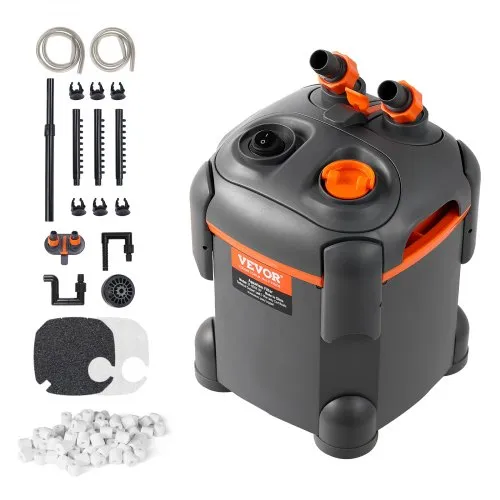
Credit: www.vevor.ca
Choosing The Right Canister Filter
Canister filters help keep saltwater tanks clean and healthy. Picking the right one is key for your tank’s success.
This guide covers important points to help you select the best canister filter for your saltwater aquarium.
Size And Capacity Considerations
Choose a canister filter that fits your tank size. A filter too small will not clean well. A filter too big may waste energy.
Check the filter’s capacity rating. It should match or exceed your tank’s volume in gallons or liters.
Flow Rate Importance
Flow rate measures how fast water moves through the filter. It affects water clarity and oxygen levels.
- Pick a flow rate that cycles your tank water at least four times per hour.
- Too high flow can stress fish and corals.
- Too low flow may cause dirt and waste buildup.
Compatibility With Saltwater Tanks
Saltwater tanks need filters that resist corrosion from salt and moisture. Look for materials like plastic and stainless steel.
| Feature | Why It Matters |
| Sealed Pump | Prevents saltwater leaks |
| Corrosion Resistant Parts | Lasts longer in saltwater |
| Easy to Clean | Reduces maintenance time |
Brand And Model Recommendations
Choose brands known for quality and saltwater use. Check reviews and user feedback for reliability.
- Eheim Classic – Simple and durable
- Fluval FX Series – Strong flow and capacity
- Marineland Magniflow – Easy setup and maintenance
- Hydor Professional – Quiet and efficient
Installation Tips For Saltwater Canister Filters
Installing a canister filter correctly is key to keeping your saltwater tank healthy. Proper setup helps maintain clean water and strong circulation.
Follow these tips to position, connect, and prepare your canister filter for best results in your saltwater aquarium.
Placement And Positioning
Place your canister filter below or next to the aquarium. This position allows water to flow easily with gravity. Avoid spots where the filter may get wet or blocked.
Keep the filter close to power outlets but far from water splashes. Make sure hoses can reach the tank without kinking or stretching.
Connecting Intake And Output
Attach the intake tube securely to the tank’s water intake point. The output tube should direct water back into the tank smoothly. Check that both tubes are free of sharp bends.
- Use clamps to hold tubes firmly in place
- Ensure tubes are clean and free from debris
- Match hose size to the filter’s connectors
- Double-check connections for tight fit
Ensuring Leak-free Setup
Leaks can cause damage and reduce filter efficiency. Check all seals and connections before use. Tighten clamps and fittings as needed.
| Component | Leak Check |
| Hose connections | Inspect for drips and tighten clamps |
| Filter lid seal | Ensure O-ring is clean and properly seated |
| Priming valve | Close valve tightly after priming |
Priming The Filter
Priming removes air and fills the filter with water. This step helps the pump work correctly. Follow the filter’s instructions for priming.
Common priming tips:
- Fill the canister with tank water before sealing
- Open the priming valve to let air escape
- Use manual or automatic priming functions if available
- Listen for steady water flow sounds
Maintenance And Cleaning
Canister filters help keep saltwater tanks clean and healthy. Regular maintenance keeps the filter working well. It also protects fish and corals.
Cleaning and checking parts often stops problems before they start. This guide covers key maintenance tasks for canister filters.
Regular Media Replacement
Filter media collects waste and dirt from tank water. Over time, it gets clogged and stops working well. Replace media on a set schedule.
Different media types need different replacement times. Follow the manufacturer’s advice for each media type you use.
- Mechanical media: replace or clean every 2-4 weeks
- Chemical media: replace every 4-6 weeks
- Biological media: rinse gently, replace only if damaged
Cleaning Filter Components
Clean the filter parts to keep water flow strong. Turn off and unplug the filter before cleaning. Remove parts carefully to avoid damage.
Rinse hoses and impellers with tank water. Use a soft brush to remove buildup. Avoid soap or chemicals that can harm tank life.
- Rinse media baskets and trays in tank water
- Clean impeller and motor housing monthly
- Check hoses for blockages and clean as needed
Avoiding Common Maintenance Mistakes
Some mistakes can harm your filter or tank. Avoid these common errors to keep your system safe and effective.
- Don’t clean biological media with tap water
- Never run the filter dry during cleaning
- Avoid over-tightening parts when reassembling
- Don’t skip regular check-ups and cleaning sessions
- Use only recommended media and parts
Signs Your Filter Needs Attention
Watch for signs that your canister filter needs maintenance or repair. Early action can prevent bigger problems.
- Water flow slows down noticeably
- Unusual noises coming from the filter
- Water becomes cloudy or smells bad
- Leaks or drips around the filter unit
- Tank water temperature rises unexpectedly
Troubleshooting Common Issues
Canister filters are key to keeping saltwater tanks clean and healthy. Sometimes, these filters face problems that affect their performance. Fixing these issues quickly helps protect your marine life.
This guide covers common problems with canister filters and easy ways to solve them. Use it to keep your filter running smoothly.
Dealing With Low Flow
Low flow means less water moves through the filter. This can harm water quality and tank health. Check if hoses are bent or clogged first. Also, clean the impeller and filter media regularly.
Another cause is air trapped inside the filter. Open the canister to release trapped air. Make sure all seals are tight to avoid air leaks.
Handling Leaks And Noises
Leaks can cause water damage and filter failure. Check all hose connections and O-rings for damage. Replace worn parts to stop leaks. Tighten clamps but do not overtighten.
Noises often come from the motor or impeller. Clean the impeller to remove debris. Lubricate parts if needed. If noise continues, inspect for cracks or loose components.
Managing Filter Clogs
Clogs reduce filter efficiency and water flow. Remove and rinse all filter media in tank water weekly. Avoid using tap water as it can kill beneficial bacteria.
- Check intake and output tubes for blockages
- Clean sponges and foam pads gently
- Replace carbon or chemical media as per schedule
- Ensure the filter basket is free of debris
Preventing Contamination
| Cause | Prevention |
| Dirty filter media | Clean or replace media regularly |
| Backflow of dirty water | Install check valves on hoses |
| Improper handling | Wear gloves and use clean tools |
| Cross-contamination | Use separate equipment for different tanks |

Credit: sevenports.com
Enhancing Filtration Performance
Canister filters are crucial for maintaining clean saltwater tanks. They ensure water clarity and support a healthy aquatic environment.
Optimizing their performance involves adding media, adjusting flow rates, and integrating with other systems.
Adding Supplemental Media
Supplemental media can boost filtration efficiency. Consider adding activated carbon or bio balls to your canister filter.
- Activated Carbon: Removes odors and impurities.
- Bio Balls: Increases beneficial bacteria colonization.
- Phosphate Remover: Reduces algae growth.
Optimizing Flow Rates
Flow rates impact filtration performance. Adjusting the flow can enhance water movement and maximize filter contact.
| Tank Size | Recommended Flow Rate |
| 20 gallons | 80-100 GPH |
| 50 gallons | 200-250 GPH |
| 100 gallons | 400-500 GPH |
Integrating With Other Filtration Systems
Combining canister filters with other systems can improve water quality. Use protein skimmers or refugiums alongside your filter.
Using Uv Sterilizers With Canister Filters
UV sterilizers help control algae and pathogens. They can be integrated with canister filters for improved water quality.
- Connect UV sterilizer to the outflow of the canister filter.
- Ensure proper water flow through the UV unit.
- Regularly clean the UV bulb for effective performance.
Frequently Asked Questions
What Are Canister Filters Used For In Saltwater Tanks?
Canister filters remove debris, toxins, and waste from saltwater tanks. They maintain water clarity and improve fish health. These filters offer mechanical, chemical, and biological filtration, essential for a stable marine environment.
How Often Should Canister Filters Be Cleaned?
Clean canister filters every 4 to 6 weeks for optimal performance. Regular cleaning prevents clogging and maintains water flow. Avoid over-cleaning to preserve beneficial bacteria essential for biological filtration.
Can Canister Filters Handle Large Saltwater Tanks?
Yes, canister filters are suitable for large saltwater tanks. They provide powerful filtration with customizable media options. Choose a filter rated for your tank size to ensure efficient water cleaning.
Are Canister Filters Better Than Hang-on-back Filters?
Canister filters offer more filtration capacity and flexibility than hang-on-back filters. They are quieter, hidden, and provide superior mechanical, chemical, and biological filtration. This makes them ideal for saltwater tanks needing robust filtration.
Conclusion
Canister filters help keep saltwater tanks clean and healthy. They remove dirt, waste, and harmful chemicals effectively. Many aquarists trust these filters for their quiet operation and easy maintenance. Choosing the right filter improves water clarity and fish health. Regular cleaning ensures the filter works well over time.
Saltwater tanks need good filtration to support marine life. A reliable canister filter makes tank care simpler and more efficient. Consider your tank size and needs before buying. Clean water means happy fish and coral. Simple and strong—canister filters are a smart choice.