
Are you tired of that constant buzzing sound coming from your aquarium filter? It can be frustrating when the noise disrupts your peace and makes it hard to relax near your tank.
Finding an aquarium filter that works quietly can change everything. Imagine enjoying the beauty of your fish without any distracting noise. You’ll discover how to choose the perfect low-noise aquarium filter that keeps your water clean and your space calm.
Keep reading to find out what makes these filters special and how you can bring tranquility back to your home.
Credit: www.vevor.ca
Benefits Of Low-noise Aquarium Filters
Low-noise aquarium filters keep the tank clean without making loud sounds. They help maintain a peaceful environment for both fish and people.
Choosing a filter with quiet operation improves the overall experience of owning an aquarium. It supports fish health and creates a calm space at home.
Improved Fish Health
Fish are sensitive to noise and vibrations. Low-noise filters reduce stress for fish, helping them stay healthy and active.
Less noise means fish feel safer and swim calmly. This lowers the risk of illness caused by stress.
Enhanced Viewing Experience
Quiet filters let you enjoy watching your fish without distractions. The peaceful sound helps you focus on the tank’s beauty.
Low-noise operation keeps the aquarium a relaxing spot. It makes your fish tank a nice place to spend time.
Better Home Environment
Noise from aquarium filters can disturb daily activities. Quiet filters keep your home calm and peaceful.
They help reduce background noise, making it easier to talk, work, or rest near the aquarium.
Types Of Quiet Aquarium Filters
Keeping an aquarium peaceful means choosing a filter that runs quietly. Different filters offer low-noise operation to avoid disturbing your home.
Here are some common types of quiet aquarium filters. Each type works well in different tank setups and noise preferences.
Canister Filters
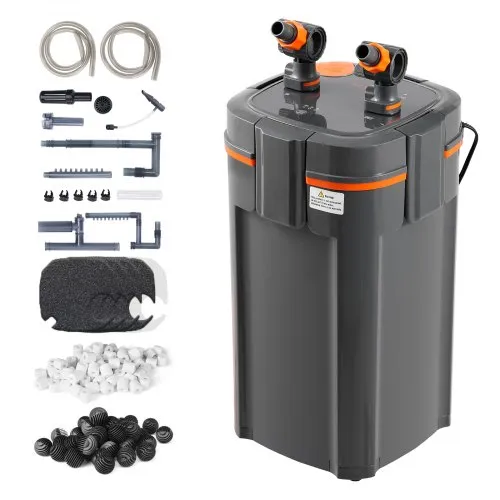
Canister filters sit outside the tank and use tubes to move water. They are usually very quiet because the motor is enclosed.
These filters clean water well and are easy to maintain. They suit larger tanks and keep noise levels low.
Sponge Filters
Sponge filters use air bubbles to push water through a sponge. They are very silent since they have no motor inside the tank.
- Good for small to medium tanks
- Provide gentle water flow
- Help grow beneficial bacteria
- Easy to clean and cheap to run
Internal Filters
Internal filters sit inside the tank and use a small motor to clean water. Many models have noise-reducing features.
| Feature | Benefit |
| Compact design | Fits well in small tanks |
| Adjustable flow | Control water movement |
| Quiet motor | Reduces sound levels |
Undergravel Filters
Undergravel filters use a plate under the gravel to push water through the substrate. They are quiet because the pump can be placed outside the tank.
Key points about undergravel filters:
- Good for biological filtration
- Low noise due to pump placement
- Needs regular cleaning to avoid clogging
Key Features For Noise Reduction
Low-noise operation is important for aquarium filters. Quiet filters help create a peaceful room environment. This guide explains key features that reduce noise in aquarium filters.
Each feature works to limit sound from the motor and water flow. Understanding these can help you choose or maintain a quieter filter system.
Soundproof Materials
Using soundproof materials in the filter housing lowers noise levels. Materials like foam and rubber absorb sound waves. This stops sounds from escaping the filter.
- Foam padding inside the casing
- Rubber seals around openings
- Thick plastic or composite shells
- Insulating layers that dampen sound
Efficient Motor Design
Motors designed for efficiency run smoother and quieter. Low-friction parts reduce sound caused by rubbing and heat. Balanced rotors avoid extra vibrations.
| Motor Feature | Noise Reduction Benefit |
|---|---|
| High-quality bearings | Less friction, smoother rotation |
| Balanced rotor | Reduces vibration noise |
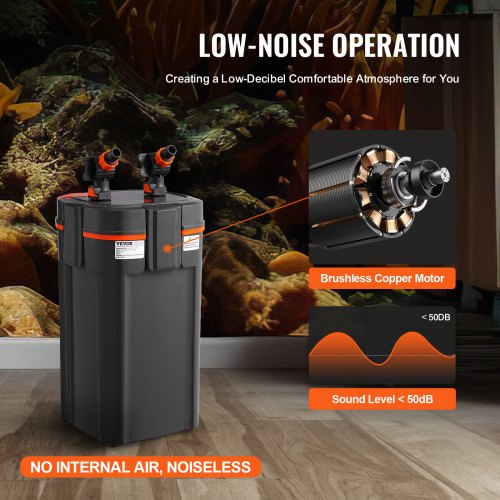
| Brushless motor | Quieter operation, less wear |
| Optimized cooling | Prevents overheating noise |
Vibration Dampening
Vibration dampening lowers noise from motor and water movement. Soft mounts and pads stop vibrations from spreading. This keeps the filter steady and quiet.
- Rubber feet to absorb vibrations
- Silicone pads between parts
- Flexible connectors to reduce shaking
- Shock-absorbing mounts for the motor
Flow Rate Control
Controlling water flow reduces splashing and rushing sounds. Adjustable flow settings let you find a quiet balance. Slower flow rates usually mean less noise.
- Variable speed pumps
- Flow restrictors to limit water speed
- Quiet water outlets with smooth edges
- Designs that prevent water drops or splashes

Credit: www.amazon.ca
Top Quiet And Efficient Filter Brands
Choosing the right aquarium filter helps keep your tank clean and your fish healthy. Quiet operation is important to avoid noise disturbance. Efficient filters save energy and keep water clear.
This guide covers four top brands known for quiet and efficient aquarium filters. Learn about their key features and benefits.
Fluval
Fluval filters are known for quiet motors and strong performance. They use multi-stage filtration to remove debris and impurities. Many models have sound-dampening technology.
- Powerful yet quiet operation
- Multi-stage filter media
- Easy to maintain and clean
- Energy efficient pumps
Eheim
Eheim filters use high-quality parts for long life and silent running. Their compact design fits many tank sizes. They also offer adjustable flow rates for different needs.
| Feature | Benefit |
| Sealed motor | Reduces noise and vibration |
| Adjustable flow | Customizes water flow for fish type |
| Durable housing | Long-lasting and reliable |
Aquaclear
AquaClear filters offer good filtration with quiet operation. Their unique design promotes oxygen exchange. They use refillable media baskets for convenience.
- Quiet motor for peaceful tanks
- Easy to change filter media
- Supports biological, chemical, and mechanical filtration
- Energy saving design
Marineland
Marineland filters are built for quiet use and strong cleaning power. They often include multi-stage filtration and easy setup. Their filters work well in many aquarium sizes.
- Quiet operation with noise-reduction parts
- Multi-stage filter system
- Simple installation and maintenance
- Good value for price
Installation Tips For Minimizing Noise
A noisy aquarium filter can disturb the peaceful atmosphere in your home. Quiet filters help fish stay calm and make your room more relaxing.
Proper installation is key to reducing filter noise. Small changes can make a big difference in sound levels.
Proper Placement
Place the filter away from walls and corners to reduce vibrations. Use a soft mat or pad under the filter to absorb sound.
Avoid placing the filter on hard surfaces like glass or metal. Keep the filter submerged properly to prevent air bubbles and noise.
- Keep some space between filter and tank glass
- Use a rubber or foam pad under the filter
- Ensure filter parts are underwater as needed
Secure Mounting
Tighten all screws and clamps to stop rattling sounds. Use rubber washers to reduce metal-on-metal noise.
Check that hoses and tubes are fixed firmly. Loose parts cause extra vibrations and louder operation.
- Use rubber washers on screws and bolts
- Check and tighten all clamps regularly
- Secure hoses to prevent movement
Regular Maintenance
Clean the filter parts often to avoid clogs and noise. Replace worn parts like impellers quickly to keep it quiet.
Lubricate moving parts with safe oils if needed. Regular checks help catch problems before noise increases.
- Rinse filter media and parts monthly
- Replace damaged impellers and seals
- Use safe lubricants on moving parts
- Inspect the filter for wear or damage
Credit: www.vevor.ca
Troubleshooting Common Noise Issues
Aquarium filters can sometimes make unwanted noise. Understanding and fixing these issues can create a peaceful environment.
This guide will help you identify and solve common noise problems in your aquarium filter.
Identifying Noise Sources
First, you need to find where the noise is coming from. It could be the motor, impeller, or air bubbles.
Listen closely to pinpoint the exact source. This step is crucial for effective troubleshooting.
- Check for vibrations near the motor
- Inspect the impeller for damage
- Look for trapped air bubbles
Fixing Air Bubbles
Air bubbles can cause a gurgling sound. They often form when water levels are too low.
To fix this, ensure the intake is fully submerged. Adjust the water level if needed.
- Raise water level to cover the intake
- Check for leaks in the filter system
- Ensure proper assembly of filter parts
Replacing Worn Parts
Worn parts can create noise over time. Regular inspection helps catch this early.
Replace any damaged or worn-out parts to maintain quiet operation. This includes the impeller and seals.
- Inspect parts for wear and tear
- Replace faulty impeller or seals
- Use parts recommended by the manufacturer
Energy Efficiency And Noise Levels
Choosing the right aquarium filter can help reduce energy consumption. It also minimizes noise levels, making your aquarium enjoyable. Finding a balance between performance and power use is essential.
Filters that operate quietly are beneficial for both fish and humans. They create a peaceful environment and save on electricity costs.
Balancing Performance And Power Use
Balancing performance with power use is key in selecting a filter. Efficient filters maintain water quality while using less energy.
- Check the energy rating of the filter.
- Consider the filter’s capacity compared to tank size.
- Read reviews on noise levels from other users.
Eco-friendly Filter Options
Eco-friendly filters are designed to save energy and reduce noise. These options are great for environmentally conscious aquarists.
| Filter Type | Energy Efficiency | Noise Level |
| Sponge Filter | High | Low |
| Canister Filter | Moderate | Moderate |
| Internal Filter | Low | Low |
Frequently Asked Questions
What Is The Best Aquarium Filter For Low-noise Operation?
The best low-noise aquarium filters use advanced motor technology and soundproof designs. Canister and sponge filters are typically quieter. Look for filters labeled as “whisper-quiet” or “silent” for peaceful aquarium environments.
How Can I Reduce Noise From My Aquarium Filter?
To reduce filter noise, clean the filter regularly and check for loose parts. Use rubber pads or mats to dampen vibrations. Position the filter away from hard surfaces and consider upgrading to a quieter model for best results.
Are Low-noise Aquarium Filters Suitable For All Tank Sizes?
Yes, low-noise filters come in various sizes and types to fit small and large tanks. Choose a filter rated for your tank’s volume to ensure efficient filtration without excessive noise or power consumption.
Do Low-noise Filters Affect Water Quality Or Flow Rate?
Low-noise filters maintain effective water flow and filtration. They use quieter motors but do not compromise on cleaning performance. Always select a filter with appropriate flow rate for your aquarium size to keep water quality optimal.
Conclusion
Choosing a quiet aquarium filter improves your tank’s peace and health. Fish feel calm without loud noises around. Clean water helps fish stay happy and strong. A low-noise filter creates a better home for your aquatic pets. Remember, a peaceful tank makes caring easier and more fun.
Quiet filters keep your room calm too. Enjoy watching your fish swim in silence and comfort.