
Are you tired of worrying about feeding your tropical fish every day? Imagine a simple way to keep your fish healthy and happy without the daily hassle.
Automatic feeders for tropical fish can do just that. They deliver the right amount of food at the right time, even when you’re busy or away. Keep reading to discover how these clever devices can make your fish care easier and stress-free.
Your fish will thank you, and you’ll enjoy more peace of mind.

Credit: www.amazon.ca
Benefits Of Automatic Feeders
Automatic feeders help feed tropical fish on a set schedule. They give the right amount of food at the right time.
These devices make fish care easier and keep fish healthy. They work well for busy people and those who travel.
Consistent Feeding Schedule
Automatic feeders feed fish at the same times every day. Fish get used to the routine and stay calm.
A steady schedule helps fish digest food better. It also avoids stress caused by irregular feeding times.
Reduced Risk Of Overfeeding
These feeders give the exact food amount each time. This stops too much food from entering the tank.
Less leftover food means cleaner water. Fish stay healthier without extra waste in the tank.
Convenience For Busy Aquarists
Automatic feeders save time for people with busy lives. They do not need to be there every feeding.
These devices are helpful during trips. Fish keep getting fed without any effort from the owner.

Credit: fishnosh.com
Types Of Automatic Feeders
Automatic feeders help keep tropical fish healthy by feeding them on time. They reduce the need for daily feeding. Many types suit different tanks and schedules.
This guide explains three common types of automatic feeders. You can learn how each works and which fits your needs best.
Digital Programmable Feeders
Digital programmable feeders allow you to set feeding times and amounts. You can customize feeding to match your fish’s needs. These feeders use a small motor to release food.
- Set multiple feeding times per day
- Adjust portion size easily
- Some have LCD screens for easy programming
- Work well for flakes, pellets, or small granules
Gravity-based Feeders
Gravity-based feeders use a simple design. Food drops into the tank as fish eat it. No batteries or power are needed. These feeders work best for larger flakes or pellets.
| Feature | Advantage | Disadvantage |
| Power source | No power needed | Cannot control feeding times |
| Food release | Simple and reliable | Food may clump in humid tanks |
| Maintenance | Easy to clean | Refill often needed |
Battery Vs. Electric Models
Automatic feeders come in battery or electric models. Battery models use power from batteries. Electric models plug into an outlet. Each has pros and cons.
- Battery models:Portable and work during power outages. You must replace batteries regularly.
- Electric models:Provide constant power and do not need battery changes. They stop working if the power goes out.
Choosing The Right Feeder
Automatic feeders help keep tropical fish healthy by feeding them on time. Choosing the right feeder depends on your tank and fish needs.
Consider key factors like tank size, feeding frequency, and food types. This guide covers what to look for in each area.
Tank Size And Fish Type
Large tanks need feeders with bigger capacity. Small tanks use compact feeders. Different fish eat different amounts and types of food.
- Small fish need small portions often
- Large fish require more food per feeding
- Active fish may need multiple feedings daily
- Bottom feeders need sinking food options
Feeder Capacity And Feeding Frequency
Feeder capacity affects how often you refill it. Feeding frequency depends on your fish’s diet and daily routine.
| Tank Size | Feeder Capacity | Feeding Frequency |
| Small (under 10 gallons) | Up to 20 grams | 1-2 times per day |
| Medium (10-30 gallons) | 20-50 grams | 2 times per day |
| Large (over 30 gallons) | Over 50 grams | 2-3 times per day |
Compatibility With Food Types
Not all feeders work with every food type. Make sure the feeder matches your fish’s diet.
- Flake feeders work well for surface feeders
- Pellet feeders suit fish that eat sinking food
- Freeze-dried or frozen foods may need manual feeding
- Some feeders allow mixing different food types
Setting Up Your Feeder
Automatic feeders help feed your tropical fish on time. Setting up your feeder correctly ensures your fish get the right amount of food.
Follow simple steps to install, program, and clean your feeder. This guide will help you keep your feeder working well.
Installation Tips
Place the feeder where it is easy to reach and close to the aquarium. Make sure it is secure and does not touch the water.
- Attach the feeder firmly to the tank edge or lid
- Keep it away from water splashes to avoid damage
- Use batteries or power as needed, checking the power source
- Load the feeder with dry fish food suitable for tropical fish
Programming Feeding Times
Set the feeding times based on your fish’s needs. Most tropical fish eat once or twice a day.
| Time | Food Amount | Notes |
| Morning (8:00 AM) | 1 scoop | First feeding of the day |
| Evening (6:00 PM) | 1 scoop | Second feeding if needed |
Maintenance And Cleaning
Clean the feeder regularly to stop food buildup and prevent mold. Check moving parts to keep them working well.
- Remove the feeder from the tank before cleaning
- Use a soft brush and mild soap to clean inside parts
- Rinse well with water and dry completely before refilling
- Check the battery and replace if low
Common Issues And Solutions
Automatic feeders help feed tropical fish on a set schedule. They save time and keep fish healthy. Yet, users may face some common problems with these devices.
Knowing the issues and how to fix them helps keep your fish safe and your feeder working well.
Food Jamming
Food jamming happens when fish food gets stuck inside the feeder. This stops food from coming out and leaves fish hungry.
Food can jam due to moisture, the wrong food size, or mechanical parts that are dirty.
- Keep the feeder dry to avoid clumping
- Use food pellets that fit the feeder’s size
- Clean the feeder regularly to remove dust and old food
- Check the moving parts for any blockages
Power Failures
Power failures stop the feeder from working. Fish may miss meals if power is out for a long time.
Some feeders use batteries or have backup power options. This keeps feeding on schedule even during outages.
- Use fresh batteries and replace them often
- Keep extra batteries on hand
- Choose feeders with backup power features
- Test the feeder’s power system regularly
Ensuring Food Freshness
Fresh food keeps fish healthy and active. Old or damp food loses nutrients and can harm fish.
Store food in a cool, dry place. Check the feeder’s food container often for freshness.
- Use airtight containers to keep food dry
- Buy small amounts of food to avoid long storage
- Replace food in the feeder regularly
- Check for signs of mold or smell bad food
Enhancing Fish Health With Automation
Automatic feeders for tropical fish can improve their health. These devices ensure that fish get regular meals even when you’re away.
Feeding your fish the right amount at the right time is crucial. Automation helps achieve this consistently.
Preventing Nutritional Deficiencies
Automatic feeders provide consistent nutrition. They dispense food at set intervals, preventing overfeeding or underfeeding.
Fish need a balanced diet to stay healthy. Automated systems help by giving the right portions every time.
- Regular feeding avoids nutrient gaps
- Consistent portions maintain fish weight
- Timed feeding matches natural habits
Stress Reduction Through Routine
Fish thrive on routine. Automatic feeders create a predictable schedule, reducing stress.
Stress in fish can lead to illness. Consistent feeding times help them feel secure and happy.
| Stress Factor | Solution |
| Irregular feeding | Set feeding schedule |
| Overfeeding | Controlled portions |
Monitoring Fish Behavior
Automatic feeders allow you to observe fish without disturbing them. You can see how they react to feeding times and adjust if needed.
Behavior changes can signal health issues. Regular feeding helps you notice any unusual activity quickly.
- Watch for changes in eating habits
- Note any unusual aggression
- Check for signs of illness
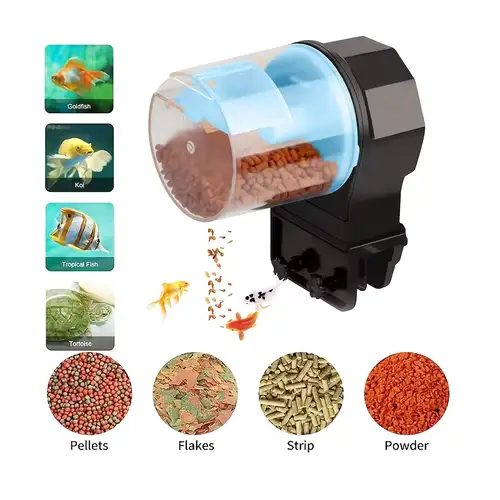
Credit: www.temu.com
Frequently Asked Questions
What Are The Benefits Of Automatic Feeders For Tropical Fish?
Automatic feeders provide consistent feeding schedules, reducing overfeeding risks. They save time, ensure fish get regular meals, and maintain water quality by preventing excess food buildup. These feeders are ideal for busy aquarists and help keep tropical fish healthy and stress-free.
How Do Automatic Feeders Work For Tropical Fish Tanks?
Automatic feeders dispense measured food portions at preset times. They use timers or programmable settings to release flakes, pellets, or freeze-dried food. This controlled feeding mimics natural habits and supports stable tank conditions, ensuring your tropical fish receive balanced nutrition without daily manual feeding.
Can Automatic Feeders Improve Tropical Fish Health?
Yes, automatic feeders promote health by preventing overfeeding and underfeeding. Consistent feeding routines reduce stress and digestive issues. They help maintain water quality by minimizing leftover food, which can cause harmful bacteria growth, keeping tropical fish vibrant and disease-free.
What Types Of Food Do Automatic Feeders Support?
Automatic feeders handle flakes, pellets, freeze-dried, and granulated foods suitable for tropical fish. Some advanced models can also dispense gel or live food. Choosing the right feeder depends on your fish species and diet, ensuring optimal nutrition and ease of use.
Conclusion
Automatic feeders help keep tropical fish healthy and happy. They give fish food on time, even when you are busy or away. Feeding becomes easy and less messy with these devices. You can control how much and when to feed your fish.
This keeps fish from overfeeding or going hungry. Choosing the right feeder fits your tank and fish needs. A good feeder makes fish care simple and stress-free. Try one to see the difference in your fish’s life.