
Have you ever wanted to create a stunning underwater world right in your home? Aquascaping for fish observation lets you do just that.
By designing beautiful, natural environments inside your aquarium, you can watch your fish thrive and explore. This isn’t just about decoration—it’s about bringing your fish to life in a way that’s relaxing and exciting for you. Ready to learn how to transform your tank into a captivating display?
Keep reading, and discover simple tips to make your fish the star of the show.
Benefits Of Aquascaping
Aquascaping is the art of arranging plants, rocks, and decorations in fish tanks. It makes the tank look beautiful and natural.
Besides beauty, aquascaping helps fish live better and stay healthy. It supports their needs in many ways.
Enhancing Fish Behavior
Aquascaping provides places for fish to explore and hide. This makes fish feel safe and less stressed.
When fish feel safe, they show natural behaviors like swimming, hunting, and playing. This is good for their health.
Creating Natural Habitats
Aquascaping copies the fish’s natural environment. Plants and rocks create a habitat that fish recognize.
This natural setup helps fish feel at home. It supports their growth and helps them reproduce in the tank.
Improving Water Quality
Plants in aquascaping absorb harmful chemicals like nitrates. This keeps the water clean and healthy for fish.
Good water quality reduces fish diseases and helps maintain a stable tank environment.
- Plants remove toxins from water
- Rocks and substrate provide surfaces for helpful bacteria
- Better water quality means healthier fish
Credit: medium.com
Essential Aquascaping Materials
Aquascaping creates beautiful underwater scenes for fish. It combines plants, rocks, and substrates.
Good materials help fish stay healthy and make the tank look natural. Choose items carefully for best results.
Selecting Substrates
Substrate is the material at the tank bottom. It supports plants and affects water quality.
Choose substrates that suit your plants and fish. Some substrates help roots grow better.
- Gravel: Good for most tanks, allows water flow
- Aquarium soil: Rich in nutrients for plant growth
- Sand: Smooth for fish that like to dig
- Clay-based substrates: Help keep water clean
Choosing Plants
Plants add color and oxygen to the tank. They also provide shelter for fish.
Select plants that match your tank size and lighting. Some grow fast, others need less light.
- Java Fern: Easy to grow and low light
- Anubias: Hardy and slow-growing
- Amazon Sword: Large and good for background
- Moss: Great for small spaces and hiding spots
Incorporating Hardscape Elements
Hardscape means rocks, wood, and decorations. These give structure to the aquascape.
Use hardscape to create hiding places and natural looks. Choose safe materials that do not affect water.
- Driftwood: Adds natural shape and shelter
- Rocks: Create caves and visual interest
- Slate or lava rock: Good for stacking and plants
- Artificial decorations: Use sparingly for contrast
Popular Aquascape Styles
Aquascaping is the art of arranging plants, rocks, and wood in an aquarium. It creates a beautiful underwater scene for fish observation.
Different styles offer unique looks and require various skills. Here are some popular aquascape styles to explore.
Nature Aquarium
The Nature Aquarium style uses natural shapes and patterns. It mimics forests, mountains, or rivers underwater.
This style focuses on balance and harmony. It often uses driftwood and live plants to create a natural feel.
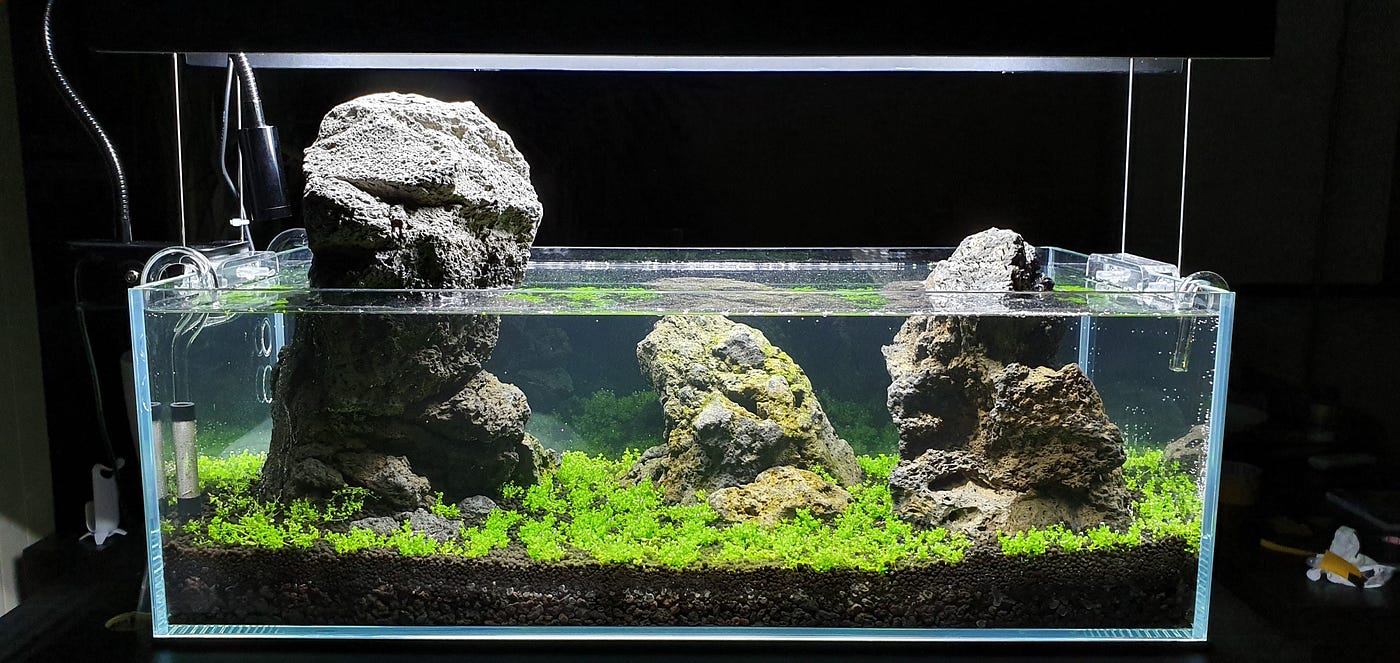
Iwagumi Layout
Iwagumi means “rock formation” in Japanese. This style uses a few carefully placed stones as the main focus.
The layout is simple but elegant. It usually has three or five stones arranged with space between them.
- Main stones called “Oyaishi”
- Smaller stones named “Fukuishi” and “Soeshi”
- Plants grow low to keep the rocks visible
Dutch Style
The Dutch Style uses many colorful plants to create a garden look. It focuses on rows and layers of plants.
This style does not use rocks or wood as main parts. It highlights plant shapes and colors instead.
- Plants arranged in groups by height
- Bright colors in front, darker plants in back
- Clear paths or open spaces between plant groups
Biotope Design
Biotope Design copies a natural fish habitat. It uses plants, rocks, and fish from the same region.
This style helps fish feel at home. It also shows how the real environment looks underwater.
- Use plants and decorations from one area
- Choose fish that live in that habitat
- Create natural hiding places and open swimming areas
Design Tips For Fish Visibility
Good aquascaping helps you see your fish clearly. Careful design makes fish stand out in the tank.
This guide shares tips to arrange plants, open swimming areas, and lighting for better fish viewing.
Plant Placement Strategies
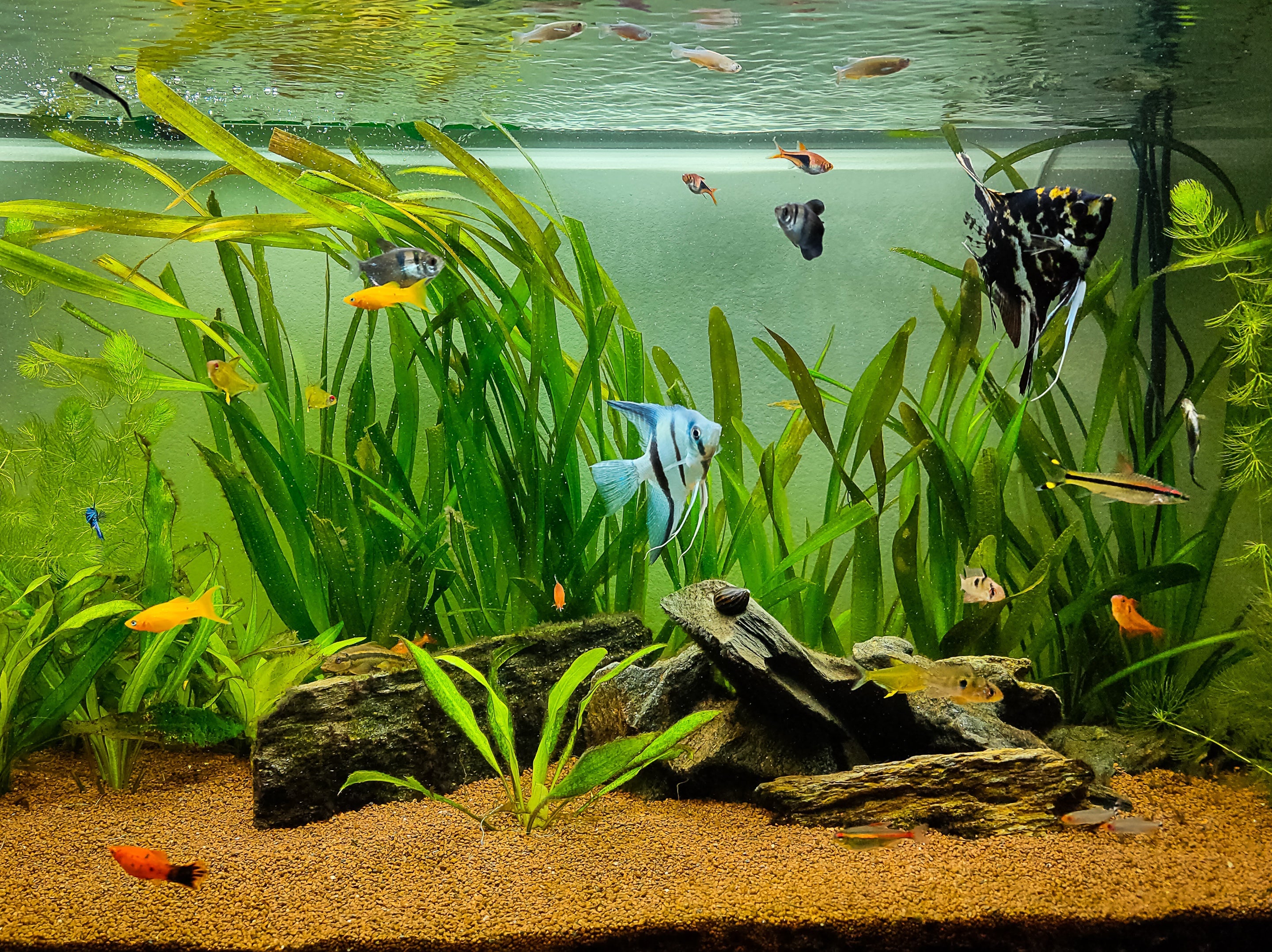
Place tall plants at the back or sides of the tank. Use short plants near the front to avoid blocking fish.
- Keep large plants away from the center.
- Use plants with fine leaves for less visual obstruction.
- Group plants in clusters to create natural hiding spots.
- Leave some gaps for clear fish paths and viewing.
Using Open Swimming Spaces
Open spaces let fish swim freely and stay visible. Avoid cluttering the tank with too many decorations.
| Benefit | Effect on Fish Visibility |
| Open Center Area | Fish swim in clear view |
| Minimal Decorations | Less hiding spots, easier to spot fish |
| Clear Substrate | Fish colors contrast well |
Lighting Techniques
Good lighting highlights fish colors and shapes. Use soft, even light to avoid shadows and glare.
Try these lighting tips:
- Use LED lights with adjustable brightness
- Place lights above the tank, not at an angle
- Avoid direct sunlight to reduce glare and algae
- Use background lighting to enhance contrast
Maintaining Aquascaped Tanks
Keeping an aquascaped tank clean and healthy helps fish live well. It also keeps the plants and decorations looking good. Regular care is important for a balanced aquarium.
Good maintenance prevents problems like algae growth and fish stress. You will need to check plants, water, and fish often to keep the tank in top shape.
Regular Pruning And Cleaning
Prune plants to stop overgrowth and keep them healthy. Remove dead leaves to avoid water pollution. Cleaning the glass helps you see the fish clearly.
Change part of the water weekly to keep it fresh. Clean the filter to remove debris but do not remove all beneficial bacteria.
- Trim plants every 1-2 weeks
- Remove algae from glass and decorations
- Change 20-30% of water weekly
- Clean filter parts monthly
Balancing Nutrients
Plants need nutrients like nitrogen, phosphorus, and potassium. Too much or too little can hurt plants and fish. Use fertilizers carefully to keep balance.
Test water regularly to check nutrient levels. Add supplements if needed but avoid overdosing. Balance helps plants grow well and stops algae from taking over.
- Test water weekly for nutrients
- Add liquid fertilizers as instructed
- Use root tabs for substrate plants
- Watch for algae as a sign of imbalance
Monitoring Fish Health
Healthy fish show bright colors and swim actively. Watch for signs of illness like spots, clamped fins, or slow movement. Early detection helps prevent disease spread.
Keep fish stress low by avoiding sudden changes. Feed them the right amount and type of food. A calm environment supports fish health and tank harmony.
- Observe fish daily for changes
- Feed small amounts twice a day
- Keep water temperature stable
- Quarantine new fish before adding
Credit: splashyfishstore.com
Showcase: Stunning Aquascape Examples
Aquascaping is the art of arranging aquatic plants, rocks, and driftwood. It creates beautiful underwater landscapes for observing fish.
Each aquascape is unique and offers a different view of aquatic life. Let’s explore some stunning examples.
Tropical Freshwater Scenes
Tropical freshwater aquascapes mimic the natural habitats of tropical fish. They often use vibrant plants and colorful fish.
These scenes can include lush greenery and varied textures. They provide a lively environment for fish.
- Amazon river themes with dense plants
- Southeast Asian styles with driftwood
- African river scenes with unique stones
Minimalist Designs
Minimalist aquascapes focus on simplicity. They use fewer plants and decorations for a clean look.
This style highlights the fish and creates a calm, open space. It often features clear lines and simple layouts.
- Zen gardens with smooth stones
- Single plant focus designs
- Open spaces with subtle elements
Themed Aquariums
Themed aquariums tell a story through their design. They use specific elements to create a unique atmosphere.
These aquariums can resemble famous places or showcase fantasy worlds. They inspire creativity and imagination.
- Shipwreck themes with sunken treasures
- Fantasy forests with mystical plants
- Cityscapes with miniature buildings

Credit: www.aqqapet.com
Frequently Asked Questions
What Is Aquascaping For Fish Observation?
Aquascaping for fish observation involves designing underwater landscapes to enhance fish visibility. It uses plants, rocks, and substrates to create natural, clear environments that highlight fish behavior and beauty. This technique improves tank aesthetics and provides a relaxing, educational viewing experience.
How Does Aquascaping Benefit Fish Health?
Aquascaping benefits fish by creating natural habitats that reduce stress. Plants improve water quality by absorbing toxins and providing oxygen. Proper layout offers hiding spots and swimming space, promoting natural behavior and overall well-being, leading to healthier and happier fish.
Which Plants Are Best For Aquascaping Fish Tanks?
Low-maintenance, slow-growing plants like Java fern, Anubias, and mosses are ideal. They tolerate various light levels and provide shelter without overwhelming the tank. These plants improve aesthetics and water quality, making fish observation clearer and more enjoyable.
How To Maintain Clarity In An Aquascaped Tank?
Regular water changes and proper filtration keep water clear. Avoid overfeeding to reduce waste buildup. Trim plants periodically and remove decaying matter. These steps ensure a clean environment, improving fish visibility and tank health for better observation.
Conclusion
Aquascaping creates a beautiful home for your fish to explore. It makes watching fish more fun and relaxing. Simple plants and decorations help fish feel safe and happy. Clear water and good lighting let you see every movement. Small changes in the tank can bring big joy.
Enjoy the peaceful view and the life inside your aquarium. Try different styles to find what suits your space best. Keep learning and have fun with your aquascape journey.