
When setting up your aquarium, one detail can make or break the entire experience: the stand’s weight capacity. You might think any sturdy table will do, but the truth is, your aquarium stand must support a lot more than just the glass tank.
Water, decorations, gravel, and fish add up fast, and if your stand isn’t up to the task, you risk damage, leaks, or even accidents. Understanding how much weight your stand can safely hold is crucial to protecting your investment and keeping your underwater world safe.
Keep reading to discover exactly what you need to know about aquarium stand weight capacity and how to choose the right one for your setup.
Credit: www.vevor.ca
Choosing The Right Stand
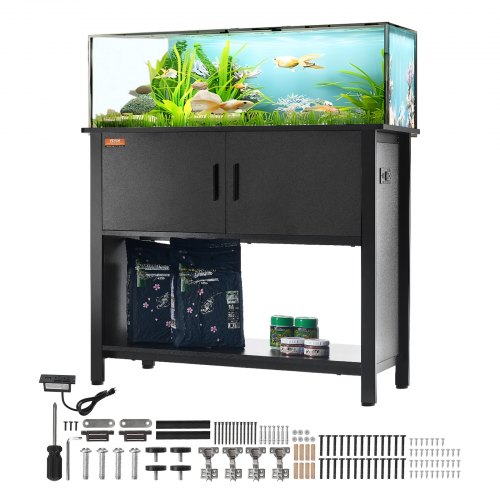
Choosing the right stand for your aquarium is important for safety and durability. The stand must support the tank’s weight and fit the size of your aquarium.
A wrong stand can cause damage to your aquarium or even lead to accidents. Understanding materials, weight ratings, and size matching helps you pick the best stand.
Materials And Construction
Aquarium stands are made from wood, metal, or plastic. Each material has its own strength and style. Wood stands are common but must be sealed to resist water.
- Wood: Strong and stylish but can warp if wet.
- Metal: Very durable and supports heavy tanks well.
- Plastic: Lightweight but not for heavy or large tanks.
Weight Ratings Explained
Weight ratings tell you how much weight a stand can safely hold. This includes the tank, water, decorations, and gravel. Always check the rating before buying.
| Stand Type | Typical Weight Capacity |
|---|---|
| Basic Wood Stand | 100 – 150 lbs (45 – 68 kg) |
| Reinforced Metal Stand | 200 – 500 lbs (90 – 227 kg) |
| Plastic Stand | Up to 75 lbs (34 kg) |
Matching Stand To Aquarium Size
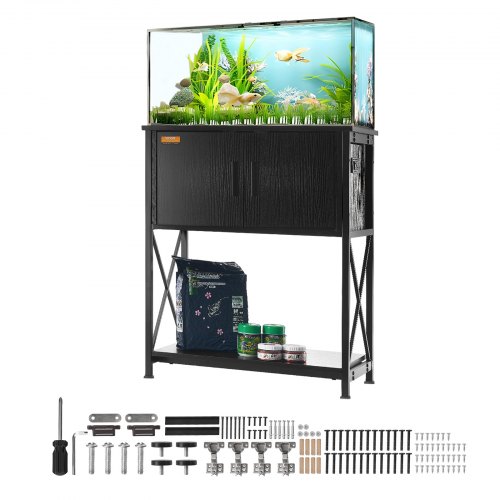
The stand size must match the aquarium’s footprint. A larger tank needs a wider and stronger stand. Measure your tank before choosing a stand.
- Measure the tank’s length and width.
- Check the stand’s top surface dimensions.
- Confirm the stand’s weight capacity exceeds the tank’s full weight.
- Consider extra space for equipment and decorations.
Credit: www.vevor.ca
Calculating Total Weight
Knowing the total weight of your aquarium setup helps keep the stand safe and stable. You must add the weight of water, tank materials, and decorations.
Each part adds to the load your aquarium stand will carry. Careful calculation prevents damage and accidents.
Water Weight Basics
Water is the heaviest part of an aquarium. One gallon of water weighs about 8.34 pounds (3.78 kg). You need to know your tank size in gallons to find its water weight.
- Measure the tank volume in gallons or liters.
- Multiply the volume by 8.34 to get pounds or by 1 to get kilograms.
- Remember to add extra weight for water conditioners or salt if used.
Tank Material And Accessories
Tank walls and accessories add weight too. Glass and acrylic tanks differ in weight. Accessories include filters, heaters, and lids.
| Material | Weight per Gallon |
| Glass | About 10 lbs (4.5 kg) |
| Acrylic | About 7 lbs (3.2 kg) |
| Accessories | Varies by type and size |
Substrate And Decorations
Substrate and decorations add weight based on material and amount. Gravel, sand, rocks, and plants all add to the total load.
- Gravel: About 3 lbs per gallon of tank volume
- Sand: About 4 lbs per gallon
- Rocks: Weight varies, estimate carefully
- Decorations: Check manufacturer weight info
Common Weight Capacity Limits
Aquarium stands must support heavy tanks safely. Knowing their weight limits helps avoid accidents. Weight includes the tank, water, decorations, and equipment.
Most stands have clear weight limits. These limits depend on the material and design. Choose a stand that fits your aquarium size and weight.
Standard Wooden Stands
Wooden stands are common for home aquariums. They usually hold between 100 and 300 pounds. Heavier tanks may need thicker wood or extra support.
Quality and wood type affect strength. Plywood and solid wood stands offer better support than particleboard. Check for braces and strong joints.
- Small stands: about 100-150 pounds
- Medium stands: about 150-250 pounds
- Large stands: up to 300 pounds or more
Metal And Steel Options
Metal stands support heavier aquariums than wood. Steel frames can hold 300 to 1000 pounds or more. They are strong and resist warping or water damage.
Metal stands need a flat floor for stability. Some models have adjustable feet to level the stand. They often have open designs for easy cleaning.
- Light steel stands: up to 300 pounds
- Heavy-duty steel stands: 500 to 1000+ pounds
- Custom metal stands can support very large tanks
Diy Stand Considerations
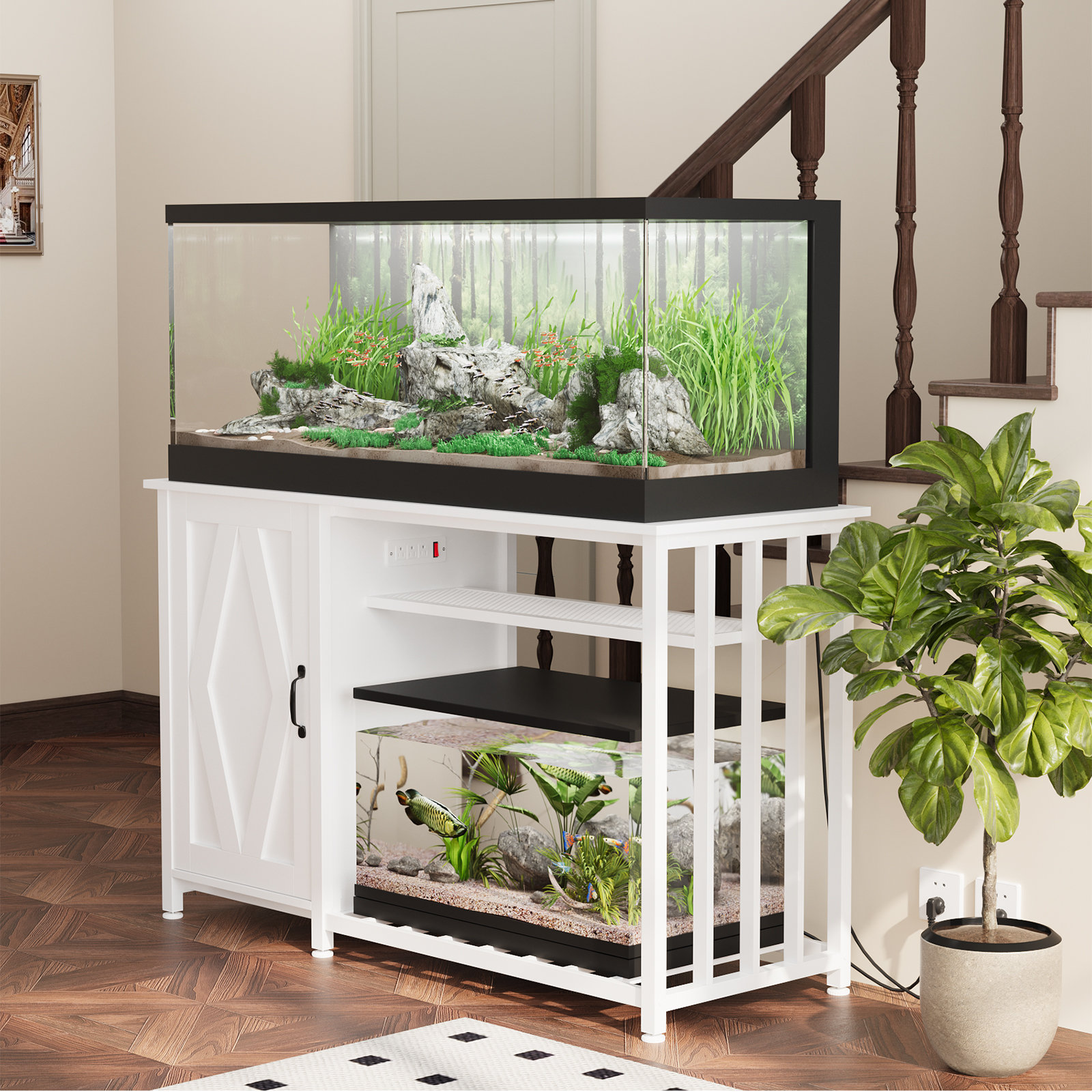
DIY stands can match your aquarium size and style. You must plan for the full tank weight. Use strong materials and good joinery for safety.
Check your design’s weight capacity before building. Use thick wood or metal and add braces. Avoid weak points to prevent failure.
- Calculate total tank weight including water
- Choose materials rated for that weight or more
- Add cross braces for extra strength
- Test stability before placing the aquarium
Credit: www.wayfair.ca
Signs Of Overloading
Knowing the signs of overloading your aquarium stand is important. It helps keep your tank and home safe.
Overloading can cause damage that may not be easy to fix. Watch for early warning signs to avoid accidents.
Structural Damage
One clear sign of overloading is structural damage to the stand. This can include cracks, warping, or bending.
- Cracks in the wood or metal
- Loose or broken joints
- Warped shelves or panels
- Unusual noises like creaking or popping
Uneven Surfaces
An overloaded stand may not sit flat. Uneven surfaces can cause the aquarium to tilt or wobble.
| Cause | Effect |
| Weight too high | Stand sags or bends |
| Uneven floor | Stand rocks or tilts |
| Damaged legs | Stand becomes unstable |
Safety Risks
Overloading your aquarium stand can cause safety risks. It may lead to a tank fall or water damage.
- Stand collapse causing injury
- Water spills damaging floors
- Electric hazards from water contact
- Broken glass from tank falling
Tips For Safe Setup
Setting up an aquarium stand correctly is important to keep your tank safe. The stand must hold the weight of the tank and water without bending or breaking.
Follow these tips to make sure your aquarium stand is strong and secure. This will protect your fish and avoid accidents.
Leveling Your Stand
A stand that is not level can cause stress on the aquarium glass. This may lead to cracks or leaks over time. Use a spirit level to check the stand’s surface.
If the stand is uneven, adjust the feet or use shims to balance it. Make sure the stand sits flat on the floor to spread the weight evenly.
- Place the stand on a hard, flat surface
- Use a bubble level to check all sides
- Add shims under low corners if needed
- Recheck the level after placing the tank
Reinforcing Weak Points
Some stands may have weak spots that can bend under heavy weight. Look for areas with thin wood or loose joints. Strengthen these parts before adding your aquarium.
Use metal brackets or extra wood pieces to reinforce corners and shelves. Tighten screws and bolts to make the stand more stable.
- Check for cracks or bends in the wood
- Add corner braces to support joints
- Use screws instead of nails if possible
- Replace damaged parts before setup
Regular Maintenance Checks
Even a strong stand can weaken over time. Regular checks help catch problems early. Look for signs of wear, water damage, or loose fittings.
Clean the stand to prevent mold and rot. Tighten any loose screws and fix small problems before they get worse.
- Inspect the stand every 3 to 6 months
- Look for warping or soft spots
- Check for rust on metal parts
- Keep the area dry and clean
Upgrading And Customizing
Enhancing your aquarium stand can boost its weight capacity. Custom options can also fit your style and needs. Explore ways to make your stand stronger and more durable.
Consider your tank size and the materials used in the stand. These factors affect how much weight the stand can support. Let’s look at some ways to upgrade and customize your stand.
Adding Support Braces
Support braces can strengthen your aquarium stand. They help distribute the tank’s weight evenly. This reduces strain on specific parts of the stand.
- Identify weak points in your stand.
- Install metal or wooden braces at these points.
- Ensure braces are securely fastened.
Choosing Heavy-duty Materials
Using heavy-duty materials can increase your stand’s weight capacity. Materials like steel and hardwood are strong and durable. They provide better support than lighter materials.
For example, consider using steelinstead of aluminum. Steel is more robust and can hold more weight.
Hardwoods like oak and maple are also excellent choices for durability.
Professional Stand Fabrication
For a custom solution, consider professional fabrication. Experts can design stands tailored to your aquarium’s needs. They use precise measurements and quality materials for the best results.
| Service | Benefits |
| Custom Design | Tailored fit for your aquarium |
| Quality Materials | Increased weight capacity |
| Expert Installation | Ensures stability and safety |
Frequently Asked Questions
What Is The Average Weight Capacity Of Aquarium Stands?
Most aquarium stands support between 100 to 500 pounds. It depends on the material and design. Check the manufacturer’s specifications before purchase to ensure safety and durability.
How To Calculate Aquarium Stand Weight Capacity?
Add the aquarium’s water weight, gravel, decorations, and equipment weight. Compare this total to the stand’s rated capacity. Always choose a stand with a higher capacity than your total weight.
Can Wooden Stands Hold Heavy Aquariums Safely?
Yes, high-quality wooden stands can support heavy aquariums. Solid wood or plywood stands with proper construction are ideal. Avoid particleboard stands for large tanks to prevent warping and failure.
Why Is Weight Capacity Important For Aquarium Stands?
Exceeding weight capacity risks stand collapse and aquarium damage. It ensures safety for your fish and home. Proper capacity prevents costly accidents and maintains tank stability.
Conclusion
Choosing the right aquarium stand weight capacity keeps your tank safe. Always check the stand’s limit before setting up your aquarium. A strong, sturdy stand supports the water, gravel, and decorations. This prevents accidents and protects your fish and home.
Remember, a good stand lasts longer and holds steady. Take time to measure and compare stand options carefully. Your aquarium will look great and stay secure with the right support. Safety and strength matter most for a happy fish tank.