
If you want your reef aquascape to truly shine, the right lighting is everything. Imagine your corals glowing with vibrant colors and your underwater garden looking alive and breathtaking every single day.
But choosing the perfect lighting isn’t as simple as picking the brightest bulb. It’s about creating the ideal balance that helps your corals grow strong while making your tank a stunning centerpiece. You’ll discover how to select and set up lighting that brings out the best in your reef aquascape—making your underwater world both healthy and beautiful.
Ready to transform your reef? Let’s dive in.
Lighting Basics For Reef Tanks
Lighting is very important for reef aquascaping. It helps corals grow and shows their colors.
Good lighting supports coral health and creates a beautiful tank view.
Types Of Aquarium Lights
There are several types of lights for reef tanks. Each type has different features and costs.
- LED lights use less power and last long.
- T5 fluorescent lights spread light evenly.
- Metal halide lights are very bright but use more energy.
- Compact fluorescent lights are small and affordable.
Light Spectrum And Coral Health
Light spectrum means the colors of light given by the bulb. Different colors help corals grow.
Blue and violet light help corals make food and show bright colors.
- Blue light supports photosynthesis in corals.
- Red and green light have less effect on coral growth.
- Full spectrum lights mimic natural sunlight.
Intensity And Coverage Needs
Corals need the right light strength to grow well. Too little or too much light can hurt them.
Light should cover the whole tank evenly. Some corals need stronger light than others.
- Shallow tanks need less intense light.
- Deep tanks need stronger light to reach the bottom.
- Adjust light height to control brightness.
- Use reflectors to improve coverage.

Credit: www.ebay.com
Choosing The Right Lighting
Lighting plays a big role in reef aquascaping. It helps corals grow and shows their true colors. Choosing the right light can be confusing for beginners and experts alike.
This guide covers different lighting types, costs, and how to customize light for your coral types. Understanding these will help you create a healthy reef tank.
Led Vs. T5 Vs. Metal Halide
There are three main types of lighting used in reef tanks: LED, T5, and Metal Halide. Each has its own advantages and disadvantages.
| Lighting Type | Energy Use | Light Quality | Heat Output | Cost |
|---|---|---|---|---|
| LED | Low | Good spectrum control | Low | Moderate to High |
| T5 | Moderate | Even light spread | Moderate | Moderate |
| Metal Halide | High | Strong intense light | High | High |
Balancing Cost And Performance
Choosing lighting means balancing how much you spend and how well the light works. Some lights cost more but save energy in the long run.
- LEDs use less energy and last longer.
- T5 bulbs cost less but need frequent replacement.
- Metal Halide bulbs give strong light but use more power.
- Consider your budget and tank size carefully.
Customizing Light For Different Corals
Different corals need different light intensities and colors. Some corals need strong light while others prefer low light.
| Coral Type | Light Intensity | Preferred Spectrum |
|---|---|---|
| Soft Corals | Low to Medium | Blue and White |
| LPS Corals | Medium | Full Spectrum |
| SPS Corals | High | Strong Blue and UV |
Adjust your lighting setup to match the coral’s needs. Use timers and dimmers for better control.
Optimizing Light For Coral Growth
Lighting plays a key role in the health of reef aquascapes. Corals rely on light to grow strong and colorful.
Understanding how light affects corals helps you create a better environment for them.
Photosynthesis And Zooxanthellae
Corals have tiny algae called zooxanthellae living inside them. These algae use sunlight to make food for the coral through photosynthesis.
Good lighting helps zooxanthellae produce energy, which supports coral growth and color.
Photoperiod And Coral Activity
Photoperiod means the length of light exposure each day. Corals need a balanced light and dark cycle to stay healthy.
- Most corals thrive with 8 to 12 hours of light daily.
- Too much light can cause stress and bleaching.
- Too little light slows growth and weakens corals.
- Dark periods let corals rest and recover.
Adjusting Light Based On Coral Species
Different corals need different light intensities and colors. Soft corals need less light than hard corals.
| Coral Type | Light Intensity | Preferred Spectrum |
| Soft Corals | Low to Medium | Blue and White |
| Small Polyp Stony (SPS) | High | Blue and Violet |
| Large Polyp Stony (LPS) | Medium | Blue and White |
| Mushroom Corals | Low | Low Blue |
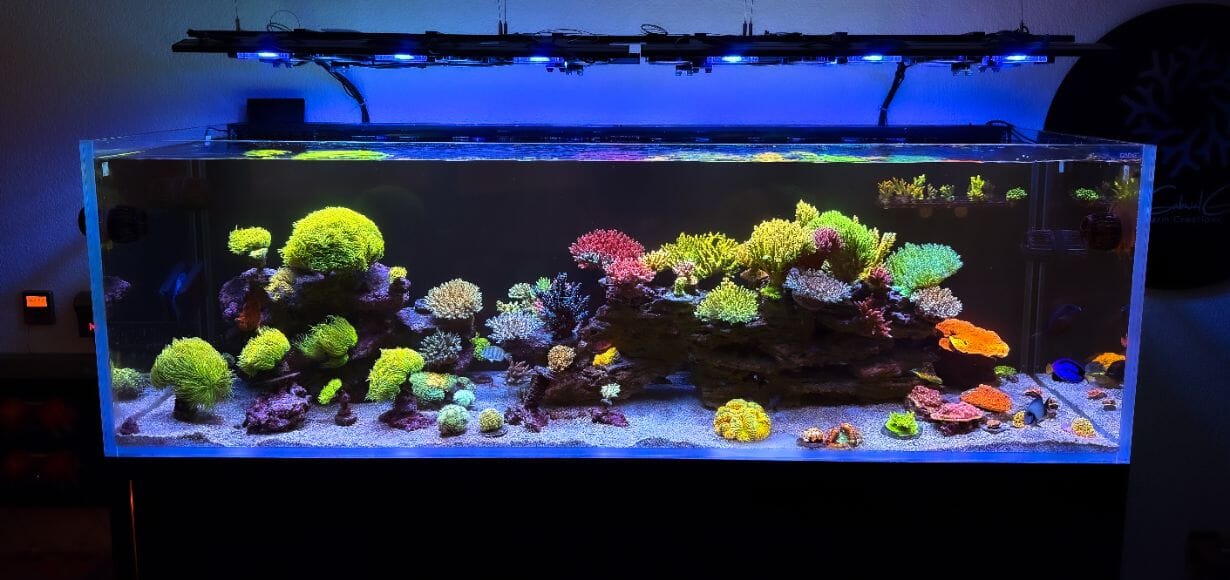
Credit: dalua.com
Setting Up Your Reef Lighting
Good lighting is key for a healthy reef aquarium. It helps corals grow and keeps your tank bright.
Setting up your reef lighting right takes some care. You need to place fixtures well and control the timing.
Fixture Placement And Height
Place light fixtures evenly over the tank to avoid dark spots. Keep the height at about 12 to 18 inches above the water.
Adjust height if corals show signs of too much or too little light. Higher placement gives softer light; lower placement is stronger.
Timers And Automation
Use timers to control when the lights turn on and off. This mimics natural day and night cycles for your reef.
- Set lights to come on gradually in the morning.
- Keep lights on for about 8 to 12 hours daily.
- Turn lights off slowly at night.
Avoiding Common Lighting Mistakes
| Mistake | Effect | How to Avoid |
|---|---|---|
| Too much light | Coral bleaching | Raise fixture or reduce light intensity |
| Too little light | Slow coral growth | Lower fixture or increase light intensity |
| Uneven lighting | Dark spots in tank | Adjust fixture placement evenly |
| Ignoring timers | Stress to corals | Use timers for consistent light cycles |
Maintaining And Upgrading Lighting
Proper lighting is key for a healthy reef aquascape. Good light helps corals grow and show their colors.
Keeping your lighting system in top shape means regular care and updates. This ensures your reef stays vibrant.
Replacing Bulbs And Leds
Bulbs and LEDs lose brightness over time. Replacing them on schedule keeps the light strong for corals.
Check the manufacturer’s guide for how often to replace bulbs. LEDs usually last longer but still need change.
- Replace bulbs every 6 to 12 months
- Change LEDs after 2 to 3 years
- Use the same type of bulb or LED for consistent light
- Handle bulbs carefully to avoid damage
Monitoring Light Intensity Over Time
Light intensity can drop slowly and affect coral health. Use a light meter to check the brightness regularly.
Keep notes on light levels to see trends. This helps you know when it is time to adjust or replace lighting parts.
- Measure light weekly or monthly
- Record the readings for comparison
- Watch for drops in intensity below coral needs
- Adjust light height or replace bulbs if needed
Incorporating New Technologies
New lighting tech can improve reef growth and energy use. Consider upgrading to LED systems with better control.
Smart lighting lets you set timers and adjust color. This mimics natural sunlight and helps corals thrive.
- Choose LED lights with adjustable spectrum
- Use controllers to set daily light cycles
- Look for energy-efficient models to save power
- Check reviews to find reliable new products
Troubleshooting Lighting Issues
Lighting plays a crucial role in reef aquascaping. It affects the health of corals and other marine life. Troubleshooting lighting issues helps maintain a thriving reef tank.
Understanding common lighting problems can save time and enhance your aquarium’s beauty. Here, we explore signs of insufficient light, algae overgrowth, and adjusting for tank depth and size.
Signs Of Insufficient Light
Corals and plants need sufficient light to thrive. They show signs when light levels are too low. Watch for these indicators to ensure proper lighting.
- Corals lose their vibrant colors.
- Growth of corals slows down.
- Plants may wilt or appear droopy.
Dealing With Algae Overgrowth
Excessive light can cause algae overgrowth. Algae compete with corals for nutrients. Control light levels to manage algae in your tank.
| Algae Type | Solution |
| Green Hair Algae | Reduce light exposure |
| Brown Diatom Algae | Increase water flow |
| Blue-Green Algae | Check nutrient levels |
Adjusting For Tank Depth And Size
Different tanks need different lighting setups. Deep tanks require more powerful lights. Adjust the lighting based on the size and depth of your tank.
Consider using LED lights as they are energy-efficient and customizable. LED options allow you to modify the intensity and spectrum to suit tank needs.
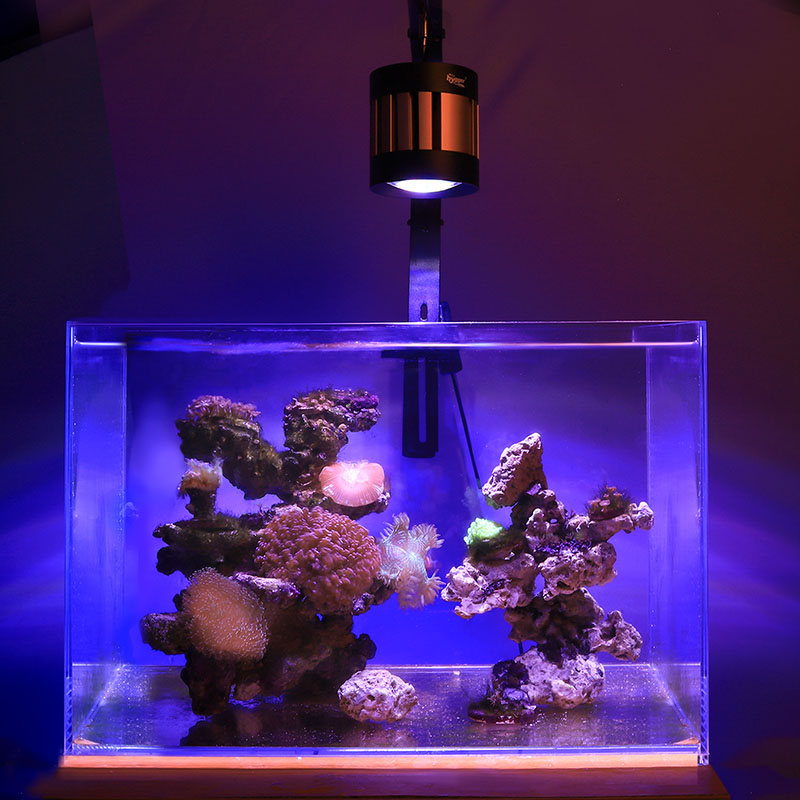
Credit: www.hygger-online.com
Frequently Asked Questions
What Type Of Lighting Is Best For Reef Aquascaping?
LED lighting is best for reef aquascaping. It offers strong, adjustable light spectrum that supports coral growth. LEDs are energy-efficient and produce less heat, ensuring a stable aquarium environment.
How Many Hours Should Reef Lights Be On Daily?
Reef lights should be on for 8 to 12 hours daily. This simulates natural daylight and supports coral photosynthesis. Using timers helps maintain consistent lighting cycles for healthier reef ecosystems.
Can Lighting Intensity Affect Coral Health In Reefs?
Yes, lighting intensity directly affects coral health. Too much light can cause bleaching, while too little slows growth. Proper intensity ensures vibrant colors and strong coral development in reef aquascaping.
What Colors Of Light Help Coral Growth Most?
Blue and actinic lights promote coral growth the most. These wavelengths enhance photosynthesis and bring out vivid coral colors. Combining blue with white light creates a balanced spectrum for reef tanks.
Conclusion
Choosing the right light helps your reef tank thrive. Good lighting supports coral growth and color. It also keeps algae under control. Balance brightness and spectrum for best results. Pay attention to your corals’ needs daily. Experiment with light settings to find what works.
Healthy lighting makes your aquascape beautiful and lively. Keep learning and adjusting for a stunning reef display. Lighting truly shapes the underwater world you create.