
Are you struggling to keep your cooling tanks effective and efficient? The secret might be simpler than you think: water movement.
When water stays still, it can’t cool properly. But with the right flow, your tank stays cooler longer and works better for you. Imagine saving energy, reducing maintenance, and protecting your equipment—all by improving how water moves inside your tank.
Keep reading, and you’ll discover easy tips and smart solutions to make your cooling tanks perform at their best.

Credit: www.amazon.ca
Benefits Of Water Movement
Cooling tanks use water movement to improve their function. Moving water helps keep the tank temperature steady.
Water movement brings many benefits. It makes the cooling process better and keeps the tank clean.
Enhanced Cooling Efficiency
Water movement spreads heat evenly in the tank. This helps the cooler parts mix with warmer parts.
When water moves, the tank cools faster. The heat leaves the water more quickly, saving energy.
Reduced Thermal Stratification
Thermal stratification means layers of different temperatures in the tank. This causes uneven cooling.
Water movement breaks these layers. It blends the water so the temperature stays the same throughout.
- Prevents hot water from staying on top
- Stops cold water from settling at the bottom
- Keeps the tank temperature balanced
Prevention Of Algae Growth
Algae grow well in still water with sunlight. Moving water makes it harder for algae to form.
Water movement reduces algae by cutting down light and nutrients in one spot. This keeps the tank cleaner.
Common Causes Of Stagnation
Stagnation in cooling tanks happens when water does not move enough. This causes problems like temperature rise and poor cooling.
Understanding what causes stagnation helps in fixing it and keeping the system efficient.
Poor Tank Design
Tanks with bad design often have areas where water flow is weak or blocked. This leads to water staying still in some places.
- Sharp corners trap water
- Uneven bottom surfaces cause dead zones
- Improper tank shape limits water movement
- Wrong inlet and outlet placement reduce flow
Insufficient Circulation
When water does not circulate well, it stays in one place too long. This causes temperature differences and reduces cooling.
| Cause | Effect |
| Low pump speed | Slow water flow |
| Blocked pipes | Restricted circulation |
| Wrong pipe size | Uneven distribution |
| Closed valves | Stopped flow in parts |
Lack Of Maintenance
Failing to clean and check tanks causes build-up and damage. This leads to poor water movement and stagnation.
- Dirty filters block water flow
- Corrosion narrows pipes and openings
- Debris settles and creates dead zones
- Broken parts reduce pump efficiency
Techniques To Promote Water Movement
Water movement in cooling tanks helps keep the water temperature even. It also stops water from becoming stagnant. Proper water flow supports better cooling and prevents buildup of debris.
There are several ways to create water movement. This guide covers mechanical agitators, pumping systems, and natural convection methods.
Mechanical Agitators
Mechanical agitators use motors and blades to stir water in cooling tanks. They create strong currents that mix water layers. This helps to reduce hot spots and improve heat transfer.
- Agitators come in different sizes to fit tank dimensions.
- They can run continuously or at set intervals.
- Adjusting speed controls the flow intensity.
- Regular maintenance ensures proper operation.
Pumping Systems
Pumping systems move water by pushing it through pipes and nozzles. Pumps can circulate water from one part of the tank to another. This method controls the direction and speed of water flow.
| Type of Pump | Flow Rate (GPM) | Energy Use (kW) |
| Centrifugal | 50-200 | 1.5-5 |
| Submersible | 30-150 | 1-4 |
| Reciprocating | 20-100 | 2-6 |
Natural Convection Methods
Natural convection uses temperature differences to move water without machines. Warm water rises while cooler water sinks. This creates a flow that circulates water inside the tank.
Key factors for natural convection:
- Tank shape and size affect flow patterns.
- Placement of inlet and outlet openings is important.
- Temperature gradients must be maintained.
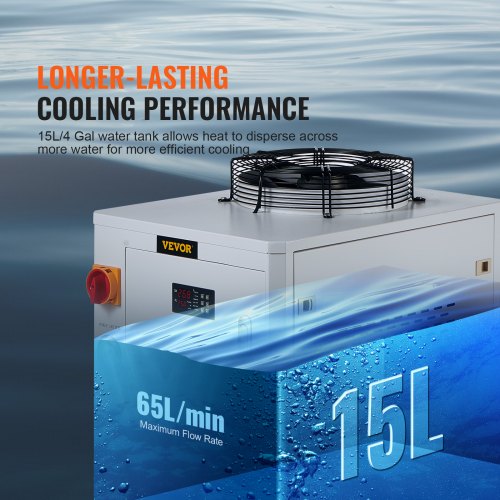
Credit: www.vevor.com
Selecting The Right Equipment
Choosing the correct equipment for cooling tanks with water movement is important. Proper selection ensures good mixing and temperature control.
Understanding agitator types, pump needs, and energy use helps pick the best tools for the job.
Agitator Types And Sizes
Agitators stir water to keep it moving and cool evenly. Different types fit different tank sizes and purposes.
- Propeller agitators work well in large tanks with low viscosity liquids.
- Turbine agitators suit medium tanks and handle higher resistance.
- Paddle agitators are best for gentle mixing in small tanks.
- Choosing the right size keeps water moving without wasting power.
Pump Specifications
Pumps move water through cooling tanks. Picking the right pump means checking flow rate and pressure.
| Specification | Importance |
| Flow Rate (GPM) | Matches tank size for proper water movement |
| Pressure (PSI) | Ensures water reaches all parts of the tank |
| Material | Resists corrosion from water and chemicals |
| Power Rating | Fits energy availability and efficiency goals |
Energy Efficiency Considerations
Using energy smart equipment lowers costs and helps the environment. Look for features that save power.
- Choose motors with high efficiency ratings.
- Use variable speed drives to match pump speed to cooling needs.
- Regular maintenance keeps equipment running smoothly.
- Insulate tanks to reduce heat loss and save energy.
Installation Best Practices
Cooling tanks with water movement help keep liquids at the right temperature. Installing them well makes sure they work properly.
Good installation reduces problems and improves tank efficiency. Follow key steps for the best results.
Positioning Of Agitators And Pumps
Place agitators and pumps to mix water evenly. Avoid areas where flow is weak or blocked.
Keep pumps near the tank bottom to move cool water upwards. Set agitators away from walls for better mixing.
- Install agitators at different depths if possible
- Keep pumps clear of debris to avoid damage
- Use adjustable mounts to fine-tune positions
Ensuring Uniform Flow
Uniform water flow cools liquids faster. Design the system to avoid fast or slow spots.
Use flow guides or baffles inside the tank. These help water move evenly throughout the space.
- Check flow speed at several tank points
- Adjust pump power to balance flow
- Use multiple agitators for large tanks
Avoiding Dead Zones
Dead zones are spots where water hardly moves. These areas cause uneven cooling and buildup of dirt.
Place equipment to cover all tank areas. Regularly inspect and clean to prevent dead zones.
- Use angled agitators to reach corners
- Install extra pumps in large tanks
- Perform routine checks for low flow areas

Credit: www.pmmag.com
Maintenance Strategies
Cooling tanks with water movement need regular care. Proper maintenance keeps them working efficiently. Follow these strategies for the best results.
Regular Inspection Schedules
Inspections help spot issues early. Set a regular schedule to check your tanks. This reduces the risk of breakdowns.
- Weekly checks for leaks and damages
- Monthly review of water movement systems
- Annual assessment of overall tank condition
Cleaning Procedures
Clean tanks work better and last longer. Follow a simple routine to keep them free of dirt and debris. Use safe cleaning agents.
Make sure to rinse thoroughly after cleaning. Regular cleaning prevents buildup and ensures smooth operation.
Monitoring Water Quality
Water quality affects tank performance. Test water regularly to keep it at the right levels. Poor quality can damage systems.
- Check pH levels weekly
- Test for contaminants monthly
- Adjust water treatment as needed
Case Studies Of Improved Cooling
Cooling tanks with water movement offer better temperature control. They help in various fields like industry, agriculture, and the environment.
We explore the positive effects seen in different applications. Real-life examples show the benefits and efficiency improvements.
Industrial Applications
In factories, cooling tanks help machines work better. Water movement keeps temperatures even.
| Industry | Benefit |
| Textile | Better dyeing process |
| Food Processing | Longer shelf life |
| Metal Works | Less metal fatigue |
Agricultural Uses
Farms use cooling tanks for milk and produce. Water movement keeps products fresh and safe.
- Milk stays at the right temperature.
- Fruits and vegetables last longer.
- Reduces spoilage and waste.
Environmental Impact
Cooling tanks help the environment by using less energy. Water movement improves heat transfer.
Frequently Asked Questions
What Are Cooling Tanks With Water Movement?
Cooling tanks with water movement use circulating water to improve heat transfer. This movement prevents hot spots and enhances cooling efficiency. They are essential in industries requiring temperature control. Water circulation ensures uniform temperature and faster cooling times, making these tanks effective and reliable.
How Does Water Movement Improve Cooling Efficiency?
Water movement increases the contact between water and tank surfaces. This enhances heat dissipation by preventing thermal layering. Continuous circulation distributes heat evenly. It reduces cooling time and energy consumption. This process ensures stable and consistent cooling performance in industrial applications.
What Industries Use Cooling Tanks With Water Movement?
Cooling tanks with water movement are common in chemical, food, and pharmaceutical industries. They help maintain precise temperature control during production. These tanks are also used in metalworking and power plants. Their ability to manage heat efficiently is crucial for product quality and process safety.
Are Cooling Tanks With Water Movement Energy Efficient?
Yes, these tanks are energy efficient due to improved heat transfer. Water circulation reduces the need for excessive cooling energy. Faster cooling lowers overall energy consumption. This makes them cost-effective and environmentally friendly. Efficient designs further optimize energy use in various applications.
Conclusion
Cooling tanks with water movement keep temperatures steady and safe. Water movement helps stop hot spots from forming inside tanks. It also improves the cooling speed and keeps the water clean. Using these tanks can save energy and reduce costs.
They are useful in many industries like farming and manufacturing. Choosing the right system depends on the tank size and purpose. Remember, steady water flow makes cooling more effective and reliable. This simple step helps protect your products and equipment well.