
Have you ever wondered how temperature changes inside large tanks can affect your processes or products? Understanding temperature gradient setups in large tanks is crucial for anyone managing storage, mixing, or chemical reactions on a big scale.
If you want to ensure efficiency, safety, and consistent results, getting a grip on how temperature varies within your tank is a game-changer. You’ll discover simple yet powerful ways to monitor and control these temperature differences, helping you avoid costly mistakes and improve your operations.
Keep reading to unlock the secrets that can transform how you handle temperature in large tanks.

Credit: www.pmmag.com
Basics Of Temperature Gradients
Temperature gradients show how temperature changes in different parts of a tank. They help us understand heat flow inside large tanks.
These gradients occur because different areas inside the tank can have different temperatures. This affects the tank’s contents and their behavior.
Temperature Gradient Concepts
A temperature gradient is the change in temperature over a distance. It tells us how fast temperature shifts from one point to another.
In large tanks, gradients form due to heat sources, cooling, or natural convection. Understanding these helps control tank conditions.
- Temperature difference between tank top and bottom
- Heat transfer caused by fluid movement
- Effect of insulation or external weather
Importance In Large Tanks
Temperature gradients affect the quality and safety of materials stored in large tanks. Uneven temperatures can cause problems.
Managing these gradients helps avoid damage, improve mixing, and save energy. It ensures the tank works well over time.
- Prevents damage from thermal stress
- Ensures proper mixing of tank contents
- Reduces energy costs by controlling heat loss
- Improves process control and safety
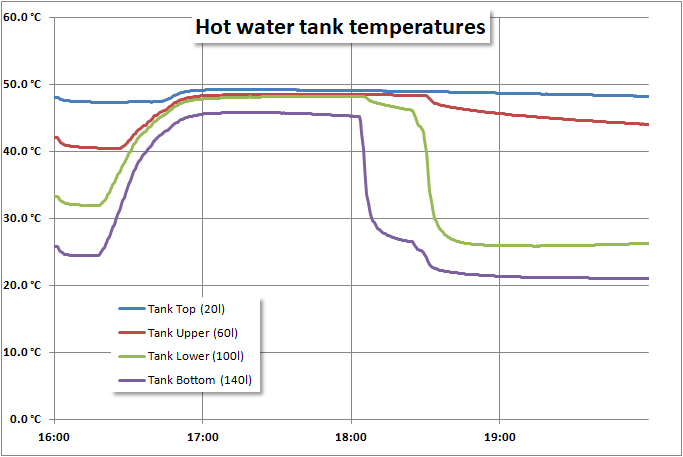
Credit: forum.ovoenergy.com
Types Of Temperature Gradient Setups
Temperature gradients in large tanks control fluid flow and heat transfer. Different setups create various temperature layers inside the tank.
This article explains three common types of temperature gradient setups. Each type uses a distinct method to manage heat and fluid movement.
Natural Convection Systems
Natural convection systems rely on temperature differences to move fluid without pumps. Hot fluid rises while cold fluid sinks, creating a flow inside the tank.
- Uses buoyancy forces for fluid movement
- No external energy needed for circulation
- Works well for slow and steady temperature changes
- Simple design with fewer mechanical parts
Forced Circulation Systems
Forced circulation systems use pumps or fans to move fluid. This setup controls temperature layers by mixing or directing hot and cold fluids actively.
| Feature | Description |
| Fluid Movement | Driven by mechanical devices |
| Temperature Control | Precise and fast adjustments |
| Energy Use | Requires external power source |
| Maintenance | Higher due to pumps and motors |
Stratified Layering Techniques
Stratified layering creates stable temperature layers with little mixing. Hot fluid stays at the top and cold fluid at the bottom, separated by distinct layers.
Key benefits of stratified layering:
- Reduces energy loss by limiting mixing
- Improves tank efficiency for heating or cooling
- Maintains clear temperature zones for different uses
- Needs careful design to avoid layer disruption
Design Considerations
Designing temperature gradient setups in large tanks requires careful planning. The setup must ensure accurate temperature control and measurement.
Key factors include the tank’s material, where sensors are placed, and how fluid moves inside the tank. Each part affects temperature readings and system efficiency.
Tank Material And Insulation
The tank’s material affects heat transfer and insulation needs. Metals conduct heat well but may cause temperature loss. Insulation reduces unwanted heat flow.
- Choose materials with low thermal conductivity for better insulation.
- Use thick insulation layers to maintain stable temperature gradients.
- Inspect insulation regularly to avoid heat leaks.
- Consider environmental conditions like humidity and temperature changes.
Sensor Placement Strategies
Sensor placement is critical to capture accurate temperature data. Sensors must be placed in spots that represent the overall tank conditions.
| Sensor Position | Purpose | Notes |
| Top of Tank | Measures surface temperature | May show warmer readings |
| Middle Depth | Tracks average temperature | Good for gradient analysis |
| Bottom of Tank | Monitors coldest area | Important for stratification |
| Near Inlet/Outlet | Checks flow effect | Detects temperature changes due to mixing |
Flow Dynamics And Mixing
Flow inside the tank affects temperature distribution. Proper mixing can reduce unwanted gradients, but some systems need stable layers.
- Use mixers to promote uniform temperature if gradients are unwanted.
- Design flow paths to avoid dead zones where temperature may vary.
- Control flow speed to balance mixing and gradient stability.
- Monitor flow changes as they impact sensor readings.
Energy Efficiency Techniques
Maintaining a temperature gradient in large tanks uses a lot of energy. Saving energy lowers costs and helps the environment.
Using smart techniques can keep tanks efficient. These methods reduce energy waste and improve tank performance.
Heat Recovery Methods
Heat recovery saves energy by reusing heat inside the tank system. It captures heat from warm areas and moves it to cooler zones.
Using heat exchangers or pumps can transfer this heat. This process lowers the need for extra heating and cuts energy use.
- Install heat exchangers to recycle heat
- Use pumps to move warm water efficiently
- Recover heat from exhaust or outflow
- Monitor heat transfer regularly
Minimizing Thermal Losses
Thermal losses happen when heat escapes from the tank. Good insulation stops heat from leaking out.
Sealing gaps and using reflective covers can also save heat. This keeps the tank warmer with less energy.
- Use high-quality insulation materials
- Seal all joints and openings
- Apply reflective coatings on tank surfaces
- Regularly check for wear and damage
Optimizing Temperature Zones
Creating clear temperature zones inside the tank improves energy use. Each zone keeps a steady temperature for its purpose.
Controlling mixing between zones reduces energy waste. Sensors and controls help keep temperatures stable.
- Design tanks with distinct temperature layers
- Use sensors to monitor each zone
- Control pumps to limit mixing
- Adjust heating based on zone needs
Monitoring And Control
Temperature gradient setups in large tanks need careful monitoring. Control helps keep the right conditions for the tank’s purpose.
Good monitoring detects changes early. Control systems adjust temperatures to avoid problems.
Automated Temperature Regulation
Automated systems keep temperatures steady across the tank. Sensors measure heat at many points.
The system changes heating or cooling to keep the right gradient. This reduces human work and errors.
- Use multiple sensors for accurate readings
- Control valves adjust flow of hot or cold fluids
- Automated alerts notify if temperatures go off range
Data Logging And Analysis
Data logging saves temperature readings over time. This helps find trends and spot problems early.
Analysis tools compare current data to past data. This supports better decisions for tank operation.
- Record temperature at regular intervals
- Use software to create charts and reports
- Identify unusual changes or patterns quickly
Maintenance Protocols
Regular maintenance keeps sensors and controls working well. Clean and check equipment often.
Replace parts showing wear to avoid failure. Keep records of maintenance activities.
- Inspect sensors for dirt or damage monthly
- Test control systems every quarter
- Document all maintenance and repairs
Common Challenges And Solutions
Managing temperature in large tanks is important. It affects the quality of stored materials. There are challenges, but solutions exist to address them.
Maintaining a consistent temperature is crucial. Large tanks face issues like temperature fluctuations and stratification. Let’s explore these challenges and their solutions.
Dealing With Temperature Fluctuations
Temperature fluctuations can harm stored products. They occur due to weather changes or equipment issues.
To prevent this, use temperature sensors and alarms. Regular maintenance of heating and cooling systems is also vital.
- Install high-quality insulation
- Use automated temperature control systems
- Schedule routine equipment checks
Preventing Stratification Issues
Stratification happens when different layers form in the tank. This can lead to uneven temperatures.
Mixing systems help prevent stratification. They ensure uniform temperature distribution throughout the tank.
- Use mechanical mixers to stir contents
- Consider air sparging for gentle mixing
- Monitor temperature at different levels
Handling Large Volume Variations
Large tanks often deal with changes in volume. This affects temperature control efficiency.
Flexible systems accommodate volume changes. Adjusting temperature settings based on volume helps maintain consistency.
- Implement adaptive control systems
- Use variable speed pumps for flexibility
- Install expandable insulation materials
Case Studies And Applications
Temperature gradients are crucial in managing large tanks. They help maintain stability and efficiency. Let’s explore how different industries apply them.
We will look at case studies from industrial storage, aquaculture, and chemical processing. Each sector has unique needs and solutions.
Industrial Storage Tanks
In industrial storage tanks, temperature control is vital. It ensures the quality and safety of stored materials. Companies use various techniques to manage heat distribution.
- Insulation layers reduce heat exchange
- Temperature sensors monitor changes
- Heating coils maintain even temperatures
Aquaculture Systems
Aquaculture systems rely on temperature gradients for healthy fish environments. Proper control can prevent disease and promote growth.
| Species | Optimal Temperature (°C) |
| Tilapia | 24-30 |
| Salmon | 8-14 |
| Shrimp | 25-28 |
Chemical Processing
In chemical processing, temperature gradients affect reaction rates. They are essential for efficient and safe operations.
Custom setups include:
- Heat exchangers for temperature regulation
- Automated systems for precise control
- Safety protocols to manage risks

Credit: www.sciencedirect.com
Frequently Asked Questions
What Is A Temperature Gradient In Large Tanks?
A temperature gradient in large tanks refers to the variation of temperature from one point to another. It impacts fluid behavior, mixing, and overall tank efficiency. Managing this gradient is crucial for processes like chemical reactions and storage stability.
How Do Temperature Gradients Affect Tank Performance?
Temperature gradients influence fluid density and flow patterns inside tanks. Uneven temperatures can cause stratification, reducing mixing efficiency. Proper gradient management ensures uniform temperature, improving process consistency and energy efficiency.
What Methods Control Temperature Gradients In Large Tanks?
Methods include insulation, controlled heating/cooling systems, and strategic placement of temperature sensors. These techniques help maintain desired temperature profiles, preventing hot or cold spots, and enhancing overall tank performance.
Why Monitor Temperature Gradients In Storage Tanks?
Monitoring helps detect anomalies, prevent product degradation, and optimize energy use. It ensures safe storage conditions and maintains product quality by avoiding temperature-related issues like spoilage or chemical instability.
Conclusion
Temperature gradient setups help control water conditions in large tanks. They allow better management of heat and improve tank efficiency. Proper setup reduces stress on aquatic life and supports their health. Careful design and monitoring keep the temperature balanced and stable.
This approach saves energy and reduces costs over time. Understanding these basics makes tank management easier and more effective. Small changes can lead to big improvements in tank performance. Keep learning and adjusting for the best results.