
Setting up a fish tank for a reef aquascape can feel overwhelming, but it doesn’t have to be. Imagine creating your own vibrant underwater world, right in your home, full of colorful corals and lively fish.
You might be wondering where to start or how to keep everything balanced and healthy. This guide will walk you through each step, making the process simple and enjoyable. By the end, you’ll have the confidence and know-how to build a stunning reef tank that captivates both you and your guests.
Ready to transform your space into an aquatic paradise? Let’s dive in!
Choosing The Right Tank
Setting up a reef aquascape needs the right fish tank. The tank holds water, corals, and fish. Choosing the correct tank helps your reef thrive.
Consider size, shape, material, and location. These factors affect maintenance and the health of your reef.
Size And Shape Considerations
Pick a tank size that fits your space and budget. Bigger tanks keep water stable, which helps corals and fish.
Choose a shape that gives enough surface area for oxygen exchange. Rectangular tanks are common and easy to decorate.
- Large tanks reduce water changes frequency
- Long tanks provide more swimming space
- Taller tanks may limit light reaching the bottom
Material Options
Most reef tanks are made of glass or acrylic. Glass is clear and scratch-resistant. Acrylic is lighter and easier to shape.
Both materials hold water well. Pick the one that fits your budget and tank size.
- Glass tanks are heavy but durable
- Acrylic tanks weigh less and resist impact
- Acrylic can yellow over time from sunlight
Location And Stand Setup
Place your tank where light and temperature stay steady. Avoid direct sunlight to stop algae growth.
Use a strong stand that holds the tank’s weight. Check the floor can support the full tank.
- Pick a level surface to avoid tank stress
- Keep tank away from heaters or air conditioners
- Ensure easy access for cleaning and feeding
Essential Equipment
Setting up a reef aquascape needs the right tools. This helps keep your fish and corals healthy.
Good equipment supports water quality, light, and temperature. Each part plays a key role in your tank.
Filtration Systems
Filtration removes waste and toxins from the water. It keeps the tank clean and safe for marine life.
- Mechanical filters catch debris and particles.
- Chemical filters remove pollutants and odors.
- Biological filters help good bacteria grow.
Lighting Needs
Corals need specific light to grow and stay colorful. Lighting also shows off the tank’s beauty.
| Light Type | Purpose | Duration |
| LED | Energy efficient and bright | 8-10 hours daily |
| T5 Fluorescent | Good color spectrum | 8-12 hours daily |
| Metal Halide | Strong light for deep tanks | 6-8 hours daily |
Heating And Cooling
Stable water temperature is important for reef health. Use heaters or chillers if needed.
- Heaters keep water warm in cold rooms.
- Chillers lower temperature in hot climates.
- Thermometers monitor the water temperature.
Water Flow And Circulation
Water movement helps deliver oxygen and nutrients to corals. It also removes waste.
Good flow types include:
- Powerheads for strong, direct water streams
- Wave makers for natural, changing currents
- Return pumps to move water from the filter back to the tank
Selecting Substrate And Live Rock
Setting up a reef tank involves choosing the right substrate and live rock. These elements are crucial for creating a healthy environment for your aquatic life.
Understanding the options available will help you make the best choices for your fish tank setup. Let’s explore the types of substrate and how to place live rock effectively.
Types Of Substrate
Substrate serves as the foundation of your reef tank. It affects water chemistry and provides habitat for beneficial bacteria.
- Sand: Fine grains, good for burrowing species.
- Crushed Coral: Coarse texture, raises pH levels.
- Aragonite: Helps stabilize calcium and alkalinity.
Placement Of Live Rock
Live rock is essential for biological filtration and adds beauty to your tank. Proper placement ensures stability and water flow.
| Placement Tip | Benefit |
| Base Layer | Provides strong foundation |
| Open Spaces | Improves water circulation |
| Gradual Slope | Creates natural look |
Creating Natural Structures
Natural structures enhance the aesthetic appeal and provide hiding spots for fish. Mimic natural reefs by arranging rocks and substrate thoughtfully.
Consider using a combination of different rock shapes and sizes. This creates a more dynamic and realistic reef structure.
Water Parameters And Maintenance
Setting up a fish tank for a reef aquascape needs care. Water quality is very important for healthy coral and fish.
Maintaining the right water conditions keeps the tank stable and safe. Regular checks and cleaning help prevent problems.
Salinity And Ph Levels
Salinity should be kept near natural seawater levels, about 1.023 to 1.025 specific gravity. pH levels must stay stable between 8.1 and 8.4 for coral health.
- Use a refractometer to measure salinity accurately.
- Test pH daily with reliable test kits.
- Adjust salinity by adding fresh or saltwater carefully.
- Keep pH stable by avoiding sudden changes in water chemistry.
Temperature Control
The ideal temperature for a reef tank is 75°F to 82°F (24°C to 28°C). Use a heater and chiller if needed to keep it steady.
Fluctuations can stress fish and coral. Use a reliable thermometer to monitor temperature daily.
Regular Testing And Adjustments
Test water parameters often to keep the reef tank safe. Important tests include ammonia, nitrite, nitrate, calcium, and alkalinity.
| Parameter | Ideal Range |
| Ammonia | 0 ppm |
| Nitrite | 0 ppm |
| Nitrate | Less than 10 ppm |
| Calcium | 400-450 ppm |
| Alkalinity | 8-12 dKH |
Make small adjustments to avoid sudden changes. Replace chemicals or add supplements as needed.
Water Changes And Cleaning
Change 10-20% of the water weekly or biweekly to remove toxins and refresh minerals. Use clean saltwater made with reef salt mix.
- Remove debris and algae from glass and decorations.
- Clean filters and pumps regularly to keep flow strong.
- Siphon the substrate to remove waste and uneaten food.
- Check water flow and circulation during cleaning.
Choosing Reef-friendly Livestock
Setting up a reef aquascape requires careful choices for the animals you add. Picking the right livestock keeps your tank healthy and balanced.
Reef-friendly animals live peacefully with corals and other species. They help maintain the tank’s beauty and stability.
Coral Varieties
Corals are the main attraction in a reef tank. Choose types that are easy to care for and fit your tank size.
Soft corals are great for beginners. They grow fast and need less light. Hard corals require more care but add bright colors.
- Soft Corals: Zoanthids, Mushrooms, Leather Corals
- Hard Corals: Acropora, Montipora, Brain Corals
- LPS Corals: Hammer, Frogspawn, Torch Corals
Fish Species Compatible With Reefs
Choose fish that do not harm corals or other tank mates. Peaceful reef fish are best for a healthy tank.
Small, colorful fish add life without stress. Avoid aggressive or coral-eating fish to protect your reef.
- Clownfish
- Gobies
- Blennies
- Cardinalfish
- Firefish
Invertebrates And Clean-up Crew
Invertebrates help keep your reef tank clean. They eat algae and leftover food that can harm the tank.
Choose a mix of snails, crabs, and shrimp for a balanced clean-up crew. They work well together without disturbing corals.
- Snails: Turbo, Nassarius, Astrea
- Crabs: Hermit Crabs, Emerald Crabs
- Shrimp: Cleaner Shrimp, Peppermint Shrimp
- Sea Urchins
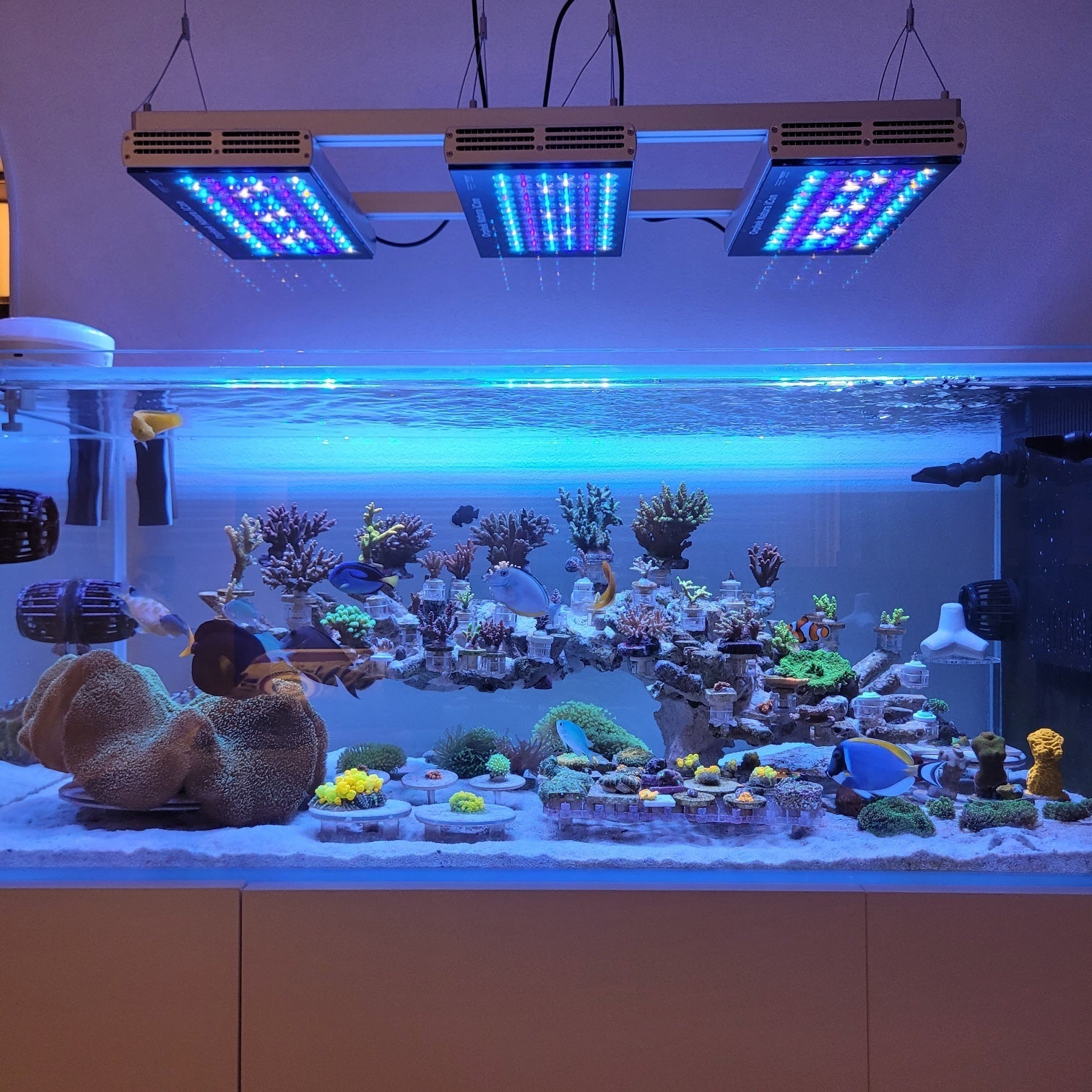
Credit: shop.orphek.com
Aquascaping Techniques
A reef aquascape needs careful planning to look natural and healthy. It is an art and science that shapes your fish tank.
This guide covers key techniques to design a beautiful and functional reef tank. You will learn how to balance looks, space, and water flow.
Design Principles
Good design in reef aquascaping uses natural shapes and colors. It creates a habitat that fish and corals enjoy.
- Use rocks and coral pieces that fit together well.
- Create open spaces for fish to swim freely.
- Choose colors that match natural reef environments.
- Arrange elements to avoid sharp edges that harm fish.
Balancing Aesthetics And Function
Your reef tank should look good and support life. Balance decoration with coral placement and water flow.
| Aspect | Purpose |
| Rock Placement | Supports corals and creates hiding spots |
| Coral Types | Different shapes add texture and color |
| Water Flow | Keeps corals healthy and moves nutrients |
| Light Exposure | Helps coral growth and color |
Incorporating Movement And Depth
Movement and depth make your reef tank dynamic and interesting. Use different heights and open areas to add layers.
Try these tips to add motion and depth:
- Place taller rocks in the back and smaller ones in front.
- Use curved coral branches to lead the eye through the tank.
- Add small fish or shrimp that swim actively.
- Install water pumps to create gentle currents.
Lighting For Coral Growth
Lighting is very important for a reef aquascape. Coral needs light to grow and stay healthy. Good lighting helps corals make food using sunlight.
Choosing the right light can improve coral color and strength. Different corals need different light types and amounts.
Types Of Lighting Fixtures
There are several light fixtures for reef tanks. Each type has its own benefits and uses.
- LED Lights: Energy-efficient and adjustable spectrum
- T5 Fluorescent: Even light spread and good for large tanks
- Metal Halide: Very bright but uses more power and heat
LED lights are popular because they last long and use less power. Metal halide lights give strong light for deep tanks.
Light Intensity And Spectrum
Corals need the right light strength to grow well. Too much or too little light can harm them.
The light spectrum affects coral color and health. Blue light helps with photosynthesis and shows coral colors.
- Intensity: Measured in PAR (Photosynthetically Active Radiation)
- Spectrum: Mix of blue, white, and sometimes red or green
- Blue light: Best for coral growth and color
Photoperiod Scheduling
Corals need a regular light schedule every day. This is called photoperiod.
Most reef tanks have 8 to 12 hours of light daily. This mimics natural sunlight and helps corals stay healthy.
- Start with low light and slowly increase time
- Use timers for consistent light periods
- Include gradual sunrise and sunset effects
Feeding And Nutrition
A reef tank needs proper feeding and nutrition for corals and fish. Balanced diets keep the ecosystem healthy. Understanding what each species needs is key.
Feeding routines vary based on the inhabitants. It’s important to provide adequate nutrients and supplements. Let’s explore essential feeding practices.
Feeding Corals
Corals have specific feeding needs. They rely on light and supplemental feeding. Providing the right nutrients helps them thrive.
- Use coral-specific foods
- Feed in the evening when polyps open
- Ensure proper water flow for nutrient distribution
Diet For Reef Fish
Reef fish require a varied diet. A balanced mix of proteins, vitamins, and minerals is crucial. Different species may have unique dietary needs.
Common foods for reef fish include:
- Frozen brine shrimp
- Pellets and flakes
- Live food like copepods
Supplemental Nutrition
Supplements ensure all nutritional gaps are filled. They support coral growth and fish health. Regular supplementation is often necessary.
| Supplement | Benefit |
| Amino acids | Enhances coral color |
| Vitamins | Boosts fish immunity |
| Minerals | Strengthens coral skeletons |
Troubleshooting Common Issues
Setting up a reef aquascape fish tank can be challenging. You may face problems like algae growth, diseases, or equipment failures. Knowing how to fix these issues helps keep your tank healthy.
This guide covers common problems and how to solve them. It focuses on algae control, disease prevention, and equipment troubleshooting.
Algae Control
Algae can quickly take over a reef tank. It grows due to excess light or nutrients. Controlling algae keeps your tank clear and your corals healthy.
- Reduce the amount of light your tank receives daily.
- Test water for excess nitrates and phosphates.
- Perform regular water changes to lower nutrients.
- Add algae-eating fish or snails to the tank.
- Clean tank surfaces regularly to remove algae spots.
Disease Prevention
Fish and corals can get sick from bacteria or parasites. Early detection and care stop diseases from spreading.
| Symptom | Possible Cause | Action |
|---|---|---|
| White spots on fish | Ich parasite | Quarantine fish and treat with medication |
| Coral tissue loss | Bacterial infection | Reduce stress and improve water quality |
| Cloudy water | High bacteria levels | Perform water change and check filtration |
Equipment Failures
Equipment like filters, heaters, and pumps can fail. Regular checks help avoid damage to your tank’s environment.
- Filter clogging reduces water flow
- Heater malfunction causes wrong temperature
- Power outages stop essential systems
- Loose connections lead to electrical hazards

Credit: www.reddit.com
Advanced Tips For Stunning Results
Setting up a reef aquascape fish tank needs more than basic care. Advanced techniques help bring out vivid colors and healthy growth.
This guide shares expert advice on color enhancement, automation, and seasonal care for a thriving reef tank.
Enhancing Color And Growth
Coral and fish colors depend on light, water quality, and nutrients. Balancing these elements encourages bright colors and healthy development.
- Use LED lights with a spectrum that includes blue and actinic wavelengths
- Maintain stable water parameters: temperature, pH, salinity
- Feed corals with quality supplements rich in trace elements
- Regularly test water to avoid nutrient spikes or deficiencies
- Place corals to match their light and flow needs
Automation And Monitoring
Automated systems improve tank stability and reduce manual work. Monitoring tools keep track of key conditions continuously.
| Equipment | Purpose |
| Auto Top-Off System | Keeps water level steady by replacing evaporation |
| Digital Thermometer | Tracks temperature to prevent sudden changes |
| pH and Salinity Sensors | Monitor water chemistry for optimal coral health |
| Programmable Lighting | Simulates natural day and night cycles |
| Automatic Dosing Pump | Adds nutrients and supplements on schedule |
Seasonal Adjustments
Season changes affect light and temperature. Adjust your tank care to keep corals happy year-round.
- Reduce lighting time in summer to avoid overheating
- Increase water flow during warm months to cool the tank
- Lower feeding frequency slightly in cooler months
- Check and adjust heater settings as temperature drops
- Perform more frequent water tests during seasonal transitions

Credit: www.nano-reef.com
Frequently Asked Questions
What Is The Best Tank Size For A Reef Aquascape?
A 20 to 50-gallon tank is ideal for beginners. Larger tanks offer more stability and space for corals and fish. Choose a size based on your available space and budget.
How Do I Choose Live Rock For Reef Aquascaping?
Select cured live rock with good texture for coral attachment. Avoid rocks with pests or algae. Live rock provides biological filtration and enhances the reef’s natural look.
What Lighting Is Best For A Reef Fish Tank?
Use LED or T5 fluorescent lights with full-spectrum output. Proper lighting supports coral growth and vibrant colors. Adjust intensity based on coral species’ needs.
How Often Should I Test Water Parameters In A Reef Tank?
Test key parameters like pH, salinity, nitrate, and calcium weekly. Consistent testing helps maintain stable water conditions essential for reef health.
Conclusion
Setting up a fish tank for a reef aquascape takes patience and care. Choose the right equipment and live plants carefully. Keep water clean and monitor temperature often. Add fish and corals slowly to avoid stress. Watch your tank daily to catch any problems early.
Enjoy the beauty of your underwater world. Small steps make a big difference in reef health. Stay consistent, and your tank will thrive beautifully. This hobby brings joy and a peaceful escape at home.