
Are you looking to create a stunning home for your betta fish? Aquascaping for betta fish tanks is the perfect way to turn a simple tank into a vibrant underwater paradise.
With the right plants, decorations, and layout, you can make your betta feel safe, happy, and active. Imagine watching your fish explore a beautiful, natural environment every day. Keep reading to discover easy tips and tricks that will transform your tank and keep your betta thriving like never before.

Credit: www.reddit.com
Choosing The Right Tank
Creating a beautiful home for your betta fish starts with picking the right tank. The tank size, shape, and material all affect your fish’s health and comfort.
Understanding these factors helps you build a safe and attractive aquascape for your betta. Let’s explore the best choices for your tank.
Ideal Tank Size
Betta fish need enough space to swim and explore. Small bowls are not good for their health. A larger tank keeps water clean and stable.
- Minimum 5 gallons is best for one betta
- More space means less stress for your fish
- Larger tanks help keep water quality steady
Tank Shape Options
The tank shape affects the swimming area and decoration space. Some shapes suit bettas better than others.
| Shape | Benefits | Drawbacks |
|---|---|---|
| Rectangular | More swimming room and easy to decorate | Needs more space in the room |
| Cylindrical | Looks nice but limits swimming space | Harder to place plants and accessories |
| Cube | Compact and easy to manage | Less surface area for oxygen exchange |
Material Considerations
Tanks come in glass or acrylic. Each has pros and cons for your betta and aquascape.
- Glass:Scratch-resistant and clear, but heavier
- Acrylic:Lighter and less breakable, but scratches easier
- Both materials hold water well and support decorations
Selecting Plants And Decorations
Creating a beautiful betta fish tank needs careful plant and decoration choices. These choices keep your betta safe and happy.
Plants and decorations make the tank look natural. They also give your betta places to explore and rest.
Betta-friendly Plants
Choose plants that do not harm your betta fish. Soft leaves and slow growth work best for their fins.
Live plants help keep water clean and add oxygen. They also create a natural feel in the tank.
- Java Fern – strong and easy to care for
- Anubias – thick leaves, good for betta resting
- Marimo Moss Balls – soft and safe for fins
- Amazon Sword – big leaves for hiding
- Duckweed – floating plant, adds shade
Safe Decorative Elements
Use decorations that have smooth edges to protect your betta’s fins. Avoid sharp or rough surfaces.
Natural materials like driftwood or rocks work well. Make sure they are cleaned before adding to the tank.
- Driftwood – natural and safe for bettas
- Polished river rocks – smooth and decorative
- Ceramic caves – safe hiding places
- Leaf hammocks – resting spots near the surface
Creating Natural Hiding Spots
Bettas need places to hide to feel safe and reduce stress. Use plants and decorations to build these spots.
Hiding spots can be small caves, dense plants, or floating leaves. These areas help your betta relax and explore.
- Cluster plants together for dense cover
- Place caves or tubes in quiet corners
- Use floating plants to create shaded areas
- Arrange leaves or decorations to form small caves
Design Styles For Bettas
Aquascaping creates a beautiful home for betta fish. The design style affects the tank’s look and fish comfort.
Choosing the right style helps you build a healthy and attractive environment. Bettas enjoy spaces that suit their personality and needs.
Nature-inspired Layouts
Nature-inspired layouts copy natural water habitats. They use plants, rocks, and wood to create a peaceful setting.
This style offers hiding spots and open swimming areas. It feels safe and calm for bettas.
- Live plants like Java fern and Anubias
- Driftwood and smooth stones
- Soft substrate like sand or fine gravel
- Balanced open and covered spaces
Minimalist Designs
Minimalist designs use few elements and clean lines. They focus on simplicity and easy maintenance.
This style suits small tanks and bettas who like open spaces. It keeps the tank neat and shows off the fish well.
- Single plant or small group of plants
- Simple decorations like a single rock
- Clear substrate or bare bottom
- Open swimming area without clutter
Themed Aquascapes
Themed aquascapes create a specific look or story. Themes can be inspired by fantasy, nature, or cultures.
These tanks use decorations and plants to match the chosen theme. Bettas add life and color to the scene.
- Asian-inspired with bamboo and bonsai plants
- Fantasy themes with colorful stones and toys
- Underwater jungle with dense plants and roots
- Zen garden style with sand patterns and rocks

Credit: www.youtube.com
Substrate And Hardscape Choices
Aquascaping a betta fish tank needs careful substrate and hardscape picks. These choices affect the tank’s look and your fish’s health.
Good substrate and hardscape give your betta places to explore and hide. They also help keep water clean and plants healthy.
Choosing Substrate Types
Pick a substrate that suits your betta and plants. Fine gravel or sand works well because bettas like soft bottoms.
Avoid sharp or rough substrates to protect your betta’s fins. Substrate color can also change tank mood.
- Fine gravel is easy to clean and looks natural
- Sand offers a smooth surface for bettas
- Dark substrates highlight bright fish colors
- Light substrates brighten the tank
Using Rocks And Driftwood
Rocks and driftwood add natural beauty and hiding spots. Choose smooth pieces to keep your betta safe from cuts.
Arrange hardscape so your betta can swim freely. Avoid overcrowding the tank with too many decorations.
- Use rounded rocks without sharp edges
- Driftwood creates caves and resting spots
- Check wood type to avoid water tint or toxins
- Position hardscape to create visual depth
Balancing Aesthetics And Function
Good aquascaping looks nice and supports betta health. Balance decorative elements with open swim space.
Plants, substrate, and hardscape should work together. This makes the tank safe and pleasing to watch.
- Leave enough swimming room for your betta
- Provide hiding spots to reduce stress
- Choose easy-to-clean materials
- Match colors and shapes for a natural look
Water Parameters And Maintenance
Aquascaping for Betta fish tanks requires careful attention to water parameters and maintenance. Keeping the tank environment stable is key to the health of your Betta fish.
Understanding the ideal conditions and regular maintenance tasks will ensure your Betta thrives.
Ideal Water Conditions
Maintaining the right water conditions is crucial for Betta health. Bettas prefer certain water parameters for optimal living.
- Temperature: 76-82°F (24-28°C)
- pH Level: 6.5-7.5
- Ammonia: 0 ppm
- Nitrites: 0 ppm
- Nitrates: < 20 ppm
Filtration And Flow
Proper filtration helps maintain clean water, while the flow should be gentle. Bettas are not strong swimmers and need calm waters.
Consider using sponge filters for gentle water flow and effective filtration. They are ideal for Betta tanks.
Regular Cleaning Tips
Keeping the tank clean is essential to prevent stress and disease. Regular cleaning tasks should be part of your routine.
| Task | Frequency |
| Partial Water Change | Weekly |
| Filter Cleaning | Monthly |
| Substrate Vacuum | Bi-weekly |
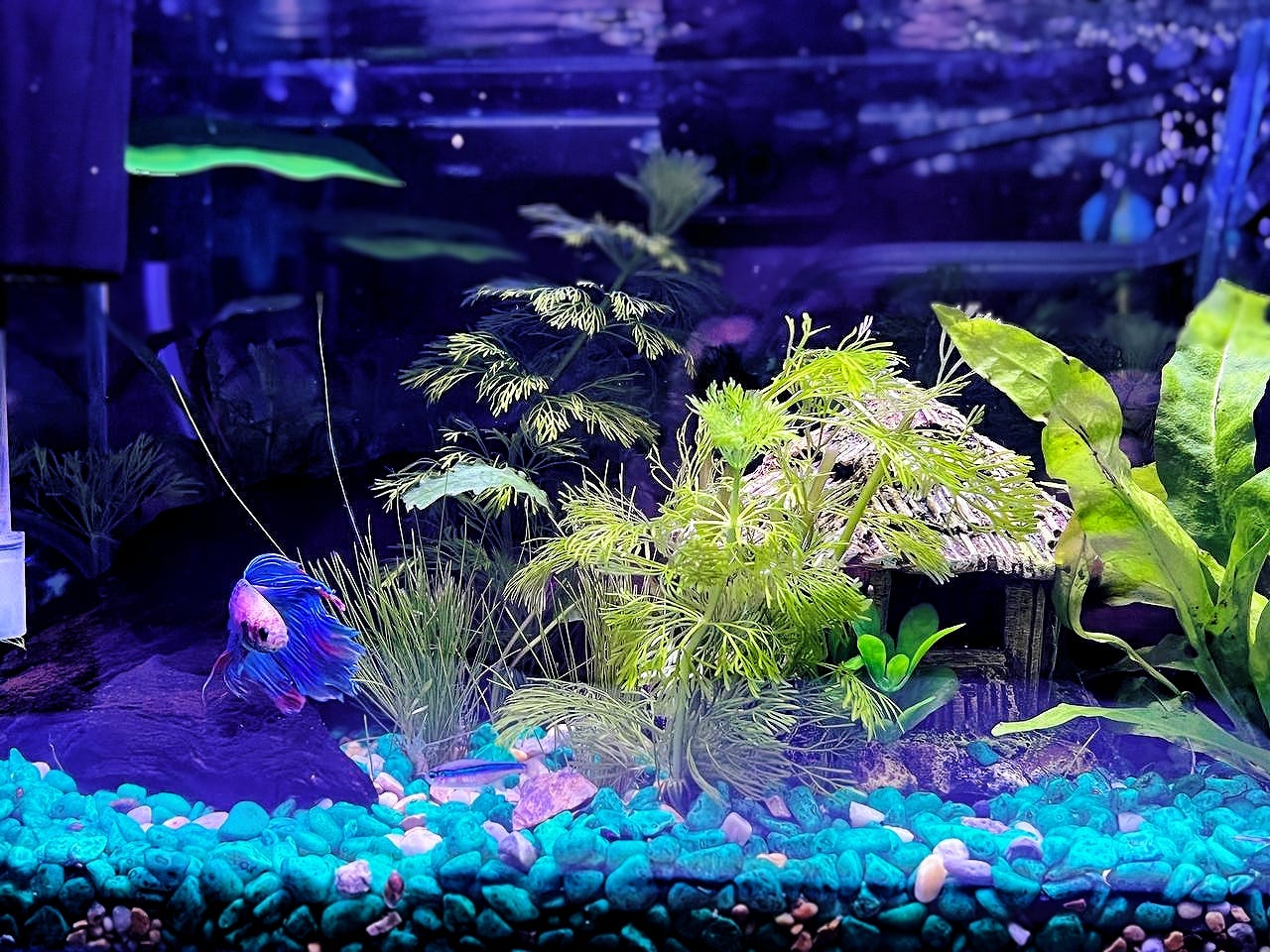
Credit: medium.com
Lighting And Co2 For Plants
Aquascaping a betta fish tank needs the right light and CO2. Plants need these to grow healthy and strong.
Good lighting and CO2 levels help plants thrive. This creates a nice home for your betta fish.
Lighting Options
Plants in betta tanks need light that is not too bright. Too much light can stress your fish. Choose lights that give the right color and intensity.
- LED lights are energy-saving and last long.
- Fluorescent lights give good light for plants.
- Use a timer to give plants 8 to 10 hours of light daily.
- Make sure light covers the whole tank evenly.
Co2 Supplementation
CO2 helps plants make food through photosynthesis. In small tanks, natural CO2 from fish and plants may be enough. For bigger tanks or heavy plants, add CO2.
| Method | Details | Best For |
| DIY CO2 Kit | Uses yeast and sugar to make CO2 | Small tanks, budget-friendly |
| Pressurized CO2 System | Controlled CO2 with a tank and regulator | Large tanks, serious plant growth |
| Liquid Carbon | Easy to dose carbon supplement | Low-tech tanks, no equipment |
Encouraging Plant Growth
Good light and CO2 are key for plants. Also, feed plants with nutrients. Use fertilizer and keep water clean. Trim plants to keep them healthy.
- Use a balanced fertilizer for roots and leaves.
- Keep water temperature stable for plant health.
- Change water weekly to prevent algae.
- Trim dead leaves to allow new growth.
Enhancing Betta Behavior And Health
Aquascaping is a way to arrange plants, rocks, and decorations in a fish tank. For betta fish, good aquascaping helps improve their behavior and health. A well-designed tank keeps bettas active and reduces their stress.
Creating a natural environment in the tank supports bettas’ needs. It also helps you watch their health and spot problems early. Let’s explore how aquascaping can benefit bettas.
Creating Stimulating Environments
Betta fish enjoy tanks with plants and hiding spots. Natural decorations give them places to explore and rest. This keeps them curious and active.
Use live plants like Java fern or Anubias. Add caves or smooth rocks for shelter. Avoid sharp objects that can hurt their fins.
- Include tall and short plants for variety
- Use soft, smooth decorations
- Place hiding spots in quiet corners
- Leave open swimming spaces
Avoiding Stress Triggers
Stress harms betta health and changes behavior. Loud noises, bright lights, and strong water currents cause stress. A calm tank helps bettas feel safe.
Keep the tank in a quiet room. Use soft lighting and gentle water flow. Make sure the tank is not overcrowded with fish or decorations.
- Place tank away from loud areas
- Use dimmable LED lights
- Set a gentle filter flow
- Limit tank mates and decorations
Monitoring Betta Health
Regular checks help keep bettas healthy. Watch their color, fins, and activity. Changes can signal illness or stress.
Keep water clean and test its quality often. Check temperature, pH, and ammonia levels. Clean the tank regularly to prevent disease.
- Observe betta’s color and fin condition
- Note changes in eating habits
- Test water parameters weekly
- Perform partial water changes every 1-2 weeks
Common Mistakes To Avoid
Aquascaping for betta fish tanks can be a fun hobby. But there are common mistakes that can harm your fish. Here are some to avoid.
Being aware of these mistakes helps you create a safe and beautiful environment for your betta fish.
Overcrowding The Tank
Betta fish need space to swim freely. Too many decorations can make them stressed. Keep the tank simple and spacious.
A crowded tank also makes cleaning difficult. This can lead to dirty water, which is harmful to your fish.
- Use fewer plants and rocks
- Leave open swimming areas
- Regularly assess tank space
Using Harmful Materials
Some materials can harm betta fish. Sharp objects can injure them. Avoid using anything with rough edges.
Also, some paints and glues are toxic. Make sure all items are safe for aquariums.
- Check for sharp edges
- Use aquarium-safe materials
- Inspect items before adding
Neglecting Regular Care
Regular care is essential for a healthy tank. Skipping water changes can lead to poor water quality. This affects the fish’s health.
Keep a schedule for cleaning and maintenance. This ensures a safe environment for your betta.
- Change water weekly
- Check water parameters
- Clean decorations regularly
Frequently Asked Questions
What Are The Best Plants For Betta Fish Aquascaping?
The best plants for Betta tanks are Java fern, Anubias, and moss balls. These plants provide hiding spots and improve water quality. They require low light and minimal maintenance, making them ideal for Betta fish environments.
How Do I Create A Natural Betta Fish Habitat?
Use live plants, smooth substrates, and gentle water flow. Add driftwood and caves for hiding places. This setup mimics Betta’s natural environment, reducing stress and encouraging natural behavior, resulting in a healthy and vibrant fish.
Can Aquascaping Improve Betta Fish Health?
Yes, aquascaping enhances water quality and reduces stress for Betta fish. Plants absorb toxins and provide oxygen. Natural hiding spots create a safe environment, improving Betta’s immune system and overall well-being.
How Often Should I Clean A Betta Aquascaped Tank?
Clean your Betta tank every 1 to 2 weeks. Remove debris and perform a 20-30% water change. Avoid disturbing plants and substrate to maintain the aquascape and keep fish healthy.
Conclusion
Creating a beautiful betta fish tank takes care and patience. Choose plants and decorations that fit your fish’s needs. Keep the water clean and the environment safe. A well-planned aquascape helps your betta stay healthy and happy. Enjoy watching your fish swim through their natural-like home.
Small changes can make a big difference in your tank. Start simple and learn as you go. Your betta will thank you with lively colors and energy. Aquascaping is a fun way to connect with your pet.