
If you want your soft coral tank to thrive and look stunning, choosing the right lighting is key. The wrong light can leave your corals dull and unhealthy, while the perfect setup makes their colors pop and helps them grow strong.
You might wonder what type of light suits soft corals best or how to set it up for maximum benefit. This guide will clear up the confusion and give you simple, effective tips to brighten your tank—and your underwater world.
Keep reading to discover how to bring out the true beauty of your soft corals with the perfect lighting.

Credit: www.youtube.com
Choosing The Right Light Spectrum
Lighting is very important for soft coral tanks. The right light helps corals grow and stay healthy.
Choosing the correct light spectrum supports coral colors and their natural processes.
Importance Of Blue And Actinic Light
Blue and actinic light help corals make food through photosynthesis. They also bring out coral colors.
This light penetrates water well, reaching corals deep in the tank. It mimics natural ocean light.
- Supports coral growth
- Enhances coral fluorescence
- Improves water clarity appearance
Role Of White And Full Spectrum Light
White and full spectrum light provide all colors corals need. It helps balance their environment.
This light supports coral health by providing energy and showing natural colors clearly.
- Promotes photosynthesis
- Supports natural coral colors
- Creates a natural daylight effect
Balancing Light For Coral Health
Too much or too little light can harm corals. Balance blue, actinic, and white light carefully.
Use timers and dimmers to match natural day cycles. Watch coral response to adjust light levels.
- Start with moderate intensity
- Adjust light based on coral growth
- Keep a consistent light schedule
- Observe coral color and health
Light Intensity And Duration
Lighting is key for soft coral health in tanks. Proper light helps corals grow and stay colorful.
Both the strength and length of light exposure affect coral well-being. Too much or too little light harms them.
Optimal Par Levels For Soft Corals
PAR means Photosynthetically Active Radiation. It measures light corals use for photosynthesis.
Soft corals need moderate PAR levels to thrive. Too high can bleach them, too low slows growth.
- Low light soft corals: 30-75 PAR
- Medium light soft corals: 75-125 PAR
- High light soft corals: 125-200 PAR
Daily Light Cycle Recommendations
Soft corals do best with a daily light cycle that mimics nature. This supports their natural rhythms.
A common cycle is 8 to 10 hours of light followed by 14 to 16 hours of darkness. This helps corals rest.
- Start with 8 hours of light
- Increase to 10 hours if corals show good health
- Keep darkness long enough for coral recovery
Adjusting Light Based On Coral Species
Different soft coral species need different light intensities and durations. Watch how they respond.
Some species need brighter light, while others prefer shaded conditions. Adjust light slowly to avoid stress.
| Coral Species | Light Intensity (PAR) | Light Duration (hours) |
|---|---|---|
| Zoanthids | 50-100 | 8-10 |
| Leather Corals | 75-125 | 8-12 |
| Mushroom Corals | 30-75 | 6-8 |
Types Of Lighting Fixtures
Lighting is very important for soft coral tanks. It helps corals grow and stay healthy. Different lighting fixtures give different kinds of light.
Choosing the right type depends on your tank size and coral needs. Let’s look at the main types of lighting used in soft coral tanks.
Led Lights Benefits And Drawbacks
LED lights use less energy and last a long time. They can produce many colors and light intensities. Many hobbyists like LED lights for their flexibility.
- Energy efficient and cool to touch
- Long lifespan, reducing replacements
- Can simulate natural sunlight well
- Initial cost can be higher than other types
- Some models may not provide enough light intensity
T5 Fluorescent Options
T5 fluorescent lights are bright and spread light evenly. They are good for small to medium tanks. These lights are easy to find and replace.
| Feature | Benefit | Drawback |
| Light Spread | Even coverage | Less focused intensity |
| Cost | Affordable upfront | Bulbs need frequent changing |
| Heat Output | Moderate heat | May need cooling |
| Color Options | Good spectrum variety | Limited to bulb types |
Metal Halide Considerations
Metal halide lights give strong, intense light. They work well for deep or large tanks. These lights create heat and use more power.
- High light intensity, good for coral growth
- Produce a lot of heat, need cooling systems
- Higher electricity use than LEDs or T5s
- Bulbs have shorter lifespan and cost more
Positioning And Placement
Lighting is vital for soft coral tanks. Proper placement helps corals grow well and stay healthy.
Correct positioning avoids problems like shadows and uneven light. This guide covers important tips.
Height And Distance From Tank
Place lights at the right height to cover the tank evenly. Too close can harm corals. Too far lowers light intensity.
- Keep lights 12 to 18 inches above the water surface.
- Adjust height based on coral type and tank size.
- Raise lights if corals show signs of bleaching.
- Lower lights to increase intensity if corals stretch.
Avoiding Shadow And Hot Spots
Shadows block light and slow coral growth. Hot spots cause burns. Position lights to prevent these issues.
| Issue | Cause | Solution |
|---|---|---|
| Shadows | Objects blocking light | Move lights or rearrange decorations |
| Hot spots | Light focused on one area | Use diffusers or multiple light sources |
Creating Even Light Distribution
Even light helps all corals grow equally. Use the right setup to spread light across the tank.
Tips for even light distribution:
- Use multiple lights spaced evenly.
- Install reflectors to spread light wider.
- Adjust angles to cover dark spots.
- Check light coverage regularly.
Supplemental Lighting Techniques
Lighting is crucial for soft coral tanks. Proper lighting enhances coral health and colors. Supplemental lighting can mimic natural environments.
Different techniques can improve your tank’s lighting. They help maintain coral cycles and growth. Let’s explore some effective methods.
Using Moonlights For Natural Cycles
Moonlights simulate the moon’s glow. They help corals follow natural day-night cycles. These lights are gentle and not too bright.
Corals need rest periods like in the wild. Moonlights provide a calming effect. They help mimic natural lunar cycles in your tank.
- Gently illuminates the tank at night
- Supports coral spawning cycles
- Reduces stress for nocturnal creatures
Implementing Dimming And Timers
Dimming lights gradually mimic sunrise and sunset. This transition is less shocking for corals. Timers control the light schedule accurately.
Using timers, you can automate light changes. This ensures consistency in daily lighting patterns. Corals thrive on regular light cycles.
| Time | Light Intensity |
| Morning | 25% |
| Midday | 100% |
| Evening | 50% |
Integrating Uv And Violet Light
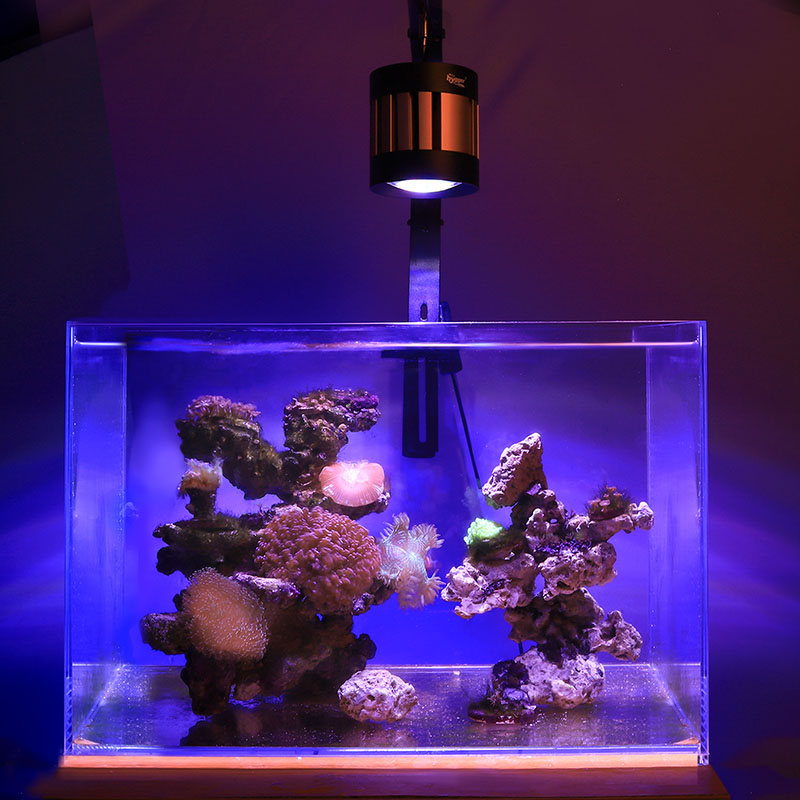
UV and violet lights are vital for coral pigmentation. They enhance the vibrant colors of corals. These lights also support photosynthesis.
Adding UV light can boost coral health. Violet lights help in replicating natural sunlight. This lighting keeps corals glowing and healthy.
- Enhances coral color and brightness
- Supports coral growth and energy
- Complements other lighting types
Credit: www.hygger-online.com
Monitoring And Adjusting Lighting
Proper lighting is key for soft coral tanks. Watching your corals closely helps keep them healthy. Adjusting light correctly supports their growth and color.
Knowing how to monitor and tweak lighting can prevent problems. This guide covers signs of light stress, using meters, and adjusting settings.
Signs Of Lighting Stress In Corals
Soft corals show signs when lighting is too strong or weak. Look for these common signals to catch issues early.
- Fading or dull colors
- Coral tissue shrinking or pulling away
- Excessive algae growth on coral surface
- Slow or stopped coral growth
- Coral polyps staying closed for long periods
Using Par Meters And Light Meters
PAR meters measure the light usable by corals. Light meters measure overall brightness. Both tools help set the right lighting.
| Meter Type | What It Measures | Use |
| PAR Meter | Photosynthetically Active Radiation | Checks coral light quality |
| Light Meter | General Light Intensity | Measures brightness level |
Tweaking Settings For Growth And Color
Adjust light levels slowly to avoid stress. Change color spectrum to boost coral color and growth. Watch coral reactions closely.
- Lower or raise light intensity by small amounts
- Shift light spectrum toward blues for color enhancement
- Increase white or full spectrum light for growth support
- Keep consistent photoperiods to mimic natural conditions
- Observe coral behavior for signs of improvement or stress
Common Lighting Mistakes
Lighting is key for soft coral tanks. Many hobbyists make mistakes that harm coral health.
Understanding common lighting problems helps keep corals healthy and colorful.
Overexposure And Bleaching Risks
Too much light can stress soft corals. It causes bleaching and tissue damage.
- Excessive light intensity harms coral pigments.
- Long lighting periods increase stress.
- Sudden changes in light can shock corals.
- High UV levels damage coral cells.
Insufficient Light Effects
Not enough light stops coral growth. Corals lose color and become weak.
| Effect | Cause |
| Faded colors | Low light intensity |
| Slow growth | Short lighting duration |
| Algae overgrowth | Poor light balance |
Ignoring Coral-specific Needs
Different soft corals need different light levels. Ignoring this causes stress.
Here are some coral types and their lighting needs:
- Leather corals:Moderate light, avoid direct strong rays.
- Mushroom corals:Low to medium light preferred.
- Zoanthids:Medium to high light, but avoid extremes.

Credit: www.amazon.ca
Frequently Asked Questions
What Type Of Lighting Is Best For Soft Coral Tanks?
LED lighting with adjustable spectrum is best for soft coral tanks. It provides the right intensity and color balance needed for coral growth.
How Many Hours Should Soft Coral Tanks Be Lit Daily?
Soft coral tanks should be lit 8 to 10 hours daily. This mimics natural daylight and supports photosynthesis without stressing the corals.
Can Fluorescent Lights Support Soft Coral Growth Effectively?
Yes, fluorescent lights can support soft coral growth. However, they may lack intensity and spectrum control compared to LEDs.
What Light Spectrum Is Ideal For Soft Coral Tanks?
A light spectrum of 10,000K to 20,000K is ideal. It promotes healthy photosynthesis and enhances coral coloration effectively.
Conclusion
Choosing the right lighting helps soft corals grow and stay healthy. Light affects their color and shape. Use lights that fit your tank size and coral needs. Watch how your corals respond to changes. Adjust brightness and time to find what works best.
Good lighting makes your tank look beautiful every day. Keep learning and caring for your soft corals. Enjoy the calm and colors they bring to your space.