
If you want your coral to thrive and show vibrant colors, the right aquarium lighting is key. Your coral depends on light to perform photosynthesis, which keeps it healthy and growing.
But not all lights are created equal—choosing the perfect lighting can feel confusing. You’ll discover exactly what type of lighting helps your coral flourish. By understanding how light affects photosynthesis, you’ll unlock the secret to a stunning, lively reef tank.
Keep reading to learn how to make your coral glow like never before.
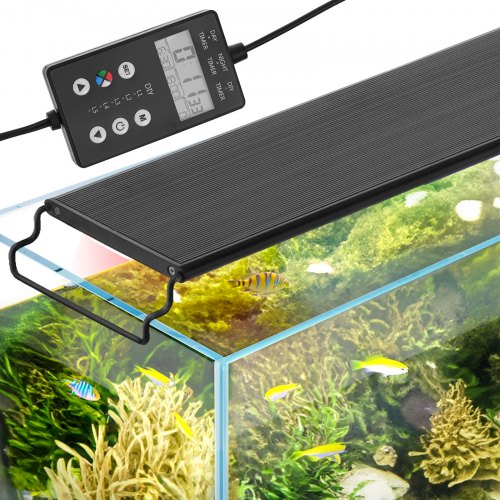
Credit: www.vevor.ca
Role Of Light In Coral Health
Light plays a vital role in keeping corals healthy. It helps corals get the energy they need to survive. This energy comes from a special process called photosynthesis.
Corals depend on light to support their growth and color. Without enough light, corals can become weak and lose their color over time.
Photosynthesis Basics In Corals
Corals have tiny algae called symbionts living inside them. These algae use light to make food through photosynthesis. The food made helps corals grow and stay strong.
- Light energy is captured by algae inside the coral.
- Algae turn light into sugars using carbon dioxide and water.
- Sugars provide energy and nutrients to the coral.
- Oxygen is released as a by-product of this process.
Types Of Coral Symbionts
Different corals have different types of symbionts. These types affect how much light the coral needs. Some symbionts do better in low light, others need bright light.
| Symbiont Type | Light Preference | Coral Adaptation |
| Clade A | High Light | Bright reef areas |
| Clade B | Low Light | Shaded reef spots |
| Clade C | Medium Light | Mid-depth reefs |
| Clade D | Variable Light | Stress resistant |

Credit: www.ebay.ca
Choosing The Right Aquarium Light
Lighting is very important for coral growth in an aquarium. Corals need light to perform photosynthesis.
Choosing the right light helps corals stay healthy and colorful. Different lights have different effects.
Led Vs. Fluorescent Vs. Metal Halide
LED lights use less energy and last longer. They can change colors and brightness easily.
Fluorescent lights are cheaper but use more energy. They give good light but need replacing often.
Metal halide lights are very bright and good for deep tanks. They use a lot of power and create heat.
- LED: energy-saving, adjustable, long-lasting
- Fluorescent: affordable, moderate brightness, shorter life
- Metal Halide: very bright, heats tank, high power use
Light Spectrum And Intensity
Corals need light that matches the colors of natural sunlight. Blue and white light work best.
Light intensity affects how well corals do photosynthesis. Too little light slows growth.
- Blue light helps coral photosynthesis and color
- White light provides full spectrum for coral health
- Adjust intensity based on coral type and tank depth
Adjusting Light Duration
Corals need a regular light schedule to stay healthy. About 8 to 12 hours of light is ideal.
Too much light can stress corals. Too little light stops their growth.
- Set light timer for consistent daily lighting
- Start with 8 hours and increase if corals need more
- Reduce light if corals show signs of stress
Optimizing Light For Growth
Lighting plays a key role in coral photosynthesis. Proper light helps corals grow strong and healthy.
Too little or too much light can harm corals. Finding the right balance improves their color and energy.
Light Placement And Coverage
Place lights evenly above the aquarium to cover all coral areas. Uneven light can cause some corals to get too much or too little light.
- Use adjustable fixtures to control height and angle.
- Spread light to avoid dark spots and bright spots.
- Check coverage with a light meter for uniform intensity.
- Consider coral types and their light needs.
Balancing Light With Water Quality
Water quality affects how light reaches corals. Clear water lets more light pass through. Cloudy water lowers light intensity.
| Water Parameter | Effect on Light |
| Clarity | High clarity improves light penetration |
| Turbidity | Reduces light reaching corals |
| Nitrate Levels | Excess can cause algae, blocking light |
| Phosphate Levels | High phosphate may cloud water |
Enhancing Coral Coloration
Lighting plays a key role in coral health and color. The right light helps corals produce bright, vivid colors.
Corals use light to create pigments. These pigments protect them and make them look beautiful in aquariums.
Effects Of Light Spectrum On Pigments
Different light colors affect coral pigments in unique ways. Blue and actinic light help corals show their best colors.
- Red light can fade coral colors over time.
- Green light has little effect on pigments.
- Blue light enhances fluorescent pigments, making colors pop.
- Actinic light boosts photosynthesis and pigment production.
Using Actinic And Blue Lighting
Actinic and blue lighting support coral photosynthesis and color. They help corals stay healthy and colorful.
| Light Type | Wavelength Range (nm) | Effect on Coral |
| Actinic | 420 – 460 | Boosts pigment production and photosynthesis |
| Blue | 450 – 495 | Enhances fluorescent colors and coral growth |
Common Lighting Mistakes To Avoid
Coral reefs need the right lighting to thrive. Mistakes in lighting can harm corals. Correcting these errors is crucial for coral health.
This guide covers common mistakes in aquarium lighting. Learn how to provide the best light for coral photosynthesis.
Overexposure And Coral Bleaching
Too much light can cause coral bleaching. Corals lose color and become weak. It’s important to balance light intensity.
- Use a light meter to measure intensity
- Adjust light height above the tank
- Provide shaded areas for corals
Inconsistent Light Cycles
Corals need a regular light cycle. Inconsistent lighting affects growth and health. Keeping a stable schedule is essential.

Credit: www.reddit.com
Advanced Lighting Techniques
Proper lighting supports coral photosynthesis in aquariums. Advanced techniques help create the best light environment.
Using modern controls, hobbyists can adjust light intensity and timing. This improves coral health and growth.
Dimming And Programming
Dimming allows gradual changes in light intensity. Programming sets schedules to mimic natural daylight cycles.
- Set sunrise and sunset times with slow dimming
- Use programmable timers for consistent light periods
- Adjust intensity during peak daylight hours
- Control light color temperature for coral needs
- Combine dimming with cloud or storm effects
Simulating Natural Light Conditions
Natural light changes throughout the day. Simulating this helps corals photosynthesize as they would in the wild.
| Time of Day | Light Intensity | Color Temperature |
| Morning | Low | Warm (2700K) |
| Noon | High | Neutral (5000K) |
| Afternoon | Medium | Cool (6500K) |
| Evening | Low | Warm (2700K) |
| Night | Very Low or Off | Moonlight Blue |
Frequently Asked Questions
What Type Of Lighting Is Best For Coral Photosynthesis?
LED lighting with a full spectrum, including blue and white light, is ideal. It mimics natural sunlight and supports coral growth effectively.
How Many Hours Of Light Do Corals Need Daily?
Corals typically require 8 to 12 hours of light each day. This duration promotes healthy photosynthesis without causing stress.
Can Too Much Light Harm Coral Reefs?
Yes, excessive light can cause coral bleaching and stress. Proper intensity and duration are crucial for coral health.
Why Is Blue Light Important For Coral Growth?
Blue light penetrates water well and drives photosynthesis in coral symbiotic algae. It enhances coral coloration and energy production.
Conclusion
Choosing the right aquarium lighting helps corals grow healthy and strong. Light supports coral photosynthesis, which feeds them and keeps colors bright. Different corals need different light types and intensities. Pay attention to light duration and quality for best results.
Good lighting creates a lively and beautiful underwater world. Keep learning and adjusting to meet your corals’ needs. Your tank will thank you with vibrant, thriving coral life. Simple steps make a big difference in coral health.