
Is your heater not turning on when you need it the most? It’s frustrating and uncomfortable, especially when the cold won’t wait.
But before you call for expensive repairs, there are simple steps you can take to fix the problem yourself. In this guide, you’ll discover easy troubleshooting tips that anyone can follow. By the end, you’ll know exactly what to check and how to get your heater working again quickly.
Don’t let the chill win—let’s get your heater back on and your home warm again. Keep reading to find out how.

Credit: www.callacs.com
Common Causes
When a heater does not turn on, it can be frustrating. There are several common reasons why this happens.
Understanding these causes can help you fix the problem or know when to call a professional.
Power Supply Issues
The heater needs power to work. If it is not getting power, it will not turn on.
Check if the heater is plugged in properly and the power outlet is working.
- Loose or unplugged power cord
- Damaged power outlet
- Power outages in your home
Thermostat Problems
The thermostat controls when the heater turns on and off. If it is set too low, the heater will not start.
Sometimes the thermostat is broken or not working right, which stops the heater from turning on.
- Incorrect temperature setting
- Dead thermostat batteries
- Faulty thermostat sensor
Faulty Heating Elements
The heating element warms the air in the heater. If it is damaged, the heater will not produce heat.
Heating elements can wear out over time or burn out from too much use.
- Burned-out heating element
- Cracked or broken element
- Corroded parts inside the heater
Blown Fuses And Tripped Breakers
Fuses and breakers protect your home’s electrical system. If they blow or trip, the heater loses power.
Check your fuse box or breaker panel to see if any switches have tripped or fuses are blown.
- Tripped circuit breaker
- Blown fuse in the electrical panel
- Overloaded circuits from too many devices
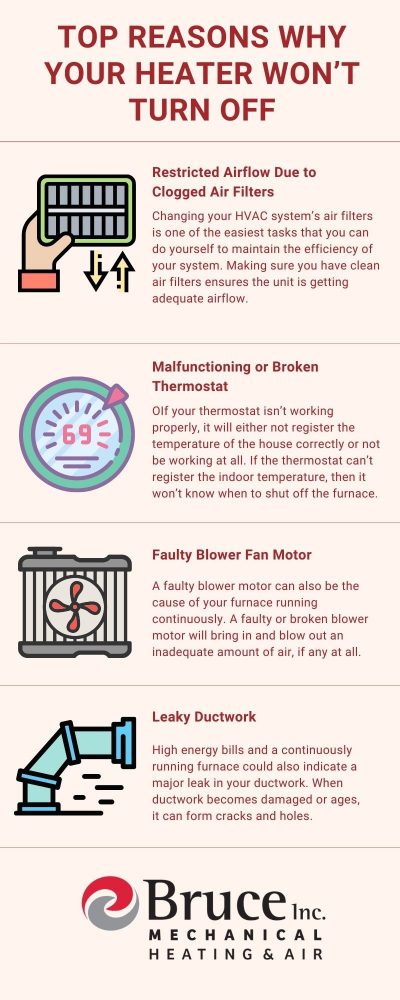
Credit: bruceinc.com
Initial Checks
If your heater is not turning on, start with basic checks. These steps help find simple issues fast.
Checking power, thermostat, and circuit breaker can save time before calling a technician.
Verify Power Connection
Make sure the heater is plugged in properly. Loose plugs can stop power flow.
Check the power outlet by plugging in another device. This shows if the outlet works.
- Unplug the heater
- Plug another device into the same outlet
- If device works, plug heater back in firmly
- If not, try a different outlet
Inspect Thermostat Settings
Check if the thermostat is set to heat mode. Wrong mode stops the heater from running.
Set the temperature higher than the room temperature. This tells the heater to turn on.
- Look at the thermostat display
- Switch to heat mode if needed
- Raise the temperature setting
- Wait a few minutes to see if heater starts
Reset Circuit Breaker
Heaters may stop working if the circuit breaker trips. Resetting it can restore power.
Find your home’s breaker box and look for tripped switches. Turn them off and on again.
- Open the breaker box panel
- Find the heater’s breaker switch
- If switch is off or in the middle, flip it off fully
- Flip it back on firmly
- Check if the heater turns on
Quick Fixes
If your heater does not turn on, try some easy fixes first.
These quick checks can save you time and money before calling a technician.
Replace Batteries In Thermostat
Low batteries in the thermostat can stop your heater from working.
- Open the thermostat cover carefully.
- Remove old batteries.
- Insert new batteries with correct polarity.
- Close the cover and check if the heater turns on.
Clean Or Replace Filters
Dirty or clogged filters reduce airflow and can prevent heating.
| Filter Condition | Action Needed |
| Lightly dusty | Clean filter with vacuum or wash |
| Heavily dirty or damaged | Replace filter with a new one |
| Unknown last change date | Replace to ensure proper airflow |
Reset Heater System
Resetting the heater can clear minor errors and restore function.
Follow these steps to reset your heater:
- Turn off the heater at the main power switch.
- Wait for 5 minutes to let the system cool down.
- Turn the power back on.
- Check if the heater starts working.

Credit: www.youtube.com
When To Call A Professional
Your heater may fail to turn on for many reasons. Some problems need expert help to fix safely.
This guide shows when you should call a professional for heater troubles.
Persistent Electrical Issues
If your heater keeps tripping breakers or blowing fuses, do not ignore it. This can be a sign of serious electrical faults.
- Frequent power outages when using heater
- Heater switches off unexpectedly
- Visible sparks or burned wires near heater
- Fuses or circuit breakers that keep tripping
These issues need a licensed electrician to inspect and repair. Trying to fix electrical problems yourself is risky.
Strange Noises Or Smells
Unusual sounds or odors from your heater can mean hidden damage. You should call a pro if you notice:
| Symptom | Possible Cause |
| Buzzing or humming | Electrical issue or motor problem |
| Rattling or banging | Loose parts or debris inside heater |
| Burning smell | Overheating or electrical short |
| Gas or rotten egg smell | Gas leak – very dangerous |
Stop using the heater if you smell gas. Call an expert immediately for safety.
Water Leaks Or Corrosion
Water damage or rust on your heater can cause failure or danger. Look for:
- Water pooling near heater base
- Rust on pipes or heater parts
- Corroded electrical connections
- Visible signs of moisture inside heater cabinet
These problems need a professional to fix leaks and clean corrosion. Avoid using the heater until it is repaired.
Preventive Maintenance
Preventive maintenance helps keep your heater working efficiently. It reduces the chances of your heater not turning on when needed.
Simple tasks can ensure your heater runs smoothly. Regular checks and cleanings are key.
Regular Cleaning
Dust and dirt can block your heater’s airflow. Regular cleaning helps maintain its efficiency.
Use a vacuum to clean vents and filters. This ensures proper airflow and reduces wear.
- Clean filters every month
- Vacuum vents regularly
- Wipe dust off surfaces
Seasonal Inspections
Check your heater before the cold season starts. This prepares it for increased use during winter.
Look for any signs of damage. Address issues early to avoid breakdowns.
- Inspect for loose wires
- Check for unusual noises
- Examine for leaks or rust
Proper Usage Tips
Using your heater correctly can prevent problems. Follow manufacturer guidelines for optimal performance.
Set the thermostat to a moderate temperature. This avoids unnecessary strain on the heater.
- Do not block vents with furniture
- Keep area around heater clear
- Use a programmable thermostat
Frequently Asked Questions
Why Is My Heater Not Turning On At All?
Your heater may fail to turn on due to power issues, a tripped circuit breaker, or a faulty thermostat. Check the power source first, then reset breakers and inspect the thermostat settings to ensure proper operation.
How Can I Fix A Heater That Won’t Start?
Start by checking the power supply and thermostat settings. Clean or replace the air filter if dirty. Inspect the pilot light or ignition system and call a professional if problems persist.
What Causes A Heater To Turn Off Quickly?
A heater may shut off quickly due to overheating, blocked vents, or a malfunctioning limit switch. Ensure vents are clear, clean filters, and have a technician inspect internal components if needed.
Can A Thermostat Prevent My Heater From Turning On?
Yes, a faulty or incorrectly set thermostat can stop your heater from turning on. Verify settings and replace the thermostat if it fails to respond to temperature changes.
Conclusion
Troubleshooting a heater that won’t turn on can save time and money. Check power sources, thermostats, and filters first. Simple steps often fix common problems quickly. If the heater still does not work, calling a professional is wise. Staying warm depends on a working heater, so don’t delay.
Regular maintenance helps avoid future issues and keeps the heater running well. Take action early to enjoy comfort all winter long.