
If you want your reef tank to truly shine, choosing the right lighting is key. LED lighting for show reef tanks doesn’t just brighten up your underwater world—it brings out the vibrant colors of your corals and fish like nothing else.
You might wonder why so many reef enthusiasts swear by LEDs. The truth is, the right LED setup can make your tank healthier, more energy-efficient, and stunning to look at. You’ll discover how LED lighting can transform your show reef tank and learn tips to pick the perfect lights for your aquatic masterpiece.
Keep reading to unlock the secrets that will make your reef tank the envy of every visitor.
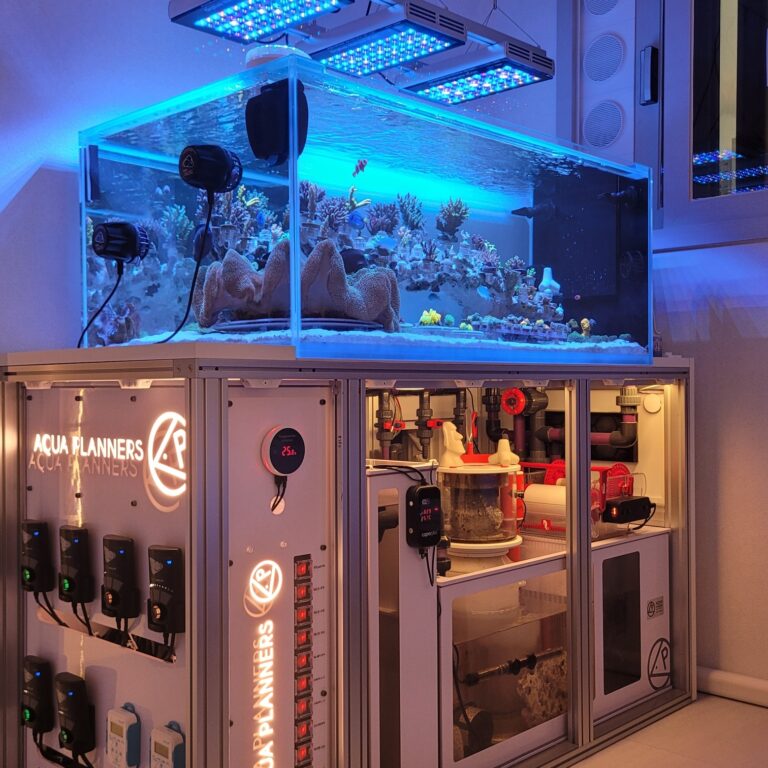
Credit: orphek.com
Benefits Of Led Lighting
LED lighting is popular for show reef tanks. It helps keep corals healthy and bright.
Many reef tank owners prefer LED lights because they offer many advantages over other lights.
Energy Efficiency
LED lights use less electricity than traditional lighting. This lowers energy bills.
They produce less heat, so the tank stays cooler. This reduces the need for extra cooling devices.
- Uses up to 75% less energy than other lights
- Less heat means safer tank environment
- Can be left on longer without high costs
Longevity And Durability
LED lights last much longer than regular bulbs. This means fewer replacements.
They are built to handle moisture and temperature changes common in reef tanks.
- Average lifespan over 50,000 hours
- Resistant to water and humidity
- Strong build reduces risk of damage
Customizable Light Spectrum
LEDs allow you to adjust colors and intensity. This helps mimic natural sunlight.
Different corals need different light types. Custom settings help them grow and look their best.
- Choose blue, white, red, and other colors
- Adjust brightness to suit coral needs
- Create day and night light cycles
Choosing The Right Led Lights
LED lights are important for reef tanks. They help corals grow and look bright. Picking the right LEDs makes a big difference.
This guide explains how to choose LED lights for your reef tank. It covers types, brightness, and color options.
Types Of Led Fixtures
There are several types of LED fixtures for reef tanks. Each has its own benefits and uses. Choose based on your tank size and coral needs.
- Strip Lights: Easy to install and good for small tanks.
- Pendant Lights: Hang above the tank for strong light coverage.
- Bar Lights: Long and slim, fit well on medium tanks.
- Canopy Lights: Built into the tank lid for a clean look.
Brightness And Par Levels
Brightness is important for coral health. PAR (Photosynthetically Active Radiation) measures usable light for corals. Higher PAR means better coral growth.
| Tank Size | Recommended PAR Level |
| Small (up to 20 gallons) | 100 – 200 µmol/m²/s |
| Medium (20 – 50 gallons) | 200 – 400 µmol/m²/s |
| Large (over 50 gallons) | 400 – 600 µmol/m²/s |
Color Temperature Options
Color temperature affects how your tank looks and how corals grow. It is measured in Kelvins (K). Choose a temperature that suits your coral and tank style.
- 6500K: Warm light, good for growth and natural look.
- 10000K: Bright blue-white light, enhances coral colors.
- 14000K: Deep blue light, simulates ocean depth.
- 20000K and above: Mostly blue, shows fluorescent coral colors.
Setting Up Led Lighting
LED lighting is a great choice for reef tanks. It helps corals grow and shows their bright colors.
Setting up LED lights correctly is important for a healthy reef tank. You need to think about placement, mounting, and timing.
Placement And Coverage
Place LED lights so the whole reef gets light. Corals need even coverage to grow well.
Measure your tank and choose LEDs that cover the area without dark spots or too much light.
- Center lights over the tank for uniform brightness
- Use multiple lights for large tanks to spread coverage
- Adjust lights to avoid shadows from rocks or decorations
Mounting Techniques
Mount LED lights securely above your reef tank. This keeps lights stable and safe.
Use brackets, hanging kits, or stands made for aquarium LEDs. Make sure the mounting fits your tank size.
- Hanging kits let you adjust height easily
- Brackets attach lights firmly to tank edges
- Stand mounts work well for tanks without rims
Timing And Light Cycles
Set a timer for your LED lights to create a regular day and night cycle. Corals need consistent light periods.
Most reef tanks need 8 to 12 hours of light daily. Adjust timing to match natural sunlight patterns.
- Start with 8 hours of light and increase if needed
- Include a period of darkness for coral rest
- Use gradual light changes if your timer supports it
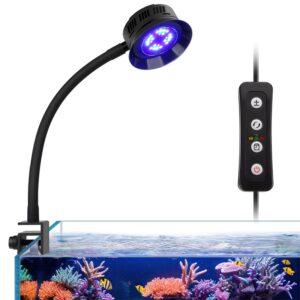
Credit: www.hygger-online.com
Enhancing Coral Growth And Color
LED lighting plays a key role in reef tank health. It helps corals grow strong and show bright colors.
Choosing the right light improves coral vitality and makes your tank look vibrant.
Optimal Light Intensity
Corals need the right light strength to grow well. Too little light slows growth. Too much can cause stress.
- Measure light with a PAR meter for accuracy.
- Adjust height of lights to control intensity.
- Match light levels to coral species needs.
- Use dimmers to fine-tune brightness.
Spectrum Effects On Coral
Light color affects coral color and health. Blue and violet boost coral fluorescence and pigment.
| Spectrum Range | Effect on Coral |
| 400-450 nm (Blue) | Enhances fluorescence and color |
| 450-500 nm (Cyan) | Supports photosynthesis |
| 500-600 nm (Green to Yellow) | Less useful for corals |
| 600-700 nm (Red) | Minimal effect on coral growth |
Balancing Light And Nutrients
Good coral growth needs both proper lighting and nutrients in the water. One without the other limits health.
Keep these points in mind:
- Strong light increases coral energy needs.
- Maintain stable nutrient levels for growth.
- Too many nutrients cause algae, harming corals.
- Use water tests to monitor nutrients regularly.
Controlling And Automating Led Systems
LED lighting is popular for show reef tanks. It helps mimic natural conditions for marine life. Automating these systems offers precise control over light intensity and timing.
Automation can enhance the health of your reef tank. It reduces manual adjustments and ensures consistent lighting patterns.
Using Controllers And Apps
Controllers and apps are key tools in managing LED systems. They allow you to set schedules and adjust settings with ease.
Many controllers connect to smartphones or computers. This makes it simple to tweak settings remotely.
- Wi-Fi enabled controllers
- Smartphone apps for real-time updates
- Customizable schedules for different tank needs
Simulating Natural Light Patterns
Simulating natural light is important for a healthy reef tank. LED systems can mimic sunrise, sunset, and even moonlight.
This helps the marine life feel more at home. It can reduce stress and promote growth.
| Light Phase | Time |
| Sunrise | 6:00 AM – 8:00 AM |
| Daylight | 8:00 AM – 6:00 PM |
| Sunset | 6:00 PM – 8:00 PM |
| Moonlight | 8:00 PM – 6:00 AM |
Maintenance And Troubleshooting
Regular maintenance keeps LED systems running smoothly. Dust and water can affect performance over time.
Troubleshooting common issues is part of owning a reef tank. Check connections and software updates regularly.
- Clean lights every month
- Inspect wires and connections
- Update software for new features
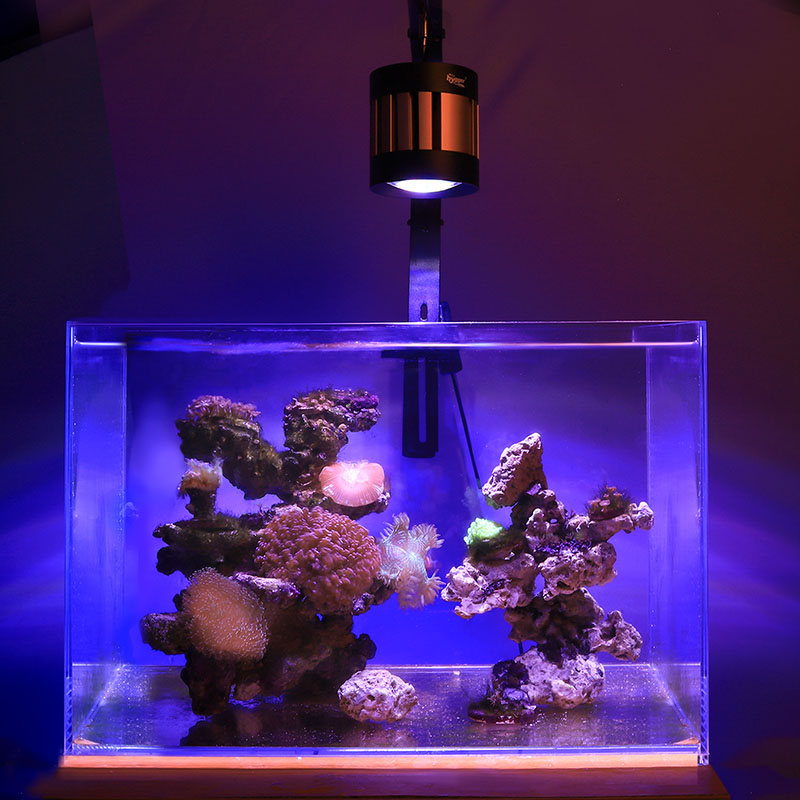
Credit: www.hygger-online.com
Common Challenges And Solutions
Using LED lighting for show reef tanks brings bright colors and energy savings. Still, many reef keepers face some problems. These problems can affect coral health and tank appearance.
Knowing the common issues and how to solve them helps keep your tank healthy. Below are key challenges and ways to fix them.
Algae Control
Too much light can cause algae to grow fast. Algae looks bad and can harm corals by blocking light and using nutrients.
To control algae, adjust the light schedule and intensity. Keep nutrients low by regular water changes and good filtration.
- Set LED lights on timers for 8-10 hours daily
- Lower light intensity if algae grows quickly
- Test and control nitrate and phosphate levels
- Add algae-eating fish or invertebrates
Preventing Light Burn
Strong LED lights can burn coral tissues. This damage shows as white or pale spots on corals. It slows coral growth and health.
Prevent light burn by starting with low light intensity. Increase brightness slowly over days or weeks to let corals adjust.
- Begin with 50% light strength after adding new corals
- Raise light intensity gradually each week
- Keep distance between LEDs and coral surface
- Watch corals daily for signs of stress
Dealing With Equipment Failures
LED lights and their parts can fail over time. This may cause flickering, dimming, or total light loss. It affects coral health.
To handle failures, check your equipment often. Replace broken parts quickly and keep spare bulbs or drivers ready.
- Inspect LED units regularly for damage or dust
- Clean LED lenses and fans to avoid overheating
- Test backup power or surge protectors
- Keep contact info of supplier or technician
Popular Led Brands For Reef Tanks
Choosing the right LED lighting is key for healthy reef tanks. Good LEDs help corals grow and show their colors well.
This guide covers popular LED brands. You will find high-end options and budget-friendly choices. We also share user reviews.
High-end Options
High-end LED brands offer strong light and advanced features. They are good for large or demanding reef tanks.
- Ecotech Marine Radion: Known for its full spectrum and app control.
- AI Prime HD: Offers bright light and customizable settings.
- Kessil A360X: Uses dense LED clusters for deep water tanks.
- Orphek Atlantik: Provides wide coverage and strong UV output.
Budget-friendly Choices
These brands give good value for smaller tanks or those on a budget. They balance light quality with price.
| Brand | Price Range | Key Features |
| NICREW | $50 – $100 | Easy setup, decent color spectrum |
| Current USA | $80 – $150 | Good coverage, adjustable modes |
| Finnex | $70 – $120 | Slim design, reliable light output |
| Beamswork | $60 – $110 | Full spectrum, built-in timer |
User Reviews And Recommendations
Many reef hobbyists share their thoughts on these LED brands. They talk about light quality, durability, and ease of use.
- Ecotech Marine Radion is praised for strong coral growth but is costly.
- AI Prime HD is liked for its app control and bright light.
- NICREW is popular for beginners and small tanks.
- Current USA gets good marks for its balance of price and features.
Frequently Asked Questions
What Are The Benefits Of Led Lighting For Reef Tanks?
LED lighting provides energy efficiency, long lifespan, and customizable spectrum. It enhances coral growth and colors while producing less heat. These features make LEDs ideal for show reef tanks, improving aquarium health and reducing maintenance costs.
How Does Led Lighting Affect Coral Growth?
LEDs offer specific light wavelengths essential for photosynthesis in corals. This promotes faster growth and vibrant colors. Proper LED settings mimic natural sunlight, supporting coral health and overall tank ecosystem balance effectively.
Can Led Lights Simulate Natural Reef Environments?
Yes, LED lights can replicate natural reef lighting by adjusting intensity and color spectrum. This creates day and night cycles, promoting natural behaviors in marine life. It also enhances the visual appeal of the reef tank.
What Is The Ideal Led Spectrum For Reef Tanks?
A balanced spectrum with blue, white, and actinic lights is best. Blue light boosts coral fluorescence, while white light supports general growth. Actinic light enhances coral pigmentation, creating a vivid and healthy reef display.
Conclusion
LED lighting boosts the look of your reef tank beautifully. It helps corals grow strong and stay healthy. You can control colors and brightness easily. This lighting uses less energy, saving money on bills. It also lasts longer than old-style lights.
Choosing the right LED lights makes a big difference. Your reef will shine with vibrant colors and life. Simple to use and good for the environment too. LED lighting suits both beginners and experts well. Give your show reef tank the light it deserves.