
When you dive deeper into the world of advanced aquariums, lighting becomes more than just a simple necessity—it’s the key to unlocking the full potential of your aquatic environment. You want your fish to thrive, your corals to glow, and your plants to grow lush and vibrant.
But how do you choose the right lighting that meets the complex needs of your setup? This guide will help you discover how the right lighting can transform your aquarium, making it healthier and more stunning than ever before. Ready to elevate your aquarium game?
Let’s explore the secrets behind lighting for advanced aquarists.

Credit: www.walmart.com
Choosing The Right Light
Lighting is a key part of any advanced aquarium setup. It affects plant growth and fish health. Picking the right light can make a big difference.
This guide covers types of aquarium lights, light spectrum, and compares popular lighting options.
Types Of Aquarium Lights
Aquarium lights come in many forms. Common types include LED, fluorescent, and metal halide. Each has unique features and uses.
- LED lights are energy efficient and long-lasting.
- Fluorescent lights offer good color and brightness.
- Metal halide lights are powerful and penetrate deep tanks well.
Light Spectrum And Color Temperature
Light spectrum means the range of colors the light shows. Color temperature is the light’s warmth or coolness measured in Kelvins.
| Light Type | Color Temperature (Kelvin) | Best Use |
| Warm White | 2700K – 3500K | Planted tanks with red plants |
| Neutral White | 4000K – 5000K | General freshwater aquariums |
| Cool White | 6500K – 10000K | Marine tanks and coral growth |
Led Vs Fluorescent Vs Metal Halide
Each light type has strengths and weaknesses for aquariums. Consider brightness, heat output, and cost.
- LED: Low heat, adjustable spectrum, and long life. Uses less energy.
- Fluorescent: Good color range and brightness. Needs bulb changes often.
- Metal Halide: Very bright and penetrates deep water. Produces more heat and uses more power.
Lighting Intensity And Duration
Lighting is key for aquarium health. It affects plant growth and fish behavior. Proper light helps keep the tank balanced and lively.
Both the strength of the light and how long it stays on matter. Too much or too little light can harm your aquarium’s inhabitants.
Measuring Light Intensity
Light intensity shows how strong the light is in your aquarium. It is often measured in PAR (Photosynthetically Active Radiation) or lux. PAR measures the light plants use for photosynthesis.
- Use a PAR meter to get accurate readings.
- Measure light at different depths in the tank.
- Check light levels regularly as bulbs age.
Optimal Photoperiods
Photoperiod means how long the lights stay on each day. Most aquariums need 8 to 12 hours of light. This supports healthy plants and fish rhythms.
| Species Type | Recommended Light Duration |
| Freshwater Plants | 10 to 12 hours |
| Corals | 8 to 10 hours |
| Fish Only | 8 to 10 hours |
Adjusting Light For Different Species
Different species need different light levels and times. Adjust your lighting to match what each species prefers. This helps them grow and stay healthy.
- Low-light plants need less intense light and shorter duration.
- Corals need strong light but may need breaks during the day.
- Fish usually prefer moderate light to avoid stress.
- Observe your aquarium and change light based on species response.
Lighting For Plant Growth
Lighting is very important for growing plants in an aquarium. Plants use light to make food through photosynthesis.
Good lighting helps plants grow healthy and strong. It also keeps your aquarium looking beautiful.
Essential Light Requirements
Plants need the right type and amount of light to grow well. They use light mostly in the blue and red colors.
Light intensity and duration both matter. Most plants grow best with 8 to 10 hours of light each day.
- Use full spectrum LED or fluorescent lights
- Keep light on for 8-10 hours daily
- Avoid very strong light to prevent stress
- Choose light with blue and red wavelengths
Balancing Light And Nutrients
Plants need more than just light. They also need nutrients like nitrogen and potassium.
If you give too much light but not enough nutrients, plants will not grow well. Balance is key.
- Provide proper fertilizers for your plants
- Match nutrient levels to light intensity
- Test water regularly to check nutrient amounts
- Adjust light time if plants show poor growth
Preventing Algae With Proper Lighting
Too much light causes algae to grow fast. Algae can harm plants and make the tank dirty.
Use the right light duration and avoid bright light in the evening to control algae.
- Limit light to 8-10 hours per day
- Use timers to keep lighting consistent
- Keep light away from direct sunlight
- Clean algae from tank surfaces regularly
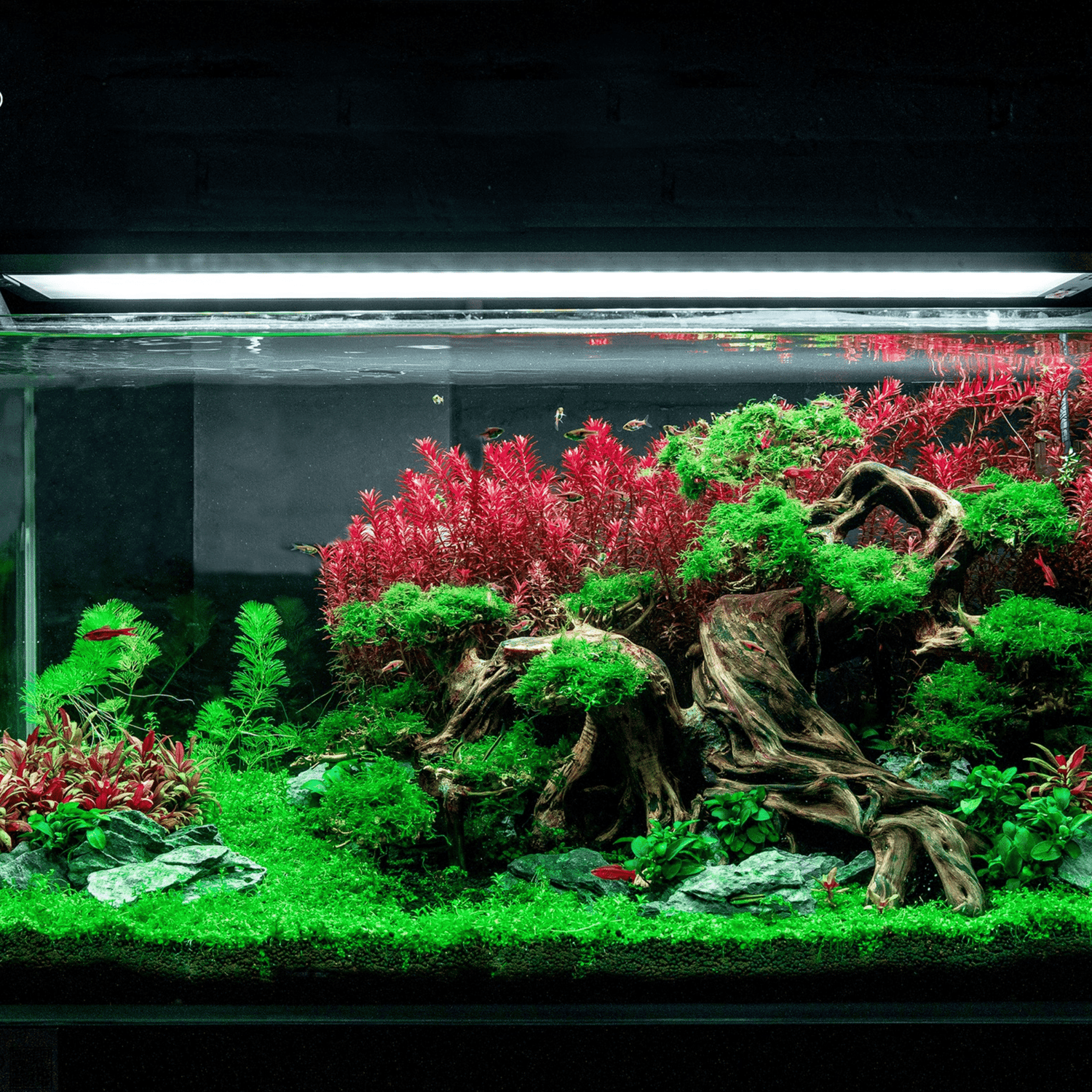
Credit: aquascapeshop.com
Lighting For Coral And Reef Tanks
Lighting is key to keeping corals healthy in reef tanks. It helps corals grow and show their best colors.
Choosing the right light and setting it up properly can mimic nature. This supports coral life and tank balance.
Special Needs Of Corals
Corals rely on light for photosynthesis. They need light in specific colors and intensities to thrive.
- Most corals prefer blue and white light.
- Light intensity should match coral species.
- Too much light can cause stress or bleaching.
- Too little light slows coral growth.
- Light duration affects coral health and behavior.
Simulating Natural Light Cycles
Natural light changes during the day. Reef tanks benefit from copying these cycles.
| Time of Day | Light Intensity | Color Spectrum |
| Morning | Low to Medium | Soft white and blue |
| Noon | High | Bright white with blue |
| Evening | Medium to Low | Blue and actinic |
| Night | Off or very low | Moonlight blue |
Using timers helps keep these cycles consistent. This reduces stress on corals.
Using Actinic And Blue Lighting
Actinic and blue lights are important for reef tanks. They help corals make food and show color.
Benefits of actinic and blue lighting:
- Supports coral photosynthesis
- Enhances coral fluorescence
- Improves tank appearance
- Penetrates deep water better
- Reduces algae growth compared to white light
Advanced Lighting Techniques
Lighting plays a vital role in the health and growth of aquarium life. Advanced techniques help simulate natural light cycles and improve tank appearance.
These methods allow aquarists to control intensity, color, and timing with precision. Understanding these options can enhance your aquarium setup.
Programmable Lighting Systems
Programmable lighting systems let you set schedules for your aquarium lights. You can mimic sunrise, daylight, sunset, and moonlight phases.
- Set different light intensities for each time of day
- Control multiple channels for color variation
- Automate seasonal changes in light duration
- Reduce manual adjustments and errors
Dimming And Color Mixing
Dimming controls light brightness smoothly to avoid stress on fish and plants. Color mixing blends red, green, and blue LEDs for natural light tones.
| Feature | Benefit |
| Dimming Range | From 1% to 100% brightness |
| Color Channels | Red, Green, Blue, White |
| Color Temperature | Adjustable from 4000K to 20000K |
| Effects | Simulate clouds, storms, or moonlight |
Automated Lighting Controls
Automated controls link lighting with sensors or timers. They help keep consistent light cycles and react to environmental changes.
Common automated control options include:
- Light sensors that adjust brightness based on room light
- Timers that turn lights on and off at set times
- Remote apps for manual overrides and monitoring
- Integration with other aquarium devices like pumps or feeders
Troubleshooting Common Lighting Issues
Lighting is crucial for a healthy aquarium. Advanced aquarists often face lighting issues. Understanding and fixing these issues can help maintain a balanced tank environment.
This guide will explore common lighting problems. We will focus on identifying algae problems, signs of insufficient light, and fixing uneven light distribution.
Identifying Light-related Algae Problems
Algae can grow fast with too much light. This makes the tank look dirty. It can also harm plants and fish.
Check if algae cover the glass or decor. This might mean your light is too strong or on for too long.
- Reduce light intensity
- Limit light duration to 8-10 hours a day
- Clean algae regularly
Signs Of Insufficient Light
Plants need light for photosynthesis. Without enough light, they may not grow well. Leaves may turn yellow or brown.
Fish may also be less active. Check if your plants are wilting or losing color. This can indicate insufficient light.
- Increase light intensity
- Use full spectrum bulbs
- Extend light exposure to 10-12 hours
Fixing Uneven Light Distribution
Uneven light can cause some plants to get more light than others. This can lead to poor growth in shaded areas.
Ensure your lights cover the entire tank evenly. Adjust the position of the lights if necessary.
| Problem | Solution |
| Dark spots | Reposition lights or add more fixtures |
| Overlit areas | Use light diffusers |
Maintaining And Upgrading Aquarium Lights
Good lighting is key for a healthy aquarium. It helps plants grow and shows fish colors well. Keeping lights clean and updated makes your tank look its best.
Regular care of your aquarium lights saves money and keeps your fish safe. Upgrades can also bring better energy use and improved light quality.
Cleaning And Replacing Bulbs
Clean your bulbs often to keep light strong. Dirt and salt build-up can block light and harm plants. Use a soft cloth and gentle cleaner to wipe bulbs.
Replace bulbs every 6 to 12 months. Old bulbs lose brightness and color quality. Check the bulb’s hours and replace if light fades or flickers.
- Turn off power before cleaning
- Remove bulbs carefully
- Use soft cloth with mild cleaner
- Dry bulbs fully before reinstalling
- Keep spare bulbs ready for replacement
When To Upgrade Your Lighting
Upgrade your lighting when it no longer meets your tank needs. New lights offer better colors and support plant growth. Also, older lights may use more energy.
| Sign You Need Upgrade | Reason |
| Dull or uneven light | Bulbs are old or weak |
| Flickering or buzzing | Electrical issues or aging |
| Plants not growing | Light spectrum not right |
| High energy bills | Old lighting technology |
Energy Efficiency Tips
Save power and lower costs by using energy-efficient lights. LED bulbs use less electricity and last longer than traditional bulbs.
- Use LED bulbs for longer life and less power
- Turn lights off when not needed
- Set timers to control light duration
- Keep bulbs clean for maximum brightness

Credit: aquascapeshop.com
Frequently Asked Questions
What Type Of Lighting Is Best For Advanced Aquarists?
Advanced aquarists often prefer LED lighting due to its energy efficiency, customizable spectrum, and long lifespan. LEDs support coral growth and enhance tank aesthetics. They also allow precise control over intensity and color, which benefits complex reef setups and sensitive aquatic plants.
How Does Lighting Affect Coral Growth In Aquariums?
Lighting directly influences photosynthesis in corals’ symbiotic algae, promoting growth and vibrant colors. Proper light intensity and spectrum are essential for healthy corals. Too much or too little light can stress corals and inhibit development, so tailored lighting setups are crucial for advanced reef tanks.
What Is The Ideal Light Spectrum For Reef Aquariums?
The ideal light spectrum for reef tanks includes blue and actinic wavelengths between 420-470 nm. These wavelengths enhance coral fluorescence and support photosynthesis. A balanced spectrum also helps mimic natural sunlight, promoting healthy coral and fish behavior in advanced aquarium environments.
How Long Should Aquarium Lights Be On Daily?
Most advanced aquarists recommend 8 to 12 hours of lighting daily. This duration mimics natural daylight cycles and supports coral photosynthesis without causing algae overgrowth. A consistent photoperiod helps maintain stable water conditions and healthy aquatic life.
Conclusion
Choosing the right lighting helps your aquarium thrive and look great. It affects plant growth and fish health every day. Adjust light settings to match your tank’s needs. Watch how your aquatic life responds to changes. Good lighting makes your tank a lively, beautiful space.
Keep learning and experimenting for best results. Your aquarium will thank you with vibrant colors and healthy life. Lighting is a key part of advanced aquarist success.